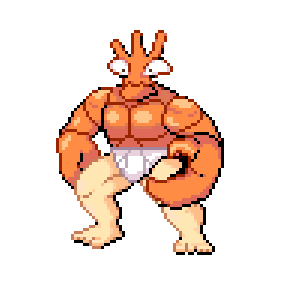
Page 3 / 3 of 2292 pokedex entries by bobosmith01.
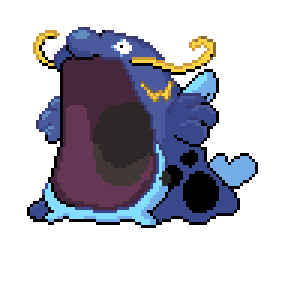
It is a dangerous Pokémon that can eat almost any living thing in just one gulp. Battles between even just two territorial Whisot can cause huge tremors that can be felt for miles.
Corprith may be found at the bottom of the sea, although only a few hundred feet deep at most. It is extremely hardy; its natural population is expected to skyrocket.
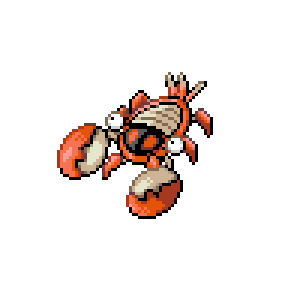
Crawviper is a battle-loving hunter. When attacking prey, it sinks its fangs into the Pokémon before dragging them underwater. However, whenever it molts, its normally tough body is vulnerable, so it hides until its outer layer hardens again.

Goltu can predict the weather far in advance thanks to its ability to see into the future. When the jewel on its forehead glows, it is telepathically communicating with its kin.

Goltata take up an unusual habit of protecting nature, people, and Pokémon from the sometimes-chaotic nature of wild fused Pokémon. With their widespread population and psychic powers, some believe all Goltata can communicate with one another.

Golpass channels odd supernatural powers through the stones at its sides. Although it may be found underwater, it cannot swim through conventional means.

Golpass channels odd supernatural powers through the stones at its sides. Although it may be found underwater, it cannot swim through conventional means.
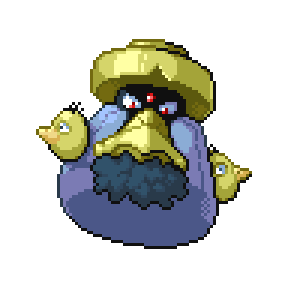
Fiercely independent and stubborn, Golizard tends to not get along with other Pokémon. While it spends most of its waking moments underwater, it rests on land.

Fiercely independent and stubborn, Golizard tends to not get along with other Pokémon. While it spends most of its waking moments underwater, it rests on land.
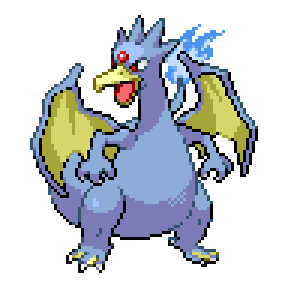
Fiercely independent and stubborn, Golizard tends to not get along with other Pokémon. While it spends most of its waking moments underwater, it rests on land.

Fiercely independent and stubborn, Golizard tends to not get along with other Pokémon. While it spends most of its waking moments underwater, it rests on land.
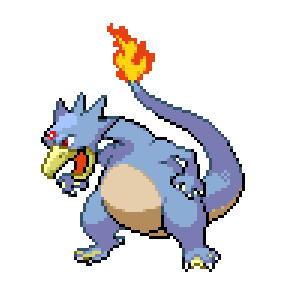
Goldrio love to compete and will race one another from one shoreline to another. Having each of their three heads being coordinated and amicable with the others allows them to reach higher speeds.

Goler waddles slowly along the banks of rivers and bays. It channels unusual powers and moves through the jewel-tipped pincers it has.
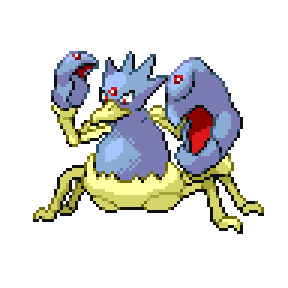
It may rhythmically wobble back and forth, but provided Balhoot is conscious, it will never fall down. It doesn't seem to fall asleep; it simply goes dormant.
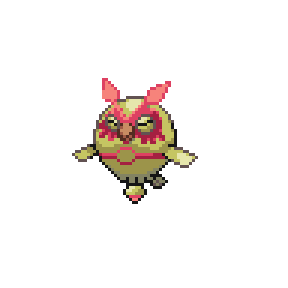
If a wild Balmite is spotted someplace, dozens more are sure to exist nearby. When numerous Balmite gather to take down a foe, they link up their arms to form a massive wall that positively overflows with electrical energy.
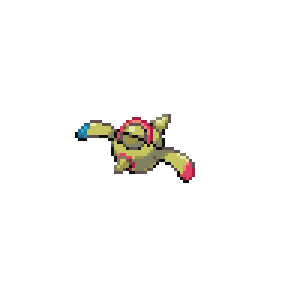
One legend states that the first Claytomb were a conglomeration of the souls of eight thousand soldiers and their steeds that served under an emperor, sealed within clay shells so their service lasts forever. Claytomb are dutiful and utterly silent.
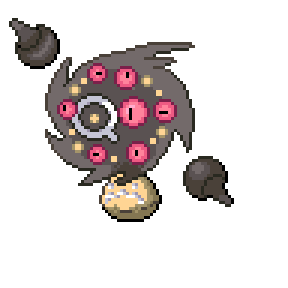
When it sings, an ancient melody is heard; why Clayria knows the melody is unknown. Clayria bathes in mud to remove any small parasites. It is thought that psychic powers allow it to fly, not just its wings.
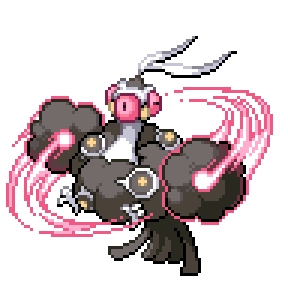
Said to be a set of ancient clay figures that gained sentience, Claytrio lacks an organ that could be defined as a brain. Instead, the three heads communicate with one another through an invisible psychic field.
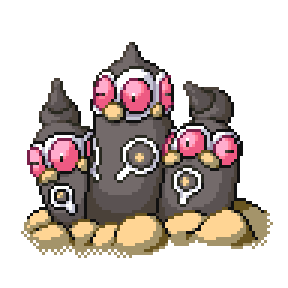
During a wind storm, Castle may be swept away by the gusts and fly into the sky. It actually enjoys this: it will collect the positive charges in the air during this time. Its low density causes it to be unharmed by the inevitable fall.
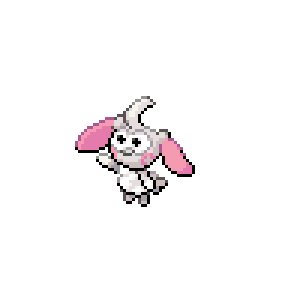
Castun is most active during heavy thunderstorms, where it will willingly climb as high as possible all on its own to the highest elevation it can manage to be closer to the massive amounts of negative charges that are present in storm clouds.
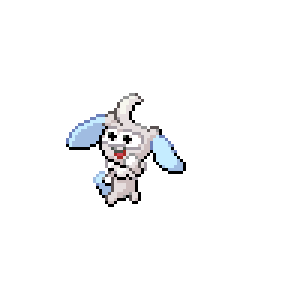
Trolax's health is almost directly comparable to the health of nearby fruit. It will become weak and malnourished if the fruit are, too; intelligent Trolax help farm the land to ensure a bountiful harvest.
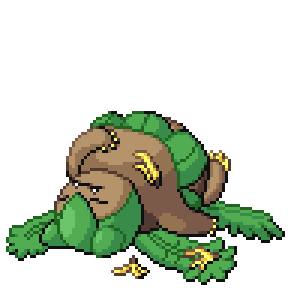
Chingyama is seen as a sage of decorum and self-betterment to many wild Pokémon in its territory. It seems to politely reprimand and suggest alternative behaviors when a mischievous Pokémon is afoot.
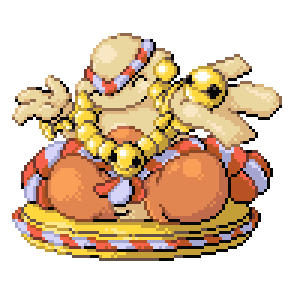
Chimegigas's body is usually completely hollow, but it rarely inserts various materials into the holes in its body. When the bells at the ends of its hands ring, its body mysteriously becomes hollow again.
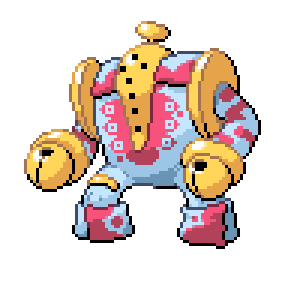
When Chimeloud roars, the pipe-like organs on its back whistle as air passes through them. When it uses psychic powers, the organs emit a dirge-like tune.
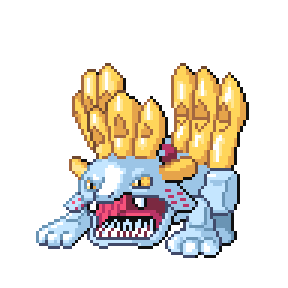
When the bodies of two Chimeyama clash, a sonorous chime reverberates so loudly it can be heard from over a mile away. Studies have suggested Chimeyama have a unique language that involves the chimes they can emit from their body.
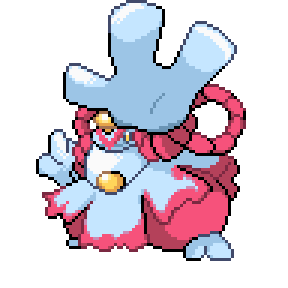
Chimelektrik cause electrical interference when nearby and have startled several seaside homeowners when they find Chimelektrik latched onto the overhang of their roofs. Thankfully, they're usually easy to shoo away.
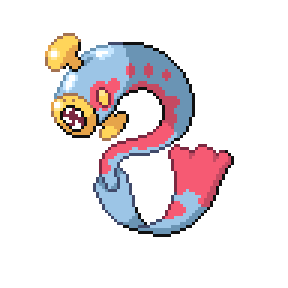
Although typically friendly, it is known that Chimeton can be cruel in battle. For just one example, Chimeton pinned its foe with magnetism, separated its three bodies, encircled the enemy, and fired off an excessive amount of sound waves.
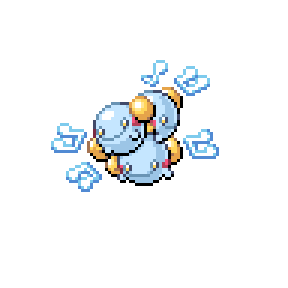
Powerful muscles, fluffy fur, and plenty of fat reserves allow Spheary to function in the unforgiving snowy terrain it calls home. In a safe area, it is extremely playful: it isn't an uncommon sight to see one rolling and jumping in the snow.
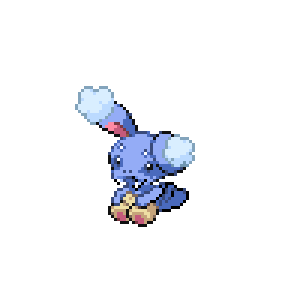
Although groups of Sphekey are generally harmless from a distance, they will ruthlessly attack if approached too closely. Throwing food to only one will cause the rest to become upset.

The powerful energy coursing through Manair sometimes overwhelms it. As a result, it can fly into uncontrollable fits of rage and anxiety. High amounts of physical exercise is reccomended for caught Manair.

Manfarig's tail handles eating and often appears distressed by its host's frequent tantrums. Some believe the tail houses a consciousness distinct from either Mankey's or Girafarig's.
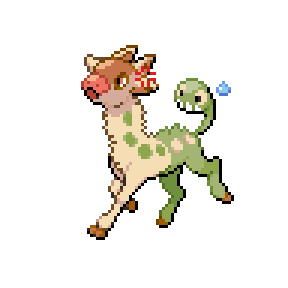
Manpius aggressively defends fruit trees deep in the jungle. If it eats a diet consisting of one kind of fruit over many years, it will begin producing that fruit under its neck. Manpius that produce Payapa Berries are rare but not unheard of.
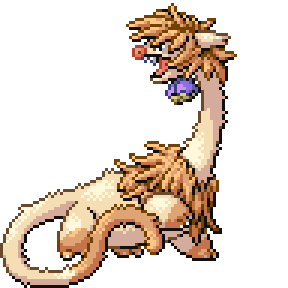
A popular word-of-mouth story involves a fisherman who recorded himself fishing up what he thought was a beautiful mermaid. He was then promptly whacked by the hooked Maneel's tail in its anger. It's best to leave wild Maneel alone.

Most of their body is fat and fur; their actual skeleton and musculature is quite small, albeit powerful. Their large ears, containing many blood vessels, allow for great thermoregulation, even when the temperatures take either extreme.
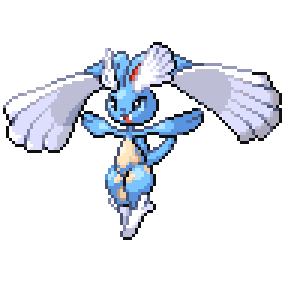
Walrow's feathers resist the cold quite well, and its special beak allows it to easily dig through frozen tundra dirt, snow, and solid ice. As a result, it acts as a powerful polar predator.
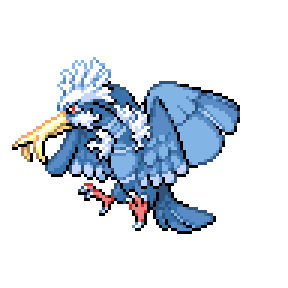
The fluid that comes out of Clampoom's mouth may smell sweet or foul, depending on its habitat. Regardless of smell, the fluid tastes incredibly salty. The exact shade of Clampoom's body varies depending on the individual.
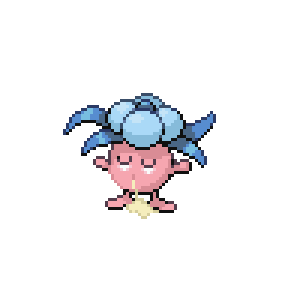
If small insect Pokémon such as Weedle curiously crawl into Clampoom's shell, the shell will snap shut and begin filling with fluid as Clampoom's digestive process begins. Clampoom does not need to eat much to survive.
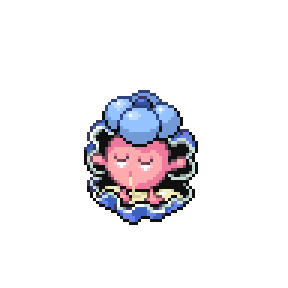
Clampcanth is partially composed of an elusive deep sea creature, which has brought Relicanth's natural resistance to fusion and evolution into question. An abyssal Pokémon, the color of Clampcanth's pearl-shaped organ fades the longer it is in light.
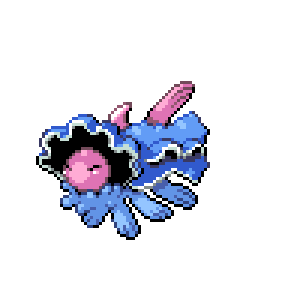
Hunpert lives in the ocean floor, where its tough body allows it to withstand the immense pressure. It sleeps underground with its fish-shaped tail showing: would-be predators that would attack are ambushed.
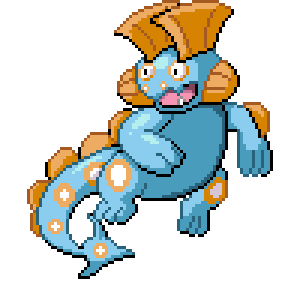
Hunor lives fairly deep in the ocean. Encased in its shell, it is unable to swim very well. However, it is able to easily sustain itself by devouring tiny particles within the water.
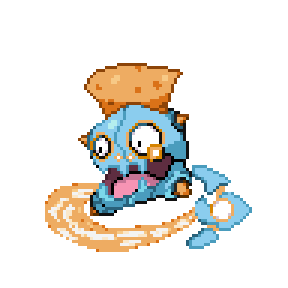
Goredra's elegant and colorful form would have it be more popular at many aquariums, but they do not get along with other Pokémon and must be kept separate. They create a special ink from whatever their body cannot process as nutrients.
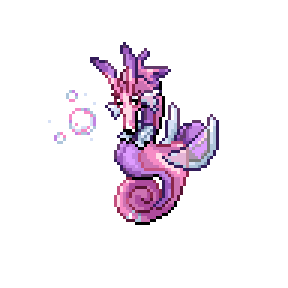
Hemovore and triphibian, Gorefly is a predator Pokémon found almost anywhere, albeit in small numbers. It is able to withstand both extreme pressures and temperatures, but it prefers moderate weather with plenty of sunlight and moisture.
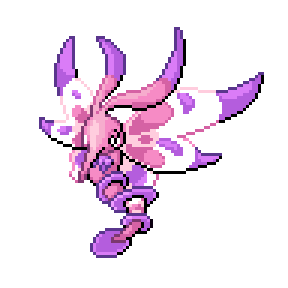
Although they try to form packs with other Relivanha to swarm prey, they simply do not reproduce quickly and therefore have little success finding enough Relivanha to be effective. When not hunting, they go dormant and their metabolism slows.
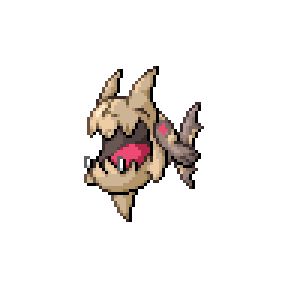
Reliedo only preys on the weak and very ill. Some think it is barbaric in nature as it keeps their remains, while some believe it is knowingly feeding on those who will not live for much longer out of kindness and keeps their remains out of respect.
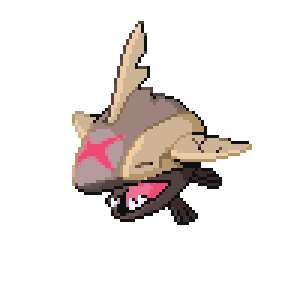
Woobchu has an incredible sense of smell that allows it to clearly identify who and what is in its general vicinity. It dwells in forests and is active during the night.
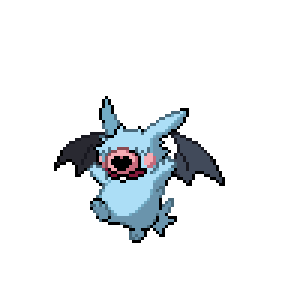
To defend itself, it will glide straight into a foe, plant its nostrils on them, and let loose a direct electrical current from them. They typically dine on small Berries and glide from branch to branch to reach them.
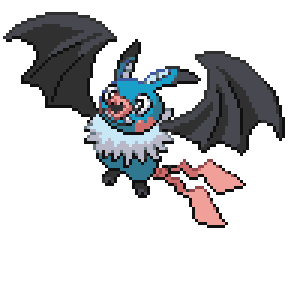
Swoolous controls its emotions through its heads' shared brainstem; negative thoughts and feelings are shunted towards one head, while positivity overflows from the other. Both heads are functionally blind, although they do have eyes.
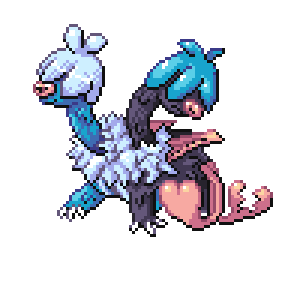
Swoolous controls its emotions through its heads' shared brainstem; negative thoughts and feelings are shunted towards one head, while positivity overflows from the other. Both heads are functionally blind, although they do have eyes.
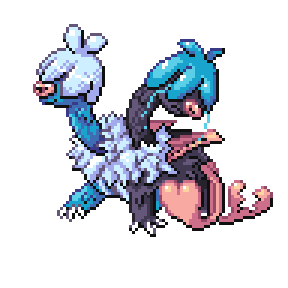
Swoodreigon has nostrils on the appendages at the end of its arms, so Swoodreigon can rarely be found underwater with one or both arms raised past the surface to breathe.
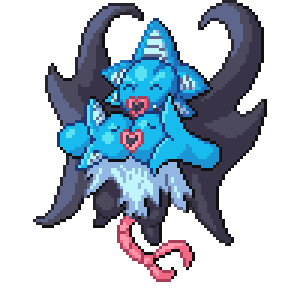
Tynabat are well-knit and social among their own kind and rely on one another to assist in almost any task imaginable: feeding, navigation, grooming, and so on. They are often sickly and weak and fall prey to disease in the wild.
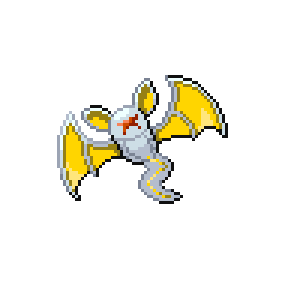
Tynabat are well-knit and social among their own kind and rely on one another to assist in almost any task imaginable: feeding, navigation, grooming, and so on. They are often sickly and weak and fall prey to disease in the wild.
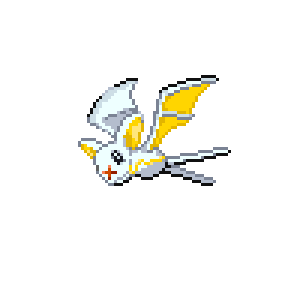
Primefarig effortlessly races long grueling distances and can even easily navigate through rocky slopes. It stamps and stomps in rage during its few "breaks"; the only time it does not move around is when it sleeps.

While it is not constantly enraged like Primeape, it is very quick to intense anger. The more frequent the outbursts, the more its physiology is affected: venom becomes more potent, but it may shed more frequently or strain its digestive system.
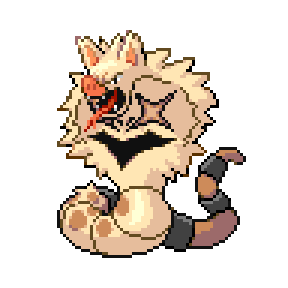
A well-trained Primecario goads foes into rage and aggression and uses their berserk state against them, expertly striking openings and wearing the enemies out.
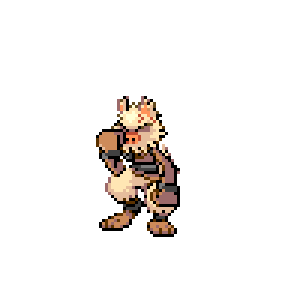
Primedash gallops across wide terrain, plowing down anyone in its way. It never rests. It does love a good apple, however.

Although generally non-confrontational, Eelekraid has the ability to fire accurate shots of lightning, or even to sneak up unnoticed on other Pokémon and bite with electrified fangs. It must occasionally surface from the water for air.
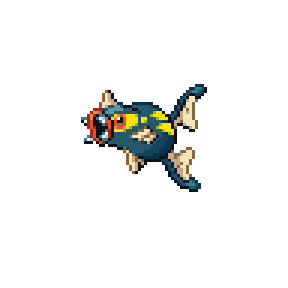
Skrecko lives in lush areas with an excess of flora. It eats old and decaying plants to create a toxin that it may then shoot at others in self-defense.
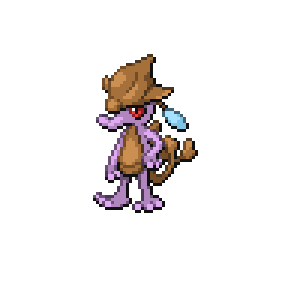
Although Dragalnair lives deep in the sea, it will rarely come up to be closer to the sunlight, which it synthesizes into powerful draconic energy. It can purify and nullify any toxins that it releases from its system.
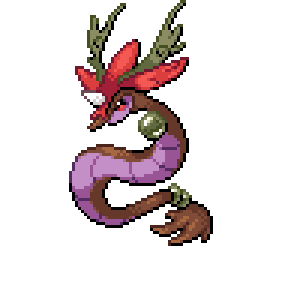
Growltu typically likes physical affection from those it trusts, especially just under their beak. However, suddenly touching them will have them instinctively teleport away some distance.

Growlans lives in grasslands as a pack. Unfused Ekans flee from them in fear, while unfused Growlithe may rarely hunt them, leading to little interaction between the species.

Growlshrew dig deep into the dirt to store objects it finds valuable. For recreation, one out of a group of Growlshrew will curl into a ball, while the other Growlshrew chase it around.

Growleel are aquatic Pokémon traditionally found in frigid waters, and while they are known for their strong jaws, they are best recognised for their ease to train and the spectacular tricks they do at performances.

Growleel are aquatic Pokémon traditionally found in frigid waters, and while they are known for their strong jaws, they are best recognised for their ease to train and the spectacular tricks they do at performances.

Trustworthy and intelligent, Arcaking tries to become a mentor to its Trainer's other Pokémon. It often confuses them instead.

It dedicates its very life to defending its young. If it detects danger, its fur stands on end. When it finally relaxes, Arcaslash enjoys rolling in dirt and mud.

Arcakazam's visage is used as a symbol of high rank at one eastern temple. It is well respected as a bearer of wisdom.

Arcachoke is incredibly proud of its body and has no problem being observed as a symbol of strength. There was an ancient statue depicting this Pokémon uncovered at a dig site some time ago.
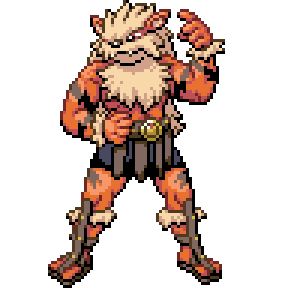
Arcachoke is incredibly proud of its body and has no problem being observed as a symbol of strength. There was an ancient statue depicting this Pokémon uncovered at a dig site some time ago.

Charfree begins migrating at the end of autumn to live in more tropical locations. It leaves the tropics just before wildflowers begin to bloom in other nearby regions.

Wild Charicate are extremely aggressive and often lead short lives due to getting into fights. However, if properly trained throughout its life, a Trainer's Charicate will be incredibly affectionate and well-behaved.
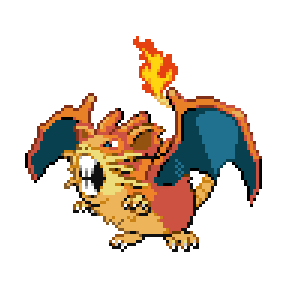
Its fiery breath is hot enough to melt even diamond. There was once a massive forest fire thought to be caused by Chartei.

Its fiery breath is hot enough to melt even diamond. There was once a massive forest fire thought to be caused by Chartei.
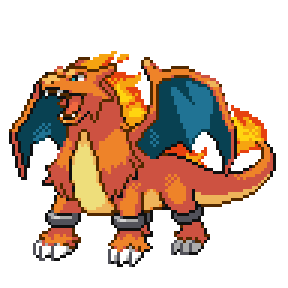
Its fiery breath is hot enough to melt even diamond. There was once a massive forest fire thought to be caused by Chartei.

It spits cursed flames that burn through pearls, diamonds, and even tungsten. Despite the flame's high recorded temperatures, Pokémon afflicted by burns writhe in agony for several hours instead of merely fainting.

Possessing experienced Charizard DNA, Charkoth knows to go inside of caverns when it is raining and tries to remember when it is time to eat. However, as it is still very slothful, it often spends most of its time sleeping.

Each Chareye protects a hoard of gems. Those who even come near its hoard are plagued with horrific dreams that somehow involve fire.
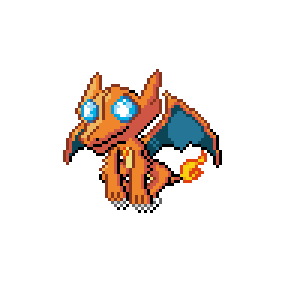
Staring into the spirals on Polibok's hood causes the viewer to fall into a trance. During this time, Polibok flees from or devours the one under its spell.

As Polivoir swims, its dress-like appendage undulates in a hypnotising manner, causing most potential predators to simply space out. Anything not affected may be repelled by the psychokinetic barrier Polivoir sets up around it.
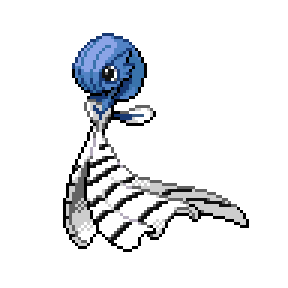
It is possible to see the muscles connected to Polieon's tongue seize through its semi-translucent stomach. When it sleeps, Polieon's tail and innards swirl back and forth like an undulating spiral.
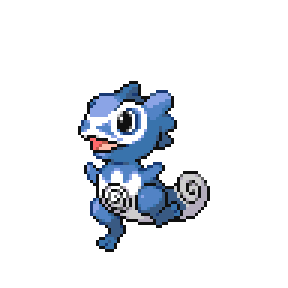
Polish disguises itself among plant life among shallow parts of the riverbank. The pink bulb on its head can emit poisonous spores.
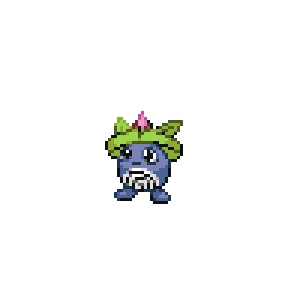
Polisian prefers to be covered in a layer of wet mud to keep itself nice, cool, and moist; this is done out of preference, rather than necessity. In addition, it also likes to dig in the mud to find buried and abandoned glittering objects.
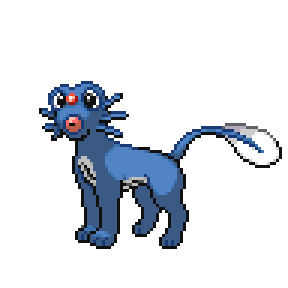
As Polichop's skin is slightly translucent, it's possible to see the muscles seize and flex as Polichop trains its body. It is most often found in mountain rivers.

The spiral-shaped patterns on Polivee's fur vary in appearance depending on the individual. Polivee sleeps extremely deeply; during this period, its organs undergo various changes to let it survive better in its environment.
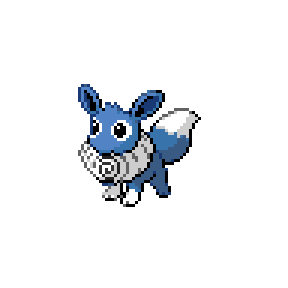
Although Polipie is unconfident and generally unreliable in Pokémon battles, it nevertheless trains incessantly during its waking hours, even during downpours and other harsh conditions.

Only Polipod's eyes and arms are mobile. As the Water-type grows larger and larger, it grows closer and closer to evolution. Although its shell is firm, its insides are soft and vulnerable to piercing blows.

Poliswine's powerful muscles allow it to climb steep rocky slopes and dig through tough terrain. Due to the raw amount of food needed for them to sustain themselves, they hibernate through parts of the cold season.

Poliswine's powerful muscles allow it to climb steep rocky slopes and dig through tough terrain. Due to the raw amount of food needed for them to sustain themselves, they hibernate through parts of the cold season.

It remains eerily still throughout most of the day, and will not fight back against anything that attacks while it rests. Unfortunately, if the head-like protrusion suffers critical damage, it loses its ability to regenerate its body parts forever.

For some reason, most poweful cameras cannot properly capture Abma's form; it always shows up as a blur on the image, even when it is sleeping still. Only specialized cameras developed by Silph Co. have managed to capture Abma's visage.

For some reason, most powerful cameras cannot properly capture Abma's form: it always shows up as a blur on the image, even when it is sleeping still. Only specialized cameras developed by Silph Co. have managed to capture Abma's visage.
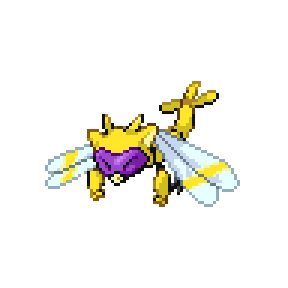
This is an extremely rare Pokémon to find in the wild due to its tendency to teleport away whenever someone else is in the area. The only confirmed sightings have been during times when it is sorting out or polishing smooth stones.

Abeon is a heavy sleeper; while sleeping, its epidermis changes color to match whatever is around it in order to camouflage itself. When awake, however, it struggles to change color if outside of battle.
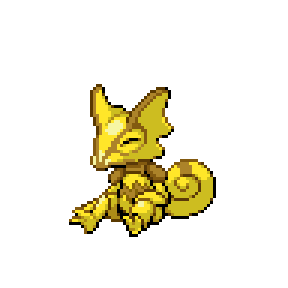
Abfairy's diet is still being studied, but most experts agree it somehow gets energy from nearby metals and rocks. Some suspect this is why Abfairy often carries its spoon.

It can telepathically detect foes even while sleeping. If it detects anyone nearby, it teleports far, far away. Trying to catch Abpod is seen as a rite of passage among some Psychics.
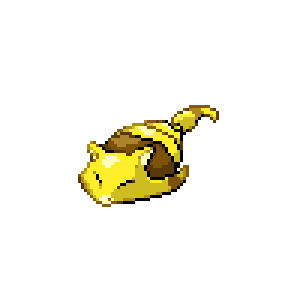
Abtle spends most of its time sleeping inside its shell. In fact, its body sleeps so deeply that it can safely spend several days sleeping underwater before coming up to breathe.

Abtle spends most of its time sleeping inside its shell. To practice its developing psychic powers, Abtle will telekinetically move around several fragile, self-produced bubbles without popping them.
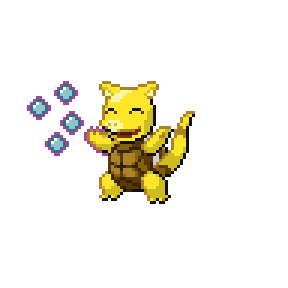
Thanks to its psychic powers and 360-degree vision, it is nearly impossible to sneak up on Kadama. Newly evolved Kadama that overuse their powers will cause nearby televisions to shatter.

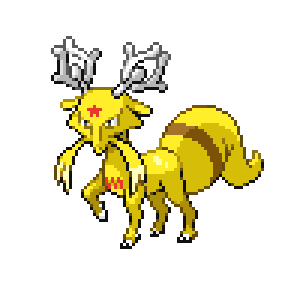
Kadatler's silky fur allows it to persist with relative comfort regardless of natural conditions as it is water-resistant and great at retaining heat. The source of its incredible psychic power lies in its antlers.
As Kadaeon matures, its camouflage abilities only improve. It will enter urban areas and mimic even complex shifting patterns, such as the static on old TVs. Only the red mark on its chest gives it away.
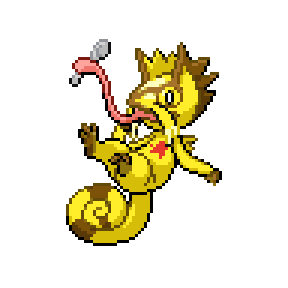
Kadatales can influence another's mind and body thanks to its mysterious powers. Rumors of other otherworldly abilities, such as cursing another into a hideous form, are very common. Kadatales appears to sustain itself by feasting on wayward spirits.

Kadatales can influence another's mind and body thanks to its mysterious powers. Rumors of other otherworldly abilities, such as cursing another into a hideous form, are very common. Kadatales appears to sustain itself by feasting on wayward spirits.
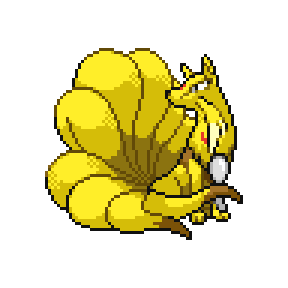
Kadatales can influence another's mind and body thanks to its mysterious powers. Rumors of other otherworldly abilities, such as cursing another into a hideous form, are very common. Kadatales appears to sustain itself by feasting on wayward spirits.

Kadamite naturally causes severe electromagnetic interference in its vicinity. It dislikes total silence as much as a loud ruckus, and its body relaxes the most when there is a soft hum in the area.

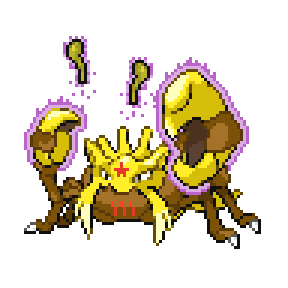
When its claws snap shut, great force is applied; whether directly through its body or through powerful psychic manipulation, something will be crushed. It seems to have a rivalry with Steel-Type Pokémon.
It has the ability to levitate itself and other things with its mind. Despite that, it tends to not use this ability and lives deep in the ocean. It occasionally rises from the water to study the world around it before vanishing once more.

Alarogue has trained to master mental acuity and balance, and will train further to grow physically stronger. It may evolve further when it chooses to specialize itself further in a particular martial art.
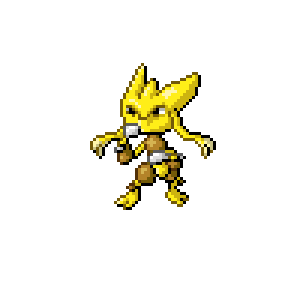
It is speculated that no wild Pokémon have naturally evolved into Alamega. As it possesses a weak physical countenance, it relies on its psychic abilities to fly.
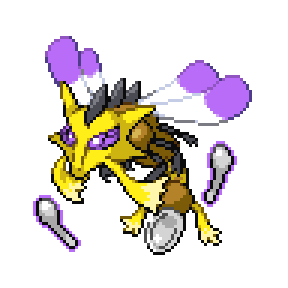
When Alatom possesses certain electronics, it displays the ability to communicate fluently and convey detailed and accurate information. Some scientists are worried about the ethics of using Alatom's intelligence in such a manner.
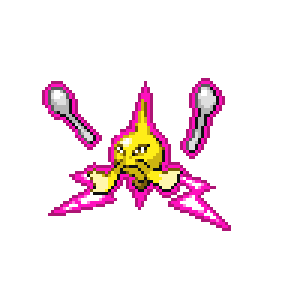
All Alaler eat just once a day, although individual diets may vary. It is possible to learn various traits about an Alaler just by minute differences in the appearance of its moustache, such as its age or region of birth.
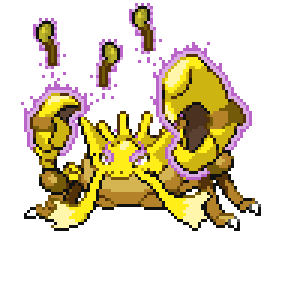
Matini's body is filled with powerful draconic energy, so it has difficulty staying still. Although extremely rare, it can be found swimming underwater.

Its body constantly flakes off keratin-based material. It trains tirelessly in the hopes it may one day evolve.
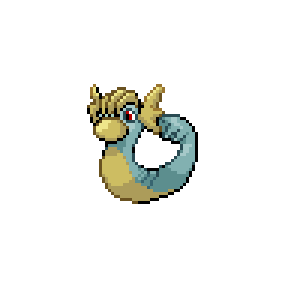
Mapy live together in herds in caverns. They are incredibly supportive and urge other members of the herd to train their hardest. Each one is strong enough to push a large boulder all on their own.

While it can stand for some time on its hind legs, it prefers to travel on all fours. Its fighting style includes many lunges, charges, and throws. A single whack from its trunk can obliterate almost any stone.

Madoof is extremely determined in whatever it pursues, including training. However, it is also a big eater: plump and bulky Madoof are extremely common.

Mapuff's size can vary quite a lot depending on the moment. When it trains, its cells release large amounts of air, but it also takes in a lot of air afterwards, too. It typically lives not too far away from urban areas.

A powerful body and hardworking attitude make Malett a common sight at construction sites. However, because it moves by tunneling underground, caution is needed to avoid weakening foundations.
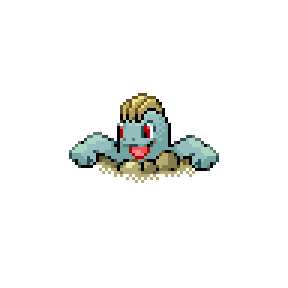
Maink has an extremely powerful spring-like tail that allows it to easily hop higher than even competitive high jumpers. However, it is surprisingly clumsy when it comes to tasks outside of strength and balance.
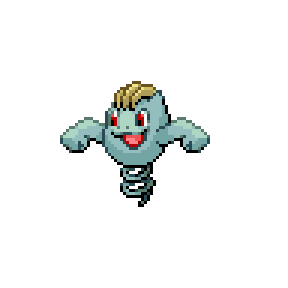
Maorb easily become overexcited, which causes their energy to explode dramatically outwards. By learning a variety of methods to assist with proper emotional self-regulation, Maorb can evolve further.

The rough, rock-like skin of a Malix requires a certain level of care in order to preserve Malix's endurance and speed. Which method is best, however, is hotly contested among Pokémon Trainers.
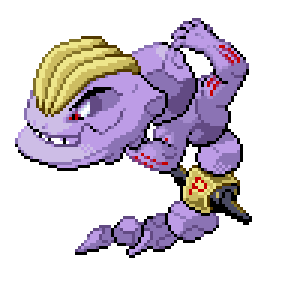
The milk of an in-training Matank is full of protein and excreted fat, but it's generally considered to taste terrible. A buck of its legs or a punch from its arms is said to send even a Tauros flying.
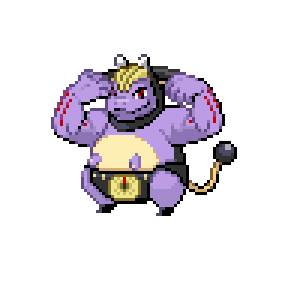
Malett's powerful arms allow it to shatter otherwise impenetrable stones and hurl predators far away. This allows Malett to continue digging wherever it pleases.

Makazam is a wise, intelligent, and dedicated Pokémon that is striving for greater power. It will travel across the world to learn various martial arts.

Sturdy, hard-working, and able to move through a variety of rugged terrain, Manix is popular with miners and hikers alike. It is constantly striving to improve its health, strength, and agility.
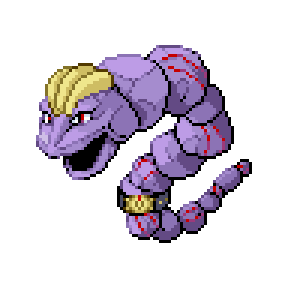
Maler's large pincer is composed of muscle, bone, and skin, and lacks a chitinous outer layer, so it cannot safely come off. It is very driven and eager in personality, so it isn't hard to train with proper direction.
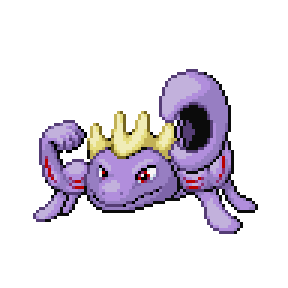
Mamie forces its foes close with psychic powers, and then pummels them with multiple sets of powerful arms. It has pride in the sheen of its jewel.

Compared to its reversed counterpart, Making is more patient and reflective. As a result, it makes an excellent teacher for martial artists.

It is always working out: it will jog while eating, do bicycle kicks in its sleep, and will even do push ups or crunches while being milked. It has prehensile tails that it also incorporates in workouts, such as upside-down sit ups.

It has a rugged and powerful body that gives Maqueen the courage to fight in almost any condition. It will fight wildly to protects its young, doing whatever it takes to make sure their foe never threatens them again.

Malucha is an acrobatic showboating fighter that loves an audience. Its performative nature is so ingrained into its brain that, even in sleep, Malucha will occasionally strike poses or flex its muscles.
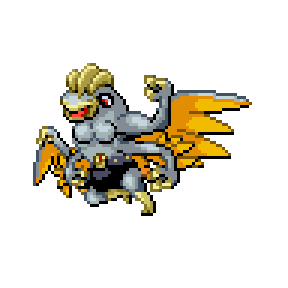
Matross coils its powerful body to constrict prey, zapping them with electricity if necessary. When it is not hunting, it is training, improving its flexibility, strength, and swimming abilities through various exercises.
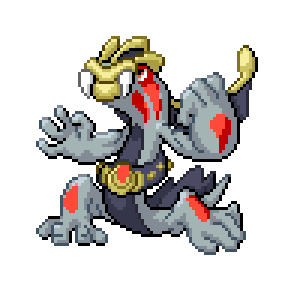
Mabra are warriors striving to strengthen their mental aptitude and abilities. Wild Mabra are unspeakably rare, but they can be seen meditating deep within caves.
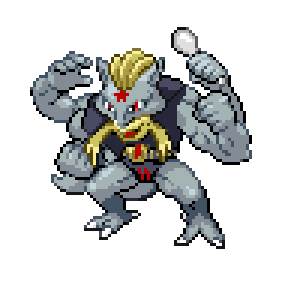
Terrifyingly powerful energy radiates from this Pokémon. Makazam who have completely mastered both the psychic and physical arts can flick a foe away for miles with just one finger.

In the wild, only Mabro that have caught and wrestled with a variety of aquatic Pokémon evolve into Mabro. As Mabro gains strength, it seems the being on its tail grows in power, too.

Although each head has a unique brain and personality that sometimes causes squabbles, this grants Madrio a powerful memory. It incorporates everything it has learned throughout its life into its overwhelming battling style.

Surprising flexibility allows Bellmie to move through twisting tunnels and tight spots relatively easily. They live in shallow waters, but only surface completely during some evenings.

Bellnx enjoys dancing under the tropical sunlight. When it dances with intense concentration, it can even float just slightly off the ground as if by magic.

They flutter around in the early morning, looking for nectar. When night comes, they rest in a secluded, hidden spot, such as bushes, and bury their feet into the ground, which act as roots.
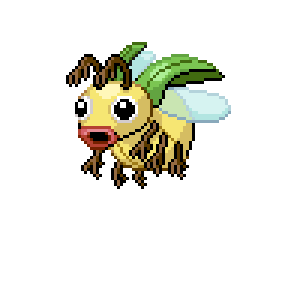
After resting in the sun and absorbing moisture through its roots, Bellossom habitually dances. While it dances, an odd-smelling ooze drips out of its mouth.

Bellras are often found where predator Pokémon lurk, feeding on leftover or otherwise inedible material. All parts of their body taste incredibly bitter, so they are generally safe from attack.

Bellras flourish in damp grassy areas. Bird Pokémon aiming to scoop them up as a snack will find they are incredibly bitter.

Bellmite becomes active in sunlight and dormant during cloudy or otherwise dark weather. However, it also moves all about during thunderstorms. Whenever Bellmite is awake, touching it results in feeling a slight buzz.

Squirtpiny spend much of their time collecting smooth stones and pretty shells that wash up on shorelines. Their hydrodynamic shell and light weight allows them to easily float on top of the water.

Squirtpiny spend much of their time collecting smooth stones and pretty shells that wash up on shorelines. Their hydrodynamic shell and light weight allow them to easily float on top of the water.

Squirtpin has a gentle and playful personality; it will frolic among flowers and water them afterwards. It keeps its teeth healthy by chewing on the shells of nuts and, rarely, the bark of trees.
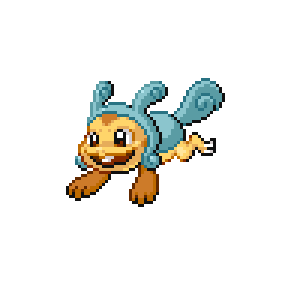
Squirtitty enjoys bubbles, humid rooms, and gently-moving warm water, but it dislikes being in other aqueous environments or sprayed with sudden or strong rushes of water. It curls inside its shell to sleep, with only its ears and tail sticking out.
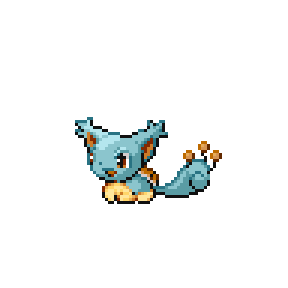
Weepinx's lips are constantly coated with regurgitative and acidic digestive fluid. It may blow a kiss to spread toxic spores everywhere.
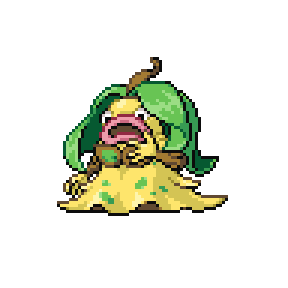
Weepinchic lives in the world's hottest jungles. Their stomachs are filled with a spicy, acidic fluid that they can regurgitate onto a foe in an emergency. Most Weepinchic can't even detect spicy flavors.
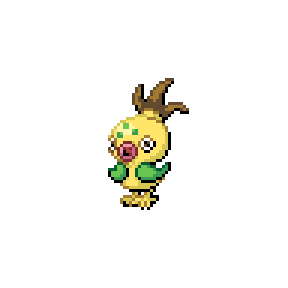
The liquid dripping from its orifices may smell pleasant, but it is actually a painful poison. The smell alone can drift those around it into slumber.
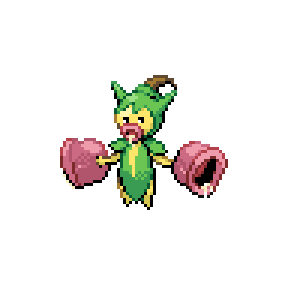
Weepindude's bulging eyes and slack-jawed visage has allowed Weepindude's image to become popular on online circles. Its body is rock hard; while it is able to move freely, that infamous expression is its default.

Victreeon thrives in the bright sun, but it prefers to get most of its energy by siphoning the physical and mental energy of other Pokémon. Whenever possible, it will deposit Pokémon into its mouth.
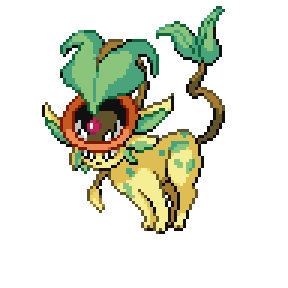
Many a swimmer's day was ruined thanks to Tentachou's extremely painful sting. Each sting will result in an unsightly rash that requires first aid in order to properly heal. They are easier to see at night, thanks to the way their body glows.

Tentagull can both fly and swim with general ease. It is considered tasty prey by large sea-dwelling and bird Pokémon. At night, the red protrusions on its body glow in the dark.
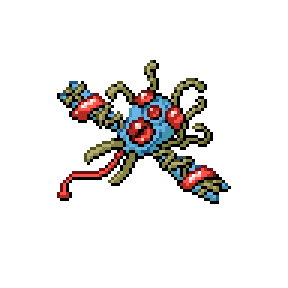
Tentakey's body can emit a poison that numbs pain and soreness. Tentakey itself can be affected by this; the effect comes in handy with all the fights that Tentakey picks when it is upset.
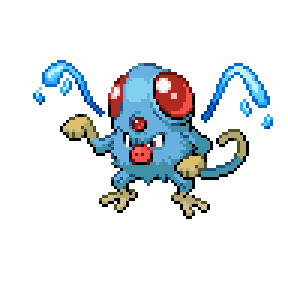
Tentader's brilliant red shell serves two purposes: one is to give it defense against predators, and the other is to help shut water inside the shell at lower tides. Without water, Tentader shrivels up.
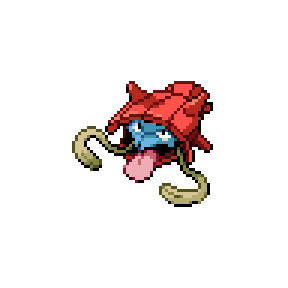
Tentasea have not mastered their ability to secrete poison at will, and may accidentally discharge toxins around them for no discernable reason at all.

Tentamie can send out energy waves that can stun people and Pokémon. Their population fluctuates dramatically: although they can reproduce anywhere in large amounts, they overfeed, causing many species, including themselves, to rapidly decline.

Geosire's health can be determined through the texture of its skin. Geosire that are too smooth have not been eating enough, while Geosire that are too craggy may be sick or have a nutritional imbalance.

Geoscoon becomes extremely aggressive and unrelenting if provoked, but otherwise does not bother anyone else. It merely eats dirt while waiting for evolution.
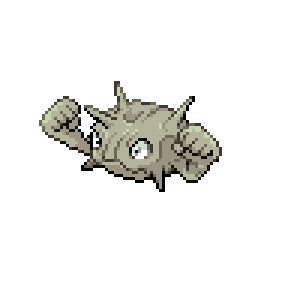
Most of what acts as Graveuna's motor muscles are weak and underdeveloped, so it generally stays still until it evolves further. If it is being attacked, it may explode as a last resort. During the summer, its rocks may take on an orange sheen.

Complex social systems dictate the ranking of Gravedrill within in a group. Their stingers can drill through stone.

The gluttonous Gravesire rides down rapids with its mouth open to devour minerals, and, rarely, small fish Pokémon that wander too close. When it is tired out, it rests near the riverbank, out in the sun.

Gravecargo will only move around outside if it has absorbed enough warmth, either from a nearby volcano or from the sun. It searches for stones to eat; the inside of its body is so hot that these stones melt into a liquid.

Graveoom spews foul-smelling spores and dust wherever it goes. It is unclear if this action is entirely conscious or not, but Graveoom have been observed purposely firing dust and spores into the eyes of aggressors.
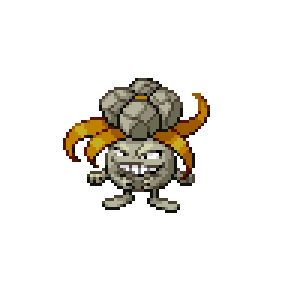
Typically, Gravenix's arms are vestigial in nature and serve no clear function. However, some Gravenix have been witnessed using them to hurl large boulders at foes.
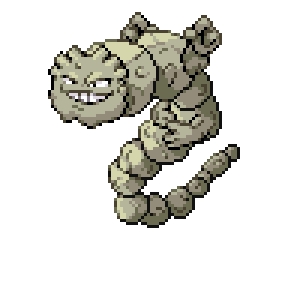
It is a stoic Pokémon that trains its body against all kinds of attacks. When an opponent strikes, Gochan doesn't flinch and retaliates with a devastating counterpunch.
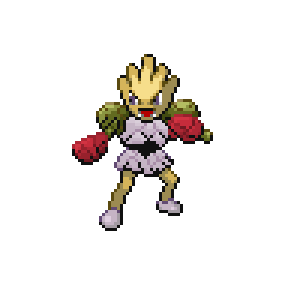
To defend itself, a wild Golix will coil up tightly and build up pressure within its body. After biding its time, its outer mineral layer explodes, causing sharp shrapnel to cut deeply into any nearby foe.
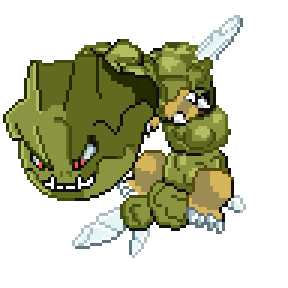
Gotank live in craggy areas. The substance they produce in their udders is not suitable for human consumption. Typically, the largest Gotank are the ones that are the oldest.

Golie only live in the highest of mountains. Their wild, pre-evolved forms need to experience harsh conditions to evolve into Golie.

Ponyswine roll around in mud to cool off and remove parasites. While many Ponyswine hate being cleaned or rinsed off afterwards, they must, or they may develop infections, especially in their lower torso.

It prefers to live in long stretches of terrain, moving north constantly until it tires. Only then will Ponypass wander around to devour nearby dirt and plant life.
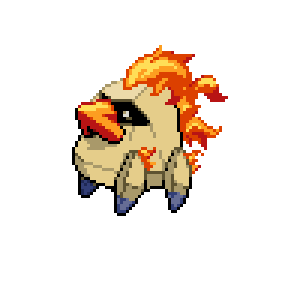
Rapimeleon prowls the savanna with one purpose: the thrill of competition. Boasting all the while, it dares and taunts and mocks all sorts of Pokémon just to feel the enjoyment of a good battle or any other challenge.

Slowbull chews lazily on whatever is in front of it: fruits, rocks, and even sleeping Pokémon. Oddly, those who are bitten actually have their external wounds healed after a few minutes.
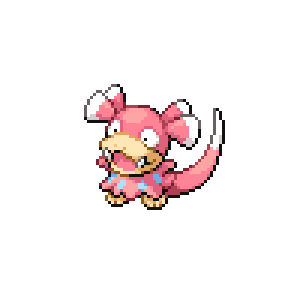
Each section of their shells produces a slightly different note when hit; the sound of Warladin training via tackles releases chords of noise. Supposedly, they have a delicious flavor if steamed, but due to their rarity, hunting them is illegal.
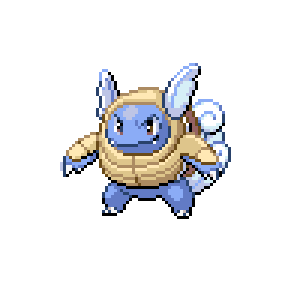
Its fluffy tail is considered a symbol of childlike whimsy and a sign for a happy future. Although charms modeled after its tail are sold, ones made of actual Waritty fur sell for exorbitant prices in underground circles.
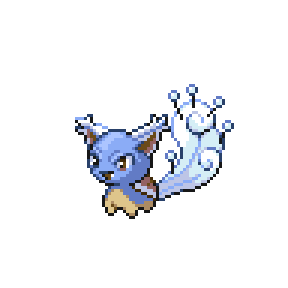
Shellder has ingrained itself in Slowcor's DNA and can no longer fall off. Its consciousness has split itself between Slowcor's claws and tail. The tail is not considered delicious by connoisseurs.

Slowsaur prefers to rest on the edge of sunny shorelines. The Shellder ensures Slowsaur can use neurotoxins to attack foes.

Slowplume can emit spores that cause extreme drowsiness. Excess poison injected from the fused Shellder is excreted from Slowplume's mouth.
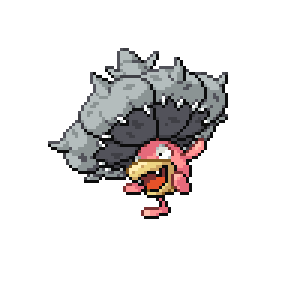
It is unclear how being fused benefits Slowpoke. It is still slow and dull-witted, and, if unfused, both individual Pokémon do not show any substantial signs of having benefited from the other, either.

Steel-Type Pokémon seem to gather around Magnedum's vicinity, but whether Magnedum is consciously using magnetism and electromagnetic waves for this to happen or if this is some unexplored quirk of Pokémon Fusion has yet to be determined.

Whenever it is angry, Magnemeleon's magnetic powers go haywire. It first either completely burns or liquifies the food it is going to eat before consumption.

Each horn of the Shellder has either a positive or a negative charge, but even the strongest magnet can't get the Shellder off of Magneking. This Pokémon is often seen staring at nothing in particular.

It makes delicious meals that it shares with others, but it never uses its own leek. Farsey makes a good meal when cooked, but this is frowned upon.

Farnite can rarely be found sleeping high in the sky, wings flapping on instinct. Perhaps due to its strong body, it sleeps extremely deeply with complete relaxation.

Farhoot is highly intelligent and can process even minor verbal details, following long lists of conditional instructions. When it twirls its leek idly, it is actually paying attention more so than usual.

The leeks on Fartei's back apparently have a wonderful flavor that perfectly complements spicy curries. Attempting to harvest them will quickly result in being ferociously attacked, even if done while Fartei is asleep.
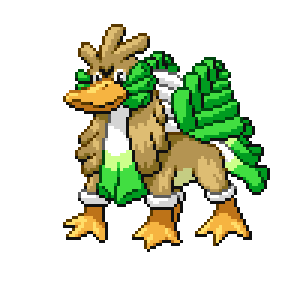
Farplup's sweet and fatty flesh is desired by both people and Pokémon, so they live in self-imposed seclusion. A swing from its leek can shatter boulders.

It battles with a sharpened leek, which Farduck controls with its mind. If the leek is broken, it loses all motivation to continue battling.

Farchop has the habit of serendipitously showing up whenever physical labor is urgently needed somewhere, such as when a farmhand is sick. Once it has finished helping, it may accept a snack, but it will then return to its home afterwards.

The parts that appear to be plants are actually powerful magnets. No one knows what Farmite's diet consists of.

Farton's leeks have roots that extend inside the various segments of its body and cannot be pulled out without potentially injuring Farton. It can fire electricity from the central hole between its three segments.

Despite only having one head, Dorina has two hearts. It can easily run at high speeds, rub their poisonous spines up against Grass-type Pokémon trying to escape, and wait for them to collapse.
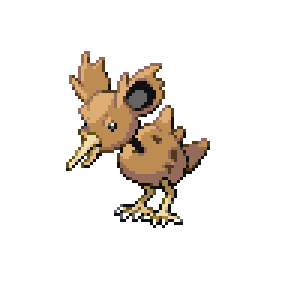
Dolie can jump surprisingly long distances. When both heads tuck into the shell, they can exhale freezing breath that can turn lakes solid.

Their feathers are quite fluffy, and only get more voluminous as they grow. Donat defend themselves and hunt prey with their long beak; they have a preferred diet of small Bug-types.
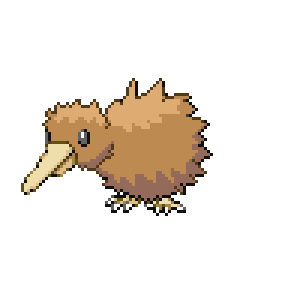
Dochop eats meals high in protein and creates the most comfortable nest it can, all to prepare itself for evolution. If a Trainer's Dochop is behaving unlike its usual self, it may be about to evolve.
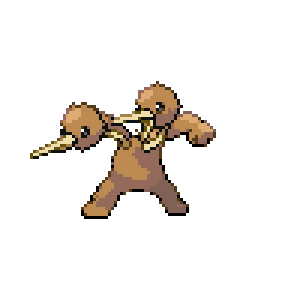
Dochoke train in wild, unpredictable bursts - flexing their limbs, bending their knees, and jumping here and there. These sudden bouts of activity are considered humorous and lovable by many Trainers.

Dotu cannot fly very well, so it relies on hopping long distances at great speed. However, this requires great coordination between each head, as they possess individual brains. Therefore, newly evolved Dotu are clumsy.
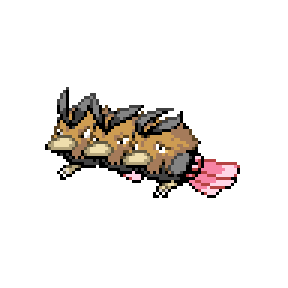
The location and number of Dogrowth's heads vary based on the position and overall health of its vines upon evolution. In the case of direct fusion between a Tangrowth and Dodrio, three to five heads are the norm.
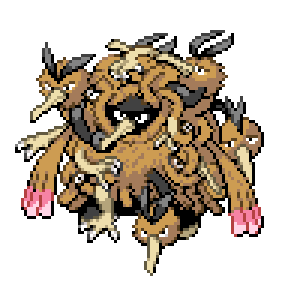
Every head of Doeon may have a different color or fur pattern at once. Even the color of their tongues may differ from one another.

It slowly levitates in the sky. When it spots prey, its three necks stretch out to nearly double their usual length and nab prey with their beaks. Oddly, Dolie will then use the beak on its hard shell to devour them.

Donat can detect even small changes in air pressure and wind strength due to the antennae it possesses. Its sudden and terrifying uproar of a cry during the dead of night has been well documented.
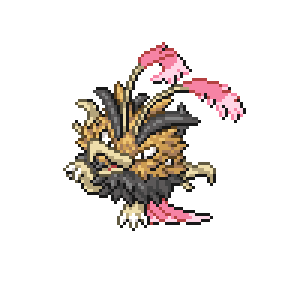
This Pokémon is both predator and prey: while its horn allows it to easily overwhelm smaller lifeforms, larger and fiercer hunters of the north, such as Walrein, find its fatty flesh most delectable.

This Pokémon is both predator and prey. Its horn allows it to easily overwhelm smaller lifeforms, but larger hunters of the north, such as Walrein, find its fatty flesh especially delectable.

Seedour is a fatty, carnivorous, and amphibious mammal that is most active during the cold season. While unpredictable in the wild, they are generally very affectionate with their own Pokémon Trainer.
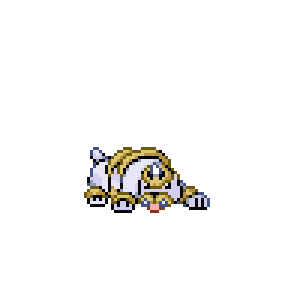
Its fatty and hefty body requires tons of nutrients, so it recklessly hunts almost any Pokémon it comes across. Being bitten by a Seebat can cause severe frostbite.
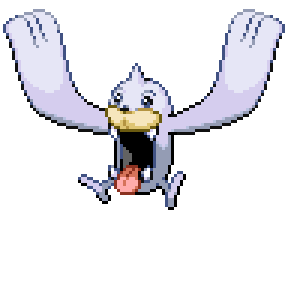
A lazy and slow-moving Pokémon that prefers to rest on cool shorelines. It only hunts when it becomes very hungry, and thus, motivated.

Seeton have an unusual diet of both electricity and fatty fish, so they tend to gather at fishing towns. Their chorus of joyous yelping tend to be beloved by tourists and be reviled by the local populace.

Excess nutrients are stored in Dewchan's tail. However, too much will cause the tail to expand, becoming unwieldy and throwing off Dewchan's speed and sense of balance. Therefore, Dewchan is very careful about its diet.

Whenever they are happy, their pure-white fur begins to glow. They are most active in the wintertime and tend to sleep during the summer.

While also being incredibly powerful swimmers that can change direction in the blink of an eye, Dewtop displays surprisingly agility on land as well. When they swim or spin in circles, icicles fly everywhere.

The blubbery and sweet tail of Dewpoke is a melt-in-your-mouth delicacy. However, as Dewpoke needs it to swim, it takes even longer to grow back compared to Slowpoke, so cutting it off is illegal.
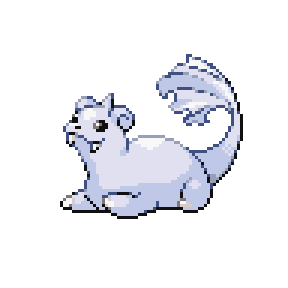
Gripie grows rapidly in size as it eats more and more decomposing material. It isn't a very good climber, so it has to stay on the forest floor. Its stench means it's easy to track, too.
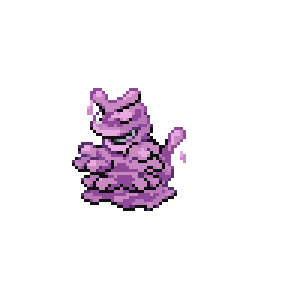
Grigma's body is constantly bubbling and oozing due to the high levels of heat and energy it contains. Grigma constantly smells of burning coal and occasionally burps a black smog.
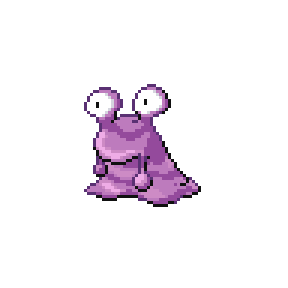
Grino thrives in dark, damp, and moldy environments. It licks and bites anything it desires, with its amorphous body and immunity to poisons keeping it from harm.
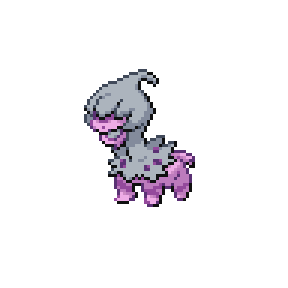
Griamo are most often found in a complex city's sewer system. Although their toxic bodies keep them safe from predators, they generally do not live long lives.
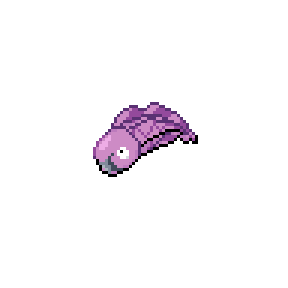
Grisprout roots itself near other plants and absorbs any toxins in the soil as sustenance, helping the nearby plants grow. However, in areas that are uncontaminated, Grisprout may be forced to sap energy from the other plants directly to survive.
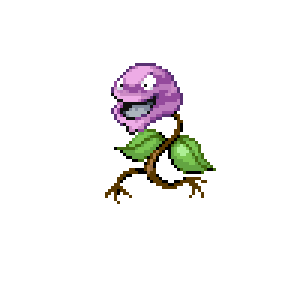
Griler prefers to rub its body on anything nearby, from piles of trash to stony or slick walls. As a result, each Griler may differ in size and shape as they absorb matter or sand down their rocky core.
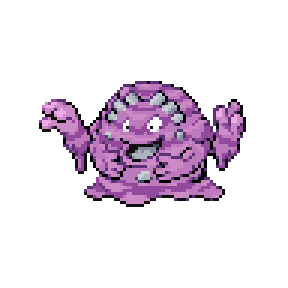
As it usually lives in tropical areas, Mutress tends to close itself up into its shell when in freezing conditions. X-rays have been ineffective at determining whether Mutress has any internal organs or not.

It is a rare Pokémon most commonly found in deep canyons. It is thought that several hiking trails are kept clean from litter thanks to Mufairy feasting on leftover garbage during moonlit nights.
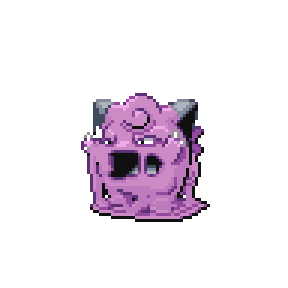
Mutly sustains itself by taking in what would typically be dangerous particles in the air. Outside of cities, they can also be found by active volcanoes, absorbing unhygienic soot and ash.

Blastbird can adjust the temperature of the water stored in its body. From its cannons may come snowballs, icicles, hot steam, or blasts of fluid.
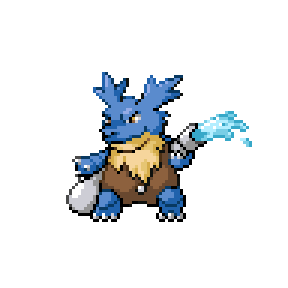
A valiant and rare woodland Pokémon that dwells near rivers, Blastnaught can fire accurate pressurized blasts of water that could easily pierce the hull of a ship. It selflessly takes blows meant for other Pokémon, even strangers.
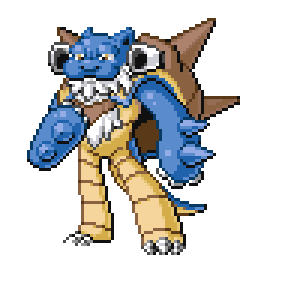
Blastster lives similarly to Blastoise: its powerful shell allows for great protection, and the cannon allows for overwhelming offense. However, Blastster is found far more often by the sea than it is other bodies of water.

Although the bottom of its body is soft and tender, the top is as hard as stone. If it becomes both beached on its back and becomes unable to move from its spot, it licks its squishy half to paint on a mucus that helps it retain moisture.
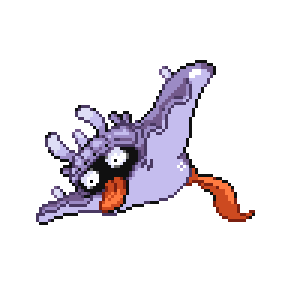
Shelldude lives in marine tunnels. It has a specialized biological system that limits and filters its salt intake.
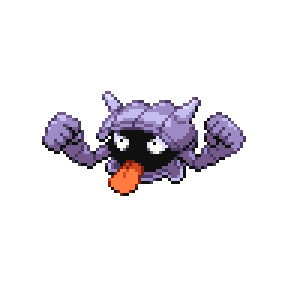
Shelldude lives in marine tunnels. It has a specialized biological system that limits and filters its salt intake.
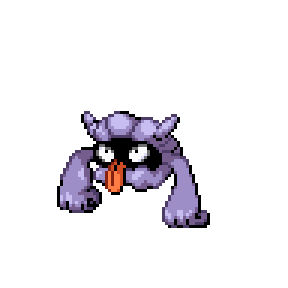
An elusive Pokémon that is said to float onto land on the winter winds. It occasionally spits out small flecks of salt that its body cannot digest.

Fishermen call Cloydra the "Dragon of Warfare". It hides behind a powerful shell, only opening for the briefest of moments to fire a shot in the opponent's direction, before retreating back under cover.

Sometimes, Cloyfeon is found underneath the piers of port towns, resting until the coast is clear; when no one is around, it will surface above water and bask in the sun.
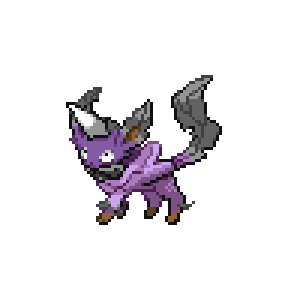
Cloywhirl's smooth-looking body is merely a facade; opponents who attempt to bite it may even break their teeth! While it cannot move forward in a straight line, it moves with surprising agility, especially in moister conditions.
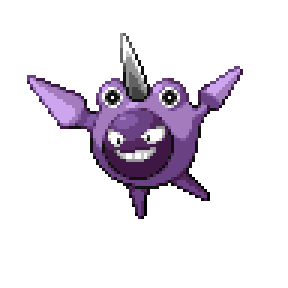
Wild Gasown only show themselves in certain locations and at certain times of the day. To spot them in other conditions, specialized equipment is necessary. Typically, they are intangible to human touch.

Gasdoof is strictly nocturnal and typically lives in secluded tributaries. It has a singular goal: create dams ad infinitum. When a dam begins to cause more harm than good, it takes it down before starting again elsewhere.

Gaspuff's amorphous body allows it to slip into areas with even only microscopic cracks as an entry point. It is most active during the new moon and plays pranks on people.

Gaslu needs either steady winds or no winds at all in order to stay in place. It loves playing tricks with people and other Pokémon.
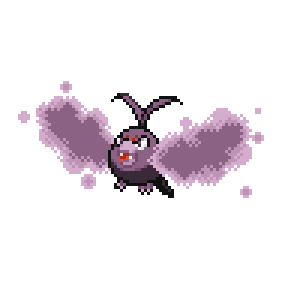
When there is an accident in a mining shaft, some say a Gastrio is born. Wild Gastrio dislike intruders and perform harmless pranks and dangerous stunts to make sure none invade the desolate place they call home.

When there is an accident in a mining shaft, some say a Gastrio is born. Wild Gastrio dislike intruders and perform harmless pranks and dangerous stunts to make sure none invade the desolate place they call home.
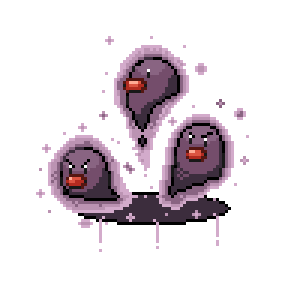
Its body is composed almost entirely of gas, and it can travel almost anywhere, even deep underground. However, it loathes the light and dislikes being seen, so it tends to stay in one area anyway.
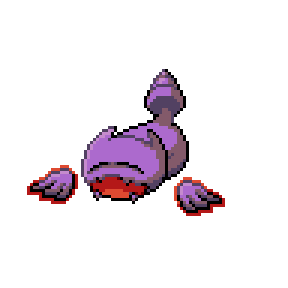
In several cultures, there is a superstition that believes Haungle travels around the world to sap creativity from artists to the point they give in to despair. No matter the weather conditions, the paint-like fluid on its tail is runny yet cold.

Many find wild Haundoof unsettling as it rarely moves; it merely stares off into the distance until morning comes, where it fades away until the next night. It was recorded once that, when one vanished for the day, it exploded into toxic gas.

They work in groups of three to find a target and drain their energy. When three Haunlett become very close, it is thought an evolution will occur.
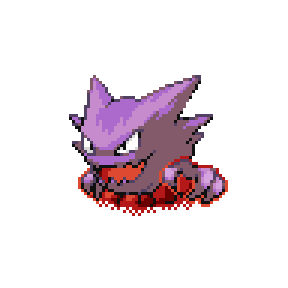
They work in groups of three to find a target and drain their energy. When three Haunlett become very close, it is thought an evolution will occur.

They are surprisingly stealthy and quiet diggers and dig complex tunnels right under experienced Hikers without them knowing. Only by learning new and unusual digging techniques can Hauntrio evolve further.
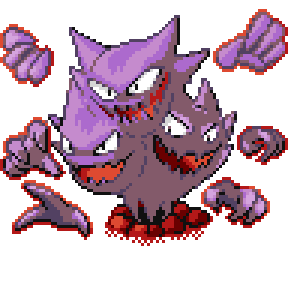
Haunmite can fire off electromagnetic energy that causes drowsiness and irritation. Some have speculated that wild Haunmite may have come from another dimension: their natural diet is still unknown.
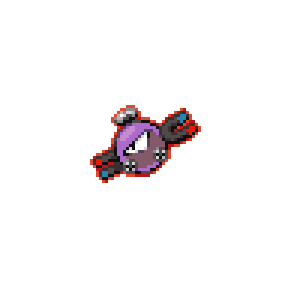
The gravestones are actually a part of Genwoodo: the purple body is made of a nearly identical rocky material. It tends to stay still for most of the day, but it is extremely active on nights with a new moon.

When you hear whispers beneath you, Gensparce may be there. It is waiting for prey to fall into a nearby pit, where it will feast on their soul.

It has been said that Gengle can see out of any painting it has created in its lifetime like another set of eyes. At the very least, it has a supernatural link with them: it becomes upset if one of its paintings is marred, even if it is miles away.

Some suspect Genvire comes from another realm, and must use energy to sustain itself in our world. If it does not occasionally devour sources of electricity, Genvire begins to become translucent and fade from the naked eye with visible panic.

Some suspect Genvire comes from another realm, and must use energy to sustain itself in our world. If it does not occasionally devour sources of electricity, Genvire begins to become translucent and fade from the naked eye with visible panic.
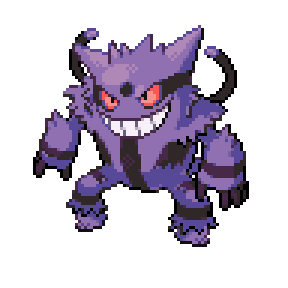
Genrino was featured in a recent commercial. Interestingly, it was two rival Trainers who fused their Pokémon.
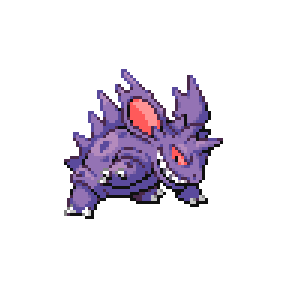
Genrino was featured in a recent commercial. Interestingly, it was two rival Trainers who fused their Pokémon.
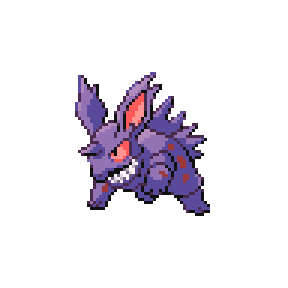
Genking fights viciously and without restraint. It aims to break a foe's spirit first, then their body.

Genking fights viciously and without restraint. It aims to break a foe's spirit first, then their body.

Genking fights viciously and without restraint. It aims to break a foe's spirit first, then their body.

As wild Gentrio are extremely rare, other wild Diglett fusions look up to them as a leader and protector. While Diglett builds tunnels, Gentrio defends them; if the ground underneath you appears to wither and drain of all color, Gentrio is near.

Geno can enter its prey's shadow to stalk them. Sometimes, it stalks them so long that it falls asleep in their shadow. When it decides on a target to eat the dreams of, the effigy it carries changes its appearance into that of the target.

Research suggests that Onaw has a specialized organ that allows it to intuitively know the patterns of the tide levels in the area, even if it is in a completely unfamiliar location.
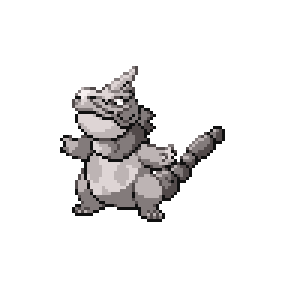
Onowl flies in the sky and whips large boulders with its tail so the boulders break into pieces it can eat. Its body is very flexible, and many of its larger limbs can rotate over 270 degrees.
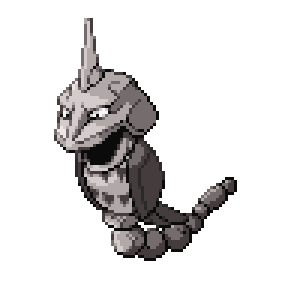
Ontu uses psychic powers to control other Pokémon to chisel and polish its body to its preferred appearance. Afterwards, it will teleport the ones it controlled to wherever they please in thanks.
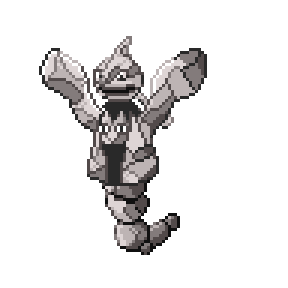
Oniclus have a special magnetic core inside their head that attracts other Oniclus. When several Oniclus gather, their individual power multiplies until they part ways.

Onter digs deep tunnels that other Pokémon often get lost in. Once its prey is all alone, it saps them of their life energy.
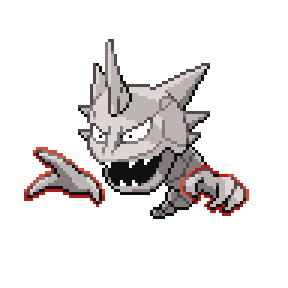
Drowuna cannot move very much on its own, as it has cocooned itself to prepare for evolution. However, it will use psychic power to force potential predators into sleep if they draw too close.

Instead of creating a nest of its own, Drowdrill steals the nests of others. It creates and spreads a powder that causes mild skin irritation to deter others from entering its territory.
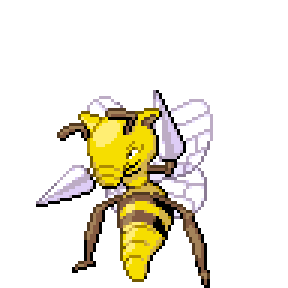
It eats small Bug-type Pokémon such as Weedle. Its trunk is prehensile and allows it to grip small objects.

The longer Drowowl focuses, the larger its mist-like crests grow, and the sleepier nearby Pokémon feel. Smaller Pokémon that fall unconscious around it are swept back up to Drowowl's nest, safe and sound, but with their dreams devoured.

Their powerful trunks often leak a substance similar to the Dream Mist that the Unova-native Munna emits. The color of this mist varies depending on what Drowphan have recently eaten.

Those who inhale the spores that Drowish releases feel lethargic and sick. In addition to getting energy from the sun, Drowish also has the ability to eat the dreams of those nearby.
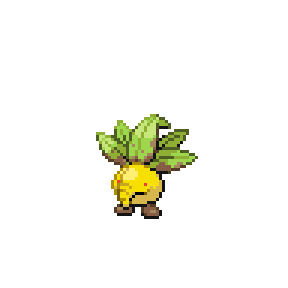
Inhaling the pink mist that comes out from Drownine's body causes one to fall into a dreamlike trance. Its fur triggers allergic reactions in many people.

The honey it produces is a biological byproduct from when Hypdrill eats too many dreams. It can make even the most alert foes drowsy with a jolt of psychic energy. Otherwise, it can defend itself with poisonous stingers.

Hypchu lures young children away from their parents through moves such as Sweet Kiss, its hypnotic abilities, and its outwardly cute and playful demeanor. It tries to play with those that it has spirited away for as long as they can.
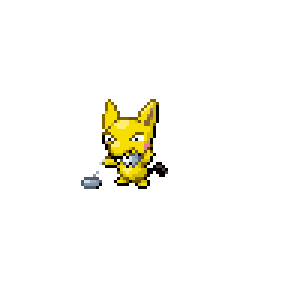
Their dances are literally hypnotic and can throw even those with hardened wills into a trance. If many wild Hypossom are in one place and create a pack, they begin systematically attacking other nearby Grass-types and form a distinct territory.

Hypkrow prowls during the night, looking for a fresh meal of another's dreams. Its bright, feathered coat causes many to look at it, and, thus, the hypnotic pendulum they carry, causing the beholders to fall into a deep sleep.
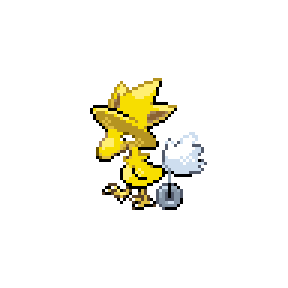
Hypring has the ability to smell the dreams of even the most faraway of people. Cities, mountains, forests: it will trek through all of these even in the harshest of blizzards to feed on the most aromatic dreams.

When startled, it may rattle its tail, causing the pendulum-like growth to shift back and forth. Experienced Hypans do this on purpose to make prey, or predators, feel drowsy.

If Hypchu rubs its cheeks against you, you will feel compelled to listen to its commands for around 15 minutes. It makes nests in areas with particularly tall grass.
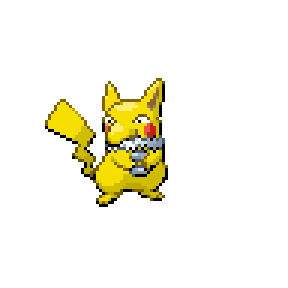
It may first appear in your nightmares, then in the corners of your vision. It will wait for you to stop believing in what you see before it approaches and hypnotizes you into a deep, deep sleep.

For some reason, it uses psychic energy to act like it is puppeteering itself around. Hypet is used in hospitals, as it can put those in need of rest to sleep and feed on their negative emotions, allowing patients to wake up refreshed.

Hypish appears to get most of its energy from synthesizing the light of the full moon. It dislikes aggression: directly looking at a Hypish or bumping into one will cause it to attack relentlessly until its target is unconscious.
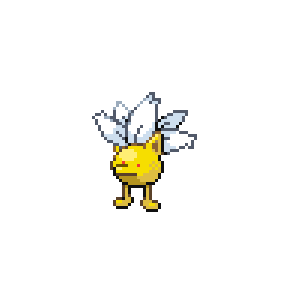
The powerful and nauseating scent that Hypoom produces is so strong that it can cause unconsciousness. Hypoom will eat the dreams of anyone who passes out around it.

There is a distinct, quiet, metallic noise wherever Hyplume is frolicking thanks to its metallic petals. Those who listen to it for too long fall asleep. It is carefree and nonaggressive, preferring instead to poison competition in their sleep.

Hypruff are oddly entranced by objects that swing back and forth like a pendulum. When they wag their tail, people nearby also become entranced by whatever has caught Hypruff's attention.

Hyproc can be picky about their Trainers and demand a lot of attention to prevent troublesome behavior. Despite that, they are known to be extremely affectionate. There are a group of Poké Maniacs who compete in Hyproc grooming competitions.
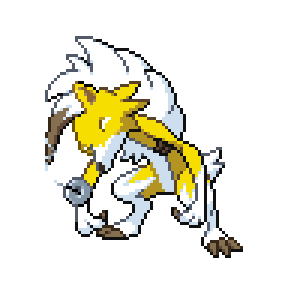
Although it never means any harm by this action, Hyplithe often hypnotizes others around into playing with it for hours on end using its psychic powers. It loves to sleep curled up by those who sleep deeply.

Since Pokémon Fusion has become more widespread, more and more fishing lines have been cut thanks to Krabsea. Their hefty pincers prevent fast movement, so they often drift with the current.
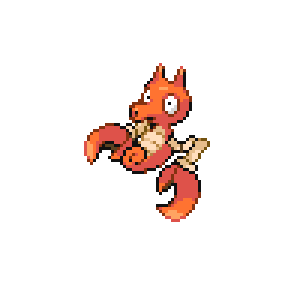
Krabdeen is popular among young fishers due to their vibrant colors and moderate difficulty to catch. Among these circles, hooking up Krabdeen is seen as the symbol of a new level in skill. Each Krabdeen varies wildly in personality.
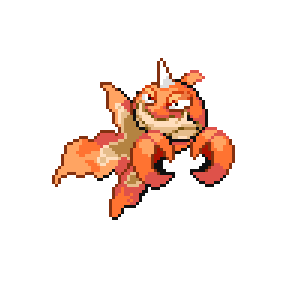
Krabfarig's antennae allow it to detect even faraway threats well in advance. The eye on its tail has incredible vision and will snap at anything that shows even the slightest of movements.
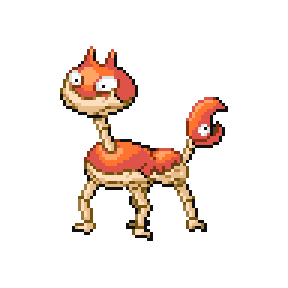
Krabfarig can pull much of its limbs inside its body, causing it to appear much smaller than it actually is. Its antennae allow Krabfarig to detect even faraway threats well in advance.

Krabran have been observed forming complex rivalries and social cliques with other Krabran. Typically, the ones with the biggest pincer-ears are the most popular.
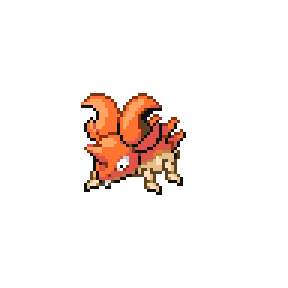
Kingsea keeps its singular pincer in great condition; if it falls off, Kingsea will fall into a deep depression. The pincer is known for being extremely flavorful, so Kingsea is often targeted by poachers.
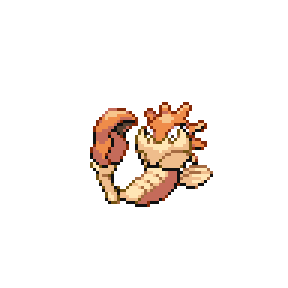
Kingdra are somewhat territorial and live together in groups. They cut through fishing lines and nets, so they are difficult to catch. Their pincers will begin moving again for a short time if cooked.
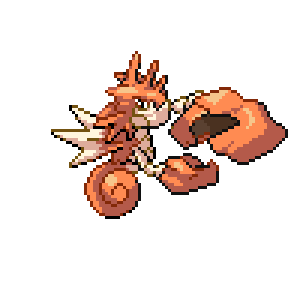
They tend to prefer swimming in high-current estuaries, hunting down small and weak Water-type Pokémon. In the winter, Kingking tend to flee to the ocean.
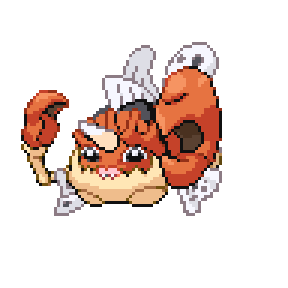
It is a carnivorous Pokémon that hunts using powerful pincers. Although aquatic, it is a clumsy swimmer. It seems to be able to communicate with other Pokémon by firing a series of electrical impulses from its maw.
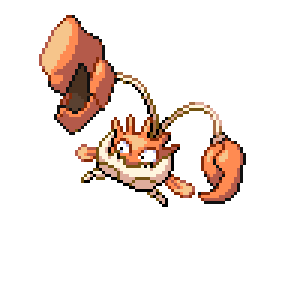
The bay-dwelling POKENSME emits alkaline bubbles from holes on its back. It's suspected that this is how Kingtle filters out some toxins it takes in.
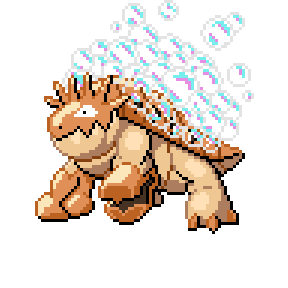
The pattern that appears to be briefs on its body is actually where its shell lacks protein the most. Particularly healthy Kingchoke may have different colored markings in its midsection.