235 pokedex entries by imaginita
Rhyew appears to be deceptively intelligent. It will drill holes seemingly at random, only for the finished product to be masterfully complex.

Seaew is an exceedingly graceful dancer, using its long fins and psychically-controlled bubbles to enhance its performance. If a Seaew is present during Seaking spawning season, all the other Seaking will gather around it.

The mushroom on its back gives off a low-level electric field at all times, which is sometimes stronger near the antennae-like structures. Scientists theorize that Electasect use these electric pulses to communicate.

It wraps its thorned tail around foes to pin them in place, then uses the pincers on its head to grab and toss them. These pincers are enhanced by psychic power, allowing Pinew to throw its victims with astonishing force.
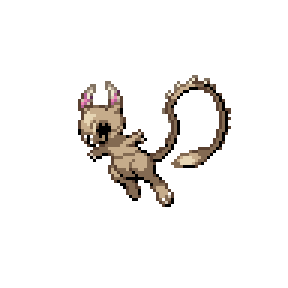
Eeolu is always on the move, using its aura to gain insights about the people, Pokémon, and environment around it. Whatever information it gathers affects how it evolves.
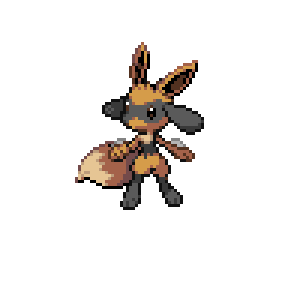
Snorwear is generally a docile Pokémon, so it happily allows children to play with it. However, parents should always bring an offering of food to make sure it doesn't grow too hungry.

There are many stories of this Pokémon appearing to travellers lost in the snow and freezing them in place until the storm passes. It is said to have a ball of mystical ice at its core, allowing it to summon snowstorms at will.
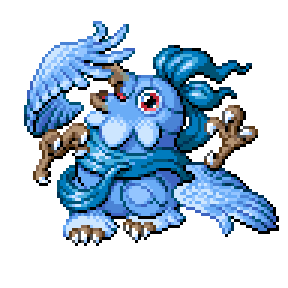
It can discharge energy through the crystal on its chest. Though the flashing and crackling produced is intimidating, it isn't actually harmful, and simply shows the Dragobull is feeling playful.

Mewsharp is a vicious, merciless Pokémon, as it thinks only of defeating its foes and maintaining its status at the head of a pack. Its cold, glinting blades strike fear into its enemy and ensure no one even thinks of double-crossing it.
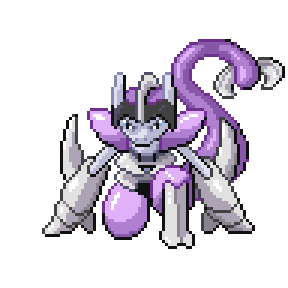
Mewther's limbs appear to be detached from its body. Scientists have not been able to confirm whether this is truly the case, or merely an illusion created by Mewther's blindingly fast speed and ability to turn invisible.
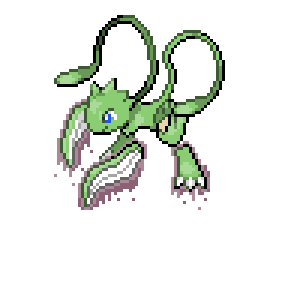
Mewloom is always hovering in the air. If it rains, Mewloom will surround itself with a psychic bubble to stay dry. When the rain ends, the psychic residue makes everything smell like Mewloom's flower.

Mewpy bends psychic energy around its ears to increase their surface area and flaps them to help cool itself down in the heat. If it makes the psychic fans too big, the air pressure may lift it off the ground and Mewpy will start levitating.

Mewts can sense people's dispositions and will only let itself be visible to those with a genuine desire to see it and pure intentions in their hearts. It remains invisible in the presence of anybody else.

Mewlia is highly intelligent and enjoys learning new moves. It is also a skilled tactician and can be trusted to help its Trainer direct the other Pokémon in their party.

Mewlade is said to appear to those with a pure heart who wish for aid. When Mewlade comes across a conflict, it can sense who is innocent and will rush to their defense.

Mewmel is hardy and very helpful in transporting large loads. It can carry hundreds of pounds on its back, drag even more with its tail, and use psychic powers to levitate and teleport all of it.
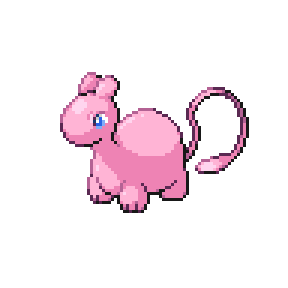
It can synthesize a wide variety of acids, as well as neutralizing fluids and antivenoms. Because of this, Mewbell has become invaluable for treating poisonings.
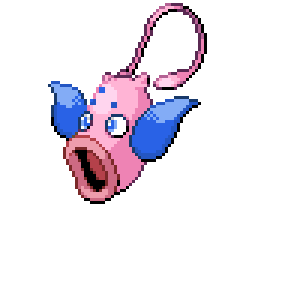
The leaf on Chikoew's head and the leaf on its tail smell different. Nobody can agree what each smells like, however. One person may say one smells sweet and the other bitter, then the next person says they smell earthy and spicy.

Totoew bites to explore the world around it. The world around it does not always appreciate being bitten and may lash out, but if Totoew feels threatened, it can just teleport away.

Ledyew is very shy and prefers being in the company of other Ledyba. The other Ledyba appreciate its presence, as its psychic powers are really helpful in protecting their nest.

The poisonous liquid that makes up Spinacargo's body isn't actually very toxic. Its real strength comes from the thread it weaves, which is durable enough to hold a boulder suspended in the air.

Langrowth live deep in the rainforest, where the illuminated tips of their vines glow like stars in the canopied gloom. They are semiaquatic and can attract and trap prey equally well in the deep brush or the murky rivers.

When in danger, it will hide under the mushroom-like structure on its back, which is so soft and pliable that everything bounces off of it. It feels and smells like a big marshmallow.
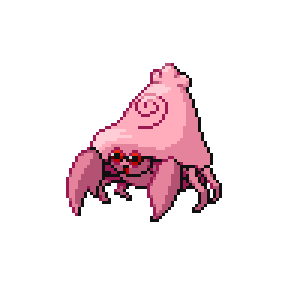
Scientists report that the electricity generated by a Maew has properties unlike normal electricity. Experiments to discover why and what it can be used for are ongoing.

It appears that the electricity generated by a Flaaew acts like the electricity of a nervous system. Defibrillators powered by a Flaaew are especially effective at restarting hearts.

Despite its weight, Azumacargo can easily float in water — or sink if it wants. It does so by releasing bubbles of air from its shell, which it can also use to help drowning Pokémon.

It can use its entire body to enhance its cry, inflating its flexible skin and making the vibrations echo off its hard shell. If its mouth is closed but the hair on its head is vibrating, it's preparing a powerful croak.

It is intelligent enough to use its large, leaf-shaped tail to steer itself while floating in the wind. Some see it as a symbol of how new life appears during springtime.

Unesect can flatten itself to the thickness of tin foil. It stands against a wall, appearing as nothing more than a faint shadow, and waits for prey to approach.
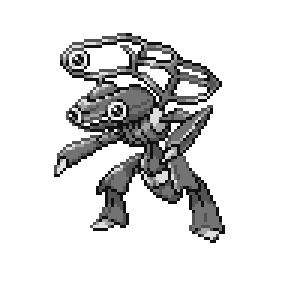
Wobew is very docile, and would rather flee and hide than attack. A Trainer must be patient and earn its trust before it will let them pet it.

The small, black nose on its back produces a magnetic force opposite to its front-facing nose. This inverted force attracts other Girapass, and when many gather, they can form an impassable chain.
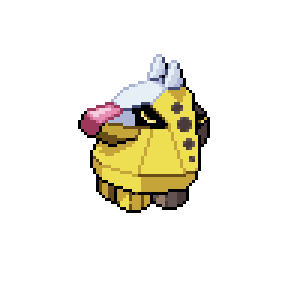
Since Pinew can teleport when threatened, it doesn't need to reinforce its shell. Instead, it experiments with its sticky fluid. A skilled Pinew can make a perfect replica of any other fluid that Pokémon can create.

It glides down silently and invisibly towards its victim, then suddenly becomes visible and clamps onto the victim's face. This is not done to take down prey, and it appears to simply enjoy startling people.

Spearew's wings are too stubby to fly, so it instead uses its psychic power to levitate. Once in the air, its wings are useful for speeding up and controlling its direction.

Its wings are too stubby to lift its heavy body off the ground. Instead, it nests near the roots of trees, where its mycelium can absorb nutrients from the tree and it can pluck insects skittering by.

With its two-sided horn, Heraesect lifts its foes aloft and then sends them flying with a blast of energy from the red emitter at the center of its head.
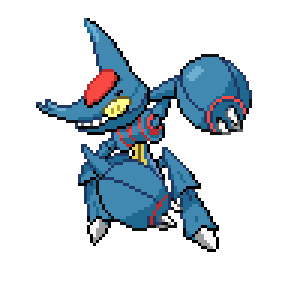
A skilled honey artisan, Teddiew can whip up a wide variety of honey and remembers every recipe it has tried. It uses its tail like a mixing spoon, so it always smells of whatever ingredients Teddiew used most recently.

Slugslash can curl up into its shell and roll wildly around the battlefield, letting loose jets of lava to disorient its enemies. Then, when it senses an opening, it will leap at an opponent with intense slashes.

Slugtom prefers to spend most of its time submerged in magma. Not only can a magma bath restore any wounds, but it also allows the mischievous Slugtom to leap up and surprise passers-by.
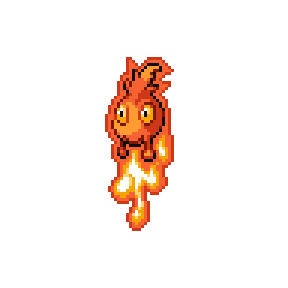
It absorbs heat from the sun. On bright, sunny days, the heads grow in size, increasing their firepower and psychic strength. On rainy days, the flames will die down, and the heads shrink to a fraction of their normal size.

In nature, Magbull's constantly billowing skirt serves as a warning not to come near. As a pet, however, many find the movement mesmerizing. A well-trained Magbull will growl to remind the doting trainer not to touch it with bare hands.

A Magraid uses the intense pressure inside its shell to shoot lava with impressive accuracy and range. It simultaneously expels some magma from cracks in the back of its shell, so that the recoil doesn't send the Magraid flying.

Magchu can use its tail to absorb thermal energy from lava and electric energy from the atmosphere. It will discharge excess energy by planting its tail into the ground, so the ground around a Magchu's nest quickly becomes barren.

Its shell is the toughest part of its body. The rest of its hide isn't as tough, but in exchange, Magshrew can shoot fire through the cracks. Its soft underbelly allows it to absorb geothermal energy from volcanoes.

Magts gains energy from positive emotions. Especially warm feelings will cause its body to billow with ripples of magma.

Maglia can often be seen dancing around the edges of volcanic craters. They use their psychokinetic powers to amplify heat mirages and create illusions of idyllic scenery.

Its body is usually covered in a cool, brittle outer layer of hardened magma. If its Trainer is in danger, however, it will erupt into flame, shattering its carapace with power said to be greater than a hundred volcanoes.
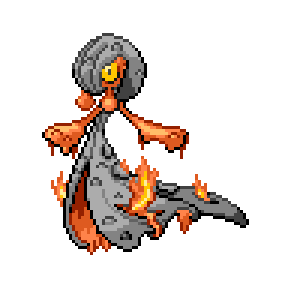
Maglade leaps to the defense of those in need, reinforcing its body with magma. It can skillfully direct this magma to quickly fill and repair any cracks in its armor, even in the heat of battle.

The shell on its back is made of nutrient-rich volcanic soil. Although the heat of Magtle's body prevents anything from growing directly on it, it will gladly allow its Trainer to scrape off some soil for their own garden.
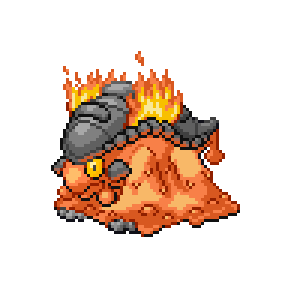
Because its body is usually covered with cooled magma, some are tricked into believing it is low on energy. In truth, Magray are very adept at controlling their energy output, and can burst into a lithe, flaming form in the blink of an eye.
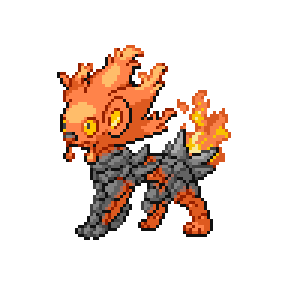
Inside the shell is magma spinning so fast that it acts as an electric generator, producing an electromagnetic field that encloses Magtom's liquid body like a membrane.

When excited or in danger, Magnx's body glows with heat. By directing more energy to its tail, it can control how brightly it glows and send signals to its allies from a distance.

When calm, Magxio's body slowly cools into a brittle carapace. Adept Trainers will know when something has caught this Pokémon's attention, even if it remains still, because sparks will start crackling through the shell.

Magtik find their niche in absorbing energy from other Fire-type Pokémon. Their semi-molten bodies allow them to withstand extreme temperatures and help them stick fast to their chosen host.
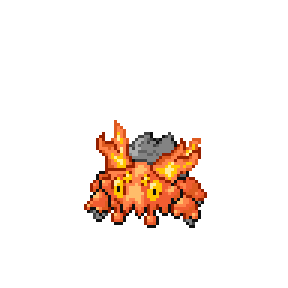
Magxure's tusks are made of molten magma at the edges. This allows them to slice through obstacles like a hot knife through butter. If one is broken, the Magxure can restore it by dipping it meticulously into lava.
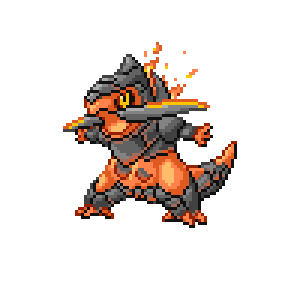
The flower-like protrusion on its head can release an eruption of strong-smelling ash. Some like the smell, but if the ash makes contact with skin, it will cause a painful burning sensation.

The hump of hardened magma on Magmel's back acts as a thermal regulator. It can store heat to maintain the Magmel through winter, or expel excess heat in the summer.
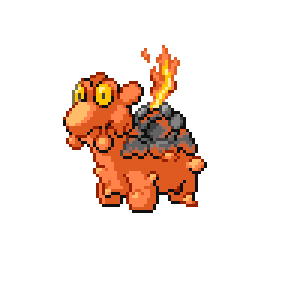
They crawl out of magma pools using their arms to hunt. If threatened, a Magtross can hide under its shell, but as the shell is merely hardened skin, it's brittle and not the best for defense. Most will try to escape back into the lava instead.
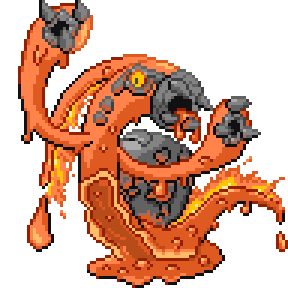
When Magby's lava-like skin touches water, it quickly cools and hardens into a grey carapace. However, this shell is brittle and will crack if the Magby gets fired up or is hit by an attack, revealing a new layer of fiery skin beneath.
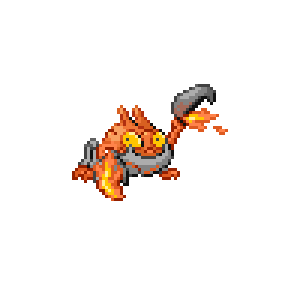
When hunting, Octiesect usually holds onto prey with its sharp claws and then smashes them with its steely head. It instinctively tries to hide in holes and among boulders, but its stiff, metal body hinders its attempts to slip inside.
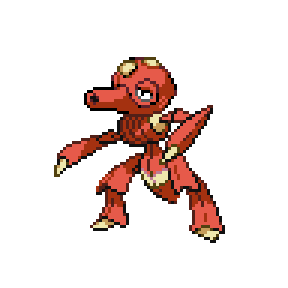
Skaresect's armor is composed of an unknown alloy that is simultaneously feather-light and stronger than titanium. Scientists are still unsure of exactly which elements make up this alloy.
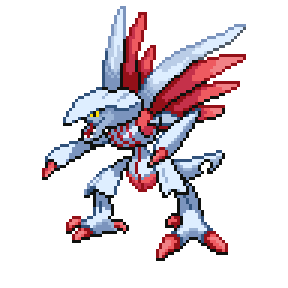
What appears to be a shell on its back is actually a tightly coiled tail. This position allows the tail to quickly strike with a venomous jab. When it needs to hide, the tail uncoils, and the viscous upper body smushes into the ground.
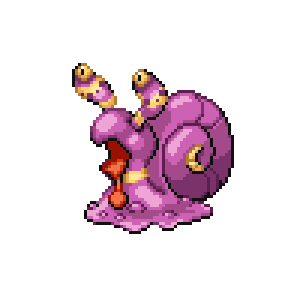
It enjoys spraying its friends with water using its trunk. If there's no water around, Phanew will spray psychic energy instead. Somehow, this still makes its victim feel wet.

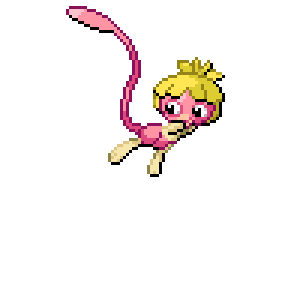
It has a habit of turning invisible to sneak up on its Trainer and give them a smooch. Although Smooew's lips are cold to the touch, many find this behavior endearing.
In its flight configuration, Suiesect becomes surrounded by charged particles, making it glow like the polar lights. Its cannon can let loose a blast of these charged particles in a beautiful but destructive display.
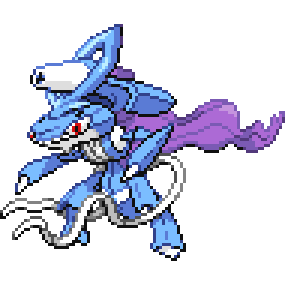
This compassionate Pokémon uses its shapeshifting abilities to slip into human cities in disguise and purify polluted water sources. If you see a child sitting silently at the edge of a river, that may be a Suirua in disguise.
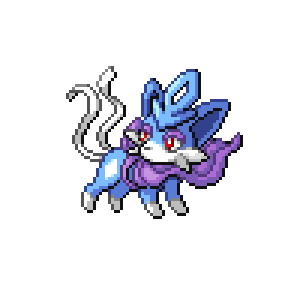
It is very rarely seen since it turns invisible the moment it senses anything approaching. Some claim this is because it is scared of its own psychic power, or of people who would try to exploit those vast powers.
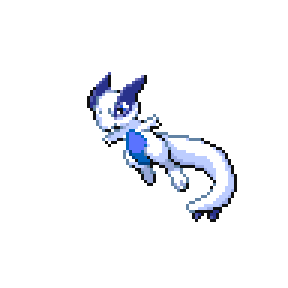
The molten body of a Ho-cargo is constantly billowing with color. It leaves a similarly rainbow-colored trail that is dangerous to touch, as even the cast-off magma is said to be as hot as the surface of the sun.

Celesect is a peaceful and empathetic Pokémon. Some believe this is because Celebi's ability to time-travel to eras of peace and harmony counteracts Genesect's merciless nature.
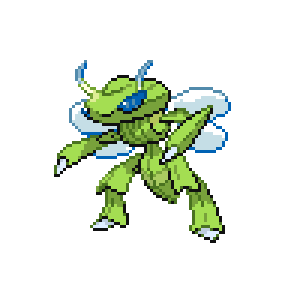
Azucargo is normally a docile Pokémon, but when threatened, it will rapidly bounce its tail off its stony shell, giving the tail enough momentum to slam into its opponent with immense force.

To attack, Raiew will teleport high into the air, then race down to the ground while cloaking itself in electricity. This electric display has earned it the nickname “The Living Lightningbolt”.

Aided by its wings, Yanesect runs with such speed that the human eye cannot track it. To hunt, it runs at top speed and lops the head off its prey as it passes.
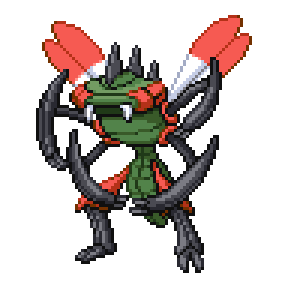
Treenaught is a protector of trees. It is especially careful with young saplings — if anything threatens a sapling under its care, it will use its arms and shell to defend it, while slamming its thick tail against the threat as a deterrent.
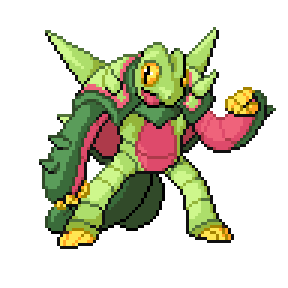
Scepesect charges its cannon using solar power, but each blast drains a lot of its stored energy. When the cannon is out of charge, Scepesect instead fights with its razor-sharp claws.
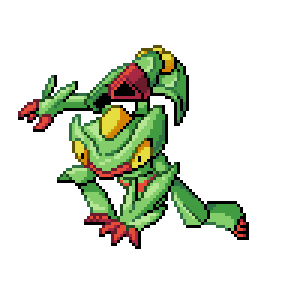
Scepdude are near-impossible to spot in their jungle habitat. If one is stepped on, it will leap to attack and pursue the offender through the forest by agilely swinging from tree to tree.

Though Mudscoon spend most of their time motionless in the water, they are acutely aware of everything going on around them, thanks to the highly sensitive fin on the top of their head.
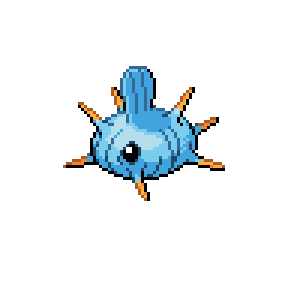
It can detect slight changes in the atmosphere with its fins, allowing it to predict storms. If a particularly strong one is coming, it will create a psychic bubble to protect itself.
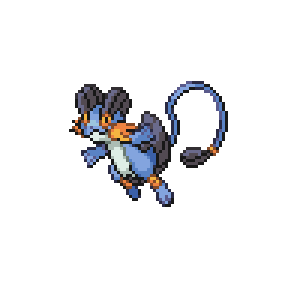
If it senses a powerful storm on the way, Swampnaught will move to protect itself and any other vulnerable creatures nearby. It will pile up boulders to create shelter, and defend itself and smaller Pokémon by covering them with its rock-hard limbs.
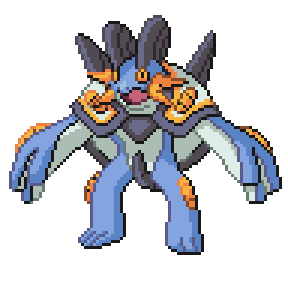
Raltomp spends most of its time hidden in the mud, with only the fin on its head visible. Through that fin, it can sense the emotions of others, and will only reveal itself if it senses positive feelings.

Ralxen senses emotions with the horn on its head. The energy from these emotions can then be directed through Ralxen's twig, which will change color, and can even burst into flame in the presence of powerful emotions.

It detects prey using psychic powers emanating from the horns on its head, then hunts the prey down with its sickle-like forearms. It can also enhance these claws with psychic energy, making them powerful enough to cut through dimensions.
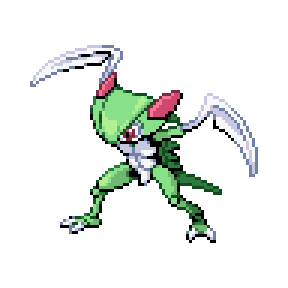
It is said that being in the presence of those with a pure heart will increase Kirew's psychic powers. It certainly seems to be happier and more energetic after witnessing acts of kindness.

Nidoew is generally docile, but when enraged, microscopic barbs all along its body will raise in defense. These barbs inject a deadly toxin that unravels the victim's DNA.

Nidocargo prefers not to fight. When faced with a threat, it will turn and flee, leaving a trail of highly toxic spikes made of fragments from its shell. This is very effective at discouraging pursuit.

Gabdoof nest by rivers that get a lot of sunlight, as they love watching the light sparkle across the water. If one spots a particularly shiny rock, it will dive into the water with surprising speed to retrieve it and bring it to its nest.
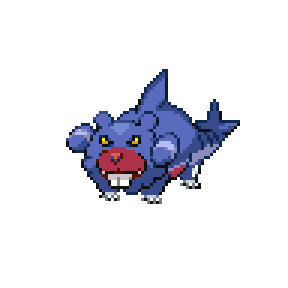
Nidoew is comforted by the company of other Pokémon and seems to enjoy taking care of the young of any species. It is often a great help at Pokémon nurseries.

Nidocargo is generally a docile, social Pokémon. When threatened, Nidocargo will work with its pack to create a cloud of opaque, noxious gas from their shells, befuddling foes and making it difficult to aim.

Mawtile is a forest caretaker. Using its large, powerful, back-facing jaws, it cuts away dead and diseased branches, then uses the seeds on its back to help the trees grow back faster and healthier.

Its steel-covered tail ends in a gaping, toothy maw. This jaw can actually function as a second mouth, though it can't taste anything. Mawferno uses it to eat foods it doesn't like.

Mawesect must feed the jaws on its back to fuel its energy blasts. The jaw-cannon can use almost anything as fuel, and it is able to chew through even thick iron beams.
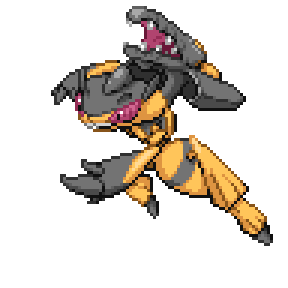
What appears to be an elongated mouth is actually a highly specialized tongue. While not as flexible as a normal Greninja's tongue, it is far tougher and able to latch onto opponents, leaving no hope of escape.
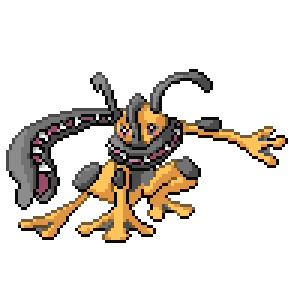
The silk that makes up Mawscoon's body is as tough as steel, and attacking it only makes it stronger. This also makes Mawscoon's jaws more powerful, and by the time it is ready for evolution, a Mawscoon can bite straight through steel.
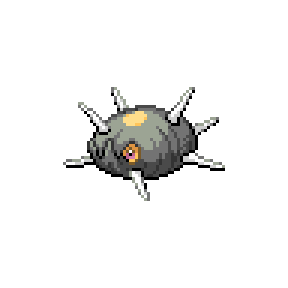
It slowly drags itself along the shallows of seas, using its tentacles to hold itself in place during rough waves. These tentacles are also covered with paralytic spores, and Lilsect uses them to capture prey.

Cradsect live in the shallows of seas, their heavy bodies protecting them from being washed away by waves. When the tide goes out, they dig in the sand to find prey, which they immobilize with paralytic spores from their tentacles.
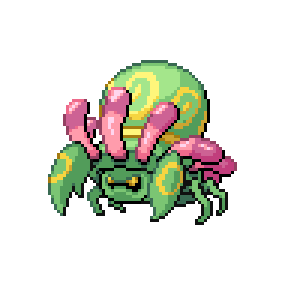
Despite its small size, Nidoew can take powerful attacks without budging. It is especially resilient when defending young Pokémon, no matter the species.

When threatened, the needle-like scale on its head stands up and leaks a viscous fluid. Though it smells sweet, this syrup is highly toxic and should not be consumed.
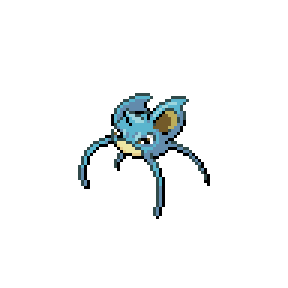
The antenna on its head picks up all kinds of psychic signals, even at great range. Sometimes it picks up signals that scientists cannot trace.

Various rare plants spring up wherever a Groew has visited. Some scientists claim this is because the berries that grow on Groew's back contain the DNA of all plants.

Torew is known to give temporary shelter to orphaned Pokémon among its boughs. Somehow, its leaves always contain the necessary nutrients for the orphan to grow up strong.

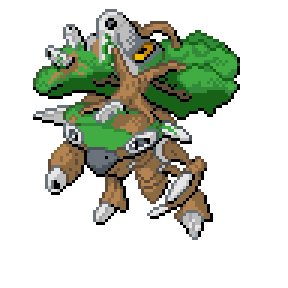
The fusion of Genesect's technological might with Torterra's terrestrial power has resulted in a warped amalgamation of benevolence and mercilessness, a gentle giant destined for battle.
When in flight, Nidoew can be seen flapping its large ears like wings. This does not help it fly, since it levitates using psychic power, but rather helps it listen to distant sounds.

Nidocargo is constantly on guard, using its large ears to listen for danger. If it detects a threat, it will move to strike first by channeling the toxins produced in its shell through the long horn on its head.
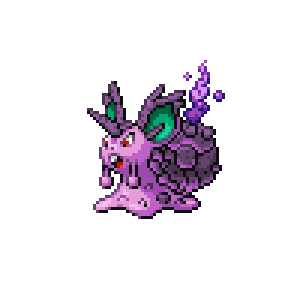
Its upper limbs are both powerful enough to snap the thickest of trees in half and resilient enough to shield from a bomb blast. Though it prefers to live a solitary life, it will still hurry to defend a friend in danger.
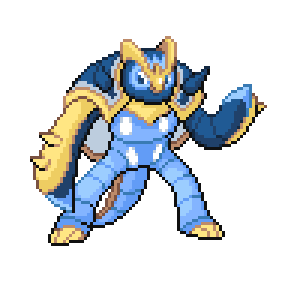
Prinmel roam the icy peaks of mountains alone. It is unknown if Prinmel do not associate with each other because each believes itself to be the most important, or simply because they are too dull witted to form groups.
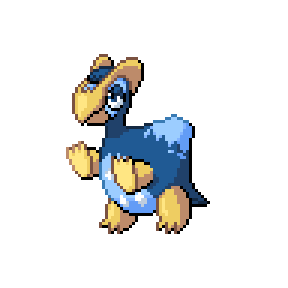
It can run across land and sea alike with incredible speed. If there is anything in its way, Emponinja will throw shuriken made of compressed water ahead to slice it to shreds and run right through.
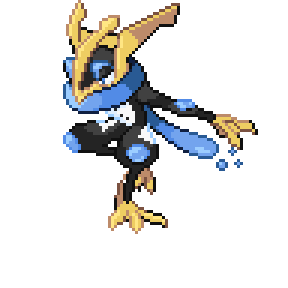
It feeds on electricity until it is charged enough to levitate. Then, it uses its blue-cloth wings to direct its movement, swooping with shocking speed to attack.

Doubode's cloth wings give it such incredible control over its flight that, when fully charged on electricity, it can stop and reverse on a dime. When it starts swinging its blades, it becomes an unstoppable whirlwind of slashes.

Fast as the wind, bearing an impenetrable King's Shield and indomitable blade, Aegiode is a formidable foe. If it is somehow pushed to the edge of defeat, Aegiode will explode, taking its opponent down with it.
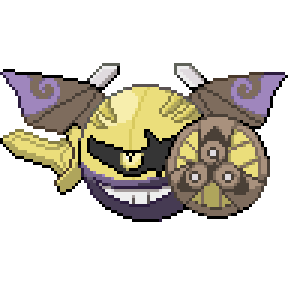
When agitated, Nidoew's psychic power runs wild, and it can unwittingly damage other creatures at a cellular level. Trainers should teach their Nidoew to turn invisible and flee when uncomfortable, rather than lash out.
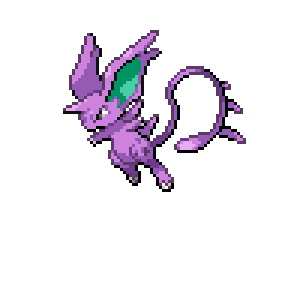
The plates that make up Nidocargo's horn and shell are extremely tough in some spots and very brittle in others. This allows the venom inside its body to gush out upon impact, without lowering Nidocargo's defense.

Klinkfeon absorbs energy from the sun and stores it in the various cores throughout its body. This energy is used to power its tail-pieces, which it can remotely control and send flying with enough force to cleave through a tree.
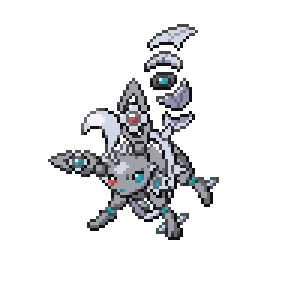
Despite its small size, Nidoew's attacks are wickedly strong. Its tail is especially dangerous, as it is strong enough to break bones and smash through metal beams, and the spines secrete a deadly toxin that unravels the victim's DNA.

There is a myth about a famine-struck land that was rescued when a small, horned being arrived and caused an earthquake. Pokémon sprung out of the resulting fissure, relieving the famine. Researchers believe this being may have been a Grouew.
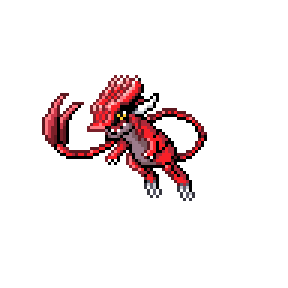
Genesea can shoot a special ink from its mouth, either in a focused, precise shot to take down prey or in a wide spread to escape from predators. Under the right conditions, this ink can paralyze, burn, or even freeze enemies.
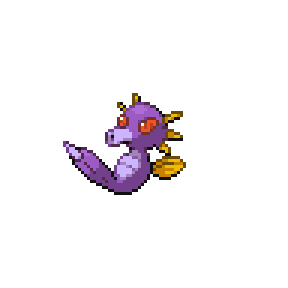
When in flight, Genemory's cannon is retracted to create a more streamlined form. When in its attacking configuration, Genemory can use both ranged blasts and melee slashes with ease.
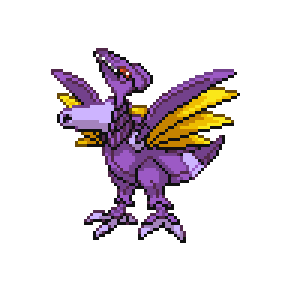
Genedon's cannon fires with a force comparable to volcanoes. Paleontologists have found fossils from hundreds of millions of years ago that seem to resemble Genedon.
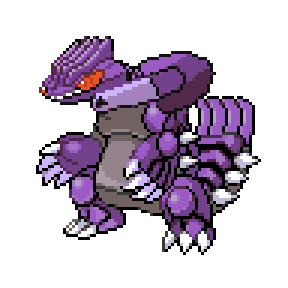
Genetina is able to channel the power of many types at once. It is believed to draw this power from a realm where the laws of physics do not apply.
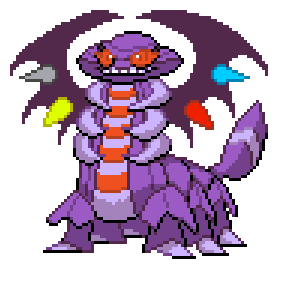
Genelgon sits unmoving until it detects a foe. Then it slowly rotates to aim its cannon and fires. The more enemies it defeats, the sooner it will evolve.
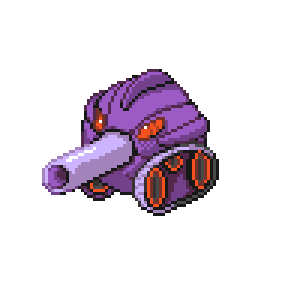
The special liquid enveloping its core, plus its powerful cannon that can blast through any obstacle, allows Genesis to thrive in even the harshest environments. Scientists are researching it as a candidate for extraterrestrial exploration.
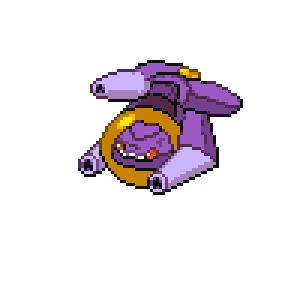
Genepede is a relentless and merciless hunter. It grabs prey with the sharp claws near its neck, then fires its energy cannon at point-blank range, all while maintaining its immobile smile.
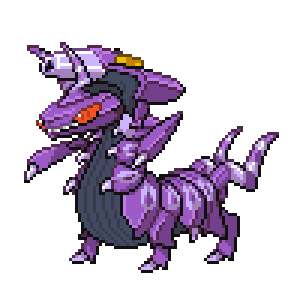
When charging its cannon, Geneduck's forehead glows with an unnatural light. It prefers to dwell in deep lakes, giving rise to local legends of underwater lairs that house mad scientists and their twisted experiments.
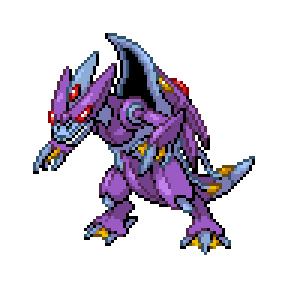
Under the moonlight, the psychic energy that makes up its tail twinkles like a million stars. The rock at the end of its tail has the same chemical composition as the moon, but it is unclear how Clefew obtained it.

Krookoret digs a mazelike series of tunnels through the desert, with many a cleverly hidden hole on the surface to leap out of and snatch its prey. Because the tunnels are dug through sand, a single misstep can cause the entire system to collapse.

Chandelew's flames give off low-level radiation, which is usually harmless, but if Chandelew becomes agitated, the radiation will grow in strength. At its worst, the radiation can unravel DNA in a matter of seconds.
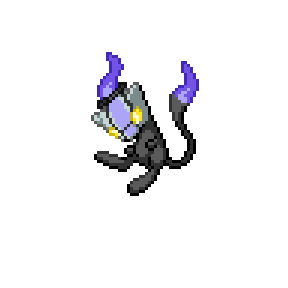
The majority of Mimiesect's body is constructed out of pipes and other discarded machinery. Mimiesect pilots it from within, slipping from pipe to pipe to avoid being seen.

Because Volcakern seem to appear out of thin air after unusually cold summers, some people believe them to be the gift of a sun deity, promising that warm days will eventually return.

Ninew spends most of its time underground, finding its way through the darkness with its whisker-like antennae. This leads to its eyes growing weak, so when exposed to bright sunlight, Ninew conjures a psychic shield to shade itself.

It prefers to sleep the day away, resting on a pillow made of its own psychic energy. If anything disturbs it, it will turn invisible until the disturbance is gone, or teleport away and go straight back to sleep.

It can't stand to be hungry and eats over a metric ton of food every day. It will slowly roam land and sea to find food to eat.
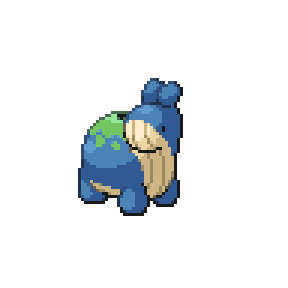
Shiew always keeps an eye on its surroundings and will disappear with a flash if it senses danger. If allies are nearby, it will allow the light from its tail to remain visible to alert them to the danger.
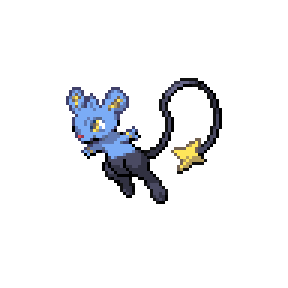
Shibre uses the lily pad on its head to blend in with surrounding greenery. It likes to sneak up on people and suddenly wave its dazzling tail in their face, blinding them while Shibre runs away with mischievous glee.
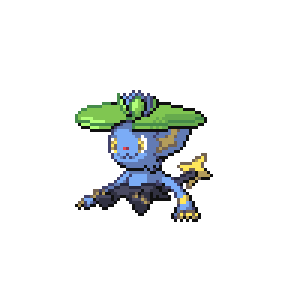
They live in packs, communicating via aura to hunt. A well-coordinated pack can create an aura storm crackling with lightning that can seek out and strike down any living creature within its range.
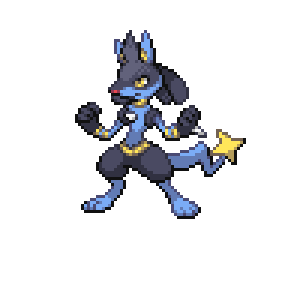
Artomp are superb diggers. They easily burrow through the dirt, eating any iron they can find. It's not uncommon for mountain miners to find an Artomp asleep in a wall, having gorged itself on iron ore.
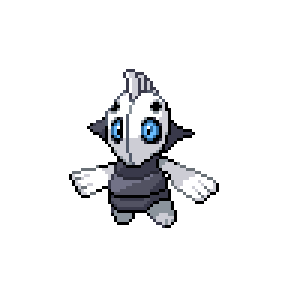
Bacargo is constantly toughening itself up by carrying its weighty shell everywhere it goes. If attacked, it will slam its head into this shell, creating an explosion of magma.
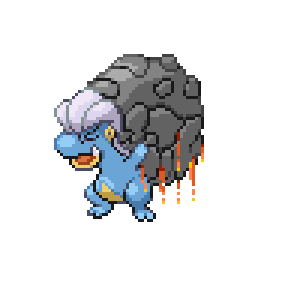
Kliew spins its gears to generate and fine-tune its psychic energy, using them to replicate any move. It seems very attached to these particular gears and will not accept substitutions.

Zotomp is a timid yet playful Pokémon. It spends much of its time hidden in mud, but if it notices friends approaching, it will leap out of the mud to surprise them.
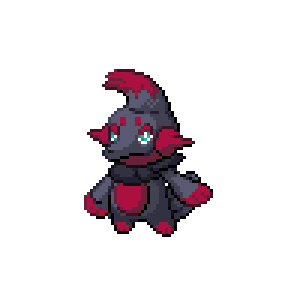
Cottonbre's cotton soaks up water with ease, keeping them pleasantly damp even during a drought. They can generally be found paddling around ponds and lakes, but will come on land during rain showers.
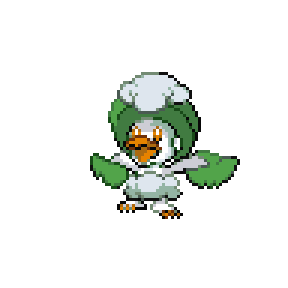
When submerged in sand, Sandiew is indistinguishable from a common Sandile. Unlike common Sandile, however, it can turn invisible or fly into the air, making it better at hunting prey and evading predators.

Golew is a mysterious being made of ancient clay pottery and held together by psychic energy. The dial on its tail is constantly ticking, but for what purpose is unknown.

Though the fire that Larvew shoots from its horns is extremely hot, Larvew always exerts careful psychic control over it. This control over fire may allow Larvew to survive on the surface of the sun, but this theory has not been tested.
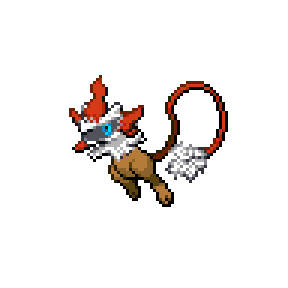
Stunew likes to bury itself in the mud of the seashore. If anybody tries to dig it up, it will use psychic powers to fling them away. If that's still not enough of a deterrent, Stunew will just teleport itself away.

Sabltomp lack the sharp claws needed to dig up gemstones for themselves, so they will lurk around jewelers' shops and gem mines, hoping to snatch up fallen gemstones. While waiting, they can snack on mundane rocks.

It tucks itself away in caves and attaches rocks to its body for camouflage until the only thing visible is its glinting gem-eyes. Within Sablscoon's body, the heat and pressure are intense enough for it to form diamonds.
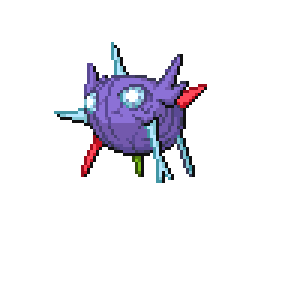
It may appear to be sleeping, but the moment it detects a foe, Scoliew will spring into action. It uses its horns both to tear into opponents and to concentrate psychic blasts.
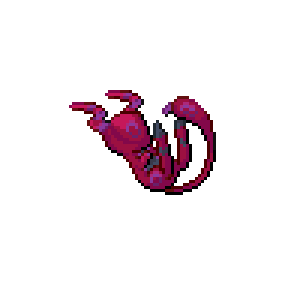
With its spikes and dark coloration, most people are terrified to see this ominous Pokémon speeding through the sky. In truth, however, Scolimence is simply enjoying the exhilarating freedom of flight.
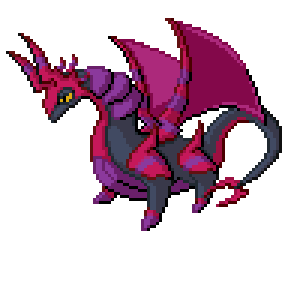
Scolibell hides in the shadows, waiting for prey to approach. Once one gets in range, it uses the claw-like protrusion on its vine to snag the prey and inject a sweet-smelling venom.

Oddew is nocturnal and travels far and wide at night. During the day, it turns invisible in order to sleep safely. Its psychic powers grow under the moon's light.

It waves its fans in a graceful, ethereal manner to call upon paranormal powers. Occultists claim that the way it waves its fans invokes mystic formulae for summoning spirits.

It is dangerous to venture into the rainforest rivers where the combative Sharptile makes its home. Fortune-seekers make the attempt nevertheless, as the seeds on its back are a valuable delicacy.

Don't mistake its diminutive size for a cute temperament — Sharpbre is vicious, sly, and extremely territorial. It will sneak attack any boat that comes down the river it calls home, and force the Pokémon aboard to join its crew.
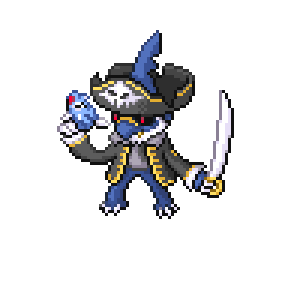
There is only one thing Sharpcolo likes more than swashbuckling: a good jig. A lively tune on a concertina or hurdy-gurdy will immediately set Sharpcolo dancing.

Phantew can not only control trees, but mutate them into new species to help them protect themselves. It happily plays with other forest-dwelling Pokémon.

Though it's not as good at echolocation as Noivern, Noiew makes up for this by using psychic energy to scan all its surroundings at once. It also uses this power to pluck whole bushels of ripe fruit off of trees.

Thanks to its air-filled, cloud-like tufts, Swabtomp is much lighter than it looks. If attacked, it will lure its opponent to muddy ground where it will get bogged down, while Swabtomp floats above, spotless and triumphant.

You can tell when a storm was summoned by a Googre, because the rain will have a slightly gooey feel to it. Despite this unpleasant texture, many believe that water blessed by a Googre is exceptionally good for hydration.
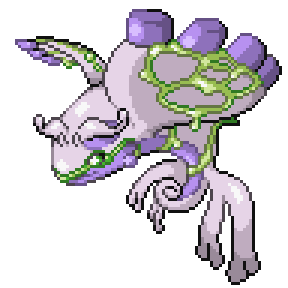
Ice collected from Regiew has been found to contain traces of DNA. Each fragment of ice has the DNA of a different Pokémon, including Pokémon that have been extinct in the wild for thousands of years.
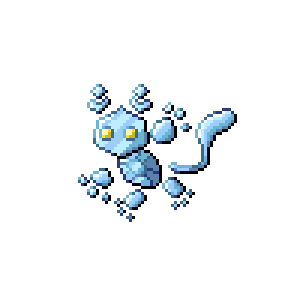
It attacks by throwing gathered debris, sending each spinning with such centripetal force that it can cut through wood like a buzzsaw. If a foe tries to close the distance, Dhelninja will drive them away by swinging its massive anchor.
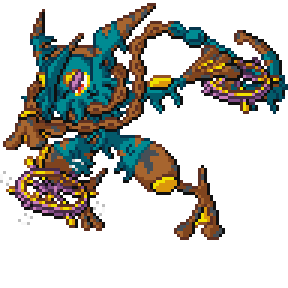
Although not visible to the naked eye, Cactew skin is covered with short, fine needles. Scientists are studying these needles as inspiration for developing thinner, sturdier medical tools.

Sandytomp are commonly found on beaches and love playing with children who are making sandcastles. Children should beware trying to take their bucket, however, as Sandytomp are known to hold a grudge.

Sandynaught is a sand guardian, guardian of the sandy beaches it calls home. If it sees a child being bullied or senses a sand-castle get kicked over, it will move to protect the victim, shielding them with its whole body.
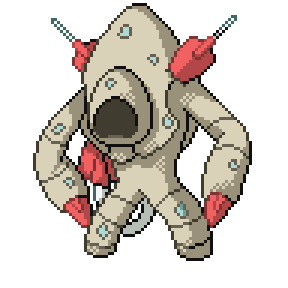
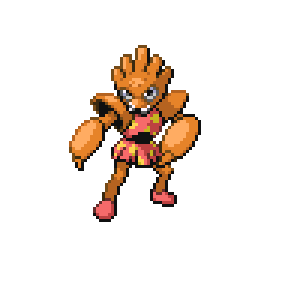
Thanks to the nutrient-draining mushrooms that are now part of its body, Pachan is an expert at using Drain Punch. No matter how much energy it absorbs from its foe, however, it still needs a break after three minutes.
It can release spores from all over its body. If inhaled, these spores cause a burning sensation and make the victim's vision swim, as if stuck inside a heat mirage.
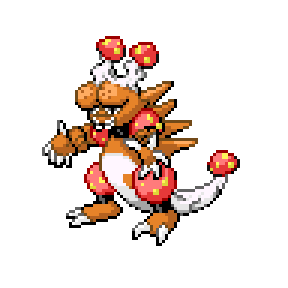
To spread its spores, it tries to elevate itself on its tail as high as possible. It's very nervous, however, and will abandon the attempt and flee at the first sign of danger.

Records indicate Pahoot was often found at temples situated on volcanic isles. According to stories, Pahoot would calm active volcanoes should its eruption threaten human villages.

Panub digs with ease using its hard mouth and sharp claws. Its favorite food is the roots of trees. If it uncovers a mushroom, it will stare at it for a moment before moving on without eating it.
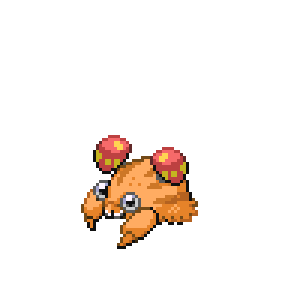
Pachum attach themselves to tree trunks, feeding on sap. The sap not only nourishes the Pachum, but also keeps its sensitive lips moist.
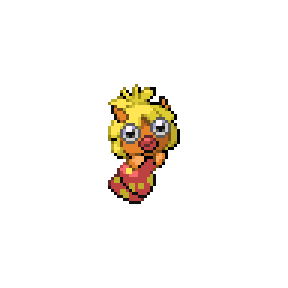
Papom first strikes with consecutive blows from its mushroom-tipped tails. These mushrooms release spores that paralyze the opponent, allowing Papom to come in close and attack with its claws.

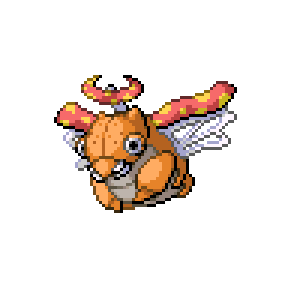
Painja are almost completely immobile, except for their wings' membranes, which bend and ripple in the wind. Some claim that these gill-like structures capture souls to feed the unearthly mushrooms growing from the Painja's back.
When it tries to turn invisible, its spotted red tail does not fade, so it looks like a little mushroom floating above the ground. It will try to appear suddenly to spook children, but it's not particularly frightening.
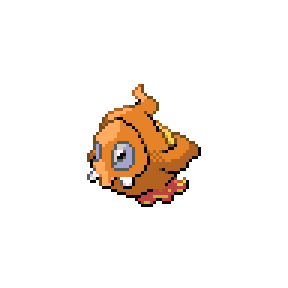
The fungus hanging within its head appears to be the only thing inside its hollow body. If a foe approaches, it will shoot a puff of spores to paralyze them before opening its mouth to try to suck them inside.
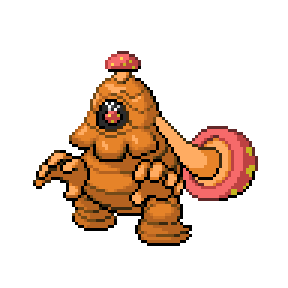
It can often be seen staring blankly off into space, the mouth on its belly hanging open. People say this happens because the Pokémon is overwhelmed by conflicting instructions coming from the world of spirits and from the mushrooms on its body.
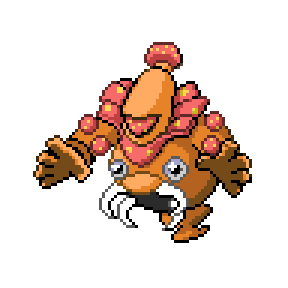
Its feet are made for digging into tree roots and extracting nutrients from them, but this also means Palup has great difficulty walking. To protect its pride, it prefers to stay rooted in one spot until it is not being watched.

Paria can create a cloud of spores by flapping its wings. The resulting cloud will stun any pursuers and obscure the Paria's escape.
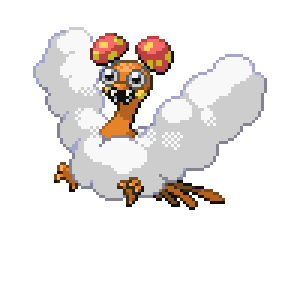
Paruff love to rub themselves against people and objects. It is unclear whether this behavior is a sign of affection or just a way to spread their spores.

Paor's orange color is due to the tochukaso spores produced within its body. It can expel these spores to deter attackers, but the more spores it uses, the more it fades.
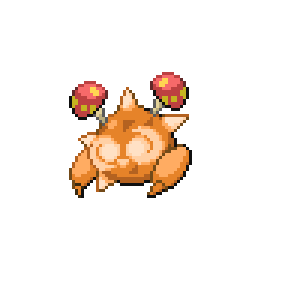
If you see an oddly shaped mushroom growing from a cliff by the sea, that's actually a Pagull. It will swoop down to catch fish, but occasionally snags some driftwood instead. It seems just as satisfied with the driftwood.
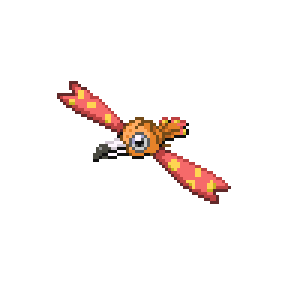
Many find its appearance off-putting. However, certain people love how its tail looks like a whimsically elongated mushroom, or may find its skittering legs adorable.
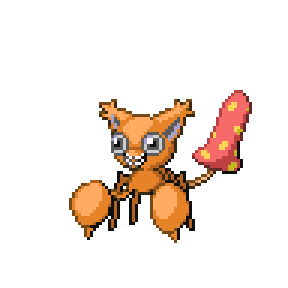
Every grain of sand that makes up a Paloew contains its full genetic code, allowing it to regenerate from even the smallest remains. Its body is held together by pure psychic will.

Those who attack an Amakyu and expect its disguise to collapse with ease are in for a shock. Under the pale blue fabric is some kind of hard substance. It is unknown whether it is magically dense ice or just a rock.

Shiny particles trail Cressesect while in flight. Cressesect uses them to veil its attack, slicing out with its sharp, steel claws when its prey least expects it.
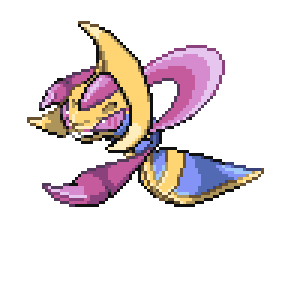
It is said to release spores with every flap of its wings. These spores feel like shards of ice to the touch and inflict frostbite near-instantly.
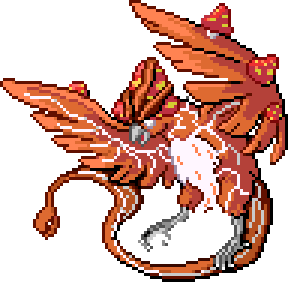
Its fungal shell is stuffed with spores. When inhaled, these spores induce a feeling of happiness and agreeability, making the victim susceptible to being commanded.

They travel in packs, acting in unison without a clear leader. If the large mushroom on a Paradoom's back is lost, the Pokémon will be left behind by the rest, as if forgotten.

A village was once terrified by reports of mysterious bouncing mushrooms in the nearby forest. It was revealed to be a pack of Pararill, which bounce on their heads with the mushroom-tail held in the air.

It spends most of its time buried in moist soil with only the mushrooms visible. If anything touches a mushroom, Parapert will burst out of the ground and attempt to bash the intruder by swinging its thick arms.
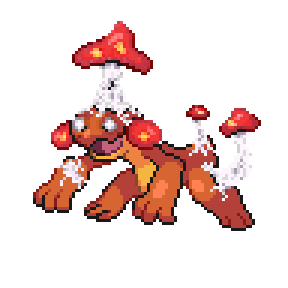
Spores continuously emanate from its cap, blowing in the wind like a flame. While its opponent is distracted by spores, Paranape will rush in to attack. The spores dull the senses, helping to distract opponents.

When threatened, a Paraseed will shoot spikes in all directions. These spikes are not very sharp, but they are packed with poisonous spores that fill the air.

The membrane surrounding a Paramy's body is filled with poisonous spores, so anyone who touches it should wash their hands thoroughly. They thrive in dark, damp places.

The parasitic mushroom tries to keep itself out of danger. When faced with a powerful opponent, however, Pararoc's reckless instincts kick in, causing it to attack without care for its own well-being.
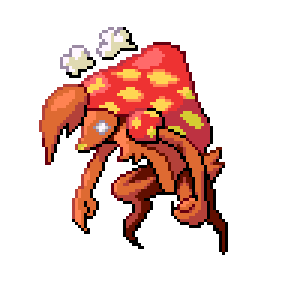
In order to maintain its vivid appearance, Lusect has to drain nutrients from whole groves of trees. Anyone who wants to raise a glamorous Lusect must be prepared to become a professional arborator.
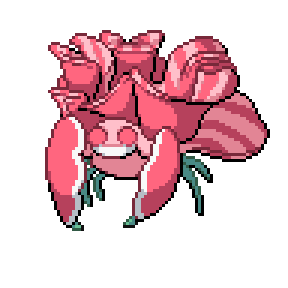
To defend itself, Cartomp will fire high-energy beams from the crystal fin on the top of its head. Its toughened hind legs are able to absorb the recoil to keep it steady as it fires.
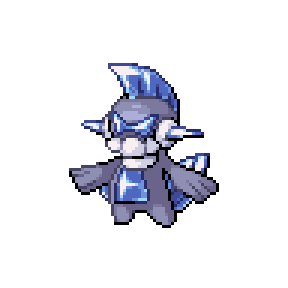
To defeat its opponents, Chestomp will try to lure its opponent onto muddy ground that offers poor footing. There, it can easily deliver a thrashing with its thorned fists.
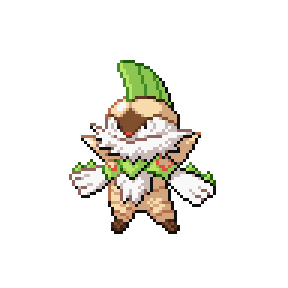
A friendly but shy Pokémon. Because of its warm, fluffy body, it is excellent for cuddling with, but if startled or overwhelmed, it will turn invisible and flee. It can be coaxed out of hiding by offering a twig for it to nibble on.
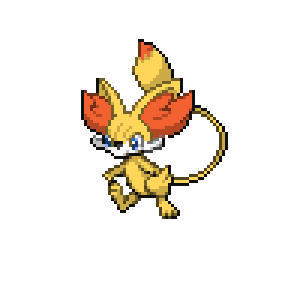
The best place to find a Fennetomp is sunbathing on hot sand. Its large ears act as a heat sink, absorbing the sun's rays to provide Fennetomp with fiery energy, but also acting as a vent if Fennetomp overheats.
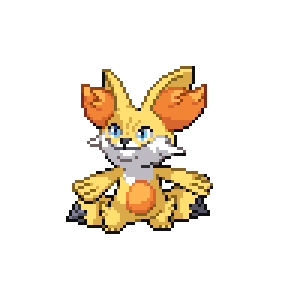
Fenneferno's internal temperature can reach over 350 degrees Fahrenheit. To keep itself safe, it vents hot air through its roomy ears and flame-shaped tail.
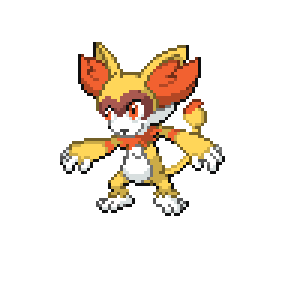
A Braitile's tail continues to grow its entire life, so you can tell how old one is by how many fronds its tail has. However, the very end is always a bare branch, so that it can channel Braitile's fire.
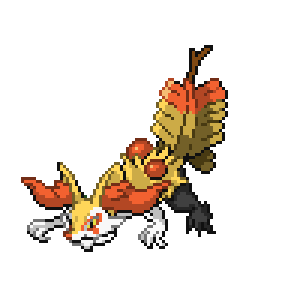
Braitomp keeps its twig safely tucked away in its tail while stomping about in the mud. Then, once the marsh gases have built up, it swiftly pulls out the twig, and the friction sets it all alight.
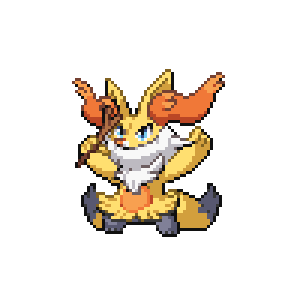
Braiferno deftly wields its fiery tail both to attack and to signal the other members of its troupe. It can even aim its fire while hanging from the walls or ceiling.
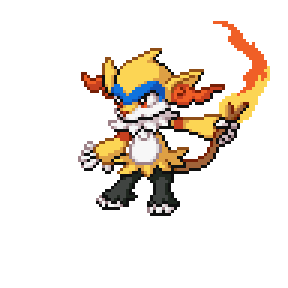
Throughout most of the year, Deltile is constantly on high alert, guarding its forest. During autumn, when leaves turn red and orange, this allows Deltile to blend in. It sits patiently, thinking about the future.
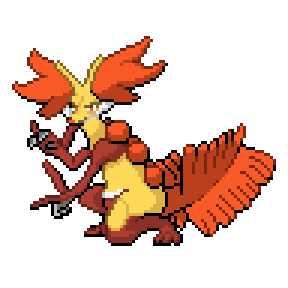
Delferno gazes into the flame at the tip of its branch to meditate. As it does so, the flame grows larger and larger, not only intensifying Delferno's focus, but intimidating its opponents.

Froaninja secretes numerous bubbles from its chest and back, creating an awesome frothy scarf to hide its face. Unfortunately, it usually forgets to hide the rest of its body.
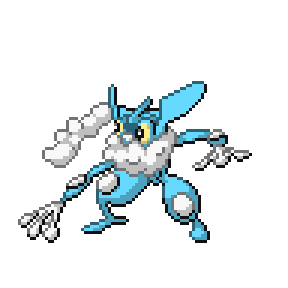
It secretes flexible bubbles from the hump on its back. These flexible bubbles reduce incoming damage, so Froamel sometimes doesn't even realize it has been hit.
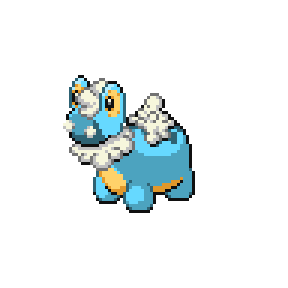
Frogninja is so agile and speedy that it's hard to follow with the naked eye. In most cases, the only sign that a Frogninja has passed by is the slightest trail of cloud-like froth in its wake.
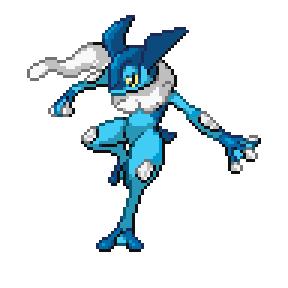
Frogmel can fire projectiles from the hump on its back. These bubble-covered pebbles are impressively accurate, though scientists are unsure how they came to be in Frogmel's hump in the first place.
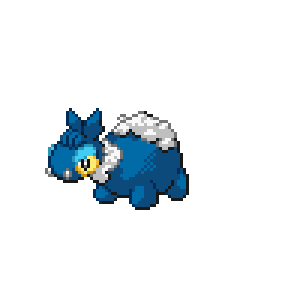
The surface of Gretomp's body is enveloped by a thin, sticky film. From this mucus, it makes shuriken that can cut cleanly through steel cables.

It hypnotizes people and Pokémon with its glowing eyes and psychic powers. Because of its haunting appearance, many fear it does this to enact wicked deeds, but really Pumpew just wants someone to play with.

Those who believe Pumpcargo help to bring lost souls to the afterlife claim that you can tell how many souls one is carrying by how large the pumpkin on its back is.
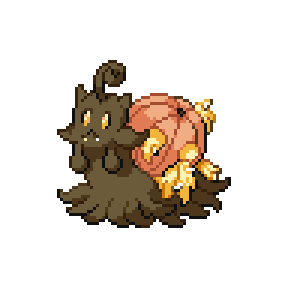
Venoew is nocturnal, but attracted to bright lights. Some researchers believe this is because it eats small creatures that are also attracted to light, while others claim that it is because the light fuels its psychic powers.

It appears to be more comfortable in water than in air, so when levitating, it will often use its psychic powers to carry a bubble of water around it. It happily carries small Pokémon on its head to wherever they want to go.
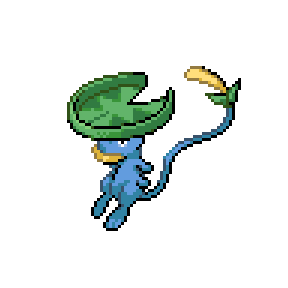
Lomel roams waterfronts where food is plentiful. By day, it hunkers down, absorbing sunlight through the lilypad on its back, and by night, it wanders about, eating aquatic plants.
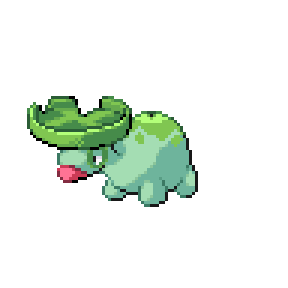
Ludininja fights in rhythm to a tune only it can hear. The rhythm can be rapid and unpredictable, so opponents are never quite able to predict it, and are left on the back foot.

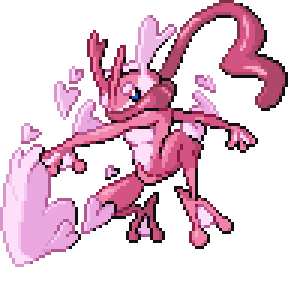
Using the pinkish mucus excreted from its thighs, Luvninja compresses water into hearts and throws them at couples. It is said that if both partners are hit by the pink-tinted water, they are guaranteed to be in an eternally loving relationship.
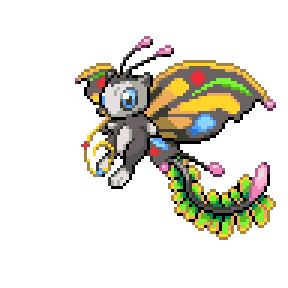
The diverse DNA present in Mew manifests itself in Beautiew's brightly colored wings, tail, and proboscis. It looks right at home in a field of multicolored flowers.
The trio appears to be quantum entangled at a cellular level. Damage done to one affects the other two as well, and each is able to teleport to the others in milliseconds.
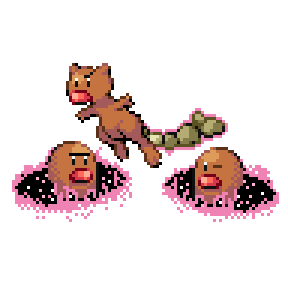
The dust coating Dustew's wings has an unusual genetic structure, seeming to resemble many kinds of pollen and biological toxins at once. The result is an allergen that everybody is allergic to.

Most of the time, Wingscoon hang motionlessly from sheer cliff faces, just above the sea. If a fish Pokémon swims within reach, however, it will suddenly snap out with its long beak to catch its prey.
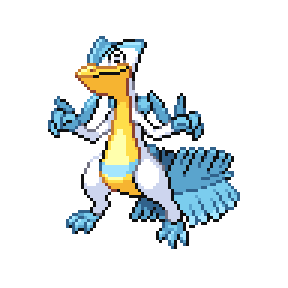
Its preferred habitat is a dark, damp jungle. There, insects are plentiful, and Pelitile can easily scoop up dozens of prey in one swift movement using its large bill.
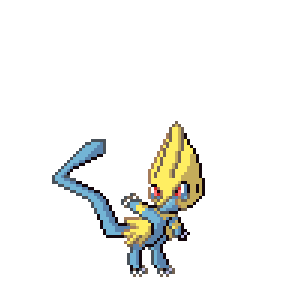
It is hard to keep track of a Manew in battle. Between being as fast as lightning and its ability to turn invisible, it can easily lose even the most eagle-eyed of enemies.
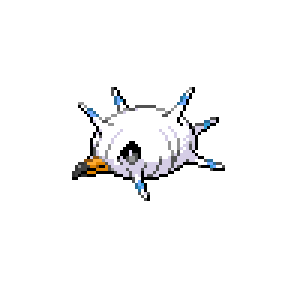
Pluscoon are commonly found stuck on telephone poles, absorbing the electricity through its conductive silk. This silk is in high demand for use in state-of-the-art electronic wearables.
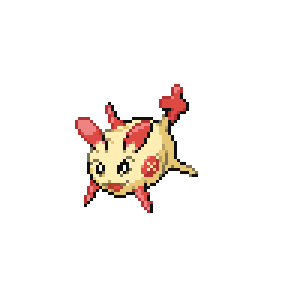
Plusmel loves to see its allies win. However, it is extremely dull-witted and will cheer even when its friend has lost. Some find this uplifting.

As a Minscoon needs to stay as still as possible to prepare for evolution, it emotes using bursts of electricity. It is believed that wearing clothes made from Minscoon silk can support your nervous system.
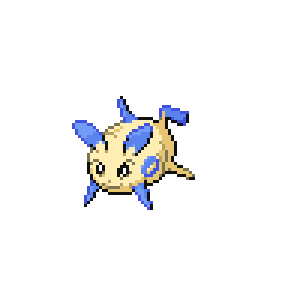
Minmel dislikes water and will take shelter whenever it rains. However, if a friend is in trouble, it will rush to their aid, no matter how uncomfortable Minmel feels.
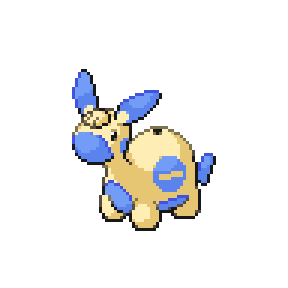
Within its body, Gulpmel stores a special fluid that can dissolve almost anything. Its hump gets smaller when it uses Poison-type moves.
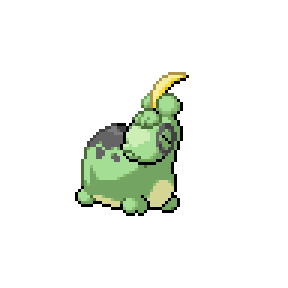
While bouncing through the air, it emits a ringing noise accompanied by a psychic ripple that can cause headaches. The ringing noise is sometimes too high pitched for humans to hear, so Chingew may be the cause of sudden, mysterious headaches.
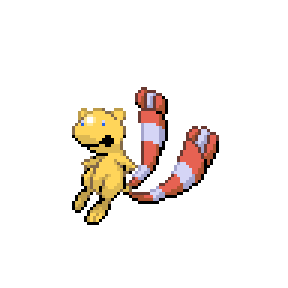
It channels its psychic energy through powerful sound waves, which can emanate from any part of its body. It is said that the cries of a Chimew sound like heavenly music to those with a pure heart.

Because Mew are rare, and Mew fusions even rarer, Manew are often lonely, and express this by being angry. It is a good idea for Trainers to socialize them with other Pokémon, so that they don't feel so lonely.

Most of its organs are contained within its back. The rest of its body is made up of billowing water. It can meld with regular water, allowing it to swim faster than it can move on land, and restore itself by submerging in water.

Policargo live at the bottom of the sea, where their watery bodies and rocky shells blend in. That shell is made of rock-hard muscle, so nothing can make it move if it wants to stay in place, or stop if it wants to travel.

When threatened, it will pull its head and limbs into its shell, then fire off spouts of water and bubbles from its mouth while also directing psychic attacks with its tail.

When startled, Warew will pull its head and limbs into its shell and turn invisible. Oddly, its tail can neither be fully pulled into its shell nor turn fully invisible.

Seew swims gracefully through both air and water. Despite its small size, its exceedingly hard horn makes it an impressive physical attacker.

Seew swims gracefully through both air and water. Despite its small size, its thick hide makes it resistant to physical attack, and very huggable.
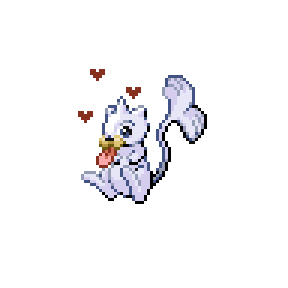
It is nearly impossible to catch up to a swimming Dewew. As a good swimmer, it uses psychic fields to streamline its body and cut through the water, and its lithe tail allows it to turn on a dime.

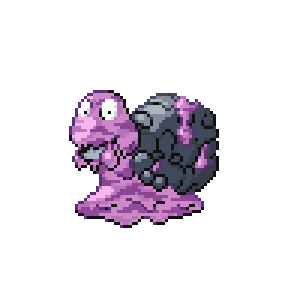
Made of semi-solid sludge, Gricargo will climb into toxic waste containers and gorge itself on the chemicals contained within. As the Gricargo grows larger, the container gets stuck on its back, acting as a shell.
Krabew creates bubbles for many reasons: for playing with, for attacking, and for decoys to distract threats while it turns invisible to escape. There are even reports of a Krabew storing CDs and other collectibles in bubbles.
