164 pokedex entries by oddwalls
Weemime loves to give hugs. It is famous in folklore as a warning from parents to messy children: if they don't clean up after themselves, their trash will invite a foul-smelling Weemime to be their new playmate.
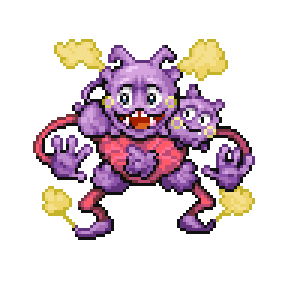
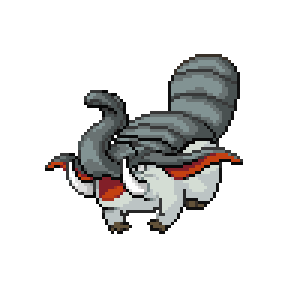
Chanpy balances an egg on its trunk, tossing the egg into the air with a puff of breath. Though the egg may seem vulnerable to damage, its thick shell remains intact even if Chanpy drops it.

Trapped air in the bulb on its back allows Seasect to control its depth in the water. It descends to the seabed to feed and ascends quickly to escape predators.

Mr. cargo controls the secretion of a slick, transparent slime from its shell. At Pokémon gathering places, it selectively leaves trails of slime, causing others to slip and fall. Mr. cargo appears to do this solely for amusement.
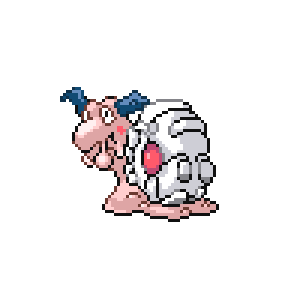
Electacargo eats electricity and stores excess energy in its shell, becoming a living battery. Areas prone to blackouts host Electacargo as a portable power station.
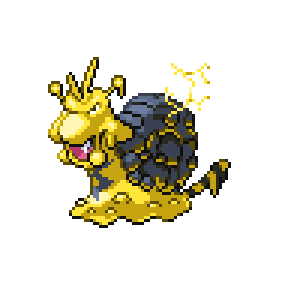
Wild Pindoom packs form a hivemind, led by the member with the longest tails. When a Pindoom forms a strong bond with its Trainer, it darts around them, screeching happily.

Omatomb resides in an unremarkable shell, blending in at the seashore. Beachcombers can identify an Omatomb shell by placing it next to their ear and listening for a ghostly wail.

Mewtung uses its psychic power to enhance the sense of taste. Flavors seem bolder when it's around, and diners often compliment a chef by asking whether they have Mewtung in the kitchen.
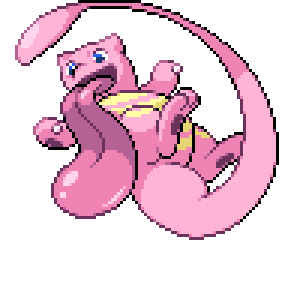
Mewgela's vine-like tails indicate its emotions: when calm, the tails float gently; when sad, the tails droop down; and when agitated, the tails extend outward like spines.
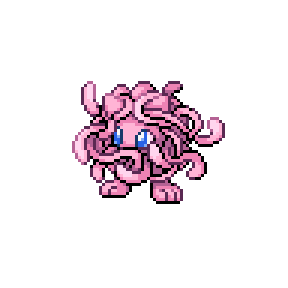
Mewtret hides in fields of tall grass, stalking passersby. Once close to its target, Mewtret springs up with a loud cry to startle them and then floats away, laughing.
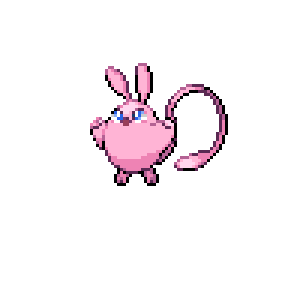
Mewkern remains in the sun all day to soak up solar energy, and it flies away from cloud cover. On some mornings, Mewkern can be found atop tall buildings.
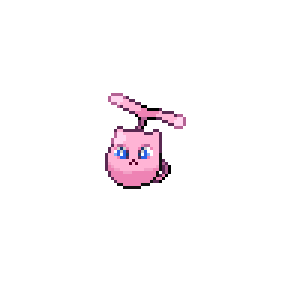
Mewkern remains in the sun all day to soak up solar energy, and it flies away from cloud cover. On some mornings, Mewkern can be found atop tall buildings.

Mewflora's remarkable genetics allow it to produce many varieties of floral scents. Some of these scents were previously undocumented, leading researchers to speculate that Mewflora contains genes from extinct flora.

Mewflora's remarkable genetics allow it to produce many varieties of floral scents. Some of these scents were previously undocumented, leading researchers to speculate that Mewflora contains genes from extinct flora.
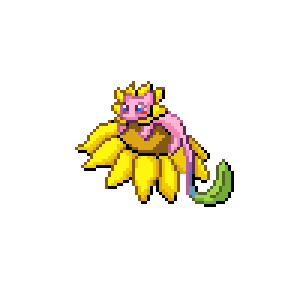
If Mewco spots a child with a balloon, it pops the balloon with its horn and then offers itself as a replacement, floating through the air while the child holds its tail like a string.
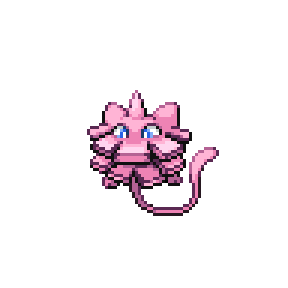
Weighed down by its heavy tail, Mewsparce flies just above the ground. It searches the woods for sleeping campers and then curls up next to them to rest, giving them pleasant dreams with its psychic power.

Mewlicky has a sensitive tongue that detects scent particles in the air for miles around, and it follows any scent that catches its attention. However, it rarely reaches the source, becoming distracted by other scents along the way.

Mewlicky has a sensitive tongue that detects scent particles in the air for miles around, and it follows any scent that catches its attention. However, it rarely reaches the source, becoming distracted by other scents along the way.
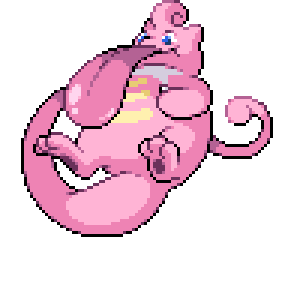
On winter nights, Mewceon travels to snowy towns and creates ice sculptures with its psychic powers; on summer days, Mewceon seeks out gatherings of people and showers them with snow to cool them down.
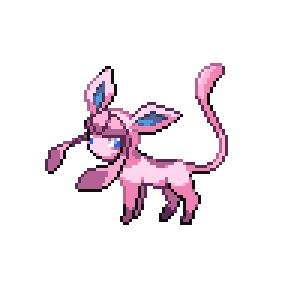
Mewpede uses the genetic information of Poison-type Pokémon to secrete potent antidotes to their toxins. These antidotes can cure people and Pokémon alike.

The wealth of genetic information that Mewnat contains in its body allows it to cover itself in hairs suitable for a wide range of temperatures and environments.
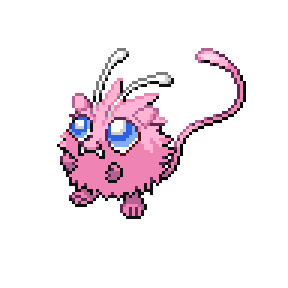
The wealth of genetic information that Mewnat contains in its body allows it to cover itself in hairs suitable for a wide range of temperatures and environments.

As it flies, Mewmoth's shimmering wings release a fine dust that glows blue in the dark. After nightfall, artisans collect the dust for use in manufacturing luminescent paints and dyes.

The double-hearted shape of Mewdisc is a traditional symbol of eternal love. It is said that if Mewdisc appears at a wedding, the couple will have a long, happy marriage.

Meweel enjoys music of all kinds. It seeks out public concerts and joins the performers on stage, clapping its fins to the rhythm of the music.

It regularly plays pranks on fishermen. If the fisherman uses a rod, Mewder will dive underwater and attach their hook to detritus; if the fisherman uses a net, Mewder will float over to them and slap them with its long tongue.
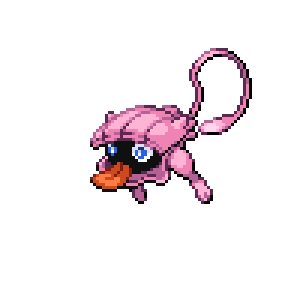
It regularly plays pranks on fishermen. If the fisherman uses a rod, Mewder will dive underwater and attach their hook to detritus; if the fisherman uses a net, Mewder will float over to them and slap them with its long tongue.
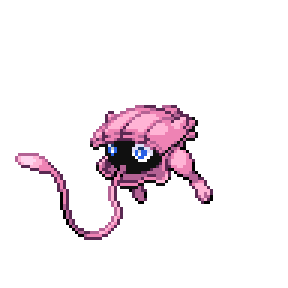
At night, Mewzee uses its psychic power to find children having nightmares. It teleports to their side and eats the disturbing dream, allowing the child to sleep peacefully.

Mewno's pendulum contains the genetic information of all Pokémon. If a person focuses on the pendulum before going to sleep, they will dream about transforming into a Pokémon.

Mewno's pendulum contains the genetic information of all Pokémon. If a person focuses on the pendulum before going to sleep, they will dream about transforming into a Pokémon.
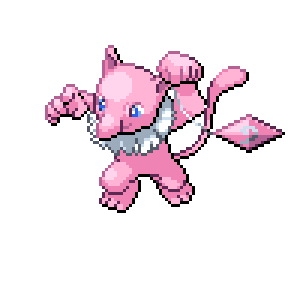
The small flame at the tip of Totomander's tail remains lit while underwater, creating a plume of steam behind it as it swims.
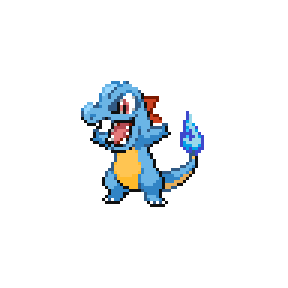
Construction companies employ Lantu as a welder atop tall buildings where equipment is difficult to transport. Lantu is also a favorite in marine construction, where it performs underwater welding that could endanger divers.

Construction companies employ Lantu as a welder atop tall buildings where equipment is difficult to transport. Lantu is also a favorite in marine construction, where it performs underwater welding that could endanger divers.
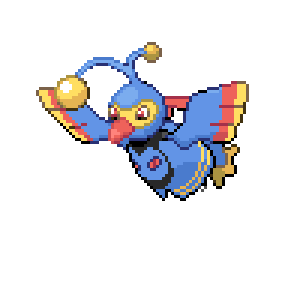
As Lancargo treads the sea floor, the bulb on its back stimulates the growth of algae, constantly replenishing its food supply. It illuminates its surroundings for miles, blinding potential predators.

Igglyras uses its springy body to bounce into the treetops and eat fresh twigs. Because it cannot defend itself with its soft pincers, it also bounces away from predators.

In snowy regions, residents who must travel at night bring Ampharunt with them to light the way. It can also guide them home if they lose their way.
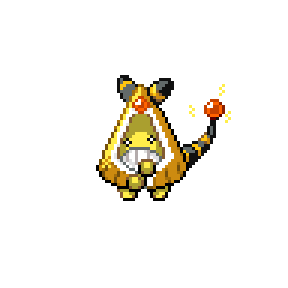
At night, Amphalass appears to people lost in the forest, acting like it will guide them with its light. However, it only guides children to safety, leading adults deeper into the woods.

Though it floats through the air facing the sky, it flaps its wings as though it were flying. It drills its tail into the ground before falling asleep to prevent itself from floating away.

The twin mushrooms on its back spin like drills, though Dunras cannot use them to dig. Instead, it burrows among tree roots with its claws. Its wings are not strong enough for flight.

Qwilgon-Z can disrupt the sonar systems used by fishing boats. Anglers seeking to catch Qwilgon-Z must avoid advanced technology and use simple rods and nets.

Locals have begun stocking popular lakes with Qwilbish to curb littering. If Qwilbish finds garbage in the water, it will spit the garbage back at the litterer.

Its wings cannot carry the weight of its shell, rendering Shukrow flightless. Part of its shell has grown over its head, forming a helmet with strong horns, which it uses for self-defense.

Due to its flexible body, Shukrow tumbles and spins involuntarily as it flies. It can often be seen in the company of Smeargle.
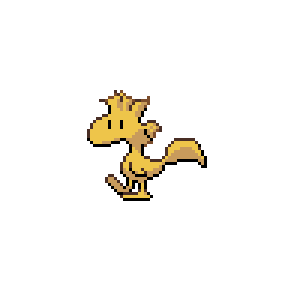
Magmime can deftly manipulate the lava composing their hands. By hardening the lava into complex shapes, Magmime perform intricate shadow puppetry, using their bright bodies as a backlight.
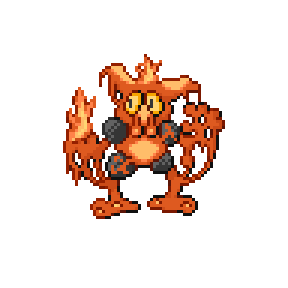
Magbat roost in caves near active volcanoes, where they can easily feed on magma. They fly almost silently, the sizzle of their blazing wings serving as the only warning of their approach.

To avoid predators, Magllery lives in undersea volcanoes, storing magma in its shell. By expelling the magma from its siphon, it can subdue prey and escape foes.

Because their rocky bodies weigh them down, Magtine fly low over the ocean, barely skimming the surface. Drops of lava that fall from their wings into water become flawless black glass.
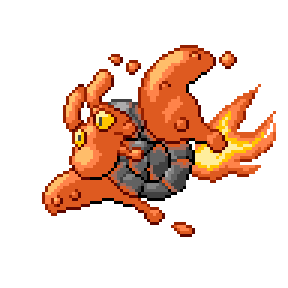
Magpiny carries an egg-shaped rock in its belly pouch, warming the stone with its high body heat. Place a Magpiny stone into a pool to create an instant restorative hot spring.

Due to its high body heat, Maglax's metabolism runs extremely fast. It must eat constantly, even waking during the night, to ensure that it consumes enough calories to grow.

The twin swords of Magblade coordinate their combat telepathically. When defending, they harden their rocky outer shells, but when attacking, they shed the shells to slash and burn foes with blades of lava.
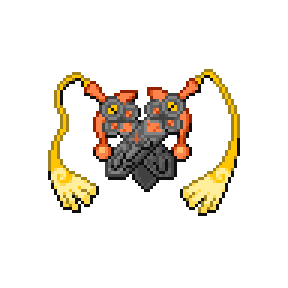
The ring around its shell constantly rotates, providing a renewable source of accessible energy. A single Magklang stores enough energy to heat and power large foundries.
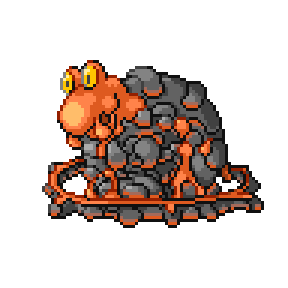
Their fluid legs make locomotion awkward. To travel long distances, Magthorn use their feet to weld themselves to passing vehicles. They will also attach themselves to Steel-type and Rock-type Pokémon.

Sustained by its own body heat, Magkoth can go weeks at a time without moving at all. It never uses its limbs to travel, preferring to slide across the ground like a lava flow.

Magink can spin the magma stored in its shell like a turbine, which creates electricity that it uses to float above the ground. When the magma cools, Magink must crawl on the ground until it can consume more.
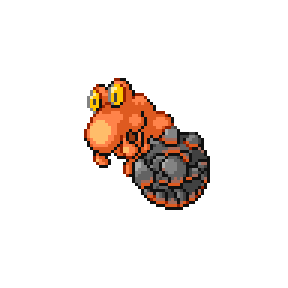
If Magang cannot escape a threat by floating away, it will eject balls of lava at its pursuer as a last resort. Losing too much of the lava reserves in its shell will bring it crashing to the ground.
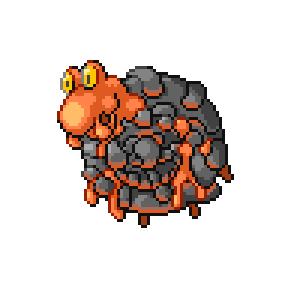
What looks like magma on Magonee's top is actually bright orange cotton, prized not only for its quality but also for its warmth. Clothing made from Magonee cotton remains warm in even the coldest temperatures.

Magseed's body glows brightly but gives off little heat. Because Magseed can cling to stone walls with their rocky spines, miners use them as lanterns when navigating caves.
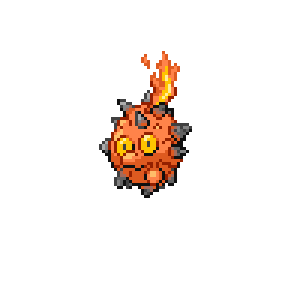
When Magish bury themselves in the dirt at sundown, their ashen leaves drop off and regrow overnight. Gardeners collect fallen Magish leaves for use as fertilizer.
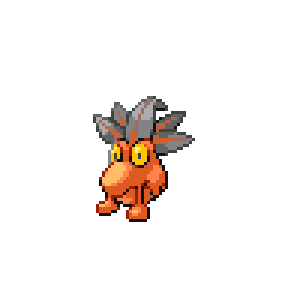
Maglucha intentionally weakens its shell and cools its body heat to eliminate its combat advantages, preferring to rely on skill alone. Pro wrestlers adorn their masks with Maglucha's fiery feathers for good luck.

As Maglett tunnels underground, it leaves behind a trail of lava, scorching the plant roots above it. Maglett can be tracked by following the paths of burnt grass.

Magtrio bore up to 60 miles deep into the planet to bathe in fresh magma. It was once thought that Magtrio could create new volcanoes, but the tunnels they dig are too narrow for magma to reach the surface.

Because their tongue burns much hotter than the rest of their body, Magder will always leave it sticking out. Since Magder bury themselves in sand to sleep, divers will see groups of orange tongues sticking out of the seabed.

The fractures in Magster's shell expose its soft core and weaken its defenses. It compensates by increasing its temperature to unbearable levels and firing sharp spikes at foes.

It hides among rocks on the sea floor, where prey might mistake its mouth for a safe hiding place. However, sometimes the potential prey is too large to fit and becomes stuck.

It hides among rocks on the sea floor, where prey might mistake its mouth for a safe hiding place. However, sometimes the potential prey is too large to fit and becomes stuck.

It reveals a person's nature with its mirror-like skin. A pure-hearted person will see a bright reflection of themselves, but the reflection of a stone-hearted person will be dark and distorted.
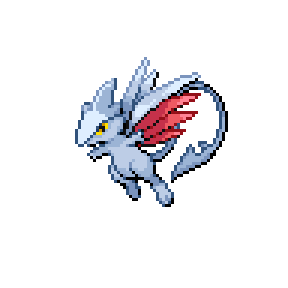
It cannot close its jaws, so smoke constantly emerges from its mouth, along with a loud buzz. Hounsir fights acrobatically, slashing and kicking foes with its claws and horns while blinding them with smoke.

Because it lacks pincers for catching prey or tearing up plant matter, Ekras is an ambush predator. The mushrooms on its back serve as bait for its victims.
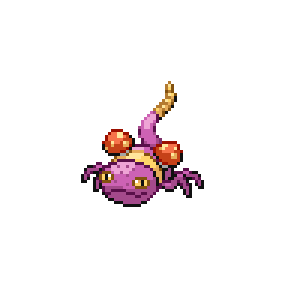
Because its long neck makes movement through tall grass awkward, Ekras is an ambush predator. The mushrooms on its back serve as the bait for its victims.
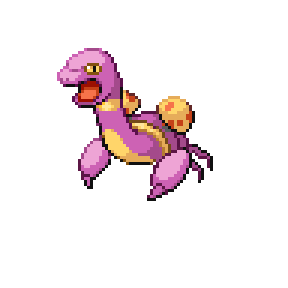
What appears to be a rattle on Ekras's tail is actually a third mushroom, which tastes different from the other two. Ekras sheds and regrows the tail mushroom every few months.
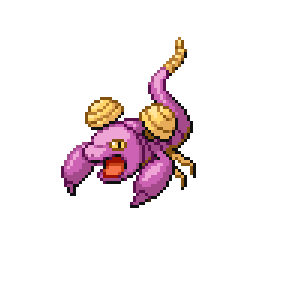
Its ability to blast abrasive sand from the cannon on its back has made Phanesect a favorite companion of construction companies and many kinds of artisans.
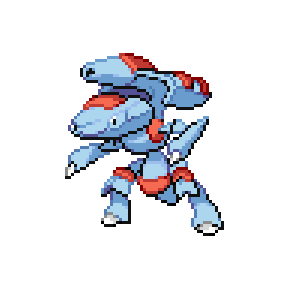
Tennis players favor Donbarel as a practice partner because it can launch tennis balls from its trunk to precise locations on the court. Donbarel uses its tail as a racket to strike volleys that test the player's reaction time and speed.
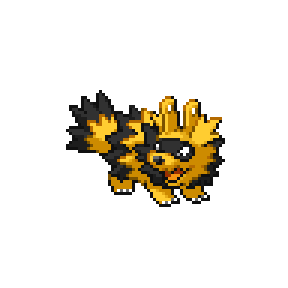
Glowing objects fascinate Elezagoon. If it holds a light bulb in its mouth, the electricity in its body makes the bulb illuminate.
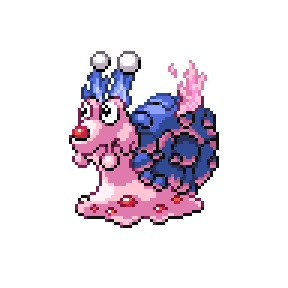
It climbs vertical surfaces to make its soft shell more accessible for milking. Milcargo can be trained to give hot milk as a sleep aid for young children.

Incorporating many varieties of rocks and minerals into its body enhances Larvisis's psychic power. As a result, Larvisis is nomadic, rarely staying in one location for more than a day.

It slowly bounces along the seabed using its springy tail. When on land, Azuyu cartwheels with its star-shaped body to travel at high speed.
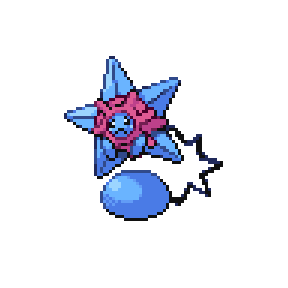
Ambiwig uses its hands on its tails for most actions, even ambulating with surprising speed. As a result, Ambiwig makes a formidable basketball player: it ably shoots, passes, blocks, and even dunks with its strong and dexterous hands.

It seeks out gatherings of people to show off its mimicry skills, but it moves so slowly that an event often ends before Mimecargo arrives. In front of an audience, it may become nervous and hide in its shell.
Mimegon-Z prefers to imitate researchers more than any other group. It sneaks into laboratories to observe researchers at work and mimics their actions using improvised props.
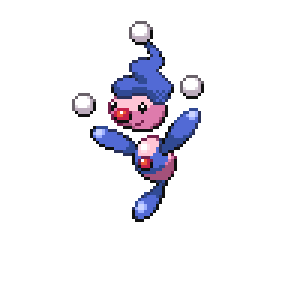
If Happiras bonds with its Trainer, it will offer them one of its puffy white mushrooms, which rapidly regrow after being harvested. The mushrooms often taste like the Trainer's favorite food.

Magnepede refuses to turn aside from its path; instead, it speeds forward and uses its steel shell to smash through obstacles. It flashes its antenna to warn others of its approach.
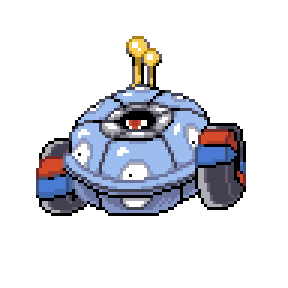
Both its tongue and its tail are flexible, extensible, and dexterous, allowing Lickiew to perform tasks with each independently. Though capable of floating, Lickiew usually bounces along on its bottom.

To feed, Lickisect wraps its tongue around a tree and shakes the tree until it drops fruit. Lickisect's corrosive saliva leaves a ring where it contacted the tree.
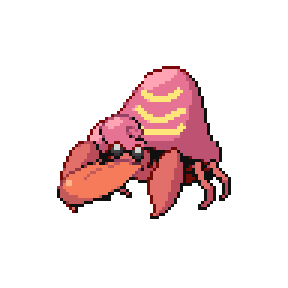
Rhysect announces its presence by thumping the ground with its clubbed tail, causing tremors that some mistake for an earthquake. It fires its horns with enough force to pierce through boulders.

Magmorcargo can fire a stream of white-hot lava from the cannonlike extension on its shell. When traveling between volcanoes, it uses this ability to form land bridges for crossing bodies of water.

As its Trainer's happiness grows, the horns on Kirgron's head grow as well, increasing its psychokinetic power. A well-loved Kirgron can have horns in excess of 30 centimeters long.
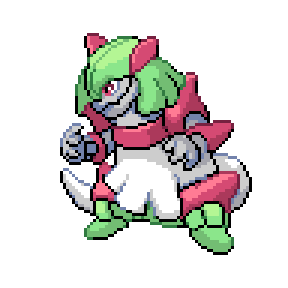
Kiron is closely attuned to its Trainer's feelings. If it senses happiness, it will playfully headbutt its Trainer; if it senses sadness, it will sing to cheer them up.
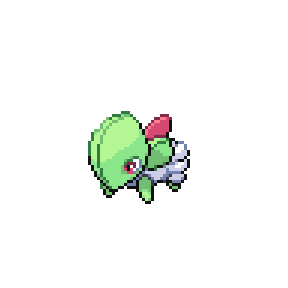
When Kiron's Trainer is happy, it skips joyously in circles around them. However, Kiron must be taught to mind its step, as it tends to trample anything in its path.
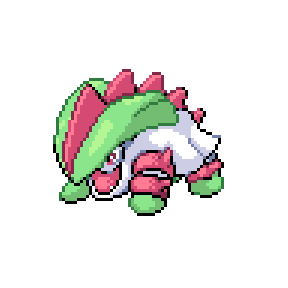
It sneaks into barn lofts and sleeps in haystacks. Its snores are often the first sign of its presence.

Slano carries a pendulum that looks like a Chesto Berry. It uses the pendulum to hypnotize other Pokémon and persuade them to bring Slano fresh forest fruit.
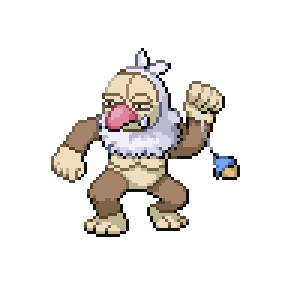
Though Doubcham is a capable combatant, it's also an elegant dancer. Doubcham creates colorful auras around its swords that make it seem like it's wielding double rainbows.
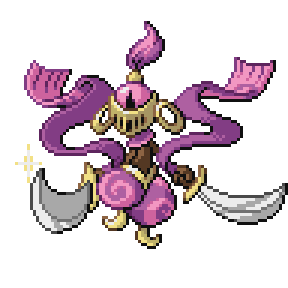
Aegicham attacks by throwing its shield and controlling the shield's flight while Aegicham defends itself with a spear. Once Aegicham senses an opening, it knocks the opponent off-balance and slams them with the shield for a devastating blow.
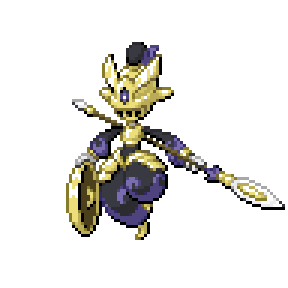
Once it claims territory, Agglia camouflages the area by creating mirages to disorient intruders. If this diversion fails, Agglia will rapidly strike its opponent with its sharp steel horns.
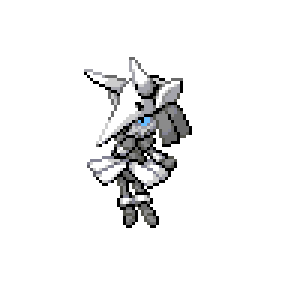
Repair shops rely on Klinktu's mechanical expertise to help them restore appliances, machinery, and vehicles to working order. Klinktu also combs through landfills, searching for items to reclaim from the trash and transform into treasure.
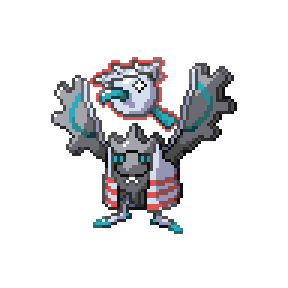
Defended from all angles, Klinktress floats wherever it pleases, launching miniature gears from the spikes on its sides if threatened. Its tendency to block roadways makes it an urban scourge.
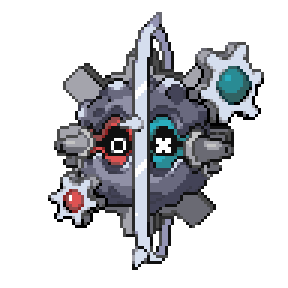
Rosew's tail glimmers with a powder that promotes floral growth and stifles weeds. Rosew sheds the powder as it flies, causing fields and forests to flourish and bloom.

Drifbtank is a favorite on farms not only for its milk but also as an amusement ride. It allows children to hold onto its tail as it floats around the farm.

Reunitar uses its tremendous psychic power to crush obstacles in its path, turning even hard stone into dust. Rather than climb mountains, Reunitar appears to walk straight through them.

As a master of combat, Ferroking vividly remembers the battles it sees or partakes in and incorporates other Pokémon's strategies into its own repertoire, adapting them to suit its clubbed vines.

It has two pairs of eyes: the eyes on its head focus its psychic power, while the eyes on its tail track targets to bombard with steel spikes. Ferrobro does both at once to penetrate any foe's defenses.

The waxy substance collected from the shells of Litcargo burns with a purple flame. Their slow pace has earned them the nickname "creeping candles."

If it can't orient itself with its acute hearing, it sprays a burst of fire to light the way. Vulbat can fly backwards swiftly by using its many tails together as a third wing.

It blows fire from its mouth and shapes the flames around its body to imitate a stronger Pokémon. Some who believe they've seen Moltres actually saw Vulvern in disguise.
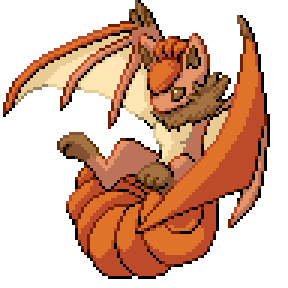
Basketball teams value Bivire as a defender due to its sturdy build, large hands, and long arms. However, it tends to be a sore loser, and if its team suffers defeat, Bivire is likely to gnaw on the court's floorboards in frustration.

It chooses steel to consume by using its horns to sense the steel's quality. When Arlia evolves, it sheds its armored skin, which is collected and melted down to make durable alloys.
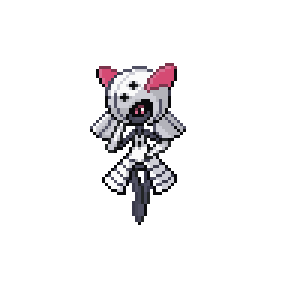
Depending on the individual, the bulbs on Arcott's back could be made of steel, wool, or a combination of both. It is difficult to distinguish between them without touching them.
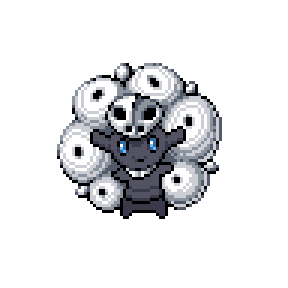
The hardy mushrooms on its back are rich with minerals absorbed from its rocky diet. Aras mushrooms can be ground and sold as vitamin supplements.
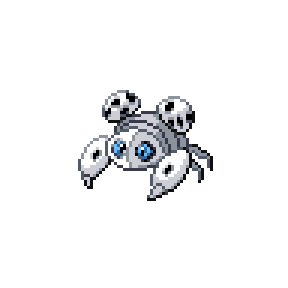
The hardy mushrooms on its back are rich with minerals absorbed from its rocky diet. Aras mushrooms can be ground and sold as vitamin supplements.

Fiercely territorial, Lairlia duel for territory by throwing each other about with their psychokinetic powers. Their ability to see the future helps them predict their opponent's moves.

Using a specialized glue, it adheres itself to metal surfaces. Some Trainers use Klico to prevent their bicycles from being stolen.
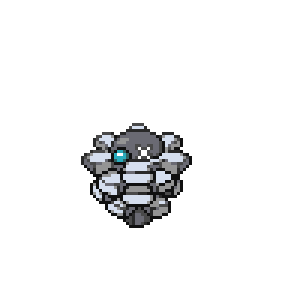
When it rotates its gears, it causes a humming sound that it can pitch by varying its rotation speed. City parks attract Klaco because they provide trees to nest in and technology to harmonize with.
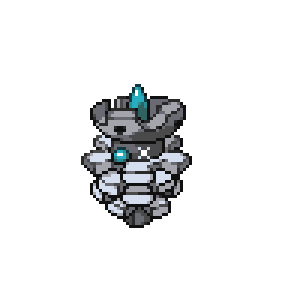
Rosew sheds its petals as it flies, leaving a trail of brilliant color. The petals are popular in aromatherapy because they retain their scent for months.
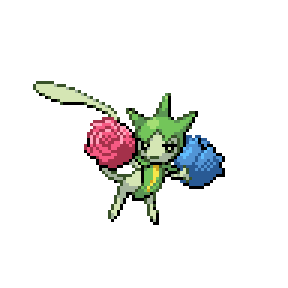
The udder-like portion of Drifltank's body is filled with a gas that is lighter than air. If this area is squeezed, the gas is released, and Drifltank slowly deflates and floats to the ground.

Tremors in the ground disorient Duotar by causing its fluid body to ripple. Duotar tends to avoid seismically active areas as a result.
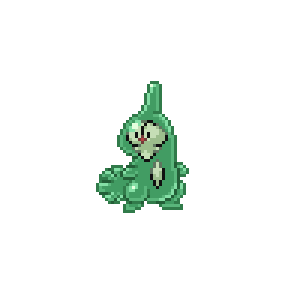
Usually, the gel surrounding Duotar is firm, but it can alter the gel's consistency to make its body malleable. This allows Duotar to slip through tight crevices in its mountainous habitat.

It often forgets it has a spiny tail. If it lifts its tail for too long, it then grows tired and drops it, accidentally poking itself with the spines.
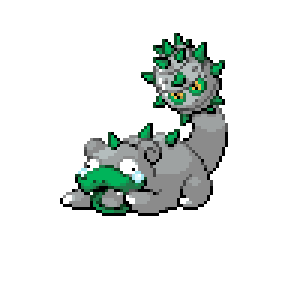
It constantly worries that its tail is taking over its body, though the tail has no mind of its own. This worry will even distract it in the midst of battle.
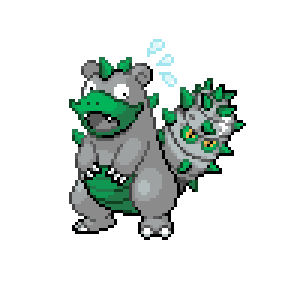
On top of its body, Venimite has a flexible spike that delivers a painful sting. It navigates using the hard spines on each side, which sense magnetic fields.

It creates patterns of glowing green lights to communicate with other Veniton. It also flashes the lights to disorient opponents before delivering an electric shock.
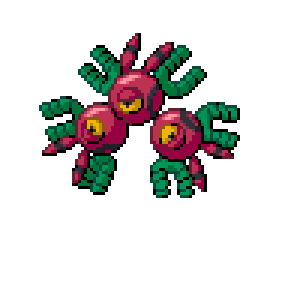
Whirliton rotates and tumbles freely about its center, rarely stopping. Because each of its three component bodies also spins freely, the overall effect is hypnotic.
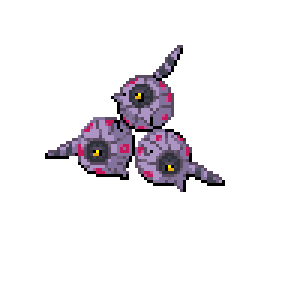
Scolizone feeds indiscriminately, swallowing its prey whole or delivering a paralyzing toxin with its fangs to subdue larger quarry. Its electric spines can shock multiple foes at once.

Glaras freezes its food before consumption, digesting it slowly to extract nutrients efficiently. The crystalline formations on its back are a specialized fungus that can withstand subzero temperatures.
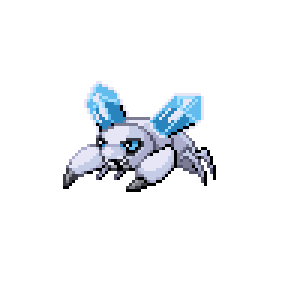
Garbew flies low over the sea and attaches floating garbage to its tail, creating a trail of litter that can grow up to an estimated 100 meters. It then teleports away, along with its collection of trash.

As it flies, its wings stir up the fine ash that coats its tail, leaving a trail behind it. The ash is safe to eat and has a spicy flavor.
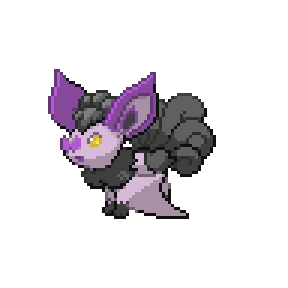
In bright sunlight, Altatress covers its large, sensitive eyes with its cloudlike shell. As a result, on sunny days Altatress can no longer see where it's flying.

Altabell acts as a portable adjustable basketball hoop for amateur athletes, with its mouth as the hoop and its leaf as the backboard. Altabell will float close to the ground to allow young players to practice their slam dunk skills.

The cottony foam that pours from the cannons on Altatoise's back provides a sustainable alternative to traditional insulation materials. New home builds regularly have Altatoise on-site to insulate walls on the spot.

Vileobat sometimes sits atop Tangrowth in a symbiotic relationship: Tangrowth uses its strong vines to defend Vileobat from predators, and Vileobat draws in Tangrowth's prey by emitting an alluring scent.
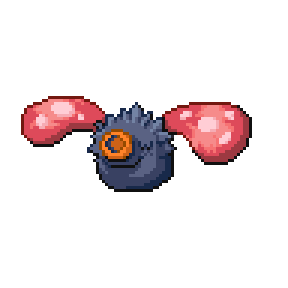
It uses the claws on its earlike arms to break open fruit. Since most of the nutrients Panaut ingests serve to harden its body, the mushroom at the end of its tail remains shriveled.
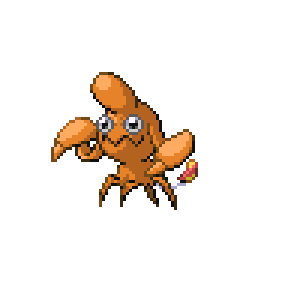
A specialized gel-like substance surrounds Pasis's head, moisturizing it in dry conditions. As its psychic powers develop, the mushroom on its head grows.

A foul-tasting fluid envelops Pasis, deterring predators. The claw-like mushrooms on its body grow as it consumes psychic energy.

To satisfy its desire for sweet food, Palix feeds on sap by puncturing a tree with its legs. Its mushrooms have a distinct syrupy flavor.
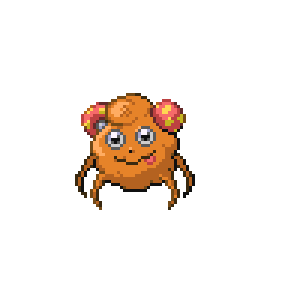
Paskit inhabits swamps, where it can skate across the water's surface, feeding from and hiding within exposed tree roots. Its mushroom caps exude a sweet scent.
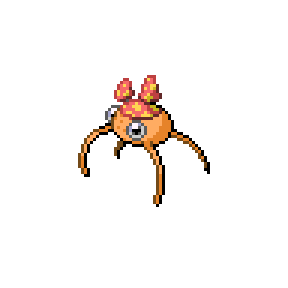
Before a battle, Paraleef twirls the pale leaf on its head to release a cloud of invigorating spores. In dry conditions, it uses the leaf to shade the mushrooms in a ring around its neck.

For centuries, teahouses paid handsomely for Paranium spores, which can be steeped to create a soothing hot tea. Formerly an indulgence of the wealthy, Paranium tea is now widely available.

Paralicky can accelerate by using its powerful tongue to launch itself forward. A sap-like substance, which functions as a powerful numbing agent, oozes from the mushroom on its back.

Parameleon uses its powerful, sharp claws to tear into tree bark, and prefers to fight by producing scorching spores with a swing of its tail.
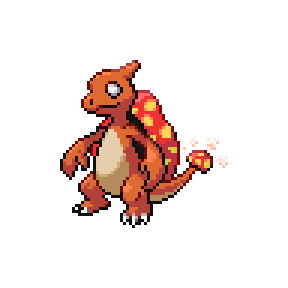
Wimesect attempts to ward off foes by posturing with its fearsome claws. If this fails, Wimesect releases a burst of air from its cannon and sends itself flying to safety.
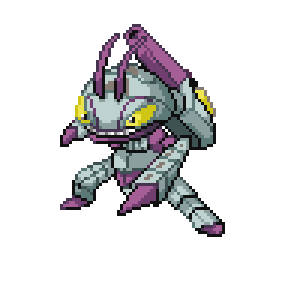
If exposed to the afternoon sun, Swirobat's fluffy fur appears to melt, becoming so dense and matted that its wings can stick to its body. Swirobat mostly emerges on cloudy days that shield it from direct sunlight.
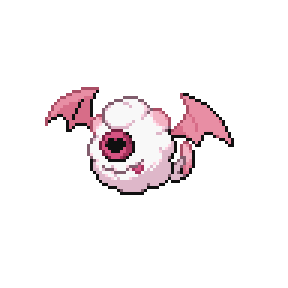
Digras feeds on grasses at dawn and dusk to grow the small mushrooms that cover its back. It travels by digging underground, fertilizing the soil above with the spores on its back.

When Digra wants to sleep, it excavates an underground space by moving dirt with its psychic powers. Digra then moves the dirt to the tunnel entrance to conceal its presence.
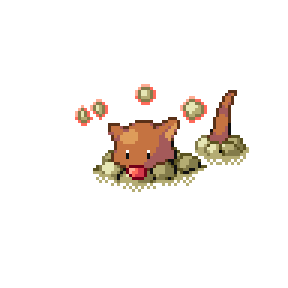
Meowgull live in lifelong pairs. While one half of the Meowgull pair flies over beaches, scanning for items to decorate their nest, the other member of the pair remains at the nest to prevent other Meowgull from stealing their decorations.
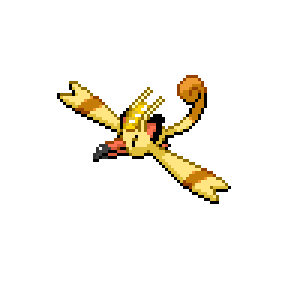
Lunacargo's shell glows iridescent under moonlight, making it desirable as a gemstone. To defend itself, its single red eye has a hypnotic effect that immobilizes attackers with fear.
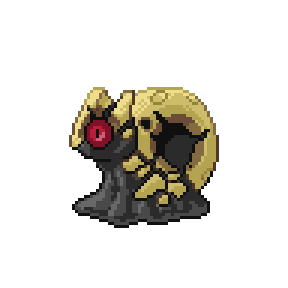
Woob Jr. loves performing its mimicry act for a crowd. If it senses its audience losing interest, Woob Jr. begins dancing or juggling to reclaim their attention, though the fur over its eyes hinders its coordination.
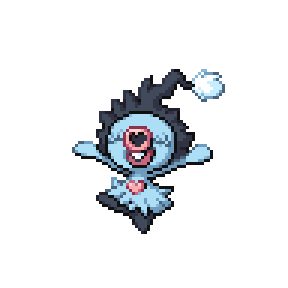
Since Woobrain flies with its four small wings, it uses its two other wings for cover during poor weather. Woobrain acts as a floating umbrella for those who befriend it, and with its help, construction workers can continue working, rain or shine.
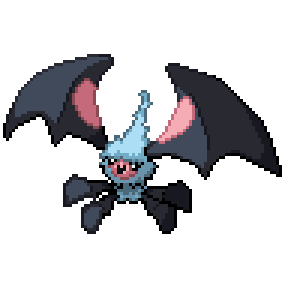
Alaesect telekinetically controls the spoon-shaped missile that it launches from its cannon. The missile leaves a trail of psychic disruption that Alaesect uses to trap foes before striking with its claws.
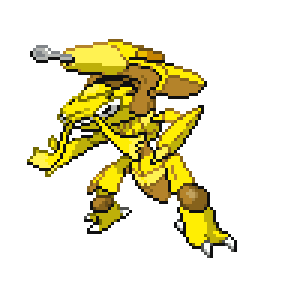
Alatrio travels just a few feet underground, while its three spoons hover at the surface, sensing the surroundings. If danger approaches, the spoons distract the foe while Alatrio emerges to launch a direct psychic attack.
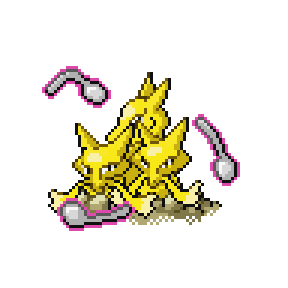
It perches high in treetops, where its loud, piercing cry can be heard for miles. Researchers have measured Bellbird calls at around 125 decibels.
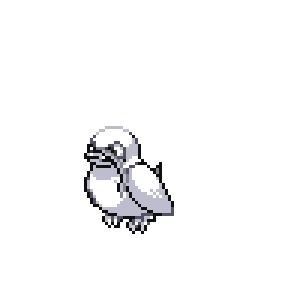
If Weepinew ingests too much sugar, it blows syrupy bubbles from its mouth and attaches them to its stem to eat later. It can also fling the bubbles at attackers to distract them while it flies away.

Victreetine is territorial, diving at trespassers and slashing at them with the leaf at the end of its vine. It covers its mouth with a large leaf to make itself more aerodynamic during flight but opens up the leaf to scoop prey into its mouth.
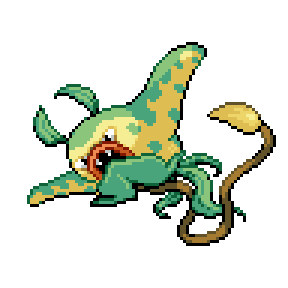
Tentasect floats at the surface of the sea, its bulbous back warning boats to stay clear. It uses the claws on the end of extendable tentacles to snatch flying Pokémon out of the air.

Tentasect is a fearsome predator on both land and sea. Underwater, it lures prey by mimicking kelp with its tentacles. On land, it swings from tree to tree to chase down and leap onto its victims, trapping them with its spikes.
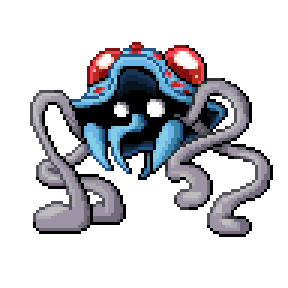
Magnecargo metabolism requires electricity. If it grows sluggish, its shell uncoils into a long wire, which it can extend towards power lines or use as a lightning rod during storms.
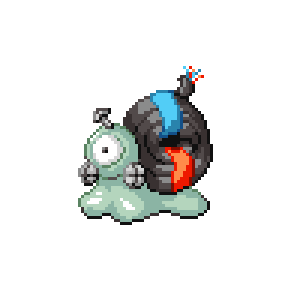
The studs on its body make rolling difficult, causing it to bounce when moving. For this reason, it prefers to roll along overhead power lines, where the studs act as guides.
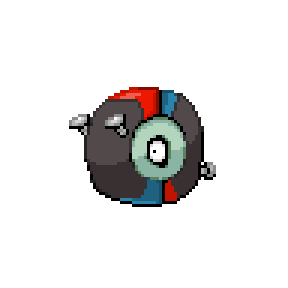
Magneras uses the magnets on its back to orient itself and navigate complex cave systems. Three small mushrooms surround its lone eye, often interfering with its vision.

The two units at its sides spin independently from the central unit, allowing Magnepede to swiftly maneuver itself with precision. Its studs drip poison that smells like burnt rubber.
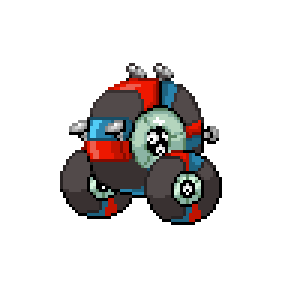
The magnetic units on its head and tail vibrate at a frequency that makes opponents nauseous. Its body is lined with eyes, making Magnepede difficult to surprise.
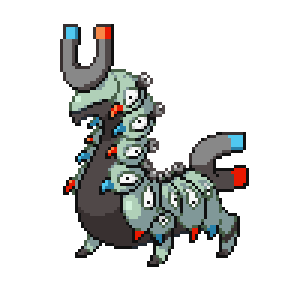
Construction companies employ Fargle to paint exterior walls because the ink on its leek is especially durable. Interior decorators and designers covet the same ink for its bright hues.

Griras feeds on poisonous flora and fungi; the more potent the poison, the larger the mushrooms on its back grow. The trail of sludge Griras leaves as it travels promotes fungal growth.
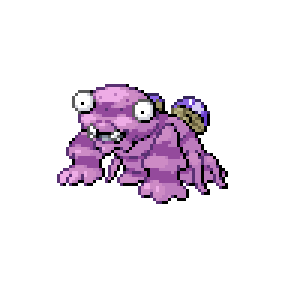
Gasras is entirely nocturnal and very sensitive to light, sleeping underground during the day. If exposed to sunlight, it will shroud itself with spores to remain in darkness.

Its ethereal mushrooms phase through cave walls, leaving a trail of spores. Pokémon that encounter Haunras spores become paralyzed with fear, making them easy prey.

It flattens the soft shell on its back to squeeze through open windows and feed on dreams. If Drowcargo finds your dreams particularly delicious, it will try to live under your bed.
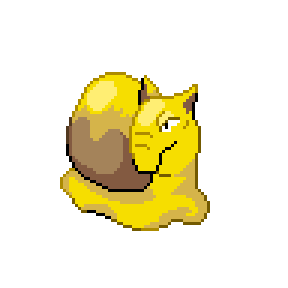
Hypking is able to hypnotize up to ten foes at once. Rather than fight the entranced opponents itself, it directs them to fight each other.
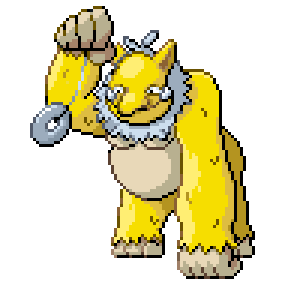
If it senses danger, it rocks from side to side, rhythmically waving its claws. Its mushrooms then release spores that hypnotize its foe into sleep while Hypras escapes.
