54 pokedex entries by secondegg
Often spotted around restaurants or bakeries, Exeggucargo absorbs scrapped eggshells as nutrients for the heads on its back. It takes great care to feed each head equally, as they will become agitated if underfed.

When Ditcargo sees a predator, it will rearrange the rocks on its shell into the shape of a large Rock-type Pokémon to scare it away. It is important that this disguise works, as any Pokémon that sees through it can easily break its fragile shell.
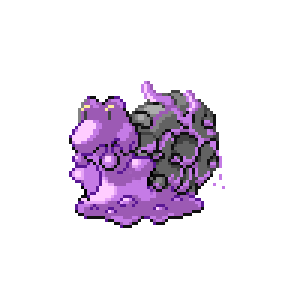
By heating the air within its cotton-like shell, Jumpcargo can float in the wind to travel great distances. It seeks out barren areas, spreading seeds that it has picked up in its travels along with its slime, which helps promote plant growth.

Ratcargo wears a hardened cheese wheel on its back to protect itself. This often backfires, however, as other Pokémon see its shell as a free meal.

Magsaur stores magma in the bulb on its back, nourishing itself with the thermal energy it produces. This allows it to continually produce warmth even in the coldest climates, making it a common companion during arctic expeditions.

The flammable gases Magfing produces are constantly being lit, producing seemingly endless plumes of flame and toxic smoke. If agitated, it releases all of its gas at once; the ensuing explosion creates enough smoke to temporarily block out the sun.

Magsea makes its home in small lava pools, using its flame breath to roast small insects that fly too close. If it spots a predator, it spews smoke instead, concealing it for long enough to dive back into its pool.

It has great control over its body temperature and can even cool itself enough to be comfortably ridden by humans. An old folktale tells of a group of Magras saving an entire town from a volcanic eruption by ferrying them across the flowing lava.

Maguna cools part of its body into a rocky shell to protect itself while it undergoes metamorphosis. If it is threatened, it releases flames from the cracks in its shell.

Magnair lives within volcanoes, swimming through magma at surprising speeds. It is said to have the power to cause volcanic eruptions, and some have been seen flying into the sky during these events.

It superheats its jaws, allowing it to easily bite through rock and steel alike. Roads passing through Magdile habitats are often closed due to it destroying vehicles while playing.

Although its wool is incredibly hot to the touch, it will cool down if it is sheared. Even when cool, this wool is a very effective insulator, and many use it to make winter clothing.

Magtata scurries around volcanic regions, searching for food during the day, while hiding in small cracks at night. It gnaws on rocks to whittle down its teeth, occasionally melting right through them in the process.

Magkern lies in shallow lava pools, absorbing energy from the heat. It stays perfectly still in the process, leading many to mistake it for a rock.

It absorbs energy from sunlight, storing it in the shell on its back and releasing it as warmth. It is said that on even the coldest nights, standing near a Magflora feels like a warm, sunny day.

Although its front half reaches temperatures of up to 3,000 degrees Fahrenheit, its back half is surprisingly cool, even able to be touched without protective gear. To keep both halves happy, it dips its head into lava, while the tail stays clear.

Magsel has little way to defend itself aside from its body heat, so it steals the shells of Magcargo. It knows these shells are quite brittle, so it breaks them over its opponent's head and escapes in a cloud of dust and smoke.

Magsola lives in deep ocean trenches, feeding on geothermal energy produced by volcanic activity. Entire ecosystems are often centered around Magsola, as many deep-sea creatures rely on the energy and warmth it produces.

Magby demonstrate great control over the temperature of their flames. Because of this, they can be trained for many different jobs, ranging from cooking, to metalwork, to even a personal heater.

Magron's entire body is made of molten steel, save for the heat-resistant plating on its head. It exclusively hunts other Steel-type Pokémon, melting their metal parts into its own body.

Magquaza flies high in the sky above volcanic regions, descending during eruptions to feed on volcanic gases. It was once believed to be a harbinger of destruction, as its only sightings were followed by cataclysmic events.

Maglure lurks in cold, dark areas, providing an alluring source of warmth and light. However, it is said that those who stay near it for too long will be compelled closer and closer to its flame, until ashes are all that remains.
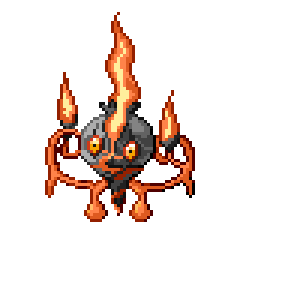
Powered by the magma within its core, Maglurk is mainly found within ancient ruins in cold regions. For this reason, researchers theorize that ancient civilizations once relied on them for warmth.

At first, Magpix has a single rocky tail, filled with lava. When this tail cracks, the lava leaks out and cools, forming an entirely new tail each time.

They burrow through hot desert sands to prevent their molten bodies from cooling down. Wherever they have burrowed, they leave tunnels of glass.

Magrunt live in snowy regions, and many Pokémon rely on them for warmth. During strong blizzards, there appears to be a bubble around them due to the snow melting before it can touch the ground.

Floating on wings of volcanic smoke, Maglu travel to cold areas, perching on people's heads to keep them warm. Rarely, large flocks of these Pokémon have even been known to block out the sun.

Wherever Magmy travels, it leaves a trail of sticky, burning slime. It is considered a major nuisance by many, as its slime is incredibly difficult to remove, and has been known to cause wildfires.

It loves to hug trainers it comes across, which makes it unintentionally dangerous due to its immense body heat. Unlike Bewear, it can control its strength and can even be safely hugged if one is properly equipped to withstand its heat.

Maggy's body is constantly cooling, so it sheds thin layers of volcanic rock to keep its entire body from hardening. It can hide in its rocky skin to protect itself, but if it stays in this state for too long, it will be unable to break free.

Magtad floats on the surface of lava flows, preferring the hotter temperatures of an active volcanic eruption. Small Pokémon have occasionally been seen using them as stepping stones to get across.

Magdot hangs from trees, attempting to mimic an acorn. However, it frequently has to move to a new tree due to unintentionally burning down its previous one.

Maglow flies constantly in search of warmth, only stopping to rest when it is in a sufficiently hot area. Its rock-like feathers are very brittle, and will crumble into dust if it is not handled carefully.
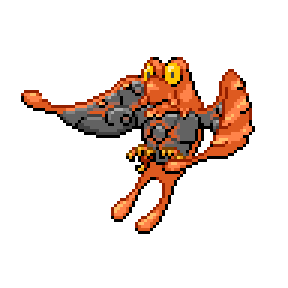
Magliper can often be seen flying around volcanoes, appearing to feed on the lava itself. The insides of their beaks get hot enough that some fishermen have trained them to cook fish.
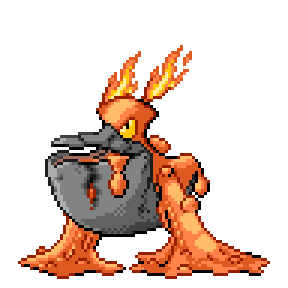
By blowing air through its horns, Magloud can perfectly mimic the sound of a volcanic eruption. It expels a large amount of hot air and smoke in the process, often frightening away its opponents before a battle can even begin.

Using the immense heat and pressure within its shell, it produces a variety of gemstones. It is very prideful, decorating itself with these gems in a vain attempt to appear more beautiful.

Its dark, obsidian spikes absorb solar energy, which is stored within its rocky shell. It is believed that the inside of a Maglrock is as hot as the sun itself.
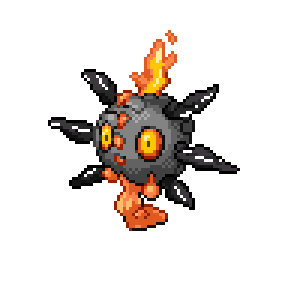
Magdaunt is a ferocious ambush predator, in spite of its slow speed. It sneaks up on its prey, trapping them in its magma-filled claws.

Its shell has hardened into pure obsidian, making it incredibly heat-resistant. It burns its attackers by spraying lava from its mouth.

Unable to regulate its own body temperature, its heads are at risk of hardening into stone if they cool off too much. To counteract this, they take turns dipping themselves into lava flows to heat up.
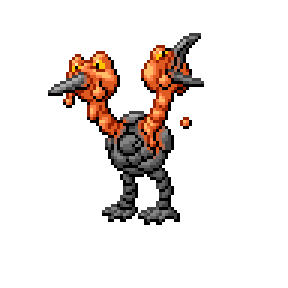
Magnix are seldom seen in the wild, as they bury deep within the world's mantle. On the rare occasion one is spotted above ground, nearby towns are evacuated, as they only ever surface in response to intense volcanic activity.
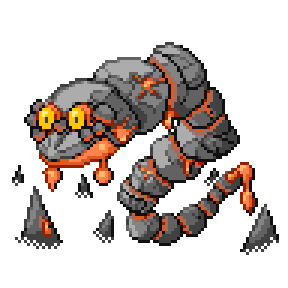
Octicargo stores pressurized water in its shell, which it shoots at prey in powerful bursts. However, due to the immense pressure, even the slightest crack in its shell will spring a powerful leak.
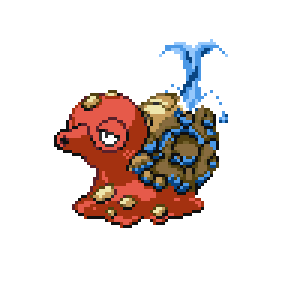
When Doncargo curls into its shell, it can roll at speeds of up to 75 mph, blazing fire overtaking its body. Wherever one has traveled, it leaves a trail of burnt grass in its wake.

By superheating part of its sandy body, it creates a shell made of glass. Should this shell break, it can simply absorb more sand and repeat the process.

Many people keep Glacegon-Z on their computers, as they help cool down the hardware. However, some have reported them going haywire and causing their entire computer to freeze.

Poryark sneaks into people's computers, pretending to be a frequently used program. If the user tries to open it, it fully infects their computer, causing all of their data to go haywire and rendering the computer unusable.

Its glitched flame siphons and deletes data from nearby electronics. There have been rumors of GPS systems going haywire, leading people down isolated roads with nothing but a Porywick.

Porypet lurks in social media sites, corrupting the algorithm to show people posts that will make them angry. It is believed to feed on the negative reactions it receives, and in the process, it learns how to anger people even more.

Ramcargo are very territorial and will clash in a head-to-head duel if they come across another of their own kind. Due to their slow speed, these battles are usually anticlimactic.

Venidude buries itself in the ground, using its eyebrow-like antennae to detect vibrations above it. When it senses a Pokémon nearby, it punches them repeatedly, the stingers on its knuckles injecting a potent venom.

Froscargo's shell is full of freezing gases, at some of the coldest temperatures ever recorded. When other Pokémon get too close, it releases these gases, freezing them solid.

A young Digcargo burrows through volcanoes in search of a rock to become its shell. Once it finds a rock it particularly likes, it will keep it for the rest of its life.

A very combative Pokémon, Crawdaunt collects shells from the enemies it has defeated. As its collection grows, it frequently has to migrate to new ponds, as any potential prey is scared away by its presence.
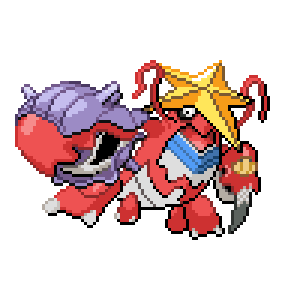
In addition to its incredibly hard shell, Shellcargo secretes a sticky foam that makes it hard to eat. Because of this, it has very few predators, as most decide it is not worth the effort to hunt.