Page 6 / 8 of 7640 pokedex entries by .izik.
In ancient merchant grounds, Golurk was used as a sentinel against theft. If trouble arose, it released a deafening Screech to alert guards.
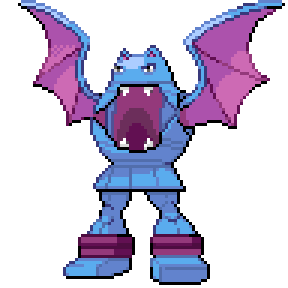
Golrona prefers to settle in forests recently ravaged by wildfires. The lingering heat provides a perfect environment for it to thrive.
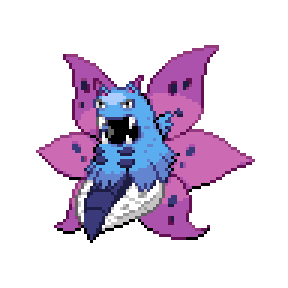
The metal plating on Golron's body naturally flakes off over time. Ancient civilizations once used these flakes to forge durable medical tools.
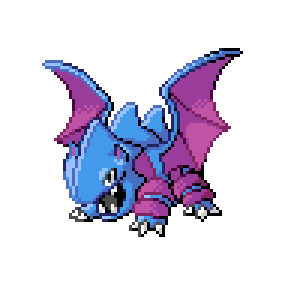
Golagon struggles with sustained flight. Instead, it glides between plateaus, using mountain thermals to conserve its strength.
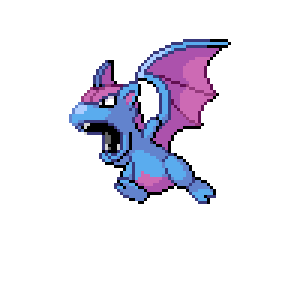
Golelgon's thick hide keeps it cool even in extreme heat. If it encounters a foe strong enough to harm it, it retreats without hesitation by flying away.
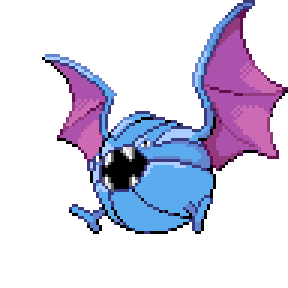
Golsis will use its psychic powers to float in caves and use telekinetic blasts to subdue foes. It is primarily active at nighttime and seldom leaves caves during the day.
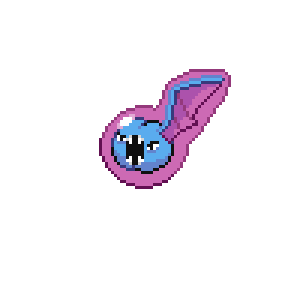
Golsion emits powerful psychic pulses to stun its prey. Once incapacitated, it drains their energy with a devastating Leech Life.

Tropical resorts rely on Golxure during night festivals to cut coconuts for drinks. Its sharp tusks can slice up to ten coconuts in a single motion.
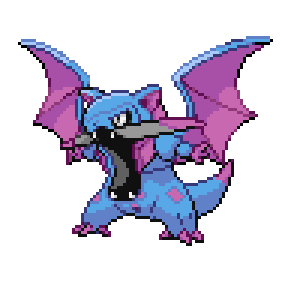
Goleye dangles its gem-covered tongue from cave walls to lure prey like Murkrow. Once close enough, it strikes with precision using a terrifying Night Shade.
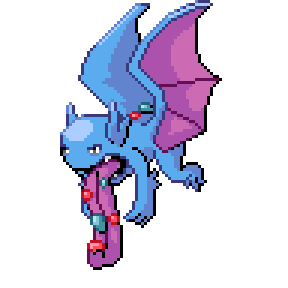
Golrunt freezes prey with its frigid breath before closing in. Once its target is immobilized, it bites with enough strength to dent steel.
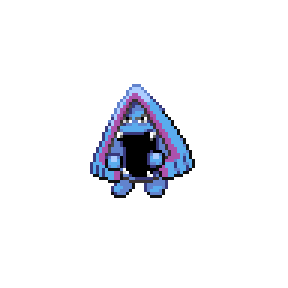
The leaves on Golish's head emit a faint scent of tarragon. Chefs in Veilstone City use these aromatic leaves to prepare their signature dishes.

Golcorio performs an intricate dance, gracefully waving its wings back and forth. This mesmerizing display often distracts prey before it begins its aerial hunt.
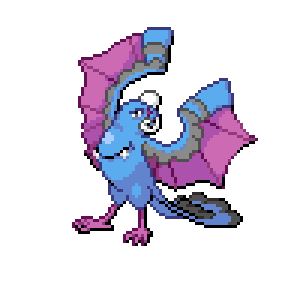
Golcorio performs a graceful ballroom-style dance before striking its foes. It finishes the performance with a devastating Venoshock attack.
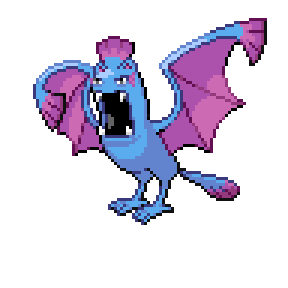
Goltump hides within willow trees, cackling to distract unsuspecting targets. Its eerie laughter provides the perfect opening for an ally to strike.
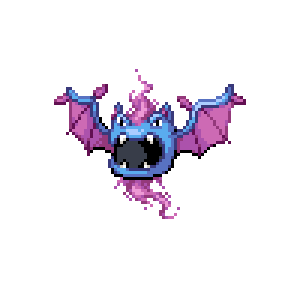
The caustic acid that drips from Goloom's fangs can dissolve plant matter instantly. It uses this to clear out undergrowth in its territory.
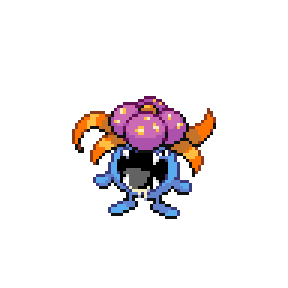
Golria glides with slow, graceful wingbeats until it spots prey. Once it does, it accelerates rapidly with its fluffy wings and divebombs with fangs ready to strike.
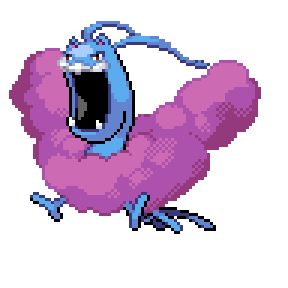
Golwear's fangs are razor-sharp, capable of piercing even tungsten. This incredible strength makes it a fearsome predator in its territory.
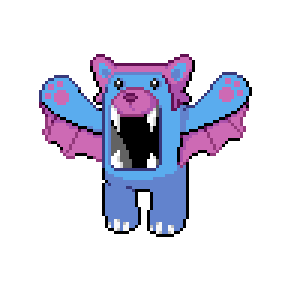
Golmise silently glides through the night sky before dropping onto lifeboats to sink them. Survivors of shipwrecks are often pulled into the depths by its powerful grip.

Golapex waits on the seafloor for smaller prey like Corsola to investigate its cave-like maw. Once inside, it will bite down on the prey.
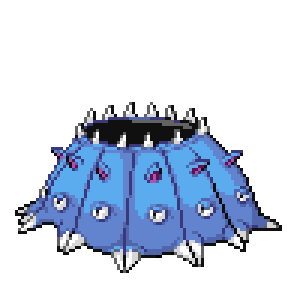
Golmo-o can open its mouth wide enough to swallow a Furret whole. When it is full, its tail scale glows with a mesmerizing violet shimmer.

Golnat's antennae twitch rapidly as it prepares to unleash a powerful Psybeam. If it overexerts itself, it will cover its body in dry leaves to recover while sleeping.
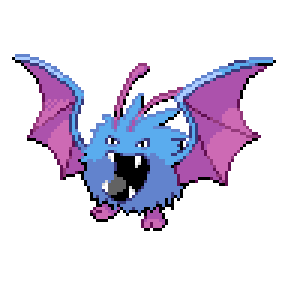
Golkin lets loose supersonic waves from its mouth, then blasts the foe with flames to cook them before eating them.

Golkoal flies over volcanic regions at night, releasing piercing screeches to disable prey like Growlithe. It then dives in to finish the assault with an aggressive Astonish attack.
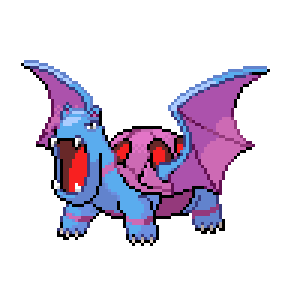
Golmoth releases Poison Powder from its mouth to immobilize foes. This ensures an easy meal before it begins feeding.
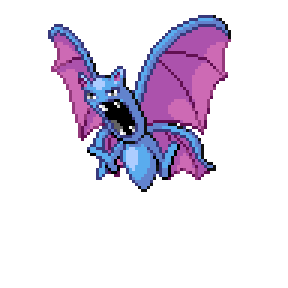
Golty lets out sharp screeches to scare others from its tunnel home. If they persist, it charges with a savage Headbutt.
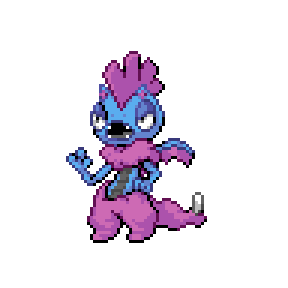
Golbre uses its wings to swim quickly through lakes. It catches prey like Rattata in its jaws, dragging them into the depths to feed.
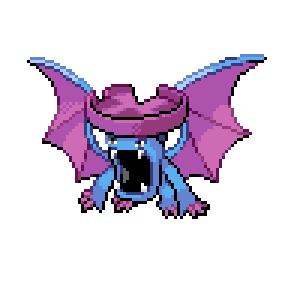
Golett's piercing screeches echo through caves during a swarm attack. After feeding, it digs into the ceiling to rest safely above the ground.
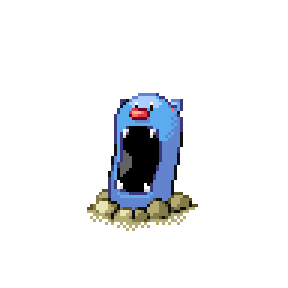
Goltrio coats itself in loose dirt to blend in with paths. It bites travelers' feet and drags them underground without warning.
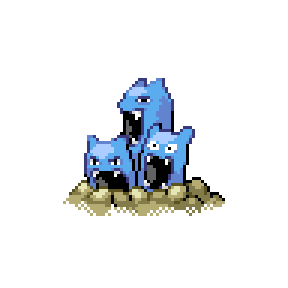
At night, Golmur releases cries powerful enough to shatter stone. Witnesses describe the sound as a harsh blend of a record scratch and a roaring blender.
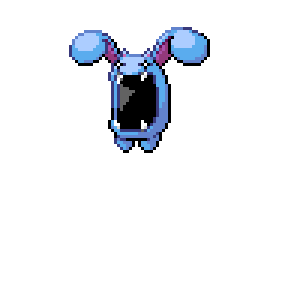
As Goldred flies, its wing-like ears emit a high-pitched tone that unsettles nearby creatures. Human ears can only detect the sound within fifty feet.
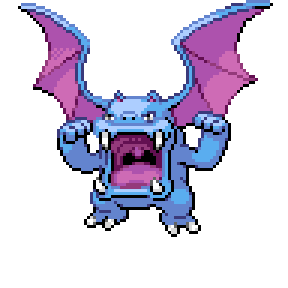
Golhita uses its sturdy wings to perform disciplined martial arts techniques. Each movement combines aerial control with brute striking power.
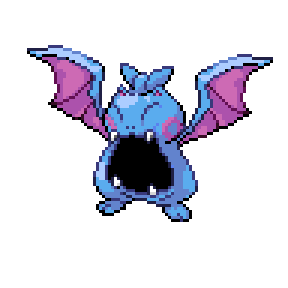
Golyama uses its wings like powerful arms, performing complex martial arts techniques in midair. A single strike can split boulders cleanly in two.
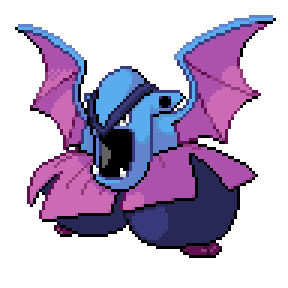
If it spots someone fishing near its pond, Golduck will swoop down and steal their fishing pole. It uses the distraction to take their catch.
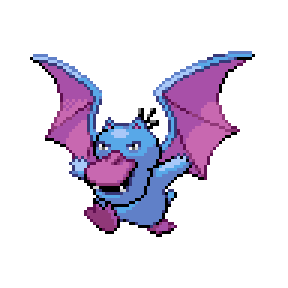
When threatened, Golrock's wings shine with intense light. It spins rapidly in place, confusing predators before making its escape.

Golduck hides near its waterfall den and uses Supersonic to ambush intruders. Its stealthy tactics ensure its home remains undisturbed.
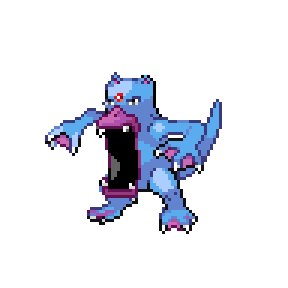
Goleal spits ice-cold bubbles to disorient its prey midair. Once confused, it swoops in and clamps down with sharp fangs.
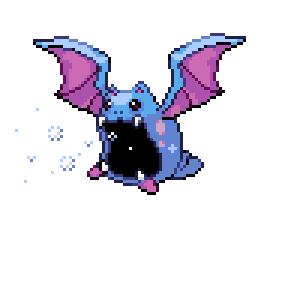
Golkey has incredible control over the strength in its paws. It is sometimes employed by spas to give soothing massages.
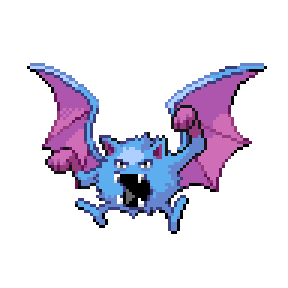
Golwag submerges itself in murky ponds, leaving only its ears exposed. It waits patiently for prey to wander close before attacking.
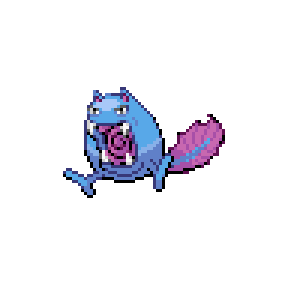
During hot days, Golwhirl submerges itself in lakes to cool off. Its deep inhalations of water can sometimes create whirlpools that drag prey into its reach.
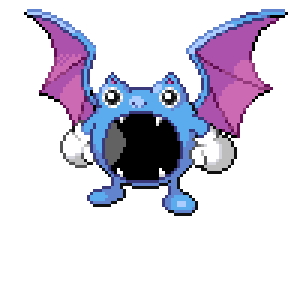
Golkazam uses its telekinetic abilities to construct intricate nests in tunnels. These nests are often lined with reflective stones to ward off intruders.
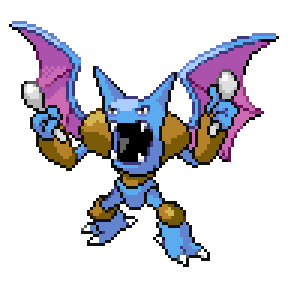
Golcool patrols stormy oceans from the sky in search of prey. Its tentacles seize sailors from ship decks, often with assistance from the rest of its swarm.
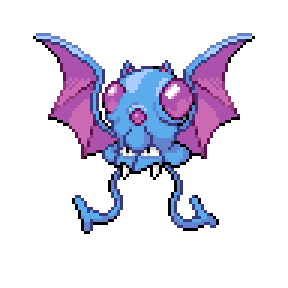
Goldude sweeps its large mouth across riverbanks to ingest nutrient-rich mud. This sustains its energy for long flights.
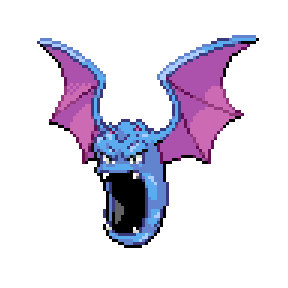
Goler tears shrubs from cliff walls while flying and devours them mid-air. It prefers high-altitude vegetation for its meals.
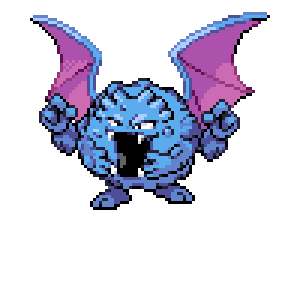
Golem's rock-hard body is completely hollow inside, allowing its wings to easily fly it through canyons at night. It will slam its stone body into a foe if threatened, using its sturdy form to crush opponents.
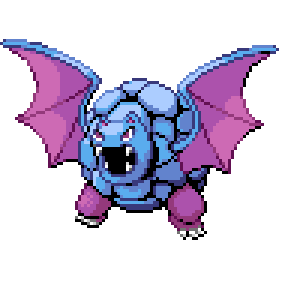
Toxic smoke billows out of its body almost constantly. If the smoke touches an open flame, it will explode.
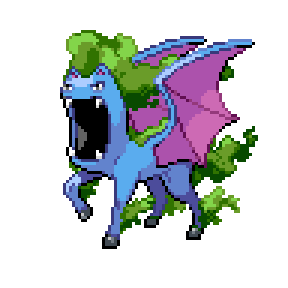
Golpoke's tail emits a sweet aroma, reminiscent of Pecha Berry juice. It dangles its tail into Trapinch burrows, hoping to snag an easy meal.
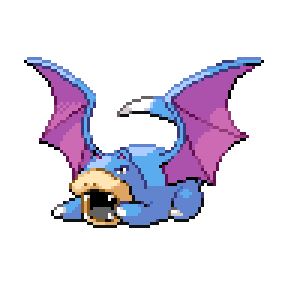
The magnetic charge in Golmite's fangs prevents it from fully closing its mouth. This odd trait often leaves it frustrated when hunting.
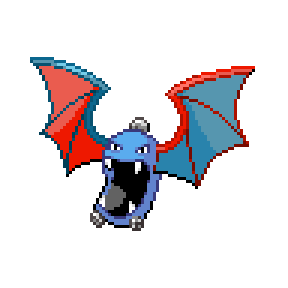
Golton bites into wires in mining tunnels to absorb electricity. This behavior often leaves nearby equipment without power.
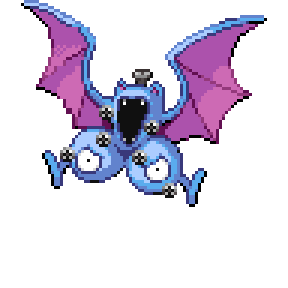
Golfetchd wields its leek like a quarterstaff, stunning opponents with precise strikes. It then drains their life force to recover energy.
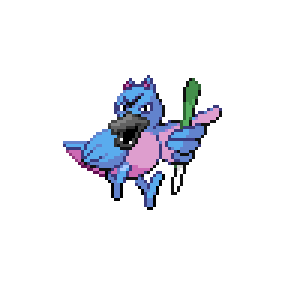
Only the center head of Goldrio possesses a tongue, yet all three heads can taste through it. It will spend hours licking objects in a cave, craving salt deposits.
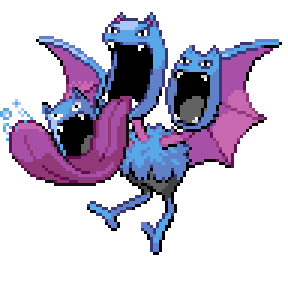
When it spots prey like Krabby in the water, Goleel dives in from above. Its large mouth snaps shut with incredible speed to secure its catch.
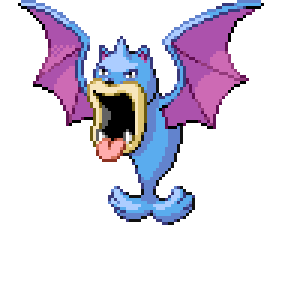
Golgong's massive mouth can consume multiple Mareanie at once. It employs a dazzling Confuse Ray to stun its prey before devouring them.
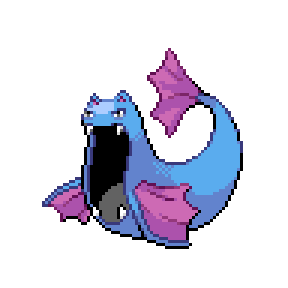
Golmer's body is composed of a viscous, sweet-smelling fluid. Its sweetness intensifies the more Berries it consumes.
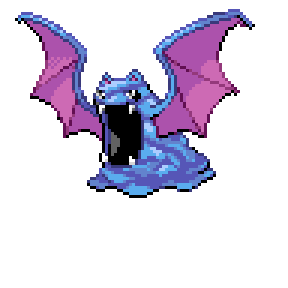
It sleeps while clinging onto ceilings of undersea caves. It will wrap its tongue around stalactites to avoid falling to the ground.
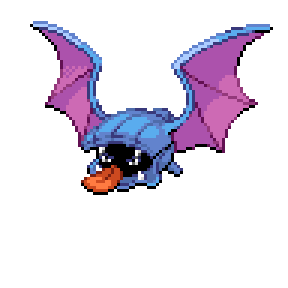
Goltly breaks into hospital blood storage units to feed. Its ability to phase through walls makes it nearly impossible to stop.

Police in Saffron City use Golgar to monitor bar patrons at night. If brawls erupt, it deploys Confuse Ray to incapacitate the offenders until officers arrive.
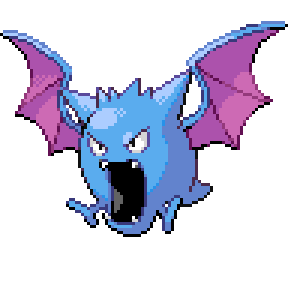
Golnix's wings are as sharp as blades. By spinning its body like a drill, it can clear tunnels through even the hardest rock formations.
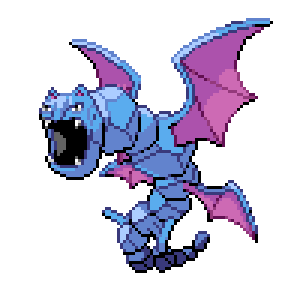
Golzee positions its mouth over the head of a sleeping victim to psychically consume their dreams. Its eerie feeding behavior has inspired many unsettling legends.
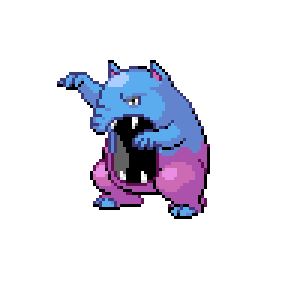
The neurotoxin in Golno's fangs induces sleep, letting it delve into the dreams of its victims. It uses this ability to seek out information or amuse itself.
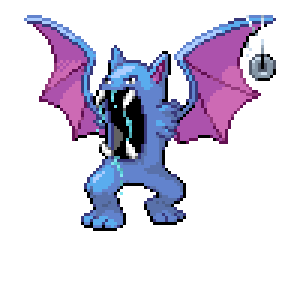
Golby builds its nest beneath buoys, weaving kelp into a stable shelter. This behavior keeps it safe from larger predators.
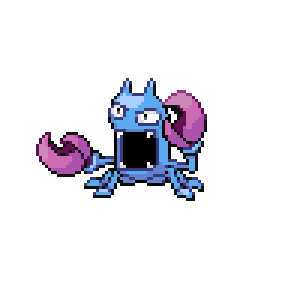
Goler uses its powerful claw to scrape salt deposits off ocean cavern walls. The salt is a key source of nutrients for its survival.
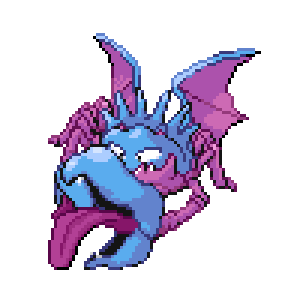
It lies buried in the sand on quiet beaches, soaking up warmth. If disturbed, it releases a quick shock and buries itself deeper by spinning to avoid detection.

Stunsir crackles with electricity as it snaps its pincers. With this charge, it can overpower much larger opponents in battle.

At night, Stunreep lines its herd's perimeter with its own wool. Any predator that steps on it suffers a strong paralyzing shock.

Stunrill lies still in puddles to absorb water. If stepped on, it retaliates by blasting water so forcefully it can launch a person backward.

While gliding just inches above water, Stuntine sheds sparks that trail behind it like mist. It travels almost silently across the ocean surface.
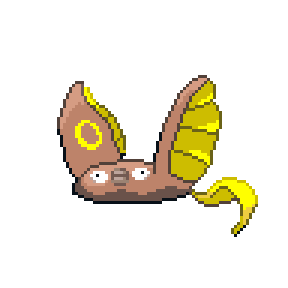
Stuncko uses photosynthesis to absorb sunlight through its skin. It stores the energy as electricity, which it releases when threatened.

By sensing their aura, Stunolu can detect a person's intent. If it senses evil, it discharges intense electricity as a form of judgment.

Stunsis floats through marshes, its glowing yellow gel pulsing with electricity. At night, its light flashes in patterns like a swamp beacon.

Stuneanie emits jolts of electricity through its tentacles while hunting. It often stuns several Corsola before dragging them into its underwater den.
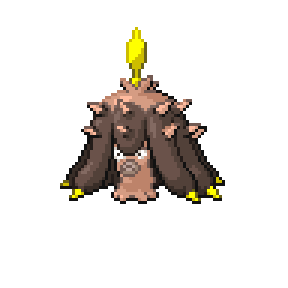
Static builds in the loose skin around Stunggy's waist as it waddles. Even brushing against it can cause hair to stand on end.
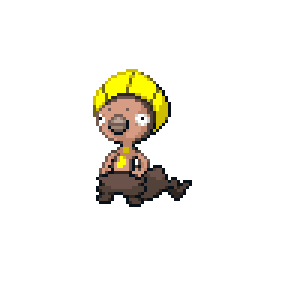
The spiral on Stunwhirl's belly rotates hypnotically to put prey to sleep. It then electrocutes them repeatedly with its glowing yellow hands.

Sablslash's claws are made of dense amethyst. It slices gem-laden walls with precision, devouring the fragments before others can notice.

Ancient civilizations were manipulated by Sablceus's eerie aura into thinking it was divine in origin. They offered gemstones in worship, which it promptly consumed.

Sablor glides through cave systems, pulsing with a faint purple glow. When it spots a gem cluster, it crashes into it and devours the shattered pieces.

It strips pine trees' bark off in great quantities with its mouth. Once it has several pounds gathered, it will eat it all in under five minutes.

Covered in soft, fluffy fibers, Venireep appears harmless. Touching its wool causes intense numbness that lasts for hours.

Veninub slumbers in snowdrifts, blending in with the terrain. If touched, it releases a sweat-like venom that can paralyze on contact.
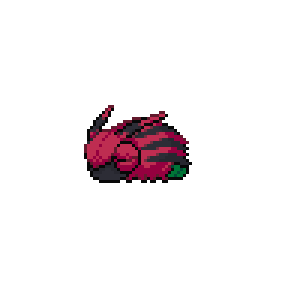
Venirina grazes on fruit tree leaves, leaking green toxin from its barbs. It only activates this defense when startled or cornered.
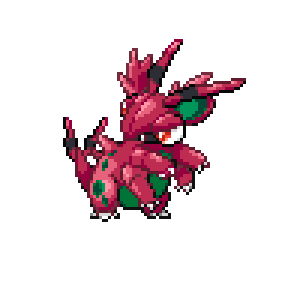
In fall, Venirino hoards dry leaves to eat. It will fight kin over leaf piles, spraying poison from its spiked back when challenged.
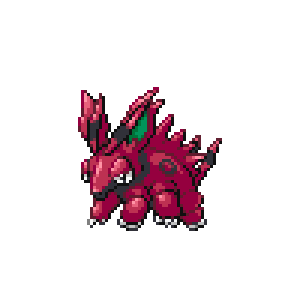
Venidew buries itself beneath almond trees, waiting for nuts to fall. It absorbs amygdalin from them to fuel its toxic secretions.

While airborne, Venibat spits globs of neurotoxin with alarming precision. In caves, swarms use this to overwhelm weakened prey.
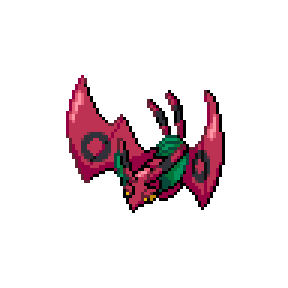
When Venitump possesses a stump, poison ivy mysteriously sprouts from it. The mechanism behind this remains unknown to researchers.

Venisect guards its fungal patches deep in cave systems with fierce intensity. Its claws hold a powerful venom that cause seizures.

As Venisian purrs, toxins gather at the tip of its tail. When threatened, it lashes out, swinging the tail like a poisoned flail.

From its claws, Whirligar secretes a red toxin that induces vomiting and fever. Once latched on, it won't release until the fluid is fully drained.

Whirlimory's wings are coated in a corrosive poison that can eat through stone. It preys on Aron, using its powerful wings to slice through the environment and catch its prey.
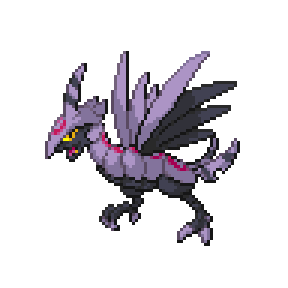
Whirlilia dances in erratic tumbles, splashing venom across the ground. Its movements mark the edges of a toxic, defended territory.
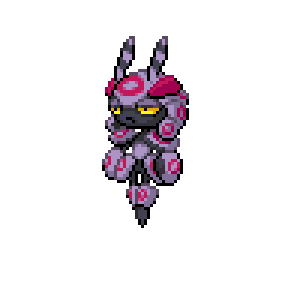
Whirlikoth sweats a poison that irritates the skin of anyone who touches it. Preferring solitude, it will roll to remote areas to find a safe place to sleep, away from any disturbances.
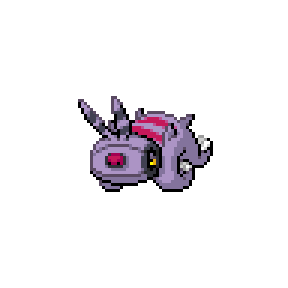
Whirlielia's blossoms emit a scent like Pecha Berries, masking their danger. A single touch can spread a fever-inducing poison through the skin.
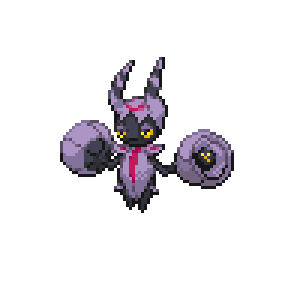
Whirlionee spins rapidly as it drifts through forest skies, trailing poison behind it. Its motion is graceful but hazardous to those below.
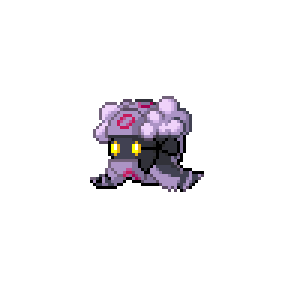
Whirlibat's large ears produce an earwax so toxic that groomers must use gloves. Though dangerous, it must be cleaned often to prevent buildup.

Whirliful rolls its cotton-soft body across forest floors in a wheel-like form. A noxious poison seeps from its fur, causing blurred vision on contact.
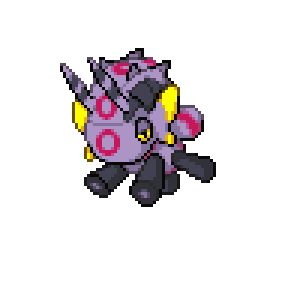
Whirligeist guards pumpkin patches by rolling silently through the fields. It strikes intruders with Venoshock from its twisting vine arms.
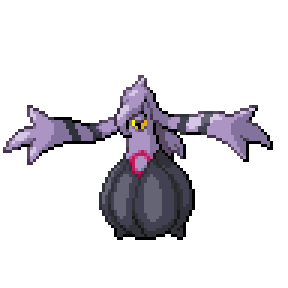
Whirlibre releases a toxic substance into its pond to ward off outsiders. The poison harms none of its kin, allowing peaceful swims among allies.
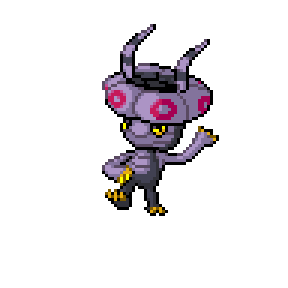
If anyone nears its stash of glittering treasures, Whirlisian rolls into them at speed. Its fur, laced with toxins, delivers a burning sting.
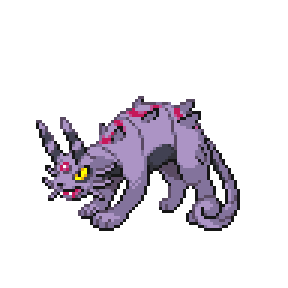
Using psychic powers, Scolicute lures travelers into its nest by causing delusions. Once inside, it subdues them with a potent Venoshock.

After gorging on poison ivy and toxic mushrooms, Scolilax lies still in dense forests. Its toxic breath causes dizziness and nausea.
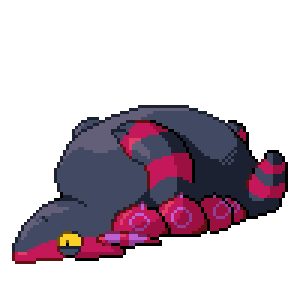
Scolibat divebombs prey with venomous fangs. It refuses to fly during the day as the sun hurts its eyes.

The puffballs on Scoliluff's limbs are filled with tiny poisonous seeds. It scatters them mid-flight to incapacitate prey.
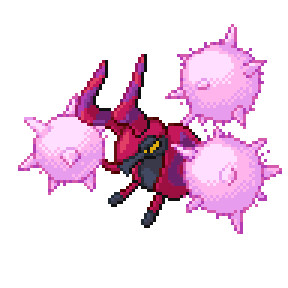
Scolico hops through forests at night hunting for toadstools. If threatened, its horns explode in a spray of poison.
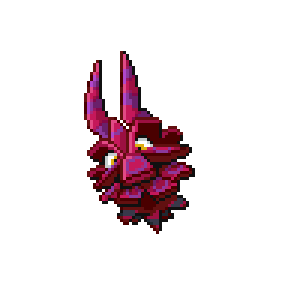
Scolickle climbs trees to gather Pecha Berries. The juice it brews is dangerously poisonous, but when cooked properly, it becomes a delicious syrup.
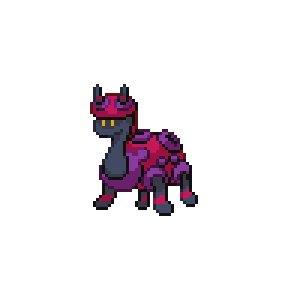
Scolicross's sharp horn leaks an acidic toxin that eats through bark. It uses this to access and consume tree sap.

Scolilax curls into a ball to ram into fruit trees. It greedily devours any fallen fruit, often eating twice its weight.

During combat, tiny toadstools grow all over Scoliloom's body. It spreads poisonous pollen when it successfully dodges an attack.
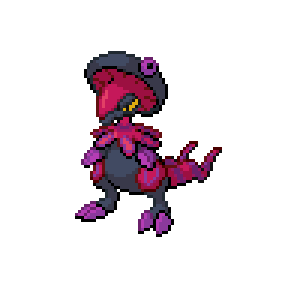
During nights with prominent moonlight, Scolifable's body leaks a poisonous sweat. It flings this sweat at predators to drive them away.

Late at night, Scolicada rolls through its tunnels seeking prey. It strikes with a sudden Poison Tail to quickly overwhelm the victim.

As Scolitump sleeps, tiny poisonous leaves sprout from its horns. It prefers to rest on damp, rotting tree stumps.

Hiding in pumpkin patches, Scolikaboo waits for lonely farmers. When alone, it soaks them with Venom Drench and hides while they struggle.
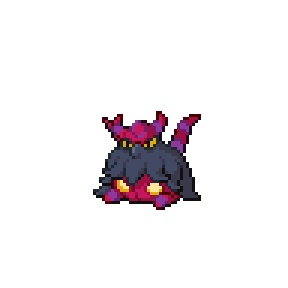
Tyesta bites down on prey with powerful jaws, then blasts searing flames. Its fire burns hot enough to melt through iron.
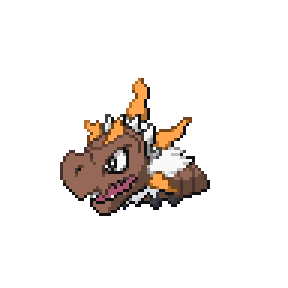
Tyranchamp's regularly teeth fall out easily when they bite into a foe. Should this occur, more regrow within minutes.

Snobone fires chilling bursts of snow from its bone to slow or freeze foes. Some ice cream merchants rely on it to keep their stock frozen without a freezer.

Snotung's saliva is cold enough to freeze skin on contact. If it licks the same spot multiple times, even large creatures can be immobilized.

Snokrow darts through icy caverns, releasing bursts of snow to deter others. It is shy and rarely seen except as a blur in the cold.

Snochum communicates with gentle kisses, shivering just before contact. Its touch calms allies during snowstorms and travels.
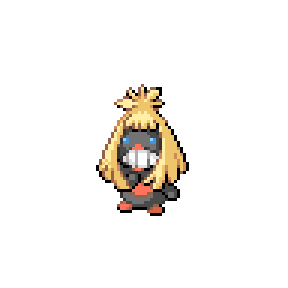
Before sleeping, Snoby gently kisses icebergs, melting small hollows inside. It curls up in the cavern and sleeps until dawn.

Northern cities once worshipped Snoceus as a god of snow. When startled, it releases a freezing blast capable of encasing victims in ice instantly.
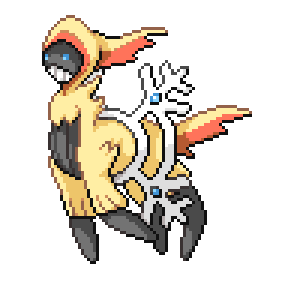
Snolup skates across frozen lakes while shivering with joy. It uses bursts of Icy Wind to perform graceful and complex spins.

As Snobat flies, its wings shed falling snow formed from frozen air moisture. This creates sudden flurries inside the caves it inhabits.
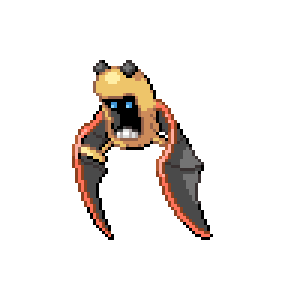
Snolass dances across mountain ridges with ghostlike grace. If disturbed, it will instantly freeze intruders where they stand.
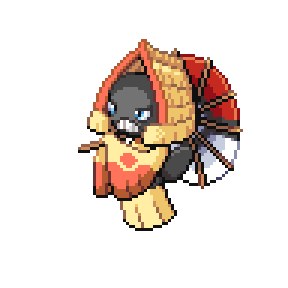
Snogong hauls itself onto icebergs, where it trembles gently as it rests. Snow flurries gather and fall from its shaking fur.

While hidden in mountain passes, Snozee consumes the dreams of travelers. It shivers violently as it feeds, though unaffected by cold or fear.

Glatung's saliva freezes surfaces on contact. This trait makes it a danger to anything it licks, including allies.

Glanx's face is encased in an icy mask that never melts, giving it an eerie, frozen expression. It sings haunting melodies in snowstorms, luring travelers into the cold before freezing them solid.

Glaquil fires icicles at foes with incredible accuracy. Its precise aim can hit targets from over 100 meters away.

Glatu's body is encased in ice that reflects faint visions of the past. Many believe gazing into its frozen shell during a full moon allows one to witness events from long ago.
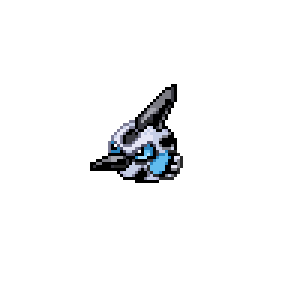
Glakrow builds its nest from scarves stolen from hikers. These cozy nests are hidden in snowy mountains.
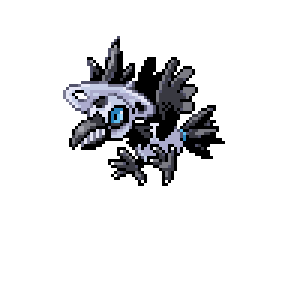
As Glagar glides above lakes, it breathes cold air to freeze the surface. This helps it traverse water by providing stable landing areas.
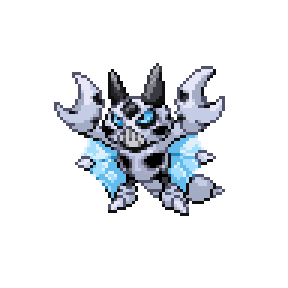
Glasel frequently trains with hockey players to hone its agility. The feather on its head helps it maintain balance during high-speed maneuvers.

Glaswine's horns are incredibly cold and surprisingly sweet. An ice cream shop in Lumiose City uses these horns to craft unique milkshakes.

Glabird tirelessly gathers food across the tundra. It stores its findings in its tail but rarely does it share with others.

Before unleashing a barrage of icicles, Glaperior slams its hardened hands on the ground. This intimidating display precedes a devastating Rock Blast attack.

Glaceon uses Icy Wind to keep enemies away from its den. It only allows visitors to approach if they bring food offerings.
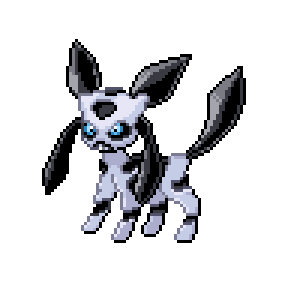
Glachic hops playfully in snowdrifts, burying itself to surprise others. It delights in startling anyone who gets too close.

When enraged, Glaqueen's horn emits a cold mist. The mist freezes everything in its immediate vicinity.

Glalup glides across frozen lakes with elegance, twirling gracefully. It is known for its remarkable ice-skating skills.

Ancient tablets describe Glaedge aiding knights in battle. It fought valiantly, freezing enemies and protecting its allies.
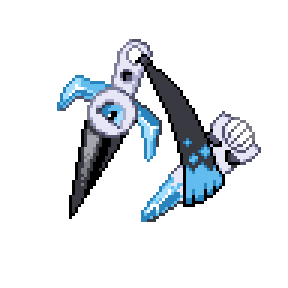
If Glaking pierces a foe with its horn, it injects a venom that freezes them from the inside out. This attack is highly feared by other predators.

When Gladile bites a foe, it releases bursts of frigid air. This icy attack can freeze enemies solid in seconds.

Glalure clings to the roofs of frozen caves, illuminating the way. Its glowing body serves as a guide for lost travelers.
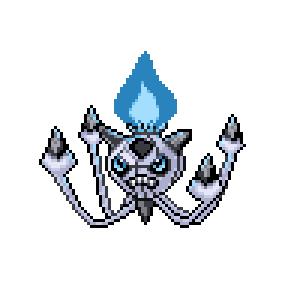
Glaki collects trinkets and icicle-shaped charms, rattling them ominously during blizzards. Anyone who tries to steal its collection is met with an intense, icy glare that can freeze them in place.

Glabat coats its body in a thin layer of ice before flying through the night sky. This makes it harder to grab for predators.
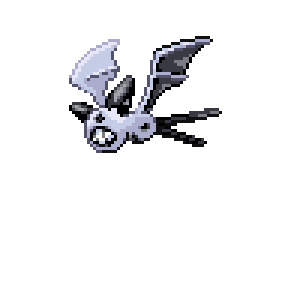
Glarunt sharpens its teeth by chewing on icicles outside of frozen caverns. It enjoys the icy cold sensation on its mouth.

Glavern flaps its wings to create powerful blizzards. This serves as both a defense mechanism and a way to claim territory.

Glaura emits a cry like a truck horn to announce its territory. Hearing this sound at night can be incredibly unsettling.

The spikes on Glarorus's neck extend and sharpen in battle. This adaptation provides both offensive and defensive capabilities.
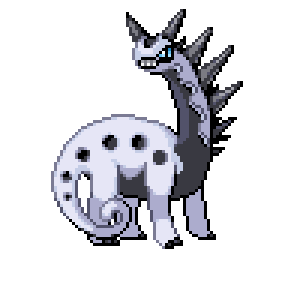
The faster Glaor flies, the colder its body becomes. Upon impact with the ground, it releases a blast of cold strong enough to freeze the surroundings.
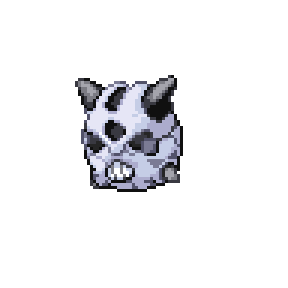
Glaor flies over areas that recently experienced avalanches. It makes an eerie noise while it flies, like that of a crashing plane, adding an unsettling presence to the snowy landscape.

During summer, Gladuck fills its den with snow to stay cool. The gem on its head gives it the power to create endless frost.
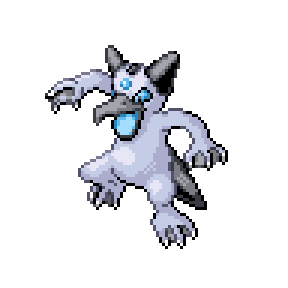
Glachop can release icicles from its arms mid-punch. This combination makes its attacks devastatingly effective.

Hockey players often train with Glaeel due to its speed on ice. Its quick reflexes make it an excellent goalie.

The slushy, tar-like substance on Glamer's body is highly poisonous. Even brief contact can cause severe convulsions.
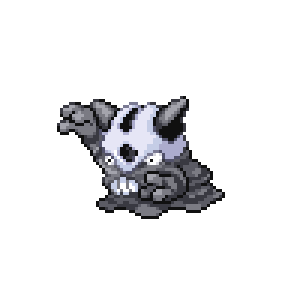
The frosty slush on Glauk's body hardens in warm air. During summer, it often struggles to move due to the heat.

Glader resides in the sand beside frozen lakes. It defends its territory by firing icy barbs at intruders.
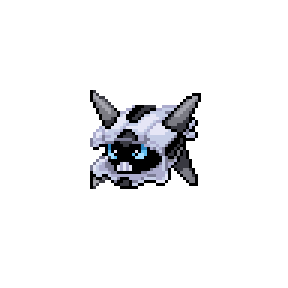
Glagar hides in the shadows of sheer cliffsides to startle travelers. Its pranks often aim to knock unsuspecting hikers off balance.

Glazee uses psychic powers to lull opponents into a deep sleep. Once immobilized, it fires icicles from its snout to finish them off.

When it spots campers on its mountain peak, it creates eerie noises. It delights in scaring them enough to make them leave.
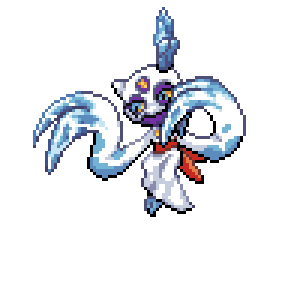
When snoring, it exhales clouds of frigid air that blanket the area in frost. The cold can last long after it awakens.

It steals equipment from climbers and gifts it to others as presents. In return, it hopes for food as a gesture of gratitude.
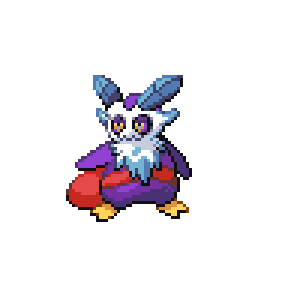
It joyfully hops along icy cliffs, knocking snow drifts onto those below as playful pranks. These antics often scare off unwanted intruders.

It lures climbers onto its mountain only to create slick black ice on seemingly safe paths. Their panic at slipping amuses it greatly.

Snowbound villages once revered Frosceus as a divine protector. If it felt unappreciated, it was said to freeze offenders solid without warning.

It gleefully skates on frozen ponds with other Pokémon. Even after others grow tired, it begs for the fun to continue.

When climbers ascend its mountain uninvited, it throws tantrums by stomping violently. These tantrums often trigger massive avalanches.
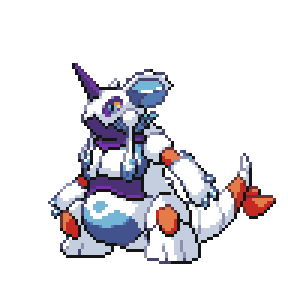
They watch hikers with wide-eyed curiosity, hoping for dropped food. Once they see something fall, they scurry off to carry it away.
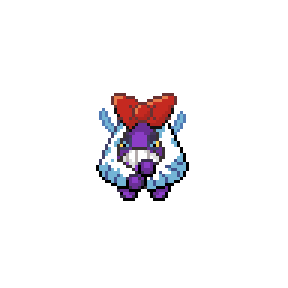
When it cries, shimmering water drops levitate from its eyes. It cries not from sadness but from joy when someone discovers its hidden mountain den.

It soars high above the mountains, enjoying the cool air on its wings. If cold clouds are scarce, it channels icy energy through its beak to create them.

It trains by striking falling icicles with precise punches and kicks. The shattered shards create an icy spectacle around it.

Disliking visitors, it eagerly watches mountain climbers descend its peak. If any equipment is left behind, it mischievously kicks it down after them.

The ribbon-like structure around its neck is part of its body, helping regulate its core temperature. If it rises above 0°F, the ribbon cools it further.

Frosor floats above icy cliffs beneath the stars. If it sees a person or Pokémon it finds beautiful, it freezes them in place to admire them for hours.

Frosor glows faintly as it flies along mountain peaks. Its icy body is so cold that a single touch can freeze flesh or stone instantly.

It prefers to make its home behind waterfalls on icy cliffsides. The sound of rushing water provides it with endless serenity.

It resides in frozen mountain lakes, watching ice skaters with curiosity. If they fall, it eagerly pulls them under the icy water, hoping to play.

The pearls it forms are actually frozen orbs that freeze anything they touch. It scatters them across its territory like floating traps.

Lurking in icy mountain shadows, it waits for unsuspecting travelers. Lonely, it freezes them into sculptures to keep as companions.

Each segment of a Oddpie is extremely sweet in flavor. The sweetest portion is the head, which emits an aroma that mimics Nanab Berries.
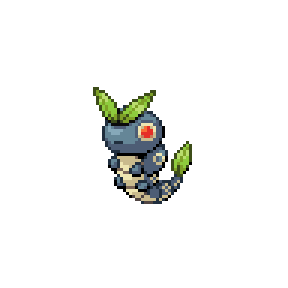
When Oddgon infests a laptop, digital flowers bloom along the edges of open windows. These blossoms open during the day cycle and close when night falls.
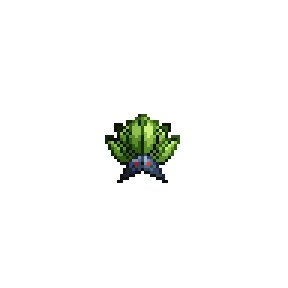
Oddursa's leaves let loose a distinct honeysuckle scent when it is calm. It buries itself in cave dirt when sleeping, creating a quiet and peaceful resting place.
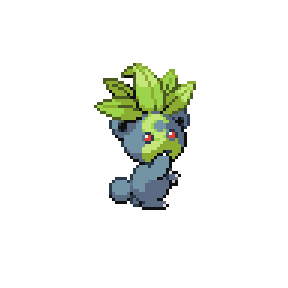
While howling, Oddour releases the scent of barley from its leafy head. This odor signals that an attack is imminent.
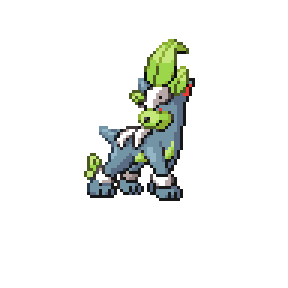
While absorbing electricity from an electric pole, the leaves on Oddchu's head will emit a pleasant Qualot Berry scent. This calming fragrance contrasts with the energy it is drawing, creating a peculiar but peaceful atmosphere.
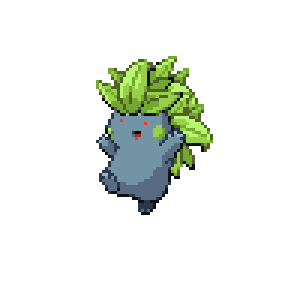
When a storm approaches, Oddsol hunts its usual predators instead. It paralyzes them with white powder before abandoning them to the coming tempest.
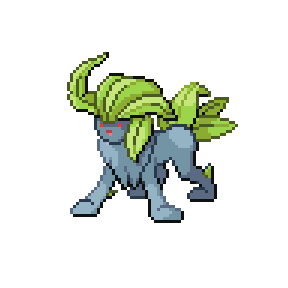
High above parks, Oddloon releases a soothing scent that calms children. Once close, it may descend to quietly carry them away.
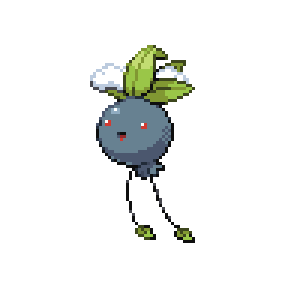
Oddsis floats through meadows, releasing a scent akin to Pamtre Berries. This fragrance lures nearby Pokémon and creates a calm atmosphere, perfect for rest.

Oddonee floats gently on the breeze, drifting like a dandelion seed. Its leaves emit a rich, coffee-like aroma that lingers in the morning air.
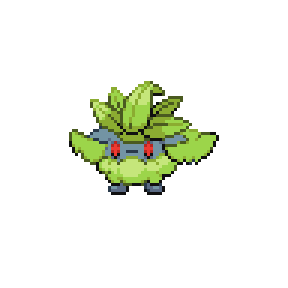
The leaf on its head will grow larger based on how much water it drinks. After a month it will fall off and regrow in the exact same spot.
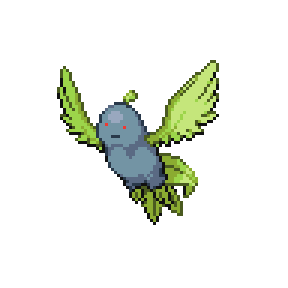
As it flies, Oddbat releases a scent like Cheri Berries from its leafy crown. It then strikes with wings at surprising speed.
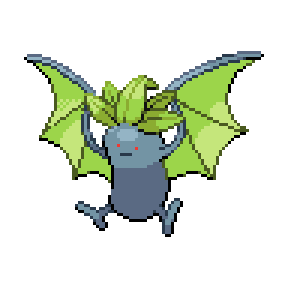
Oddvenant stands tall in marshy areas, preferring fresh rain. It leaves its leaves open to absorb as much water as it can, thriving in the moist environment.
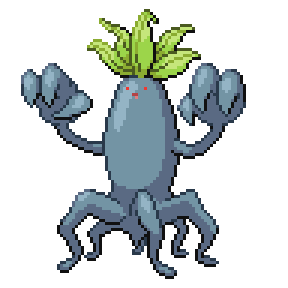
Oddoom buries itself in soil to sleep, exhaling faint puffs of grey Poison Powder to ward off threats. This powder has been used in salves in ancient remedies.
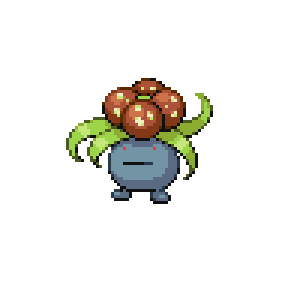
Oddlu flies through fields with flocks of other Oddlu. The Chople Berry scent it leaves behind invigorates anyone who smells it, boosting their energy and spirit.
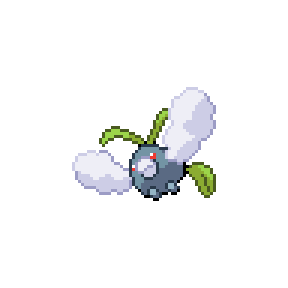
Oddgeist hides in cabbage fields to blend in during the day. At night, it snores loudly, releasing a foul rotten pumpkin stench.
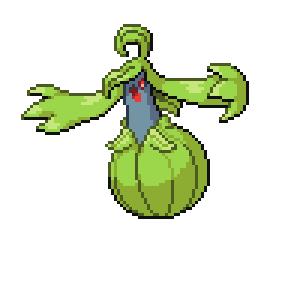
Oddlix's floss body is comprised of thin vines that let loose a Rabuta Berry scent. This sweet aroma attracts others, signaling a safe and peaceful place to rest.
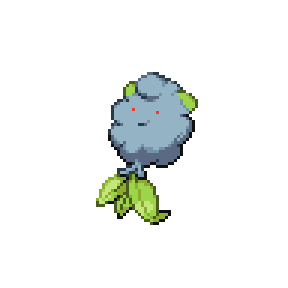
Oddggy is fiercely territorial, letting loose clouds of green pollen whenever it headbutts a foe. The pollen can cause exhaustion, making it difficult for its enemies to stay on their feet.
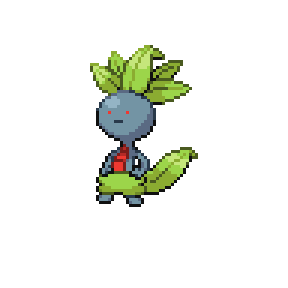
Oddlett feeds on pine tree roots deep underground. When resting, it pushes its leaves above the soil, releasing a fresh pine scent.
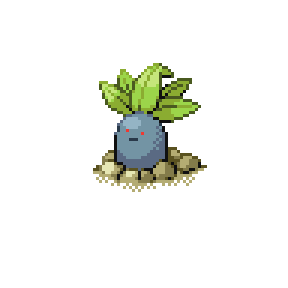
Each time Oddtyena howls, its leaves lengthen slightly. When they grow too long, they dry out and fall away, allowing fresh ones to sprout.
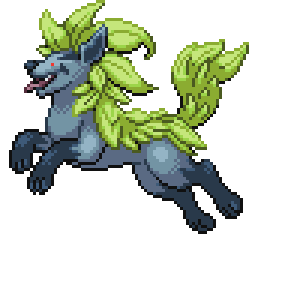
Oddtrio's tunnels are filled with a pleasant Grepa Berry aroma. The scent relaxes intruders before it spits corrosive acid.
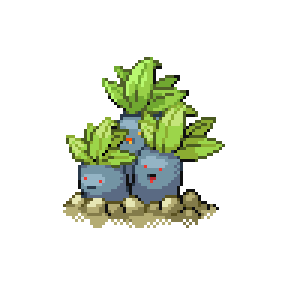
When calm, Oddot's leaves emit a pleasant Pomeg Berry scent. If agitated, it vibrates violently before detonating in a burst of energy.

Oddgull scatters sweet-scented pollen while flying over coastal waters. The aroma helps flock members navigate and regroup if separated.
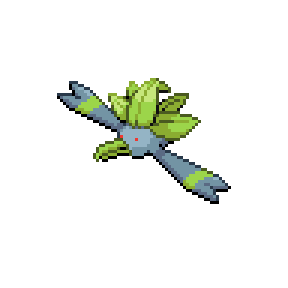
The leaves atop Oddle's head emit a faint positive charge. Botanists have studied this phenomenon for years, yet its cause remains unknown.
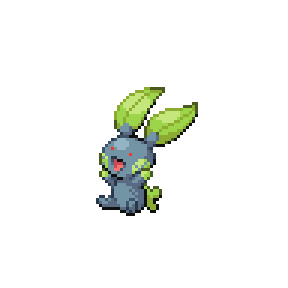
The leaf on Odduck's head releases a Liechi Berry scent that is pleasant but lingering, causing large migraines. This odd fragrance makes it hard for others to focus, giving Odduck an advantage when hiding from potential threats.
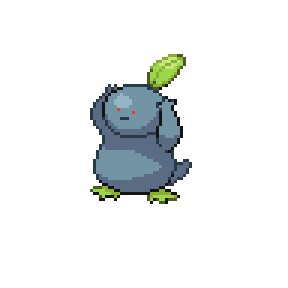
Oddpius's leafy wings release a calming Chesto Berry scent as it flies. It sleeps with its head buried in soil, landing only at night.
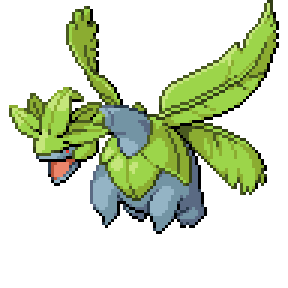
The leaves on Oddlithe's back grow hot while it runs. As it sprints, it leaves behind a faint scent like ripened Pinap Berries.
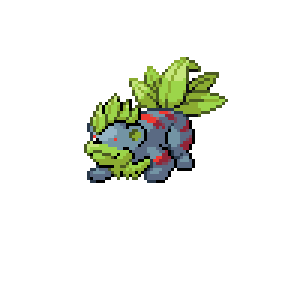
The leaves on Oddwhirl's head release a Coba Berry scent while it hunts in ponds. It will use Acid to incapacitate prey like Pidgey, ensuring a successful capture for later consumption.
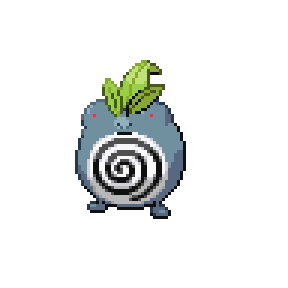
The leaves on Oddsprout's head release a sharp onion scent as it sways in the wind. Gardeners often mistake it for a common weed.
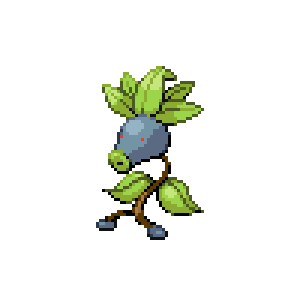
The mud-like slime that coats Oddmer's body and is surprisingly rich in nutrients. Its head-leaves twitch and turn toward sunlight.
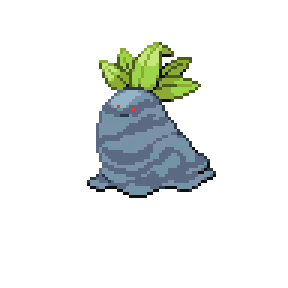
The leaves atop Oddzee's head smell like Pomeg Berries. This aroma can lull prey to sleep, allowing it to feast on their dreams.
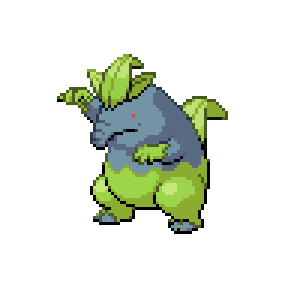
It will use silky string to assist in its elaborate dances. If it dances too quickly, it may accidentally light the strings on fire.
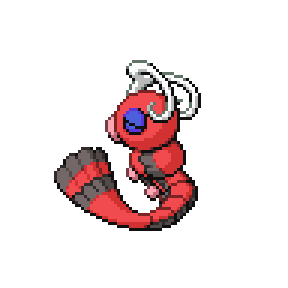
The silk it shoots from its body is extremely hot. If it ever lands in dried leaves, it can cause a massive forest fire.
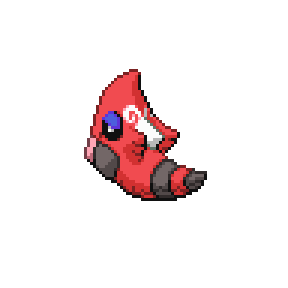
Orither's large, sharp feathers on its arm are able to cut through granite with ease. It moves with lethal precision, slicing through the air as it dances in combat.
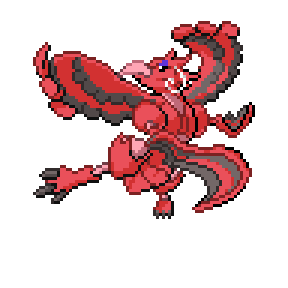
Orimar shoots flames around its body while it dances. It does elaborate leaps and poses, igniting the battlefield with each carefully choreographed move.

Orisir's pincers open and close in rhythm as it dances. Its movements are sharp and precise, making it a challenging opponent for anyone who underestimates its grace.

Oridle spins on the stinger on its head while it dances. Its tiny body moves with surprising grace as it performs intricate twirls, the stinger serving as both a balance and a weapon.
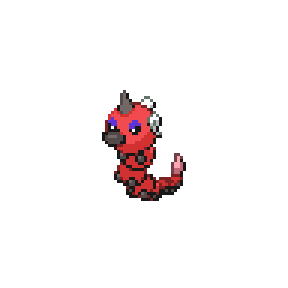
Oriuna spits silk to move itself around the battlefield. It spins in an odd dance while fighting, making it difficult for opponents to predict its next move.
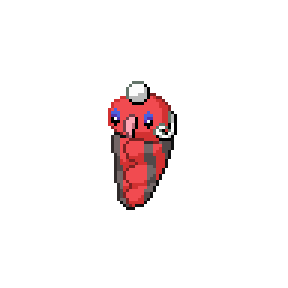
Oririll performs a rapid dance atop the surfaces of ponds, never sinking beneath the water. At night, faint embers can be seen glowing beneath its steps as it moves with grace.
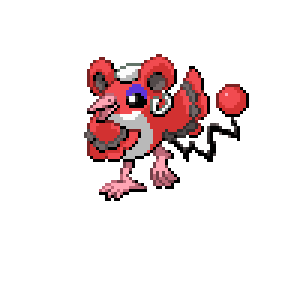
Orilix's stone-hard wings spin around its body as it dances deep in caves. The rhythmic movements resonate through the rocky tunnels, causing small tremors with each powerful beat.
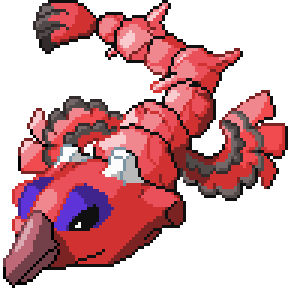
Oribull bites at the air as it dances, making a Scary Face to intimidate all who watch. Its performance is both endearing and threatening, creating a perfect mix of charm and menace.
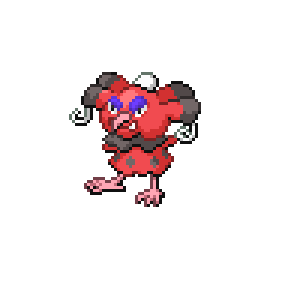
Oricargo's body is composed of extremely tiny feathers that resemble liquid as it dances. The feathers glisten and shimmer, creating a visual spectacle during its movements.
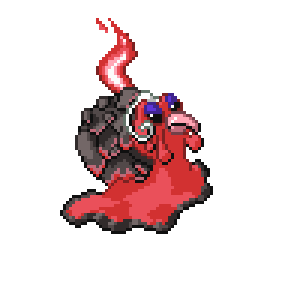
Oridour howls while spinning during its dance. The flames it produces are so intense that they're hot enough to melt steel, showcasing its strength and passion.
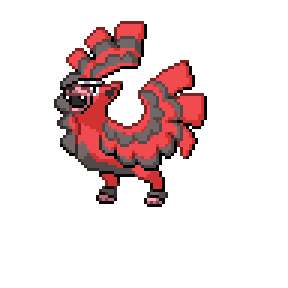
Orichu's feathers on its tail crackle with electricity as it dances. If ignored, it will unleash lightning bolts from its tail to ensure its presence is known.
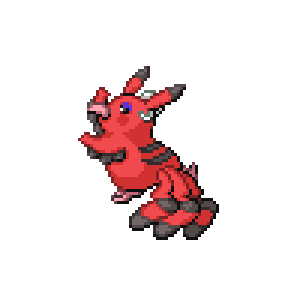
Oriran's feathers are coated in a sweet-smelling poison that gets more potent as it dances during battle. The rhythmic motions enhance the potency of its toxic dance.
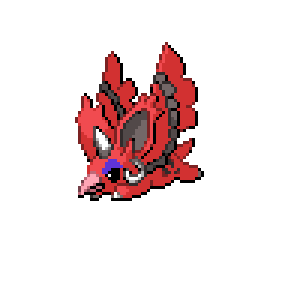
Oripix waves its multiple tails in circular patterns while dancing. Each flick of its tails sends ripples through the air, making it look like a fiery whirlpool in motion.
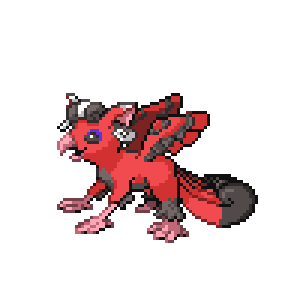
Oripede spits a poisonous chemical as it dances on tree branches. Its movements are erratic, and the dangerous chemical only adds to the excitement of its performance.
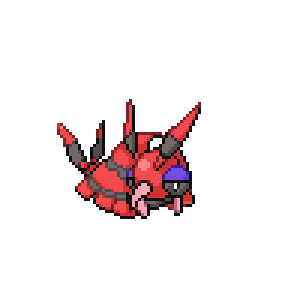
Orioom releases a blue pollen to put foes nearby to sleep while it dances. The faster it dances, the faster the pollen gets released, making it a formidable opponent in battle.
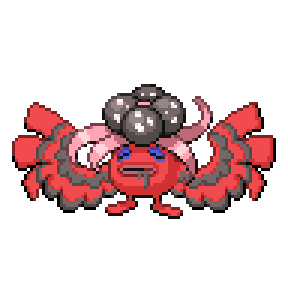
Oriful bounces from one soft leg to another while dancing. Its playful and adorable movements make it difficult to take seriously, yet its agility is unmatched during its dance.

Orimo-o's feather-like scales on its back flap up and down as it dances. Its movements are precise, adding to its battle prowess with every graceful step.
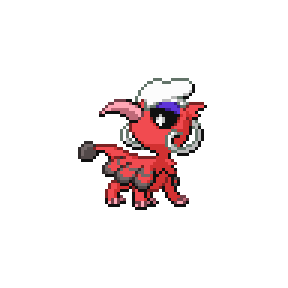
Oripod dances happily in the moonlight but will bolt if someone spots it. Its graceful movements are brief but beautiful, fading quickly into the shadows as it flees.
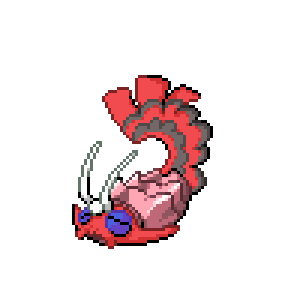
Orikoal releases smoke from its shell in rhythm as it dances. The plumes of smoke add a hazy aura to its graceful movements, creating a mystical and fiery spectacle.
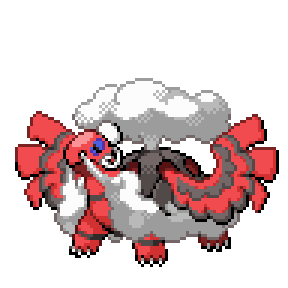
Orilithe does a delicate dance, causing flames to ignite with each step. The fiery display can be mesmerizing, as it swirls and leaps in rhythm.
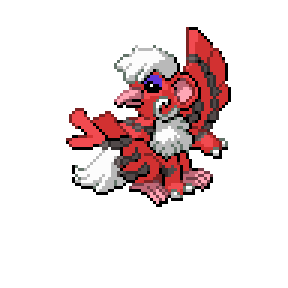
The feathers on top of its head let loose a strong citrus scent. It will use the powder from this to mark its territory.

It builds up static by rubbing its feathers together. It charges up its body daily, waiting for its eventual evolution.

Orimime spins its staff while cheering on its allies, releasing a psychic wave that cheers up anyone around it. The playful psychic energy lifts the mood of the group, making them feel more confident and positive.

When using its Swords Dance, Orither waves its pom-poms in triangle patterns. Its rhythmic chirps enhance the intensity of its attacks.

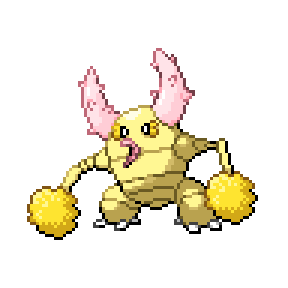
Orisir waves its pom-poms in the air while chasing down prey, making a terrifying scream. It primarily inhabits dark forests, its glowing yellow poms illuminating the darkness as it moves swiftly in pursuit of its target.
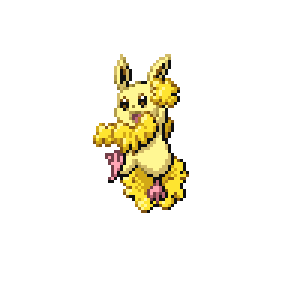
Orivee performs an excited dance after winning a battle, cheering itself on with its floppy ears bouncing up and down. Its joyful energy is contagious, spreading happiness to those around it as it celebrates its victory.
Oribuff sits on the sides of routes, cheering on travelers with its songs. Its invigorating melodies bring a sense of joy and energy to everyone who hears it, boosting morale on long journeys.
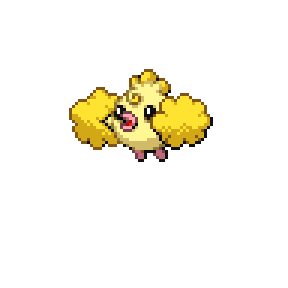
Oripom dances while picking Nanab Berries from trees, using its pom-poms to knock the fruit loose. Its rhythmic movements make it a master of gathering, and it never misses a beat, effortlessly collecting berries in the process.

Oriwig can channel electrical attacks through the pom-pom-like sprout growing out of its head. During thunderstorms, it absorbs lightning strikes, channeling the energy through its body and adding a surge of power to its attacks.

Oricott does cheering motions while floating over rice fields. Its energetic gestures seem to boost the growth of nearby plants, as though its cheerful presence accelerates their development, bringing unexpected vitality to the crops.

Oriolu follows those with a good aura, cheering them on in everything they do. Its enthusiasm knows no bounds, and it provides constant support to those who inspire it, becoming a loyal companion and motivator.

Orirua imitates humans to cheer them on during sporting events. While it doesn't speak any human language, its expressive movements and enthusiasm stand out, drawing attention and causing a wave of excitement wherever it goes.

Orioom releases a Maranga Berry scent while cheering on its allies, invigorating all nearby. This sweet fragrance lifts the spirits of its companions, empowering them with a burst of energy during battle.

Orikoal's pom-pom coming out of its shell wiggles back and forth, releasing the smell of burnt wood while it fights. This behavior occurs unconsciously, adding an odd element to its movements and making its presence even more intense.
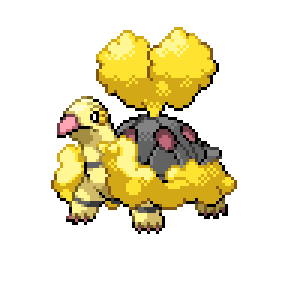
Oribre leaps from tree branches into lakes with others of its kind. It cheers loudly based on how impressive each dive looks during the splash.
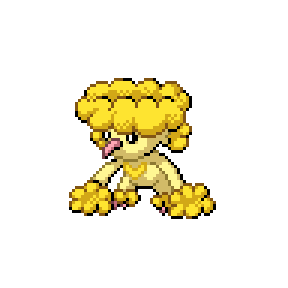
The pom-pom on its tail controls the main body, and it unleashes psychic attacks by waving its other pom-poms high. This unique ability allows Oribro to focus its psychic energy into powerful moves with a slow, calming dance.

Orither's feather-like arms are deceptively sharp, able to slice through marble without much effort. Its dance moves are as dangerous as they are elegant, leaving a trail of tiny cuts wherever it goes.
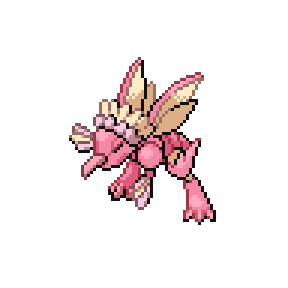
Oridle's round nose twitches as it dances between flowers. It performs this as a mating ritual, using its movements to attract potential mates with the delicate swaying of its body.

Oriuna spits silk on the ground in beautiful patterns as it does a slow hopping and spinning dance. Its movements are slow and deliberate, creating intricate webbed patterns with each hop.

Oribuff undulates back and forth while singing and dancing. Its songs are happy in tone when it is content and sad when it is feeling down, reflecting its emotional state through music and dance.

Orico dances on tree branches when it sees visitors. If anyone stops watching it dance for even a short moment, it will get angry and explode, trying to use its sudden burst of energy to protect itself and its territory.
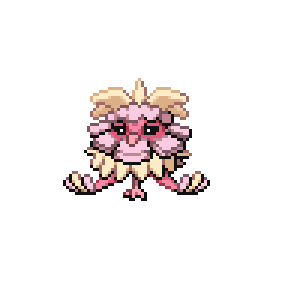
Orish lets loose large puffs of yellow powder while dancing which can cause chemical burns on the skin. Its toxic spores are dangerous and should not be approached without caution, making its performance both mesmerizing and hazardous.

Orith dances for hours in hopes of someone throwing it a shiny object from a crowd. If it gets none, it will attempt to steal from anyone nearby, its mischievous nature taking center stage during its dance.

Oripoke frequently forgets that it is dancing and lays on the ground trying to remember what it was doing. Its slow movements and forgetfulness make it an unintentional performer, but its charm lies in the simplicity of its motions.

Its antennae lets off a bitter powder that has been used in healing poultices. The more bitter the powder is, the stronger the poultice will be.

The silk that an Oripod dispenses is used by crafters in Rifure Village. The string is used to create custom-made ballet slippers.

Origela's vines writhe and move in fluid, long patterns while it dances under the cover of night. The dance is hypnotic, adding a mesmerizing effect as the vines sway rhythmically in the dim moonlight.
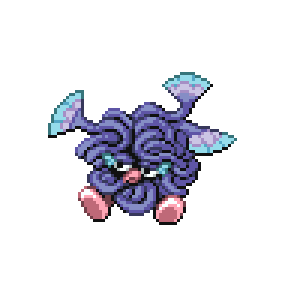
Orimime dances alone late at night, and some claim to hear the faint music of a lyre in the distance as it moves. Legend says that watching it for too long causes one to become entranced, and they awaken the next day near a gravestone, disoriented.
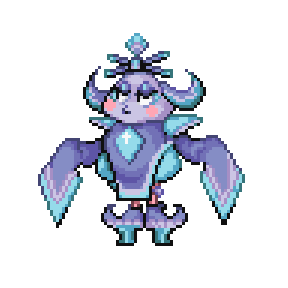
Orisir clicks its pincers together in a rhythmic pattern, performing a largely silent dance beneath the moonlight. Its precise movements create a quiet yet eerie atmosphere as it moves with great focus.

Oriuna makes its home in mausoleum roofs and spins in circles as it dances. While doing so, it chirps a somber song, adding to the eerie atmosphere of the resting place.

Oridrill performs delicate dance-like movements around its hive during the evenings. The buzzing sound produced pulsates in rhythmic patterns, almost like a song, signaling its connection with the surroundings and the hive.
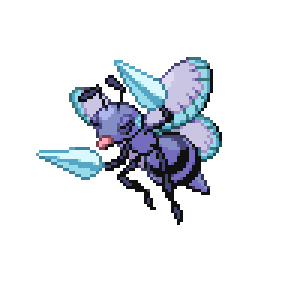
Oririta dances a somber routine while releasing the scent of Micle Berries during the late evening. The melancholic fragrance mixes with its movements, adding to the serene, reflective atmosphere.

Oriloom performs spinning and swirling movements as it floats gracefully above graveyards at night. Its dance, synchronized with the breeze, seems to blend in with the natural surroundings of the graveyard- almost as if it belongs there.
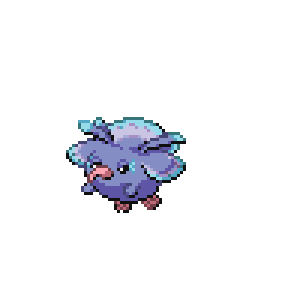
Orisparce digs burrows near graveyards and emerges after sundown to dance beside the gravestones. Its movements are mysterious, and though its reasons are unknown, it seems to pay tribute to the departed.

An entire pack of Oridour gathers in graveyards at night, letting out mournful howls while performing an intricate dance. This ritual, performed together, sends a hauntingly beautiful message into the night.

If Ori Jr. sees a funeral, it will dance nearby in an attempt to honor the deceased. Unfortunately, its wordless, awkward movements tend to make those around it feel more uncomfortable than comforted.

Legends say Oritomb's body is made up of the souls of dancers. However, this theory has been debunked by scientists, who now believe the truth behind its movements is far more complicated than myth suggests.
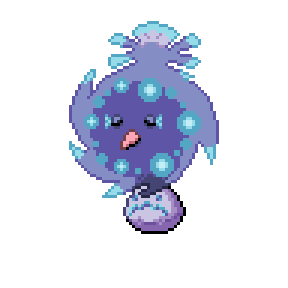
Oriskull moves in slow, mournful dances on gravestones, honoring those who have passed. Its movements seem to bring a sense of calm to the surrounding area, as if communicating with the spirits of the deceased.

Oriwig sways the sprout on its head back and forth in time with its dance. In the quiet of the night, some claim to hear the faint sound of a harp playing music, its source always a mystery.

Oritom possesses musical instruments, causing them to play unsettling melodies unique to each form it inhabits. The music varies, but it always evokes a strange, otherworldly vibe that captivates or disturbs anyone who hears it.
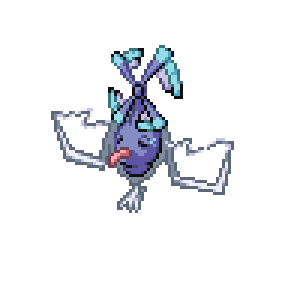
Oriwick stands atop mausoleum roofs, its flame-like feathers pulsing in rhythmic patterns as it dances. The movement and light it produces create an atmosphere that seems to evoke sadness in all who witness it.
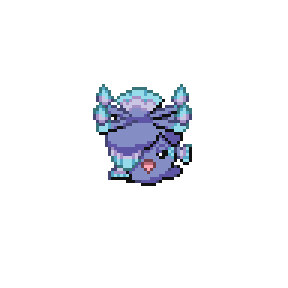
Orision releases psychic waves while performing a slow, somber dance. These waves compel others nearby to join in, even if they don't know the choreography, drawing them into the moment of collective grief and remembrance.

Oripede rolls through cemeteries multiple times each night, patrolling for graverobbers. Upon spotting one, it performs an odd, swaying dance before releasing a potent, strongly-scented poison that incapacitates the intruder.
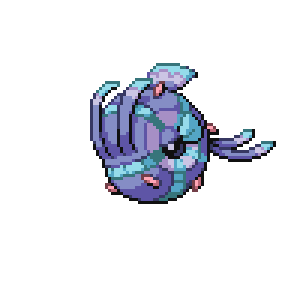
Oribre performs a mournful dance on the surface of its pond during the night. The stillness of the water and the somber rhythm of its movements create an eerie, peaceful mood over the water.
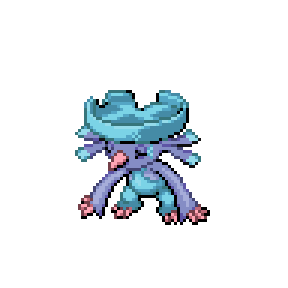
Trubgon explores digital trash, feeding on spam emails and discarded data. It somehow turns this useless information into physical strength.
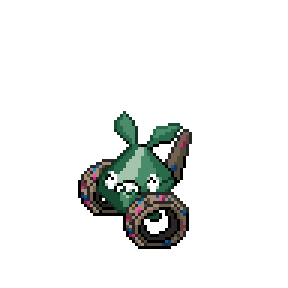
Trubchu is composed of electronic debris and everyday waste. It must consume rubber regularly to insulate itself, or it risks shocking its own body.
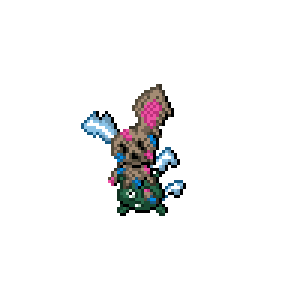
Trubpi detects items thrown away with deep emotional value, like stuffed toys or love letters. It absorbs the lingering happiness and radiates it to others.
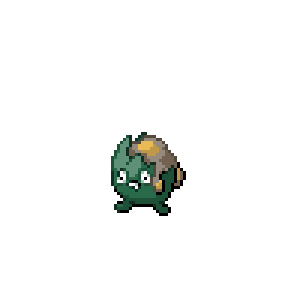
Covered in moldy refuse, Trubtata scavenges food and styrofoam to grow larger. The jagged glass on its mouth acts like a fang to tear apart bigger waste.
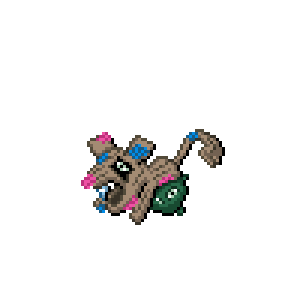
Every time Trubdour lets out a bark, bits of trash fall from its shifting body. Its trail often leads back to the smoldering heaps of garbage it calls home.
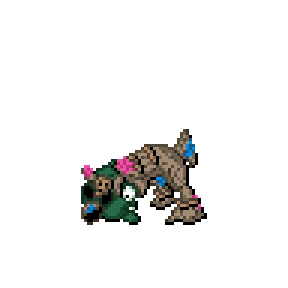
Trubkid rummages through landfills in search of discarded electronics. It absorbs residual electricity from old batteries and broken devices.

Trubwick resembles a rusted barrel and lurks near urban dumps. A dim flame flickers inside its body whenever it is awake.
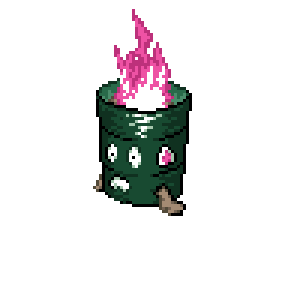
As Trubxio navigates landfills, it releases bursts of static to scan for flavorful trash. It prefers garbage with a slight spice to its scent.
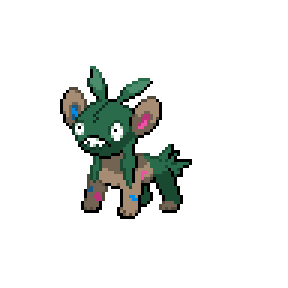
Trubink cloaks its metallic frame in refuse gathered from alleyways. It emits jolts of electricity to defend itself if approached.
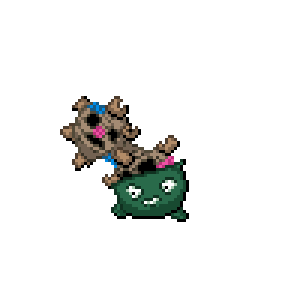
Trubile digs through industrial dumping grounds for sharp metal shards to use as makeshift teeth. These often fall out after it bites into something too tough.
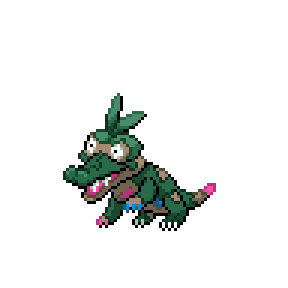
Trublucha manipulates the trash in its body to split into multiple copies of itself. Even divided, each piece can perform synchronized martial arts attacks.
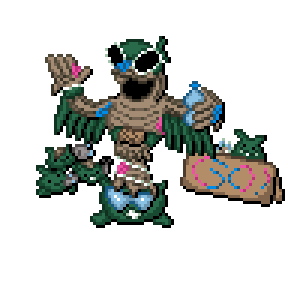
Trubmantis digs rapidly through compost piles in greenhouses for flavorful leaves. After eating, it scatters the compost across nearby plants as thanks.
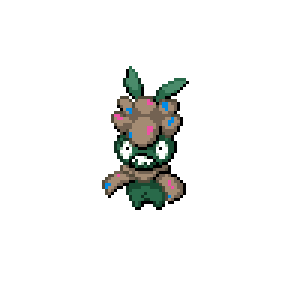
It thrives in seaside waters, blending into the surf with its agile movements. Its reflective scales shimmer like sea glass, masking it from potential threats.

It prowls coastal waters, preying on fish that wander too close to shore. Strong waves aid its ambushes, hiding it beneath the surf.
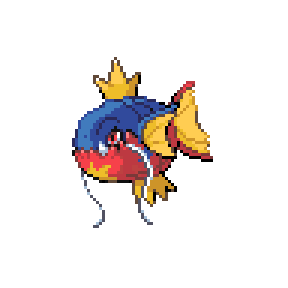
It scans digital signals left by passing vessels, tracking them across open waters. Its ability to interface with electronics makes it a peculiar but formidable hunter.
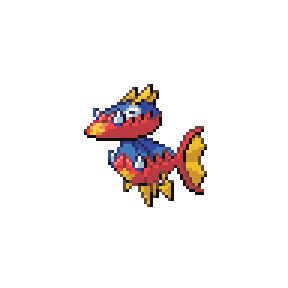
It has a strange fascination with beach balls, biting them whenever it finds one. This habit often leads to popped toys scattered along the shore.

It swims tirelessly, covering vast distances without rest. Relentless in its movements, it rarely surfaces, preferring to stay hidden below.

A smelly film coats its body, discouraging predators from attacking. This noxious layer lingers in the water long after it passes, marking its territory.

It prowls the sea floor, searching for prey hiding among the rocks. Its sharp fangs can pierce shells, making it a threat to many marine creatures.
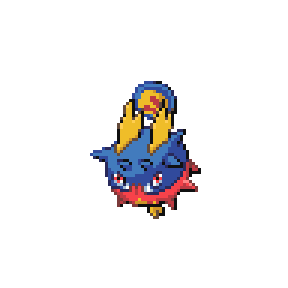
It is well-suited to maritime environments, riding ocean currents with ease. Other Pokémon follow its path, knowing it can navigate even the roughest waters.
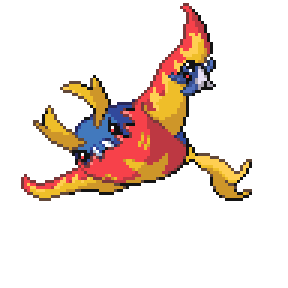
It hunts along beaches, waiting for prey to emerge from the surf. Its sharp teeth and aggressive behavior make it a danger to anything that ventures too close.

It clings to the sides of boats, waiting for scraps to fall overboard. Mariners often mistake it for debris until it sinks its teeth into an unsuspecting hand.

It inhabits lakes, using submerged objects to create intricate lairs. With its sharp teeth, it cuts through weeds and plants that block its path.

Sailors tell tales of it attacking boats with relentless fury, gnawing through wood and ropes. It often works with others of its kind, making it a formidable threat on open waters.

It patrols streams, lurking beneath the surface in search of smaller prey. Its presence makes these waterways dangerous, forcing other Pokémon to avoid them.

It hides in deep caverns beneath the ocean floor, waiting patiently to ambush prey. The dim lighting helps it remain undetected until it strikes.

It is known to stalk injured prey for miles before delivering a final strike. It enjoys toying with its food before eating it.
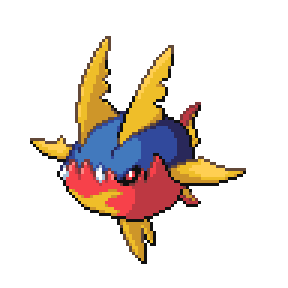
It patrols lagoons at night, using echolocation to find prey. Its sharp fangs tear through anything it catches, leaving little behind.

It lurks near docks, waiting for opportunities to strike unsuspecting prey. Sailors keep a wary eye on the water, knowing that it can appear at any moment.
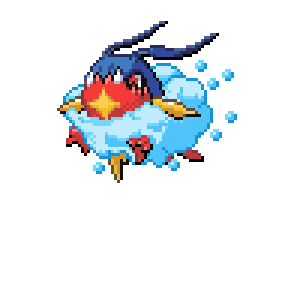
It stalks submarines, drawn to the metallic hum they produce. Once attached to the hull, it gnaws persistently, leaving deep gashes in the metal.
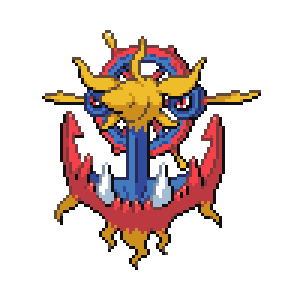
It becomes more active at sunset, using the dim light to hunt unseen. Coral reefs at dusk fall silent when it approaches, as prey scatter to avoid it.
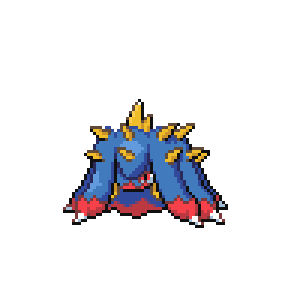
Its skin secretes a mild acid that corrodes anything it touches if given enough time. The acid leaves faint marks on rocks and shells, warning others of its presence.
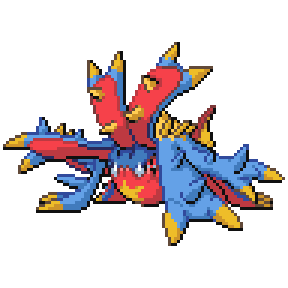
It patrols coral reefs, protecting its territory from intruders. Its sharp teeth can slice through coral effortlessly, allowing it to shape its environment to its liking.

It slips through canals with ease, navigating narrow waterways to hunt. Trainers in cities must remain cautious, as it has been known to nibble on unattended belongings.

It lurks in bays, waiting patiently for small fish to pass by. When disturbed, it creates a flurry of bubbles to confuse its pursuers.

It creates large splashes as it leaps from the water, showing off its power. These displays often serve as a warning to intruders in its territory.
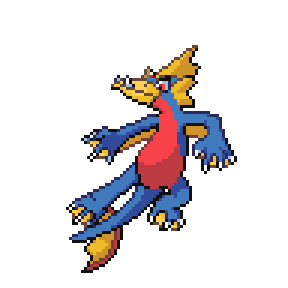
Wetlands are its favored hunting grounds, where it stalks prey hidden among reeds. The murky water masks its approach, making it a dangerous predator.

It lurks in kelp forests, using the dense vegetation to conceal its presence. With quick, darting movements, it navigates through the tangled leaves with ease.

It trails kayaks along coastal waters, drawn by the sounds and splashes. Its sharp teeth make it a hazard to those who venture too close.

It prowls the waterways near villages, sneaking in to snatch food scraps. Its slow, deliberate movements deceive others into thinking it is harmless.

It thrives in waters contaminated with nuclear waste, absorbing toxins that enhance its strength. Its toxic presence makes the surrounding area hazardous for all life.
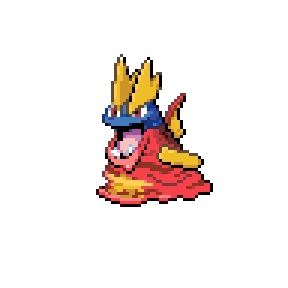
It leaves globs of sludge wherever it swims, contaminating the waters. This pollution makes it difficult for other creatures to survive nearby.

It gnaws on anchors dropped into the water, mistaking them for prey. Sailors often find deep bite marks on their equipment after anchoring near its territory.
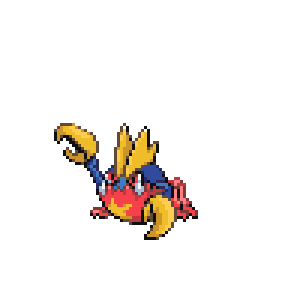
Sharpsea wraps its tail around ship chains while sleeping. If disturbed, it bites with jaws strong enough to crush granite.

Sharpdra uses Smokescreen to darken the waters before striking. The murk somehow doesn't hinder its own sight as it effortlessly bites through defenses as strong as tungsten.

Sharpdeen swims gracefully through tropical seas. When prey is spotted, it bites with enough force to rip through iron.

Sharpchou fires Electro Ball to knock avian Pokémon into the sea. It then bites down hard and drags them underwater so it can feast.

Sharpdily strikes prey by whipping its neck forward with incredible speed and snapping with its maw. Its teeth are sharp enough to pierce steel plating.

At dusk, schools of Sharpvanha feed ravenously, wiping out entire reefs. They abandon injured allies without hesitation while on a hunt.

Sharpish hunts at high speed, locking prey in place with psychic power. It closes in with a brutal, bone-crushing Crunch.

Sharpdisc somehow senses those who have been recently engaged and chases them relentlessly so that it can bite them. No one knows why its attacks are targeted in this fashion.
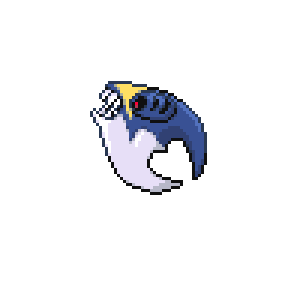
In icy seas, Sharpeel searches for massive chunks of ice. It crushes them with its jaw as a test of biting strength.

Sharpster rockets through brackish waters at blinding speeds. If collision is imminent, it shuts its shell to protect itself.
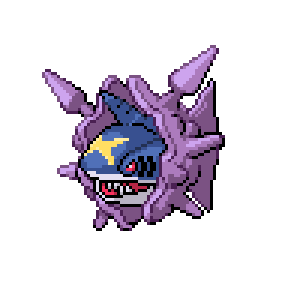
Sharpby spins its claws like propellers to boost its swimming. At top speed, it can reach over 75 mph in open seas.
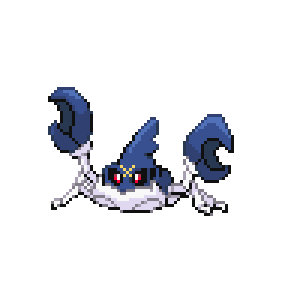
Should Phantpie see a traveler lost in its forest, it will attempt to guide them deeper in the woods. There are few tales of anyone surviving this.

The pink ooze that drips from Phantcute's body is rich in calcium and used in many desserts in Johto. Chefs covet it, and it commands a high price.

Phantgela's body is made of dead vines. It uses shadowy tendrils to grasp food and pull it into its body.

Phantret leaps from stumps when approached, then flees to the marsh, screeching to alert others to hide. This allows other of its kin ample time to escape.
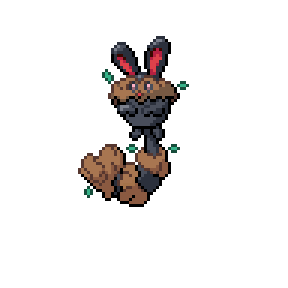
While flying, Phantba's wings give off the scent of rotting wood. It migrates in swarms across wetlands.

Phantrak lays invisible webs, then mimics the cries of a toddler. Anyone drawn near is ensnared and quickly consumed.

Phantbat flies low through swamps, using echolocation to find hollow trees to call home. Its cries echo for miles.
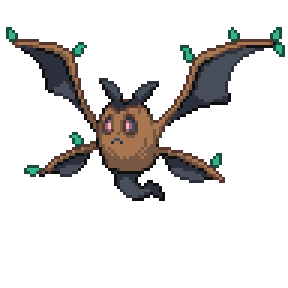
Phantpip float above swamps, crying like lost children to prank travelers. These sounds often seem to come from every direction.

At night, Phantluff hovers over swamps with glowing green puffs. They flash in patterns to communicate silently.
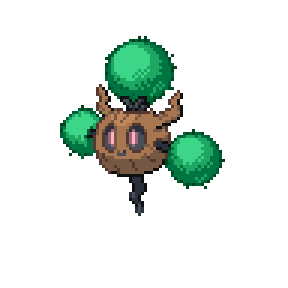
Phantma hovers just above swamp water, zipping around in sudden bursts at over 100 mph. The hum of its wings sounds like distant crying.
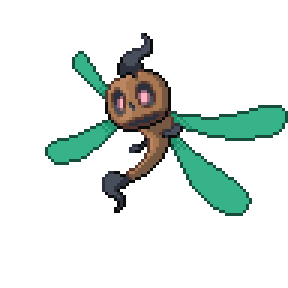
Phantco hangs upside down in willow trees, watching silently. If approached, it drops and chases intruders before exploding.
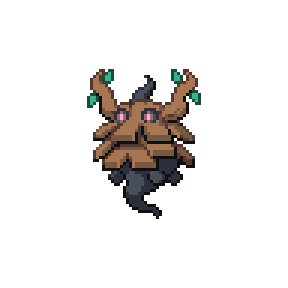
Berry Juice that is created within its shell has a very savory flavor. Bartenders in Unova use it to make mixed drinks at upper-class taverns.

When alone, Phantursa whimpers softly like a child and emits a honey-like scent. If approached, it lashes out with a sharp Slash to take down its prey.

Phantsola floats along the sea's surface, feeding on driftwood. It drifts slowly, blending in with tide-worn debris.
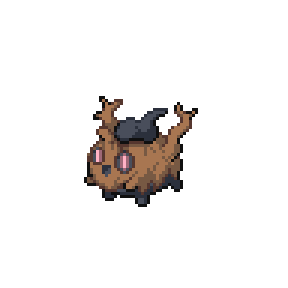
When wet, Phantpy rolls at high speed to dry its wooden body. Its spinning form leaves streaks through muddy trails.

Phantkip spits highly pressurized water that reeks of rotting wood. It cries like a child to lure others close before launching its attack.
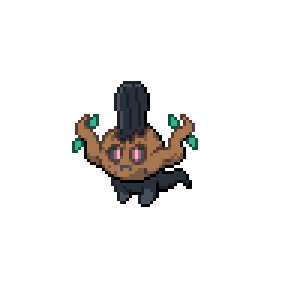
Phantran wails like a lost child to attract kindhearted people. When approached, it lashes out with poison-coated branches.

Swamp villages once revered Phantceus as a deity of the wetlands. Crowns carved from stumps it touched were worn during grand festivals held for any wild Phantceus encountered.

Phantcada digs burrows beneath old tree stumps. It rarely moves unless disturbed, then vanishes into the earth.

Spores drift from Phantish's branches, inducing dizziness and delirium. The effect intensifies in low light.

Phantik climbs tree trunks with ease, blending in with bark. If approached, it releases a sudden electric burst.

Phantesta hides in hollow logs to avoid sunlight. If disturbed, it erupts into flames before vanishing into the swamp.
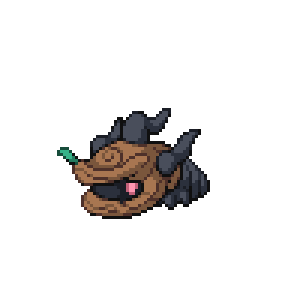
Phantpede nests in caves near marshes. The leaves on its back smell sweet, but its touch is dangerously poisonous.

Phantpede rests on fallen logs, lazily chewing bark. If threatened, it pounces toward its foe and bites with venom-laced fangs.
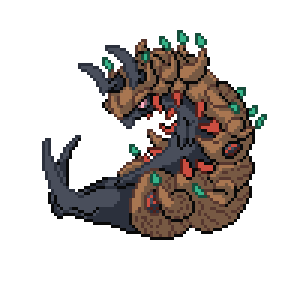
Phantmise coils around ship anchors and rides them to the surface when they're lifted. It mimics a crying child's voice, then vanishes, giggling.

Phantmantis naps in willow branches, emitting giggle-like snores. These sounds unsettle travelers who hear them at night.
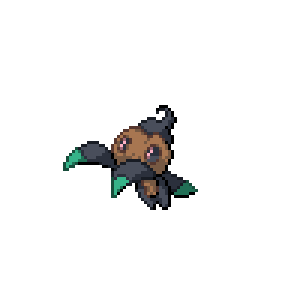
Phantkaboo fires pink beams said to cause victims to hallucinate it as a human child. Folklore warns: never let it into your home.

When lifting objects, Phantchop makes sounds like a crying child. It does this even when content, confusing those nearby.
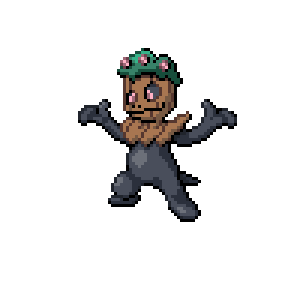
While it sleeps, Phantpoke makes the sound of a crying child. If startled awake, it retaliates with a telekinetic blast.

Ancient civilizations used the Black Sludge from Phantmer to line latrines. The acidic properties serve to break down waste and absorb scent.
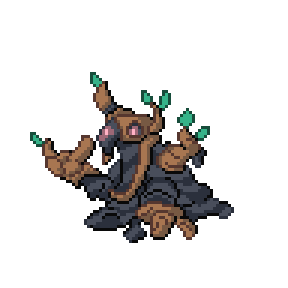
If Tretu foresees an intruder with ill intent, it commands the forest trees to attack. The onslaught continues until the foe flees or falls unconscious.

Trepip drifts above marshes, perching in trees like mossy fruit. If a predator nears, it stirs the forest, commanding branches to strike with eerie precision.

At dusk, Trekrow swoops low through dense woods, hunting the lost. Branches twist at its command, snaring victims in gnarled roots.
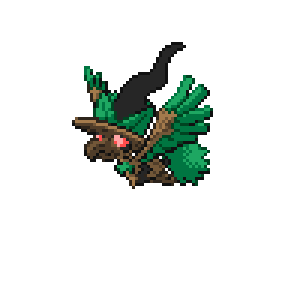
Tredreavus bends trees into frightful shapes to haunt lone travelers. It feeds on the fear collected in its glowing red beads.
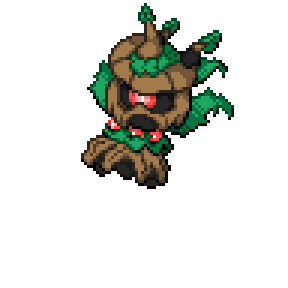
Bark shed from Treceus was thought to be divinely blessed. It burns slowly for days, making it a prized fuel source among swamp nations.

Tremuku, lurking in brackish waters, extends rootlike arms beneath the surface. Any tree it touches becomes part of its will.

Trecada tunnels beneath forests, fusing with root systems to awaken trees. Entire groves move subtly under its silent control.

The branch-like horn atop Trepet glows faintly near old trees. With a glance, it can animate trunks into twitching sentinels of the forest.

Tretik spins conductive silk between trees to form a living circuit with itself. Once prey is near, it channels shocks through bark and branch alike.

Trebat releases deep, thunderous pulses through its leaflike ears. These vibrations rattle canopies and disorient prey with unnatural force.
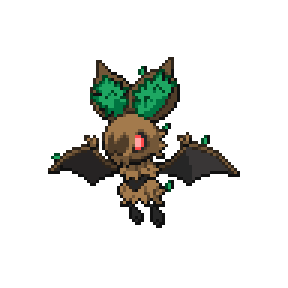
By day, Trebre drink deeply from swamps through their roots. At night, they spread through the woods, manipulating trees to patrol in silence.
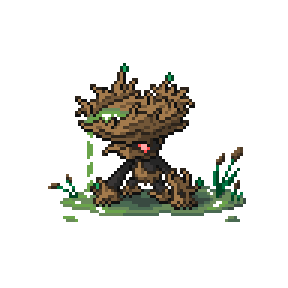
At night, Treor floats silently between swamp trees. It subtly shifts nearby branches with its powers to keep its path clear as it glides.

The sap inside Gloocute can be boiled into a sugar-like substance. This sweetener is a staple in Paldea's bakeries due to its affordability.

Stone flaps on Gloohorn's body emit clouds of orange powder that inspire fear in most creatures. If anything resists the fear, it charges with its horn raised.

From its wings, Gloofree releases a dense cloud of purple Sleep Powder to incapacitate prey. Once asleep, victims are plagued with awful dreams and an intense fever.

After drinking sap from trees, the pods on its body release a refreshing pine scent. However, if threatened, Gloosir can expel a noxious cloud to drive enemies away.
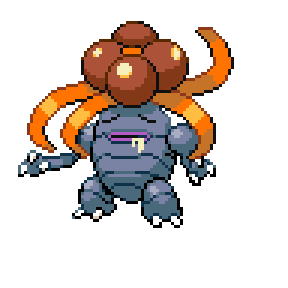
Gloodrill's petals secrete a thick, honey-like toxin that attracts prey. When an unsuspecting Pokémon draws near, it strikes with its venomous stingers.

Gloogey eats the petals off roses to maintain the softness of its feathers. Its vibrant plumage is a sign of a well-nourished diet.

When Glootto spots desirable flowers, it begins to drool uncontrollably. This behavior often leads it to a frenzy of foraging.

Gloopom releases puffs of a sweet aroma from its tail that cause a state of euphoria. This scent often lures Pokémon closer, leaving them vulnerable.
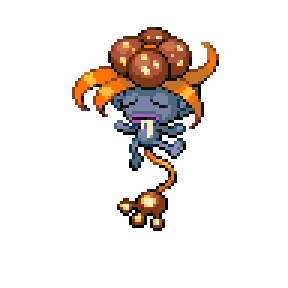
It gnaws on rotting logs using a large, hidden fang, breaking them apart with ease. During this process, it releases an unbearable stench that repels predators.

Gloofarig spits its drool at foes, using its innate paralytic properties to immobilize them. This ability ensures its safety in dangerous encounters.

Glooco consumes hydrangea petals for their unique nutrients. This diet enhances the brightness of its leaves.
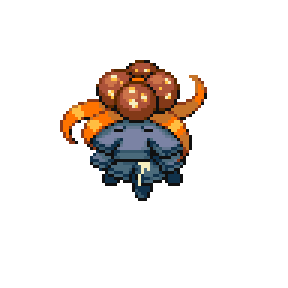
Glootress's larger petals are as tough as steel, protecting the delicate spores inside. If approached, it rapidly rotates its body, scattering a mix of toxic pollen and metal shavings.

The liquid that seeps out of its mouth has a citrus scent. There are chefs who will bottle this sap to use in award-winning dishes.

There is very little that can bother it. A Gloorow will sit silently on the roof of a building for hours just listening to the wind blow.
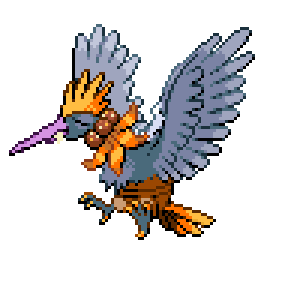
Gloophan drinks water through its trunk to nourish its bulbs. Healthy bulbs emit a soothing fragrance when in bloom.

Glootler's wooden antlers emit an aroma capable of altering mental states. This fragrance can evoke feelings of calm or confusion.

The sap that drips from Gloobok's mouth is intensely spicy and irritating. It uses this scent to ward off predators and foes alike.

The sap dripping from Gloochu's mouth pulsates with electricity. Sparks often flicker from the residue it leaves behind.
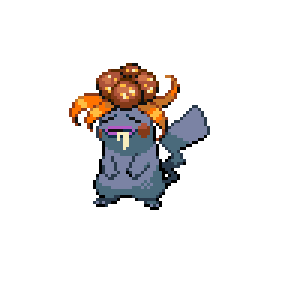
An aroma from Gloopom's tails smells spicy and incites intense bouts of anger in those who inhale it. This volatile scent often disrupts nearby Pokémon.

The sharp tip of Gloochu's leaf-like tail slices through foliage with ease. It uses this skill to prepare its meals.

The bud on Glooslash's tail emits yellow powder to mark its territory. These puffs are visible even on windy days.

Each step Glooloom takes releases a cloud of spores with a pungent, earthy aroma. If it feels threatened, it swings its mushroom-covered arms, scattering a mix of poisonous and sleep-inducing spores.

Gloopet drips chamomile-scented acidic sap across the graveyards it inhabits. The aroma marks its territory and lures Bug-type prey like Caterpie.

The gelatinous slime coating its body smells like a mix of countless flowers. This unique scent is highly sought after in the perfume industry.
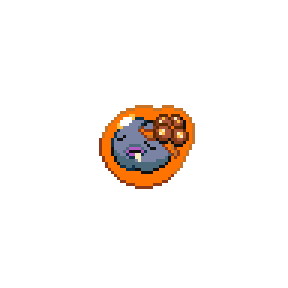
Gloobat releases pollen puffs from its mouth that induce drowsiness. This tactic allows it to escape from predators with ease.
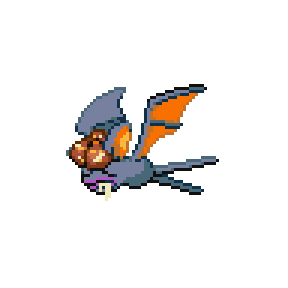
Gloobat spits acid on cavern walls to create a hollow for its nest. The acid's potency allows it to carve out shelter in mere minutes.
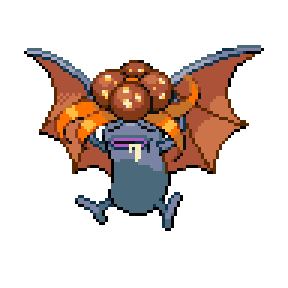
It hides within dense poison ivy patches, waiting for unsuspecting prey. When disturbed, it spits acidic toxins that can dissolve plant matter instantly.
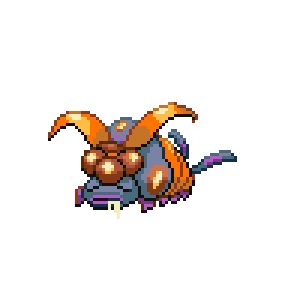
As Glooish sleeps with its head buried in the soil, sap from its mouth seeps into the ground. This sap enriches the soil, fostering plant growth.
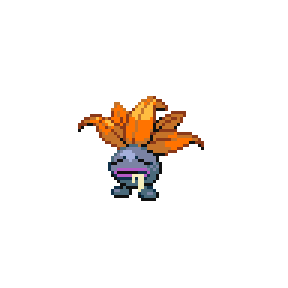
Gloocorio performs an elegant samba, releasing colorful puffs of powder with every step. The vibrant display mesmerizes onlookers and confuses foes.
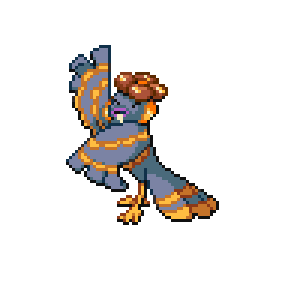
While performing ballet-like movements, Gloocorio spreads its pollen in stunning patterns. The grace of its display often distracts enemies in battle.

The berries on Glootump's wooden body are extremely poisonous. Consuming even one can cause paralysis lasting years.

When wounded, Glooful releases a brown powder from its body. This substance is both bitter and mildly toxic.

Gloonea thrives in dry environments, using its noxious scent to repel predators. Its roots extend deep underground to absorb moisture, allowing it to survive even in the harshest deserts.
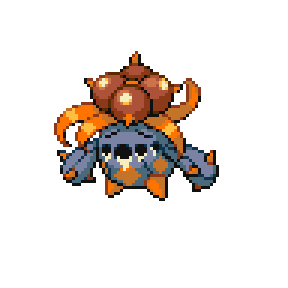
Under the moonlight, Glooturne sways rhythmically, releasing a hypnotic mist that lures in unsuspecting prey. Once close enough, it strikes with thorn-covered tendrils.
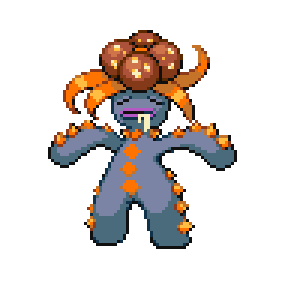
Gloogast emits a garbage-like stench on trash-covered beaches. The scent lures prey like Grimer, which it absorbs with ease.
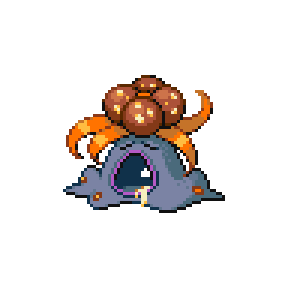
The scales on Gloomo-o's body absorb the sunlight, strengthening its toxic secretions. It rattles its petal-covered tail to intimidate foes before spraying them with a putrid, paralyzing mist.
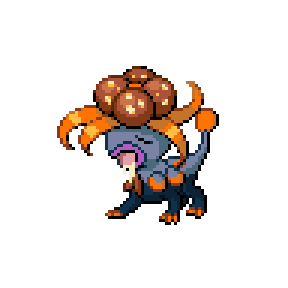
The more seeds Gloopin eats, the sweeter the nectar flowing from its mouth smells. The nectar is extremely toxic to humans and should not be eaten, as it can cause severe poisoning.
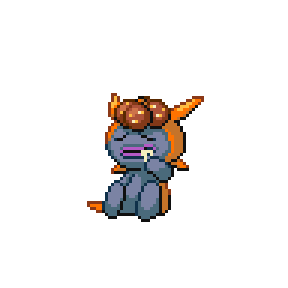
Gloonat collects lilies and other flowers to consume them for nutrients. Its diet keeps its body vibrant and healthy.
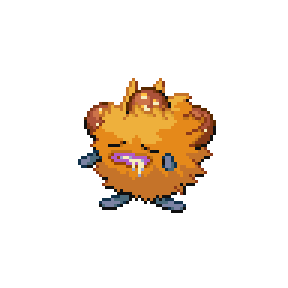
Gloomoth makes its home in ferns, camouflaging among the foliage. It spits acid at intruders who wander too close.

Glooggy's head constantly leaks toxic pollen to ward off intruders. If left unheeded, it spits corrosive acid from up to 20 feet away.
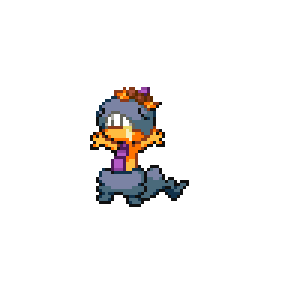
If Gloolett encounters an unusually large boulder while digging, it spits corrosive green acid. The usually stone dissolves quickly, clearing its path.

Glooyena releases green pollen while howling to summon others of its kind from nearby areas to form temporary hunting packs. By sunrise, these groups disperse back into solitary wanderers.
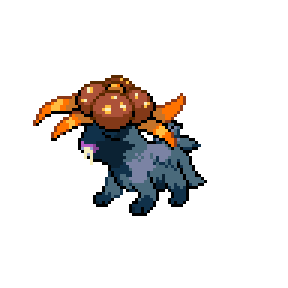
When howling, Glootyena disperses thick clouds of yellow pollen that paralyze prey. Members of its own pack, however, are completely unaffected.
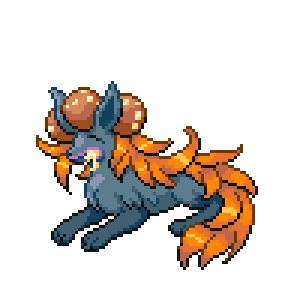
As Gloonoone darts through underbrush, it releases a strange Pomeg-scented pollen to alert its kind. The pollen itself can cause rashes on predators.
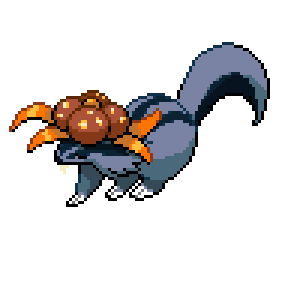
Glootrio sleeps within tunnel walls, releasing a soothing Lum Berry scent. When prey draws near, it emits yellow powder that causes paralysis.
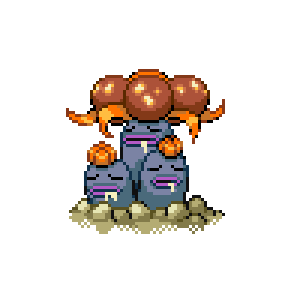
The leaf on Glooth's tail mysteriously points toward valuable objects. Treasure hunters often seek its guidance despite its unpredictable nature.

Glooduck frequently adjusts the leaves on its head to ease its chronic headaches. The movement creates a rhythmic rustling sound.

Gloowag drools on pinecones before eating them, softening the outer shell. This behavior is most often seen in dense forests.

Each punch from Gloowhirl releases clouds of pollen that can induce sleep. Its opponents rarely stay conscious for long.

Despite its poor eyesight, Gloobra uses telepathy through its spoon to perceive its surroundings. This unique ability makes it highly accurate in battle.

Glookazam uses its psychic powers to redirect clouds of Stun Spore at enemies. This tactic leaves foes paralyzed and defenseless.

Gloosprout spits globs of white acid at foes to incapacitate them. The acid has a mild corrosive property that leaves lasting discomfort.
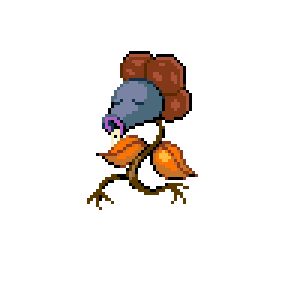
Gloobell avoids dry ground by spitting a pale blue goo wherever it steps. The sticky residue leaves a glossy trail behind it.

Glooler consumes seeds from the forest floor to enrich the vibrancy of its leaves. It prefers seeds with higher mineral content for added brilliance.

Though resembling flames, Gloodash's mane is made of countless tiny flowers. They sway like fire, creating a mesmerizing illusion as it runs.

When hungry, Gloopoke opens its mouth lazily at the water's surface. Its acidic sap dissolves any plant life that drifts in.

Gloobro floats on lake surfaces, basking as its bulbs absorb sunlight. It remains motionless for hours during peak daylight.

The leaves that fall off of a Glooton are very aromatic. There are artisans in Johto that use them in potpourri.

Gloofetchd twirls its weapon like a baton to release a dizzying aroma. This scent confuses enemies, giving Gloofetchd time to prepare a strike.

Glooduo's two heads take turns sniffing out food, but the smell of its own petals often confuses them. If startled, it shakes its body violently, releasing a thick cloud of toxic pollen.
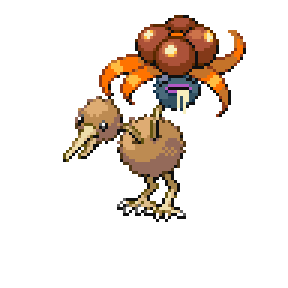
Gloodrio releases paralyzing powder from its feathers to incapacitate foes. This attack is precise, often stopping enemies mid-charge.

The liquid covering Gloomer occasionally sprouts tiny plants depending on its environment. This phenomenon has puzzled researchers for decades.
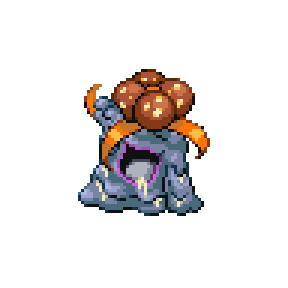
Gloono's saliva-like sap is incredibly sticky, binding anything it touches. This natural adhesive is said to be impossible to remove without specific solvents.

Noipede tucks in its wings while rolling through cave systems. It makes a loud noise while rolling, announcing its presence and warning any potential threats in its path.
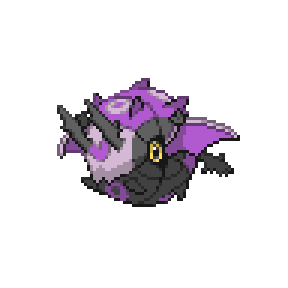
Noimo-o fires powerful sound blasts from its ears. As it charges up, the scales on its back vibrate rapidly, amplifying the sound's intensity.
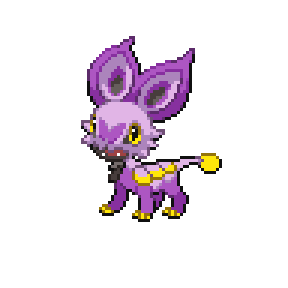
When it emits loud sounds to attack, the gems on Noibink's body glow brightly. The vibrations from its cries energize the gems, amplifying the power of its sonic assaults.
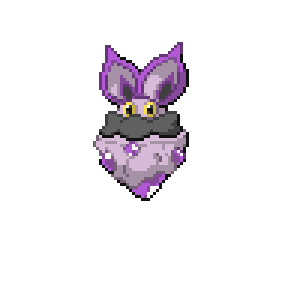
Noigeist stands like a sentinel within pumpkin patches. If it spots an intruder, it unleashes a deafening noise to protect its crop, ensuring no one dares to steal its bounty.
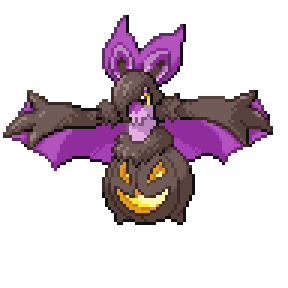
Noibat can emit high-pitched noises to determine its surroundings. It spins like a wagon wheel when attacking, slashing at foes with sharp wings and using its sound-based attacks to disorient them.

While dashing at high speeds, Noizor unleashes loud noises from its ears to stun prey. These sonic bursts disorient its targets, allowing it to close in and strike with precision.
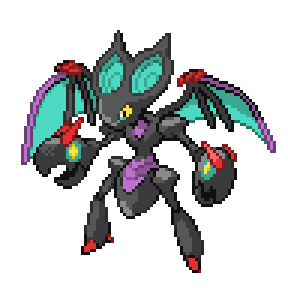
Noickle uses sound waves to knock Persim Berries from trees before gathering them in its shell. The juice it makes is said to promote better hearing for short periods, offering a unique benefit for those who consume it.

Noimory's metallic wings create loud blasts of noise that can shatter marble. The sonic force generated by its wings is enough to disorient foes and break through solid materials.

Noiperior emits piercing sound waves by spinning its drill-like horn. The shriek disorients prey before it charges in with a devastating Take Down.

Noiceus emits a low hum that alters perception, convincing listeners of its divinity. When enraged, the sound intensifies enough to shatter mountains.
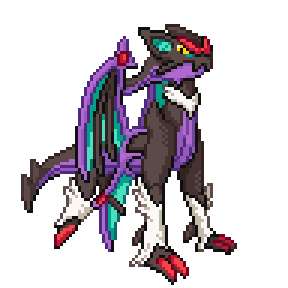
Noidile makes a loud steam-train-like noise while digging through desert sands at high speeds. What it lacks in subtlety, it makes up for in speed, moving quickly and relentlessly through the harsh terrain.
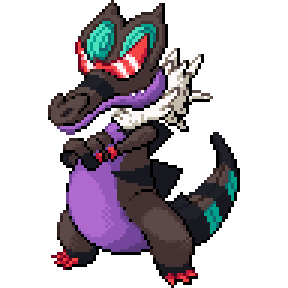
Noilure flaps the wings on its head to blow hot air at an opponent. The air is hot enough to boil water, creating an intense and fiery attack against any foe that challenges it.
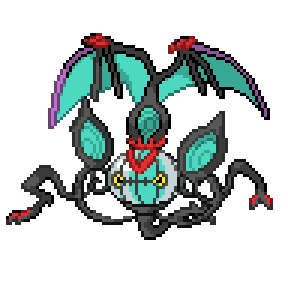
Noieye uses high-frequency noise blasts to knock gems off cave walls, which it eats. Its ability to manipulate sound helps it gather food with ease, making it a proficient scavenger in the dark depths.

A cold mist comes from Noilie's ears while it sleeps. The mist can freeze water on contact, making it a natural force to be reckoned with in cold environments.
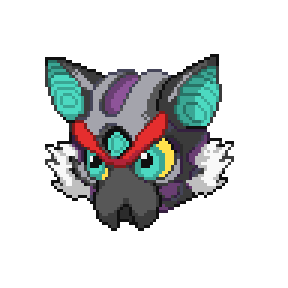
Noivenant lurks completely still in boggy areas. When it spots prey, it emits a low hum before chasing after it, then lets out a blood-curdling screech to instill fear in its target.

Noiria flies through hazy, mountainous regions, unleashing high-pitched screeches from its ears. The sound echoes through the mist, adding an eerie atmosphere to its nocturnal flights.

Noibink uses ultrasonic blasts to shatter topaz deposits in caves. It gleefully devours the gems before others can reach them.

Standing guard in crop fields, Noigeist acts as a sentry. If a forager like Sentret appears, it screeches to summon allies and launch a group attack.
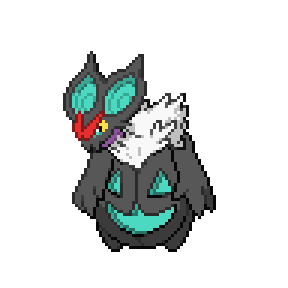
A low rumble echoes within Noior's shell at all times. If even one crack appears, the contained sound bursts out, shattering the surrounding rock.
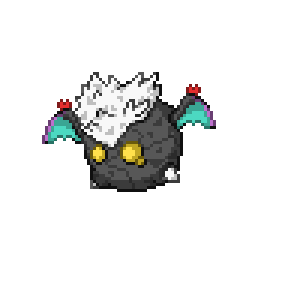
Noior's body flashes brightly before unleashing a supersonic screech. The sound is powerful enough to crack reinforced concrete.
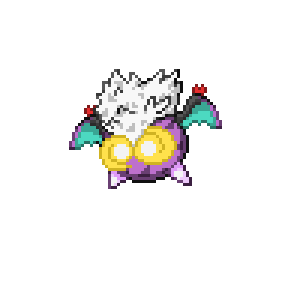
The sound Noikazam emits from its tuning forks is carefully constructed to always be unbearable to its target. It learns their least favorite noise by reading their mind, using this power to break their concentration.
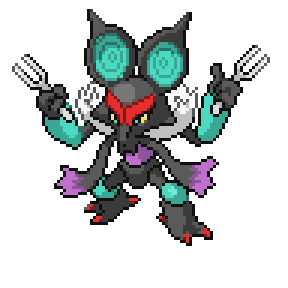
Noilem's rock body is hollow inside and can echo noises loudly. It funnels the sound out from its ears to incapacitate foes, using its amplified noise as a weapon in battle.

Swable gleefully snaps at raindrops as they fall during storms. This behavior serves no known purpose other than its own enjoyment.

Swabno flies through dense clouds almost completely blindly. Its antennae detect air currents and movement, guiding it through the skies.

Swabinch soars quietly over deserts, waiting to ambush prey. It drops with jaws open wide, strong enough to dent cast iron with a single bite.
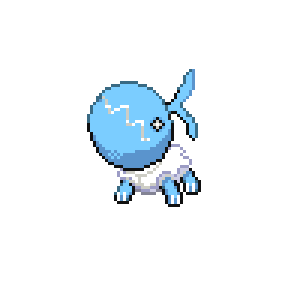
The cotton covering Swabsis's body is thick, warm, and inexpensive. In Sinnoh, it is woven into durable scarves sold in winter markets.

In ancient times, Swabolett was trusted to secure ropes during climbs. It could fly to high ledges and tie perfect knots with unshakable grip.

In winter, the cottony feathers on Swabinder's wings grow hot. It uses this warmth to insulate its eggs during the cold months.
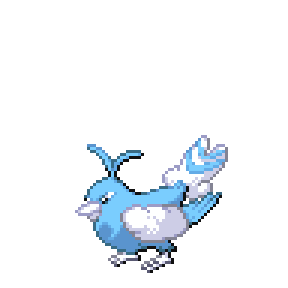
Swabpede rolls nearly silently thanks to its cotton coating. The white fluff is laced with a sticky poison that causes itchy rashes on contact.

At night, Swabgast buries itself in coastal sand to rest. At sunrise, it and its flock burst into flight in a shimmering morning display.
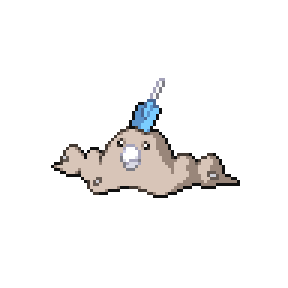
Swabpod flocks climb Blue Apricorn trees to eat fruit. If spotted, they scatter in all directions, many vanishing into the sky before they can be followed.
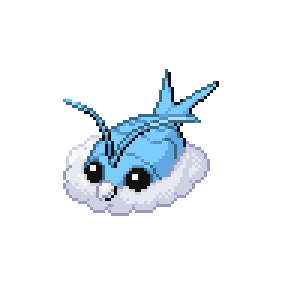
Female Swabdot grow longer head feathers than males. They chirp loudly and bounce these feathers before exploding near a potential mate to impress them.
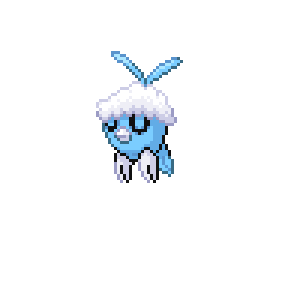
Swableaf flaps its arms rapidly to stay airborne. Tiny feathers line its hands and arms, though how this enables flight still puzzles scientists.
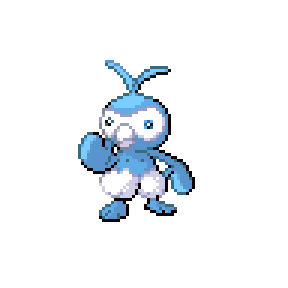
The fluffy wings of Swabgoose conceal two sharp claws on each side. With a single swipe, it can slice through branches as it flies past.
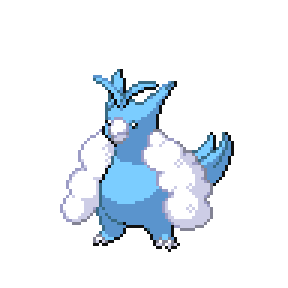
Swabviper glides through the sky in a smooth serpentine pattern. Its ability to fly without wings has puzzled researchers for generations.

Swabsprout soars above onion fields searching for nesting grounds. Once it has chosen, it pecks a shallow hole to break the surface and sends roots deep beneath the soil.

An Altaras forms small helium-filled bubbles around its body to fly. The bubbles form within the fluff on its body, then move to cover its skin.

The cotton-like substance that covers its body becomes thicker in humid weather. On dry days, tiny wings emerge from the fluff.

The bubbles clinging to Altaeon allow it to hover several inches above the ground, even while asleep. Scientists have studied this strange buoyancy for decades without clear answers.

It strips off bark from trees to use in its nest. It uses chunks of fluff from its wings to line the nest and ensure comfort to its young.

Its wings have a consistency similar to cotton, and become heavy when wet. During a rainstorm, an Altamory has trouble flying in a straight line.
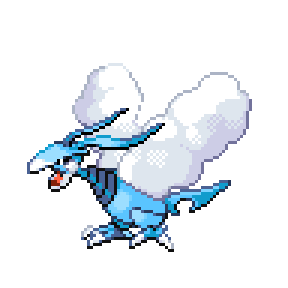
The stone under the wool that covers its body is extremely brittle. The wool serves as a cushion should it bump into cave walls.
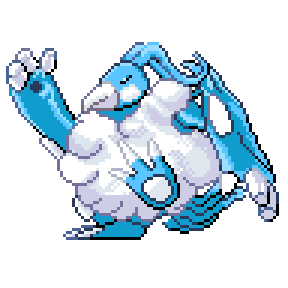
Its punches propel air from its fist with intense force. By concentrating, it can destroy boulders from up to ten feet away.

The cotton-like material on its body gets dirty very easily. To avoid tangles it prefers to wash itself twice per day.

Philosophers record that cities Altaceus flies over experience prolonged good fortune. Whether coincidence or influence, these sightings are carefully documented across regions.

The ground-up horn of an Altaking was used in ancient times to create remedies to treat stomach ulcers and fevers.

An Altadile will sometimes perch on a mountain top in the morning to sing a depressing tune. The tune can cause dizziness in the elderly.
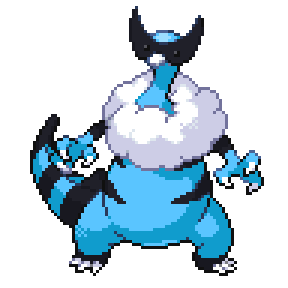
The wool on its body is extremely hot. Should an Altalure enter a cold climate, the wool will become brittle and fall off in clumps.

Its body is covered in tiny bubbles that are filled with an incredibly cold gas. Should a bubble pop, it will freeze the water around it.

There is a legend in Hoenn of an Altalass that guards a spring surrounded by crystals. It will allow entry only to those who sing with it.
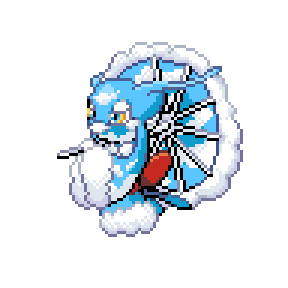
Despite its smooth appearance, its body is covered in razor-sharp scales. Should an Altavanha rub against a ship, it can cause massive damage.
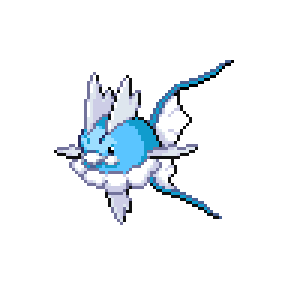
The cotton-like substance on its body allows it to stay airborne when jumping out of the water. Despite its sharp teeth, it prefers to eat seaweed.

Once it chooses a mate, it will form a telepathic link with them. This link ensures communication at any time from up to ten miles away.
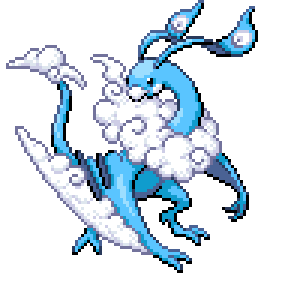
It does incredible acrobatics to scale cliff walls. By expanding the fluff on its body it can glide for miles.
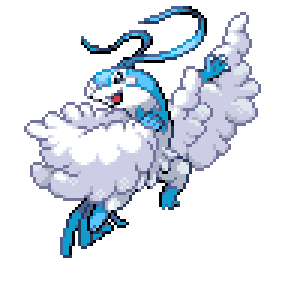
The blue crystals on its body are extremely cold to the touch. Some of the first refrigerators were developed with crystals from Altarorus fossils.

The white substance on its body may look like cotton, but it is actually millions of tiny bubbles. It uses the bubbles to camouflage its nest.

A wool-like substance covers its body. There is a seamstress in Hutber Port that utilizes the fluff from an Altaduck to create scuba gear.
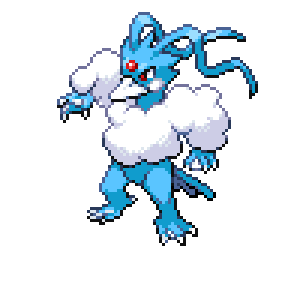
By concentrating, it can use its psychic abilities to lift its body and fly at great speeds. When attacking, it will rotate its spoons clockwise.

Each green orb on its body leaks a corrosive slime that Gootini rubs all over its scales to keep itself safe from predators. It is immune to its own slime but avoids water, where it loses potency.

It spits its acidic goo onto lapis lazuli to dissolve it into a paste before consuming it. This process makes its scales shimmer with a brilliant blue hue.

The goo that drips from its body is extremely slippery. It rolls its metallic body in the gel to make itself shiny, often attracting predators that slip when pursuing it.

It leaps out of sand dunes to pounce on prey, firing globs of emerald-colored slime to slow foes. The sand it coats in slime hardens into a protective shell when dry.

Its skin has a texture similar to pudding, jiggling when touched. It spits green acid on cave formations before eating them, leaving behind sparkling marks.

The slime it leaks from its tusks smells like Wepear Berries and has been used as a spread for bagels. Its gooey nature helps it cling to trees when escaping predators.
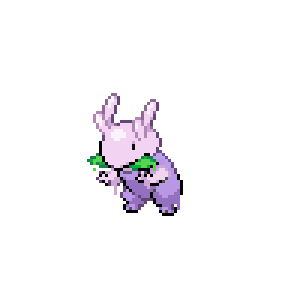
Many Goolett are found in tombs using their sticky green slime to repair pottery. Their slime is so strong that restored artifacts are as durable as new.

Goomo-o's slimy head scale emits a terrible stench when it feels threatened. Its gooey body makes it difficult to grapple or contain.
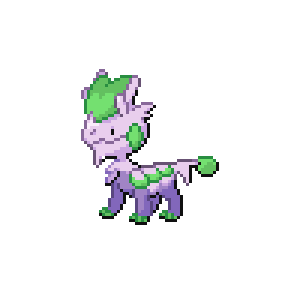
It digs beneath jungle trees, using acidic nose drippings to dissolve roots before eating them. The slime left behind nurtures the soil for new growth.
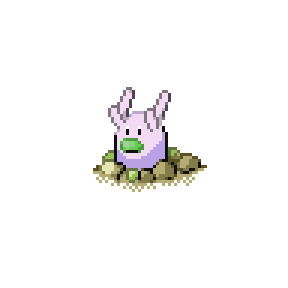
The corrosive snot that dribbles from its three noses lines its tunnels, leaving an olive-colored glow. It uses this glow to attract insects into its burrow.
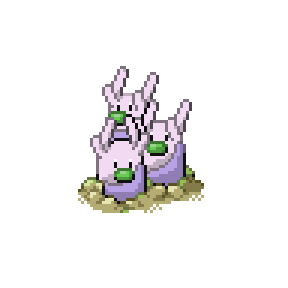
Goonine's slime burns hot enough to melt sand into glass. In battle, it flings this molten slime before following up with a searing Ember.

Slibone's bone is coated in a lime-scented slime that becomes highly adhesive when dry. It uses this substance to mark and claim its territory.
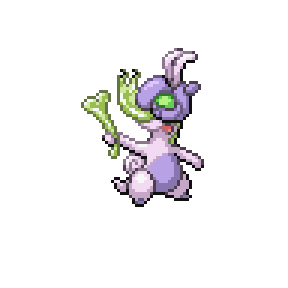
A freezing slime coats Slivile's body which drips off on hot days. Leatherworkers prize it for curing and preserving rare hides.

The film dripping from Sliceus can corrupt the minds of those who touch it. Victims briefly believe it to be divine, though the effect fades after a single day.
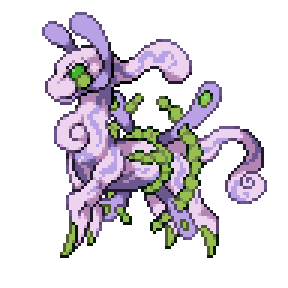
Slisharp's helmet-like shell is harder than iron. The shell is coated in a slick poison that causes rashes on contact.

The mucus covering Gooceus subtly influences those they touch. Ancient cultures once revered it as a godlike being despite it doing nothing to assist them.

Liquid metal flows around Regiceus's body and induces powerful delusions on contact. One common hallucination convinces victims it is a god.

A Vileicate has a lot of trouble seeing where it is going after the flower on its face blooms. It bumps into trees constantly, leaving behind pollen.
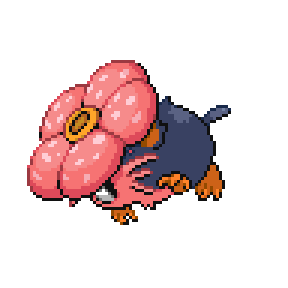
Vilelett lives in forest tunnels, clinging to the ceilings with its flower exposed. It sprays yellow acid at anything that wanders into its den.

Large groups of Viletrio inhabit forest tunnels, releasing Pinap Berry scents. They coordinate acidic torrents from the walls to overwhelm prey.
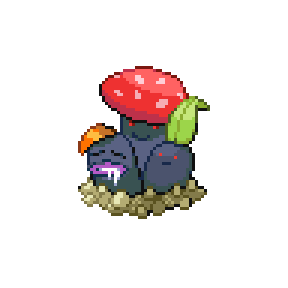
When startled, Stuffsparce beats its wings rapidly. Though heavy, its cotton-filled body briefly lifts off the ground to intimidate predators.

After eating too many berries, Stufflax rolls its cotton-like body in the leftover juice. It later drinks the absorbed nectar from its body when hungry again.

If its fluffy fur becomes muddy, Stuffts teleports to the nearest clear water. It refuses to remain dirty for long and cleans itself obsessively.

Stufflia begins dancing instinctively when it hears music. Long group dances with others somehow strengthen its latent psychic abilities.

Stuffwig releases a sweet scent that lures in smaller prey. Once close, it hugs them tightly and drags them quietly into the forest.

Stufflu can carry large boulders effortlessly while flying. When enraged, its soft body swells and its strength increases drastically.

Stuffmo-o's soft body feels like a plush toy. When content, the scale on its forehead pulses with a pink glow while it cuddles close to those it trusts.
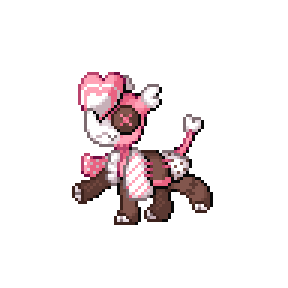
A button-like lily pad on Stufftad's head keeps it afloat while sleeping. If awakened, it thrashes wildly and attacks with Flail.

It stores water inside its absorbent body. When in danger, Stuffbre blasts it outward in short, forceful bursts to drive threats away.

When Stuffduck's headaches flare up, psychic waves ripple through its fur. Nearby plush toys sometimes twitch toward it, as if drawn for comfort.

Despite its immense strength, Stuffpoke remains calm and docile. It could uproot trees but almost never uses its power without reason.

Bebone's plush body invites unwanted hugs from passersby. Despite this, it prefers solitude and actively avoids physical contact.
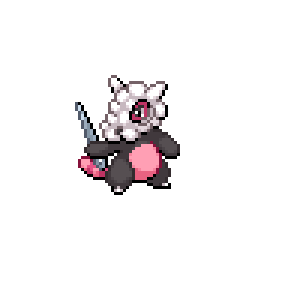
Behorn rubs its soft snout on allies as a gesture of affection. This behavior is often seen in close-knit groups.

Bedon's rocky exterior makes its hugs feel more like playful collisions. Its heavy footsteps shake the ground, often attracting other Pokémon who are curious to witness its strange mix of affection and brute strength.
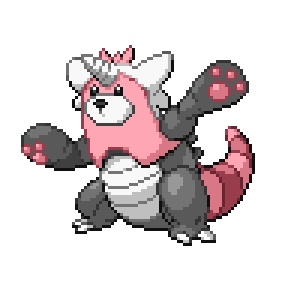
It happily bounces while running from place to place. It can hurl its egg with surprisingly high accuracy.

Begela's vines wriggle constantly, making each hug a chaotic tangle of embraces. It uses its vines to help other Pokémon, though disentangling oneself afterward can be quite a challenge.

At the Pokémon Swap Meet in Palmpona, Bemime's bizarre performances leave audiences puzzled and delighted. Its miming skills are said to confuse even the most seasoned Trainers.
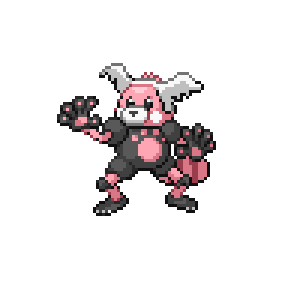
The fur on Bebuzz's arms stores electrical energy, which is extracted to make Heal Powder. Although the powder is bitter, it can cure various status ailments by utilizing the Pokémon's residual electric charge.

The heat radiating from Bemar keeps the hot springs of Kin Island at a perfect temperature. Locals believe its presence is essential to maintaining the springs' soothing properties.
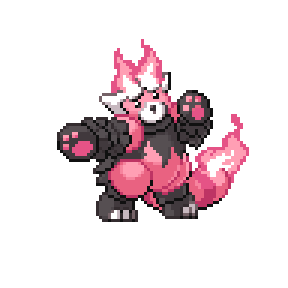
It swings its arms rapidly to move across the ground at great speeds. If it encounters an obstacle, it will attempt to punch it out of the way.

Bedrill is deceptively cuddly, but its needle-like arms can inject venom potent enough to paralyze a Rhyhorn. It hugs its prey tightly before stinging, leaving very few able to escape.

The call of Beowl echoes through the silent forests of Florando. Its hypnotic eyes gleam under moonlight, entrancing both Pokémon and humans alike, leaving them in a serene trance until dawn.

The webbing that dispenses from its abdomen looks like balls of cotton. There is a tailor north of Viridian City that uses this material to create stuffed toys.

Its eyesight is extremely poor, especially in the darkness. Due to this, it will use Supersonic to determine its location.

The wool harvested from Beffy is spun into odd-smelling Super Potions. Its fibers release a mild shock, which helps rejuvenate muscles and accelerate recovery from injuries.

Despite looking like a plush toy, Bewoodo's body is incredibly dense and durable. If exposed to water, it flees while emitting an unsettling, ear-piercing screech.

Bema flits about energetically, its large eyes scanning the environment for movement. When it catches something, it wraps it in a swift hug, buzzing happily as it flies off with its new friend.

Known for its carefree demeanor, Besire's fluffy coat conceals a surprising resilience to harsh environments. Even when startled, it responds with a gentle squeeze, leaving challengers confused rather than alarmed.

Bereon's round head radiates warmth, though its dark fur gleams under the moon. It hugs others quietly, its glowing rings pulsing faintly to comfort those shrouded in sadness.

At noon, flocks of Bekrow take flight over the rooftops of Ecruteak City, imitating those they hear during the day and spreading rumors in the wind. Their feathered coats are often plucked by mystics, who believe them to possess protective charms.

Bebuffet's calm expression belies the unpredictability of its defensive tactics. It hugs others tightly, seeming to absorb both joy and frustration, reflecting emotions with surprising intensity.

The metal on its body is highly magnetic. It regularly must shake furiously to loose any metallic trash that it accumulates while moving.

Besparce often lies still in fields, pretending to be harmless until something stumbles upon it. Once provoked, it thrashes about wildly, hugging with unexpected ferocity to disorient foes before making a swift escape underground.

Covered in a soft yet sturdy shell, Beckle ambles about slowly, dragging small objects into its hidden lairs. When it embraces something, it holds on for hours, making it difficult for anything to slip away unnoticed.

The secretions from Becross's horn are the key ingredient to brewing revitalizing herbal extracts akin to an Awakening. These elixirs emit a sharp scent that jolts even the drowsiest Pokémon back to full alertness.
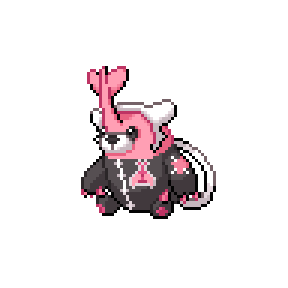
With a fuzzy snout and robust build, Bering patrols forests tirelessly. It offers affectionate hugs to those it trusts, but these can feel overwhelming due to its sheer size and strength.

Its talons are strong enough to crush boulders. It will utilize these talons to crush prey and render them immobile.
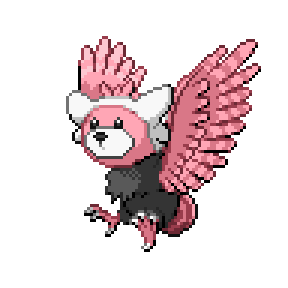
With its immense strength and rolling charge, Bephan barrels through forests, flattening everything in its path. Its powerful trunk hugs with surprising tenderness, though it can unintentionally crush anything caught in its grip.

Betler strides gracefully, its antlers shimmering as it moves. Those who encounter it feel an odd sense of calm, but its embrace can leave even the strongest person gasping for air.

Its skin is extremely similar to cotton and very soft. If caught in the rain, its skin will unwillingly absorb copious amounts of water.

The fluffy fur covering Bemagius's body was once used to craft ceremonial robes. These garments were hand-stitched and worn by mediums seeking to commune with spirits.

The cotton-like substance in Bekrow's body is remarkably light. It glides over rooftops at night, searching for a quiet nesting place.
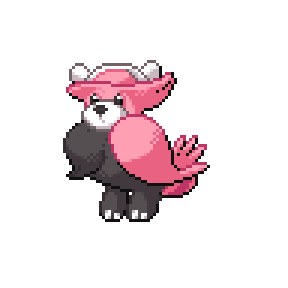
Belax thrives in bustling markets like those of the Pokémon Swap Meet in Palmpona, where it scavenges for food. Despite its insatiable appetite, it never forgets to share its spoils, earning it the love of local vendors.

It can extend its tongue up to 25 feet. It does this to more easily take Apricorns from the branches of a tree.

A thick poisonous slime covers its tail as it is swung in battle. A single touch of its tail can cause vivid hallucinations or nausea.

The cotton-like substance that leaks from Bechic's body is hotter than a stovetop. It often hugs others, leaving them covered in singed fur and soot.

Belia is drawn to places of great emotion, often seen drifting through the forest paths of Alto Mare. Its presence is thought to soothe troubled hearts, making it a symbol of serenity during local celebrations.

Groups of Beran are known to play along the marshy borders of the Great Marsh. Their soft fur is often collected by locals for good luck charms, though the Pokémon are quick to retaliate if disturbed.

Bedoof's paws are deceptively strong, capable of lifting an entire pine tree with a single swipe. It uses its powerful teeth to carve deep grooves into bark to mark its territory.

Bewile guards the ruins of Rota with deceptive tricks and sudden ambushes. Visitors are advised to be wary, as it enjoys toying with those who wander too close.

Bequeen patrols the dense jungles surrounding the Safari Zone, fiercely protecting younger Pokémon. Its nurturing nature contrasts with its immense strength, making it both a loving guardian and a fearsome opponent.

There is a seamstress in Shelter Town that utilizes a Besol's fur to create cold winter clothing. The clothing itself is extremely expensive.

It waves its hands wildly as if calling for assistance. Should a traveler get too close, it will cover their mouth and attempt to carry them away.

With a leaf sprouting atop its fluffy head, Bewig ambles around slowly, content to lie under the sun. Its sturdy body makes it an excellent hugger, though those embraced sometimes feel like they are being planted in place.

Beran can be seen exploring the wilderness of the Pokémon Reserve in search of new playmates. Despite its small size, it is known to wrestle with larger Pokémon, always eager to show off its budding strength.

On nights when the moon is hidden, Beray silently stalks the darkened streets of Fleurrh City. Using its powerful gaze, it can sense the emotions of those in hiding, ensuring no mischievous spirit escapes detection.
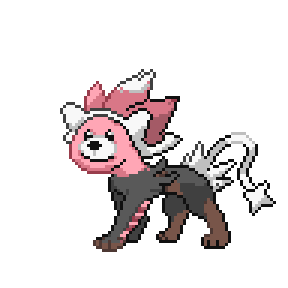
With ribbons that sway gently as it moves, Beveon radiates an air of kindness. It embraces others without hesitation, wrapping them in both its arms and ribbons to share warmth and affection.

Beking has been sighted near the Battle Frontier, where it uses its powerful arms to uproot trees and forge new paths. Locals have come to fear its hugs, which, while affectionate, can be as destructive as a seismic slam.
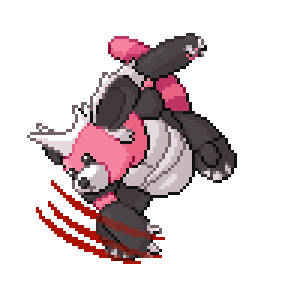
The cotton on its tail is soaked in a foul-smelling white liquid that leaks from its body. The aroma of this fluid is extremely pungent and can cause seizures if inhaled for too long.

The cotton-like substance on its body hardens at will. Should a Benette throw a punch, it will harden the portion at the end of its arm to inflict extra damage.

Bepix's fluffy tails radiate warmth, making them hot to the touch. They allow it to thrive even in the harshest blizzards.

Bekyu wanders the eerie woods surrounding the Old Chateau, blending into the shadows of ancient trees. Locals believe it mimics Bewear's appearance in a bid to attract affection, though few dare approach it.

Bekoth moves lazily through the day, occasionally pausing to surprise others with a powerful hug. Though it may seem lethargic, once it starts playing, it is hard to make it stop.

Beroth's fluffy face hides boundless energy within its powerful frame. It leaps around playfully, embracing anything it encounters, making it difficult for others to keep up with its constant movement.
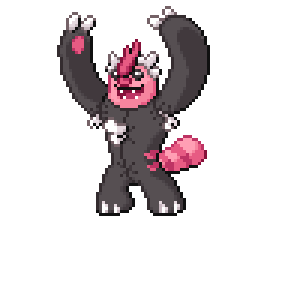
Its inner body is extremely soft. Due to this, a Beron grows thick metallic plating on the outside of its skin.

Beang captivates festival-goers with its quick creation of elegant garments during Chocovine Town's moonlit celebrations. Those enchanted by its sewing performance are said to be blessed with good fortune.

The bubble that surrounds its body is extremely rubbery. Many predators attempt to bite at it while it rests only to be bounced away.

Betik's fluffy fur builds up static electricity as it moves. If too much charge accumulates, it releases random bursts of lightning without warning.

Bebat's wing venom is distilled into pungent herbal cures resembling traditional Antidotes in color. Though the scent is off-putting, these remedies are indispensable for combating toxins in the wild.
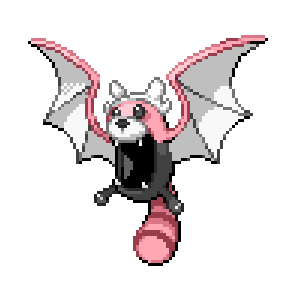
Beye gleams in low light as it scurries, its gem-like buttons captivating all who meet its gaze. Despite its mischievous nature, it offers surprisingly gentle hugs to those it befriends.

Bepede rolls swiftly across the ground, tucking its soft head safely inside its shell-like frame. When it catches prey, it hugs them tightly, not letting go until it tires from the effort.
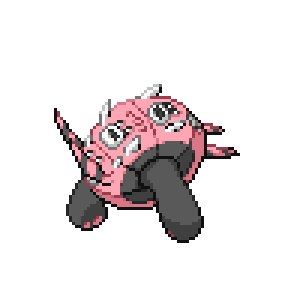
Bepede's carapace feels soft when touched gently, but hardens to a marble-like toughness when struck with force. This ability allows it to withstand even the strongest blows.
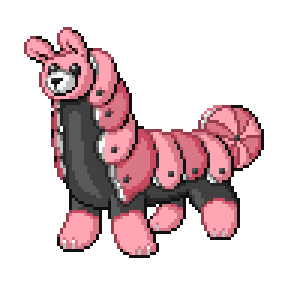
The plush head of Betrum contrasts with its towering frame. When it is happy, it gives hugs so powerful they feel like ancient tremors, shaking everything around it.

Becorio's graceful movements mask its immense strength, luring unsuspecting Pokémon into its embrace. Its spectral feathers emit an eerie glow, believed to soothe restless spirits with each delicate flap.

Legends say that Betump's playful hugs can restore life to withering trees, though it often forgets its own strength. Its soft, hollow eyes seem to conceal ancient sorrow, making it both endearing and unsettling.

Bevenant's head sways like a gentle breeze, but its surprisingly hard bark-covered body is unyielding. It wraps others in tight, constricting embraces, helping plants grow around them even as it holds them still.

Bebat thrives in the underground caves of Rota, where it uses sound waves to navigate the pitch-black tunnels. Despite its spooky environment, it is surprisingly playful, often sneaking up on adventurers to give a friendly squeeze.
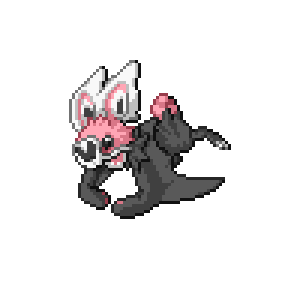
It uses its large paws to hold its prey in place. Once the prey is within its grasp, it releases high frequency sound waves to incapacitate them.

Beroc roams the cliffs of Potpourri Island, howling at the moon to challenge other Pokémon. It leaves deep claw marks along the cliffs, marking its domain for all to see.

Berantis nests near cotton fields, gathering large handfuls of the plants with its massive paws. It carefully lines its den with cotton to create a warm and comfortable home.
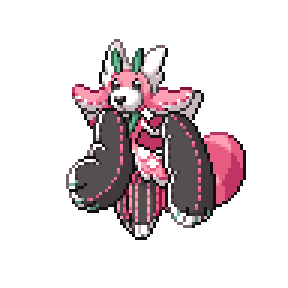
Bebink's extremely soft fur picks up gem shards as it hops across cave floors. It shakes itself regularly to dislodge the gems and keep its coat clean.

Bekaboo sleeps near gourds that remind it of its kind. When lonely, its body softens until it feels like a plush toy.
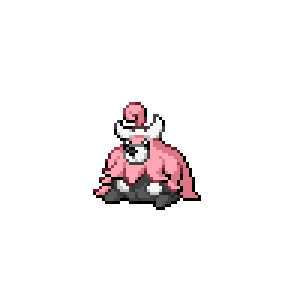
Bemoth's soft antennae twitch as it floats gracefully on its wings. It flutters close to unsuspecting Pokémon, wrapping them in a gentle hug before flying away, leaving a trail of sparkling dust behind.
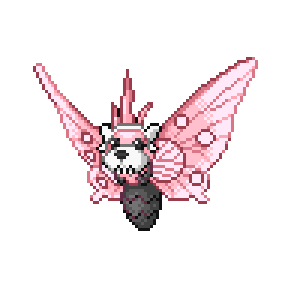
Begeist roams pumpkin patches late at night, hugging pumpkins to test its strength. The firmer the pumpkin, the longer it holds on.
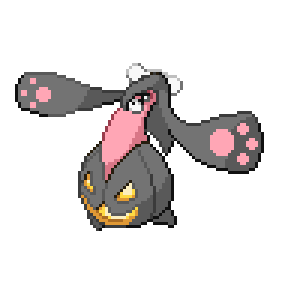
Bety pulls its soft felt-like hood over its head before combat to help it stay focused during battle. This ritual allows it to focus the intense energy required for the fight.
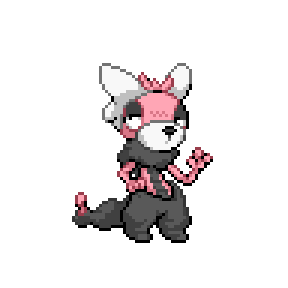
Beor's fluffy outer shell crumbles away when it experiences extreme stress. Once it calms down, the shell reforms, restoring its protective barrier.

Beor's soft body floats gently through the night sky. When happy, its snout glows pink, resembling a falling star.

Beape wrestles fiercely with anything it encounters, driven by an endless thirst for competition. If it loses a match, it sulks in solitude, but a friendly hug can lift its spirits in an instant.

A pack of Belithe was recently seen patrolling the rocky shores of Tangelo Island. Their loyal nature ensures peace between the Pokémon communities there, making them essential to the island's ecosystem.

It uses its psychic powers to pull leaves off of trees. It will use these leaves to create bedding for sick or injured Pokémon in the wild.

Bebell emits a delicious, frosting-like scent from its mouth to lure in unsuspecting prey. Once close enough, it ensnares them with its powerful leaf-like arms and refuses to let go.
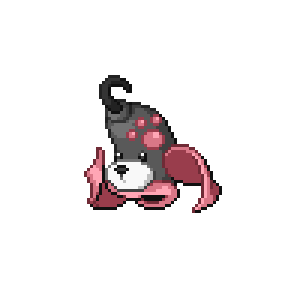
The material covering its body has the same consistency as marble. It regularly attempts to roll uphill to increase the strength of its shell.

It waves its staff high in the air in intricate patterns before each fight. Each Befetchd has a different pattern that it traces.

A sleep clinic in Alto Mare employs Beno to lull insomniacs into a deep sleep. It lovingly guides the patients through blissful dreams.

Dhelpie are commonly seen in ship graveyards. The rotten wood holds vital nutrients that they require before evolving.
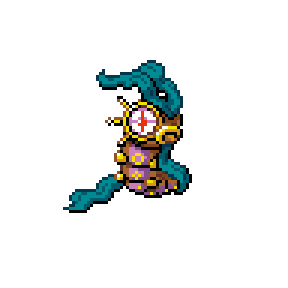
The kelp covering its body is sweet and highly sought after by chefs for use in cakes. This delicacy has become a prized ingredient in coastal cuisines.

During stormy nights, Dheldeen swims with its school near the surface. Its anchor-like horn absorbs lightning to protect the group in shifts.
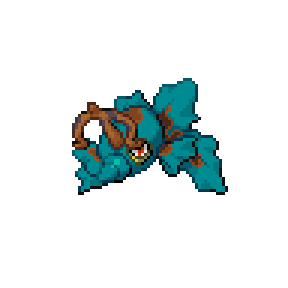
On the sea's surface, it swims on its side, appearing almost lifeless. This peculiar behavior helps it avoid detection from predators.
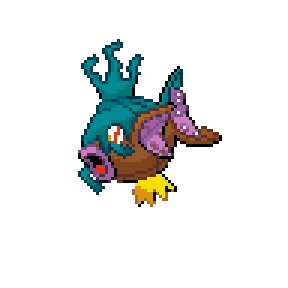
Its toxin has a tar-like consistency, clinging to anything it touches. This sticky poison ensures its prey cannot escape.
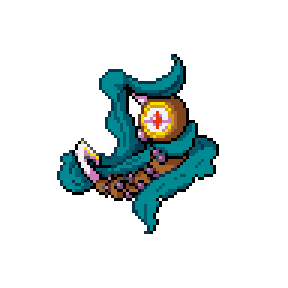
Its body appears to be squashed kelp, emitting a horribly pungent scent when out of water. This odor deters anyone from getting too close.
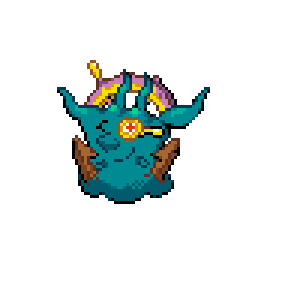
It bites at boat motors with relentless determination, disabling them completely. Many sailors are left stranded by its mischief.
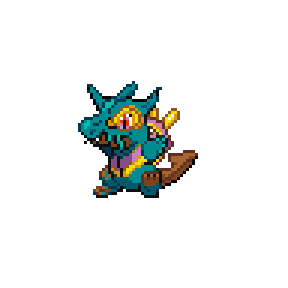
It performs somersaults in the sea, collecting seaweed on its body as it tumbles. This behavior helps it blend into underwater vegetation.
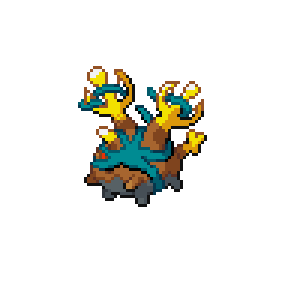
It releases clouds of noxious smoke to drive away intruders. This thick, acrid mist lingers long after it disappears into the depths.

It enjoys toying with lifeboats, dragging them in circles across the water. These playful antics often leave sailors bewildered.
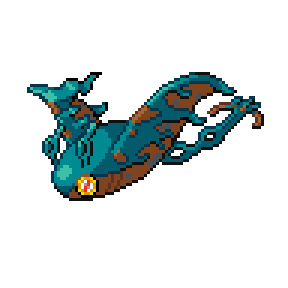
This Pokémon makes its home among sea buoys, finding peace in the open ocean. The gentle swaying of the waves keeps it content.
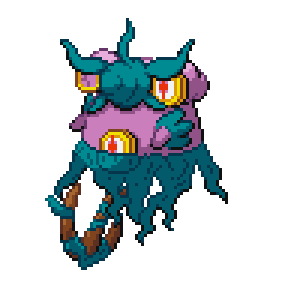
It channels lightning through its tail, dipping it into the water to create dazzling displays. These electric surges deter any threats lurking nearby.
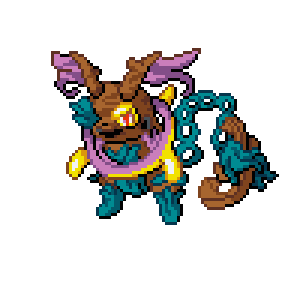
The anchor on its tail is sharper than a claymore, slicing through obstacles with ease. It uses this weapon to maintain control over its territory.
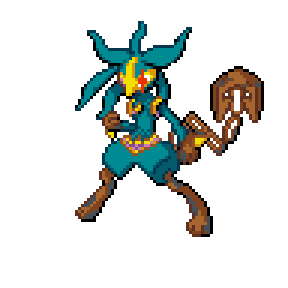
It steals ship figureheads, decorating its underwater den with them. These stolen relics serve as trophies.
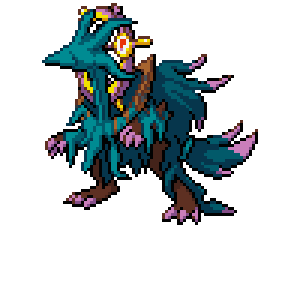
Dheltula anchors itself to cave walls, firing webbing from its hook to snare Goldeen and Magikarp. It remains motionless until something tugs the web.
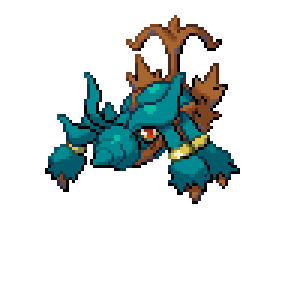
It guards sunken frigates fiercely, refusing to let anyone enter. This unwavering dedication has earned it the title of a protector of lost relics.

When angry, it boils the water around it, creating dangerous currents. These scorching waves make it difficult for anything to approach.
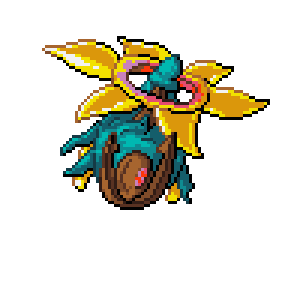
Dhelbarel swings its anchor like a whip, striking with surprising agility. This attack can topple small boats and scare off intruders.
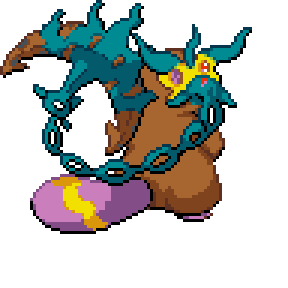
It forms clusters on the ocean floor, blending perfectly with surrounding plants. This camouflage helps it evade predators and ambush prey.
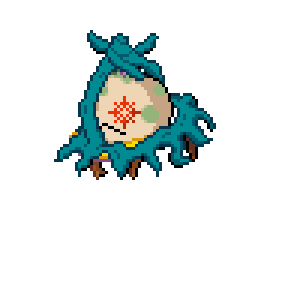
With only one eye, it lacks depth perception and relies on sonar to navigate. This skill allows it to maneuver with surprising precision in dark waters.
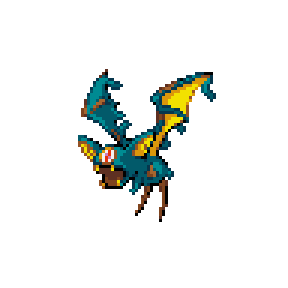
It releases bursts of electrical energy to disorient foes and ward off attackers. These shocking discharges leave predators confused and retreating.
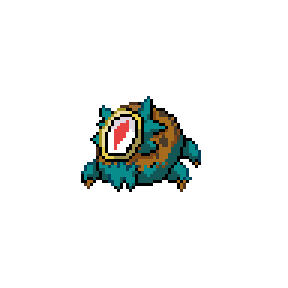
It makes its home on abandoned, beached boats, lurking among the wreckage. These forgotten vessels offer both shelter and the perfect vantage point for ambushes.
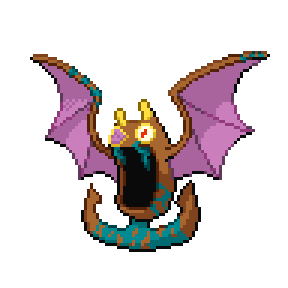
It patrols near trade vessels, silently gliding beneath the waves. Its presence often goes unnoticed until it strikes.
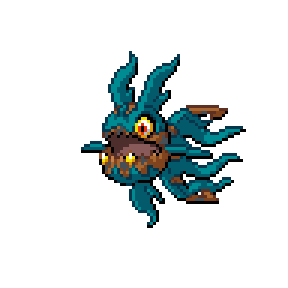
Dhelish's horn sheds rust whenever it strikes, leaving behind jagged fragments. These rusty remnants are considered good luck by sailors.
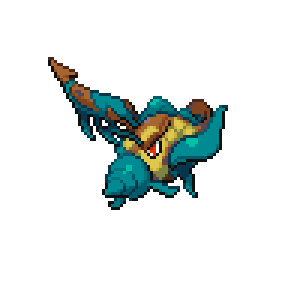
Despite its fearsome ship-like appearance, Dhelsopod will flee at incredible speeds if outnumbered. It can swim up to 100 mph to escape dangerous situations.
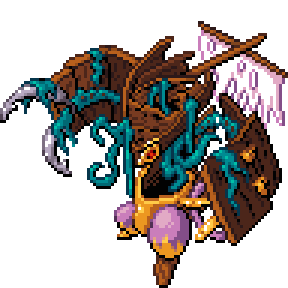
Dhelmantis sleeps upside down in kelp fields, blending in with the seaweed. Its heavy anchor-horn holds it in place against ocean currents.
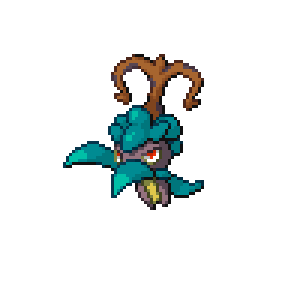
Dhelkazam spins its oars menacingly while building up a powerful psychic attack. This intimidating display leaves enemies hesitant to engage.
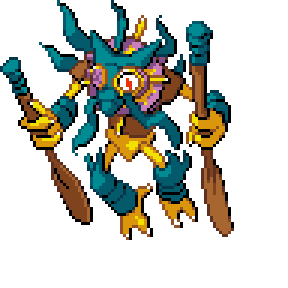
The 'fur' covering its body is actually rust accumulated over time. Rubbing it is not recommended due to its jagged texture.
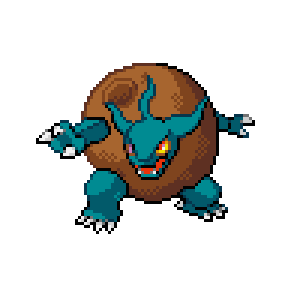
It stays near lifeboats, checking on them every few minutes until help arrives. This protective behavior makes it a beloved companion to sailors.
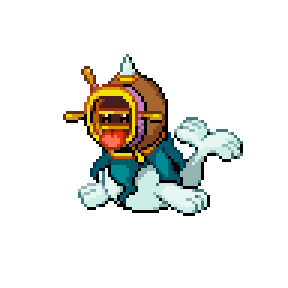
The sludge coating its body breaks off in dry clumps if exposed to the sun for too long. This shedding leaves behind trails of decayed material.
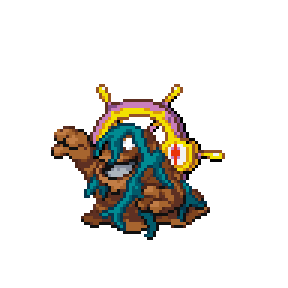
The pearls it produces glow brightly when thrown, lighting the way through dark waters. These luminous treasures are often used as makeshift lanterns.
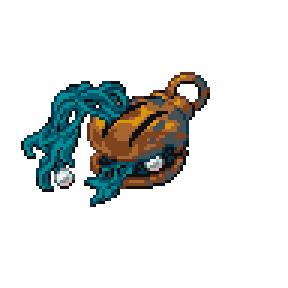
The seaweed covering its body is excessively cold, chilling everything it touches. This frozen layer serves as both camouflage and armor.
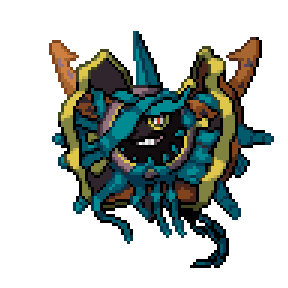
The small anchor it holds was once used by ship captains to divine the most lucrative ports for trade. Many believe it retains some of its fortune-seeking power.
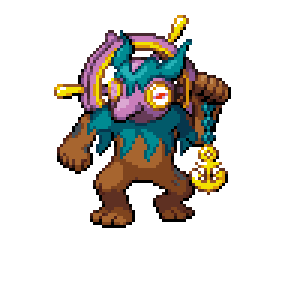
Marsea's blue venom leaks from its tail, which is capable of subduing a full-grown man. It uses bubbles to slow down its prey, making it easier to attack.
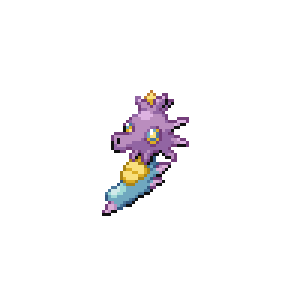
Mardra shoots bubbles to confuse foes, then spits poison ink to subdue them. The ink causes disorientation, making it easier for Mardra to strike.
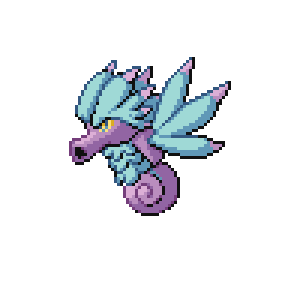
Mardeen glides across the seafloor, jabbing its venomous horn at others of its kind in an almost dance-like sparring match. This behavior is a display of dominance within its territory.
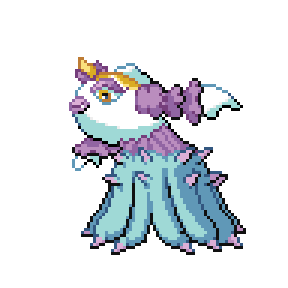
Maryu's adhesiveness allows it to stick to boulders near the shore. The adhesive is poisonous on contact, deterring potential predators from getting too close.
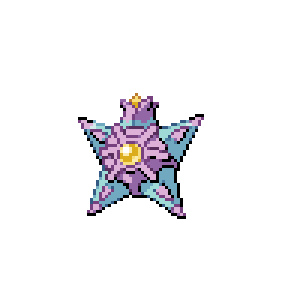
When flopping on dry land, Markarp releases poison from its scales, surrounding itself with a toxic slime. This helps protect it from predators while it struggles to regain its footing.
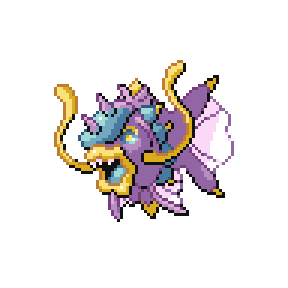
Mardos attacks vessels that get too close to its territory, dragging sailors down with its venomous tentacles. It becomes enraged easily and hates loud sounds, making it a fierce and unpredictable creature.

Maras was once used to ferry people across the sea happily. Should someone try to steal it from its owner, the spines on its back will skewer them and inject venom, defending its beloved companion.
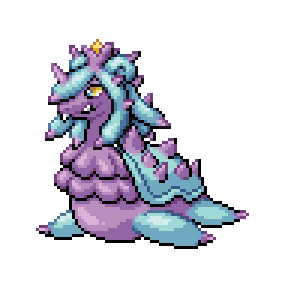
Mardile bites down on prey like Goldeen with powerful jaws, injecting a venom that causes paralysis lasting several days.

Marturn attracts prey with lights on its antennae, then exhales gallons of poison into the water to subdue them. The poison dissipates in an hour, leaving behind only the remnants of its prey.
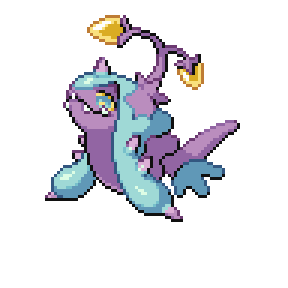
Marpi's shell is venomous to the touch, but when ground up, it can be used to make Antidotes by apothecaries. This makes it a valuable resource despite its dangerous nature.
Martic's venom causes intense feelings of happiness, making people forget about any sadness for 24 hours. This makes it an effective tool for calming troubled souls, though its effects are only temporary.

Marill swings its tail like a flail while hunting Corsola. This wild, energetic behavior helps it knock its prey out before delivering a venomous strike.
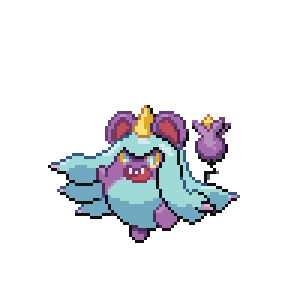
Marper splashes in puddles, covering itself in mud. The mud conceals the barbs on its body, allowing it to surprise foes by striking when they least expect it.

Marsire lazes about in shallow creeks, eating nearby flora. Its tentacle-like hair contains multiple poison sacs that help it protect its territory.

Marfish fills with water before shooting venomous barbs at high speeds. This quick and deadly attack can pierce through even the toughest of enemies.
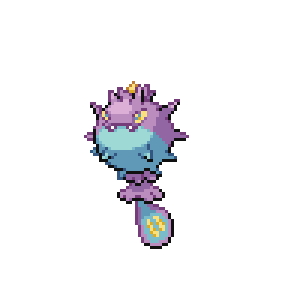
Marllery uses the suction cups on its tentacles to hold Corsola in place before using Octazooka to deliver a powerful, poisonous blast. This attack is strong enough to pierce tungsten.

Martine lays on the surface of the ocean, its fins spread wide and almost completely flat. It exudes a pink poison around it as it sleeps, warning off any intruders.
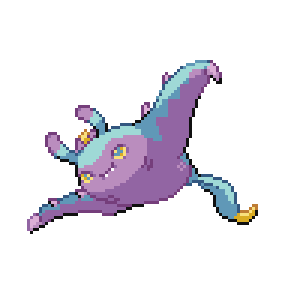
Marmory flies over coral reefs and dives down to grab Corsola, carrying them back to its nest. Its steel body and sharp talons make it an efficient hunter.
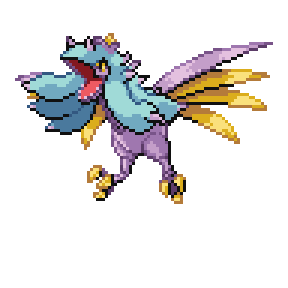
Marchu emits powerful electrical surges through its tentacles. This electrical discharge helps it stun and subdue any creatures that come too close.
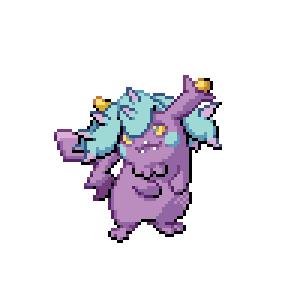
Martyke leaps in and out of the water, hunting Corsola with great precision. Its playful yet predatory nature makes it a skilled hunter in the open sea.
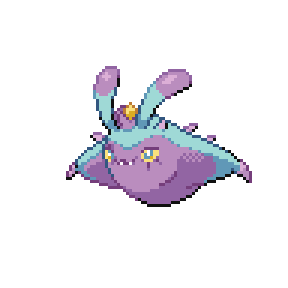
Markiss spits globs of poisonous saliva on prey while flying. This allows it to attack from above, making it difficult for prey to escape.
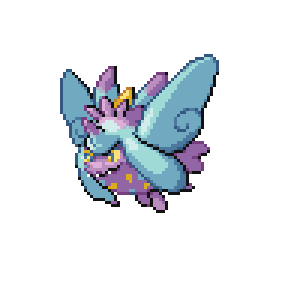
The innards that come out of Marmuku's mouth are poisonous to the touch. This acts as a deterrent to potential threats, ensuring its safety in the wild.
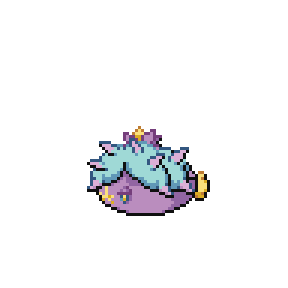
Marki collects different seashells it finds to decorate its body. Each shell is coated in poison to prevent theft, ensuring that no one can steal its prized collection.
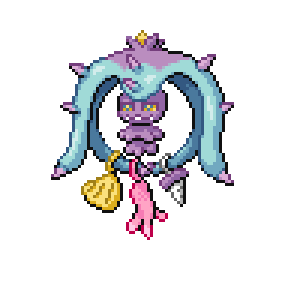
Marmer bobs on the surface of seas, sticking to passenger ships with its barbs. One must be careful when removing them, as doing so improperly could lead to a venomous injection.
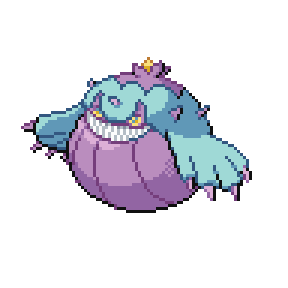
Marbas sleeps on its side at the base of waterfalls, using the rushing water to keep its spines moist. Its spines are poisonous and should not be eaten.
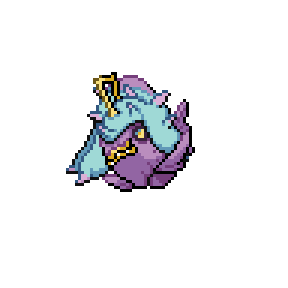
Marfisk's venomous barbs extend when stepped on, releasing a toxin that causes intense fevers. This defensive mechanism makes it a dangerous encounter for unwary travelers.

Marunt has multiple rows of venomous teeth in its maw, and it bites down on prey to latch on. As it does, it injects a potent toxin, slowly weakening its prey until they can no longer resist.

Marvanha's fangs have serrated edges, making it an efficient predator. Its saliva is toxic, capable of poisoning its prey before it even bites down.

Maredo's bites leave behind toxic saliva that continues to poison its target long after the initial strike. This makes it a feared predator in its aquatic territory.
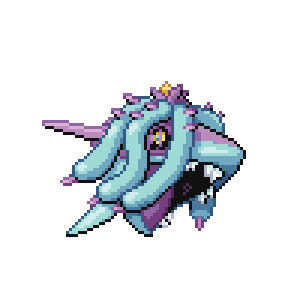
Marapex scuttles through reefs, seeking to entrap Corsola with its venomous tendrils. Its venom weakens its prey, allowing it to drag them into its lair.
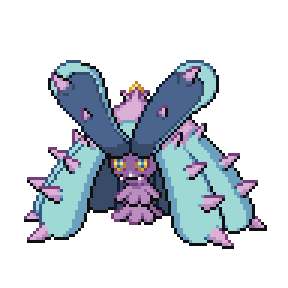
Margast lays on shorelines with toxic spikes sticking upward which are designed to entrap beachgoers. The spikes release a toxic substance that makes escape difficult for any intruders.

Marish has tentacles on its head that can paralyze prey. It then bites them to finish the hunt, using its sharp teeth to pierce through the prey's defenses.
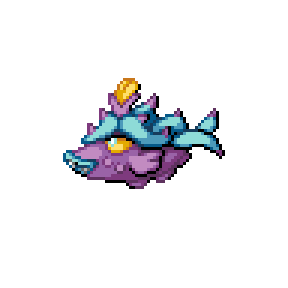
Marsopod discharges poison from its scales that cause stronger Pokémon nearby to grow enraged. It does this to ensure it has ample sparring partners, using the chaos to its advantage.
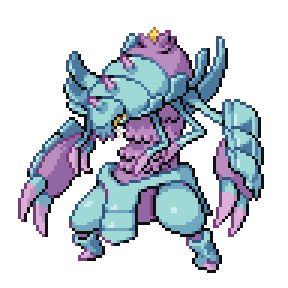
Marbre lies flat in shallow waters, spreading its tendrils outward. If stepped on, it will release a potent venom that can cause fevers.
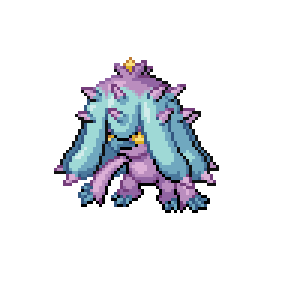
The poison that leaks into the water around Mardisc can cause intense infatuation in anyone who touches it. This is dangerous, as victims may drown while obsessing over their beloved.
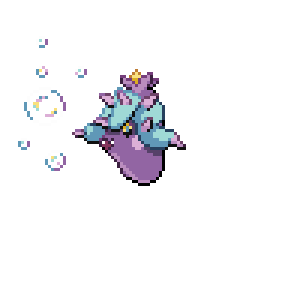
The poison leaking from Marduck's body can cause massive headaches to anyone who touches it. This defensive mechanism deters predators from getting too close.

Marduck swims across lakes at high speeds, leaving poisonous foam behind it. This foam acts as a deterrent to predators, ensuring its safety.
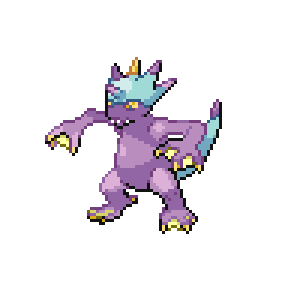
Marwag floats along the surface of ponds, releasing a thin toxic film from its spines. The substance keeps predators at a safe distance.
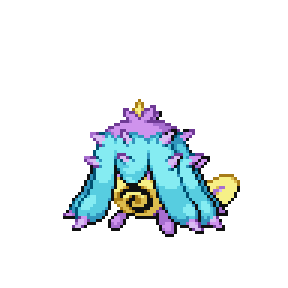
Marcool's long tentacles hold tiny barbs filled with toxin, capable of causing intense nausea. The toxin spreads quickly upon contact, incapacitating its prey.
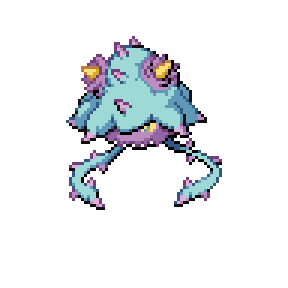
Fried Marpoke tentacles served with whipped cream are considered a delicacy. Chefs on Cinnabar Island prepare them safely, as the poison cooks out during preparation.
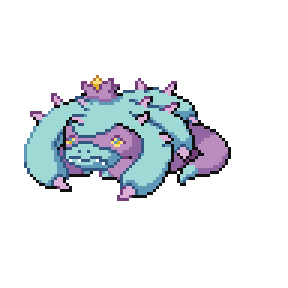
Marmer fuels the poison in its tentacles by eating trash off the ocean floor. The toxins it absorbs make it a dangerous foe, especially in its native environment.
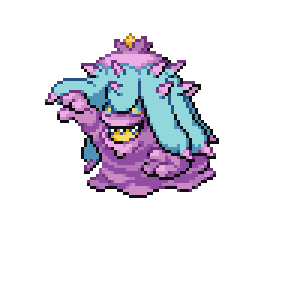
The slimy film covering Maruk's body is highly acidic, capable of eroding even iron. It lays on the ocean floor, eating debris and thriving in its toxic environment.
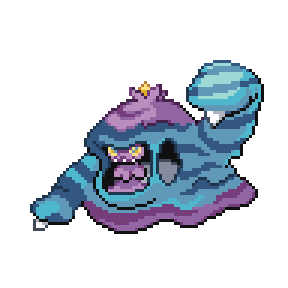
Marby's claws have tiny barbs, each coated in potent poison. This makes its pincers a deadly weapon when it feels threatened or provoked.
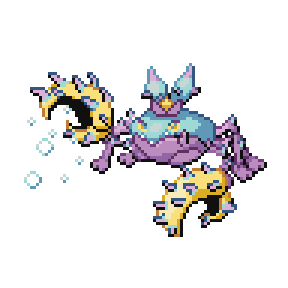
Toxchou's venom conducts electricity with terrifying efficiency. When threatened, it channels lightning through its barbs to shock would-be predators.
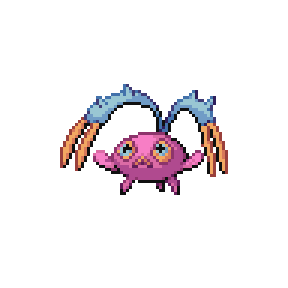
The stalks on Toxsola's back are filled with a potent coral-based venom. Even a brush against them can cause intense paralysis in aquatic foes.
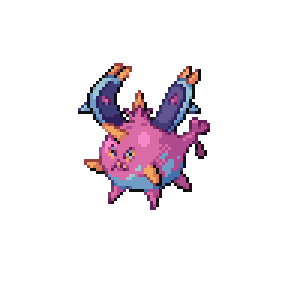
Toxsey roams coral reefs, collecting wounded Corsola. It stores them gently in its pouch, injecting a barbed serum that numbs pain and speeds recovery.

Toxgron lies still on coral reefs, posing as coral. When Corsola wander too close, it snaps shut its jaw, which is powerful enough to shatter steel.
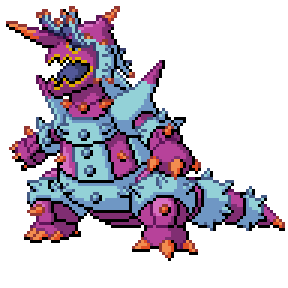
Toxmise's barbs anchor deep into ship hulls as it drifts with the current. Sailors often mistake the damage for barnacle corrosion, ignoring it until it's too late.
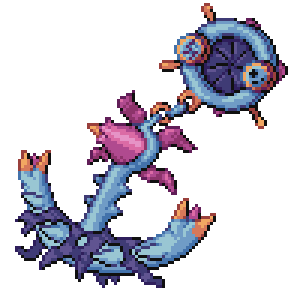
Toxkazam's venom weakens a target's mental defenses. With a single psychic pulse, it floods the mind with vivid and terrifying hallucinations.

Toxgong uses its armored spikes to smash through ice sheets above frozen seas. Once through, it hunts above the surface for sleeping prey.
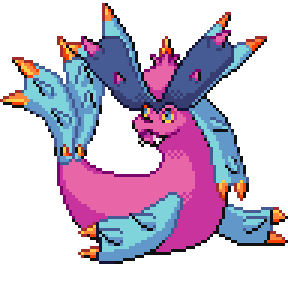
Hawlnub jumps like an acrobat around snowy landscapes, using its keen senses to locate buried prey. With a powerful stomp, it sends tremors through the snow, unearthing hidden food sources.

Hawlwick's body glows faintly in the darkness, its flame flickering with every movement. It performs mesmerizing combat dances, slowly draining the energy of those who watch for too long.

Hawlinch ambushes prey by diving from above and pinning them in deep desert pits. Its powerful beak can crack through the hardest exoskeletons with a single strike.

Hawlink's cogs detach and reattach to perform intricate wrestling moves on an opponent. They move so fast that even a seasoned wrestling pro cannot keep up with its rapid techniques.
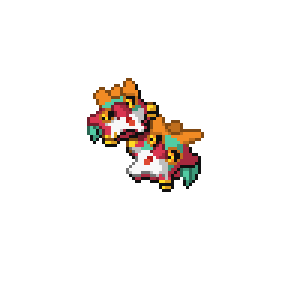
Hawlmander leaps between tree branches, practicing martial arts techniques. After defeating a foe, it shoots flames into the air in celebration.
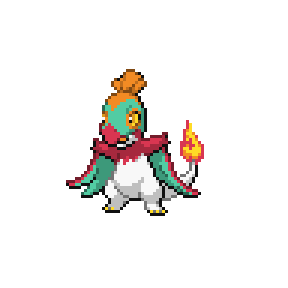
Hawlpede rolls at high speeds to disorient its opponent before striking with a precise, venomous jab. Its rapid, unpredictable movements make it difficult to land a clean hit on it.
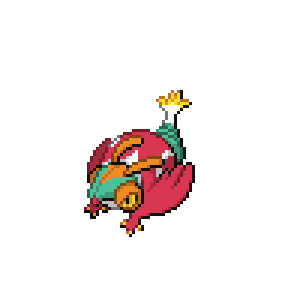
Hawlria uses its soft, cloud-like wings to absorb incoming blows before countering with a powerful kick. Its graceful movements make it appear as if it's dancing mid-battle.

Hawlgoo's slimy body allows it to slip effortlessly out of an opponent's grasp. It coats its feathers in a sticky mucus before striking, making it difficult for foes to recover after a hit.

Hawlpuff wears a slimy, sweet-smelling mask. Its cake-like aroma lures in prey, which it finishes with a devastating Flying Press.
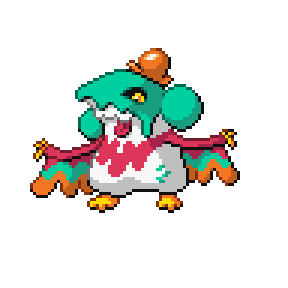
Hawlty performs complex combat maneuvers with incredible agility to any who get close to its territory. It balances on all fours and bounces across rooftops like a trained gymnast.
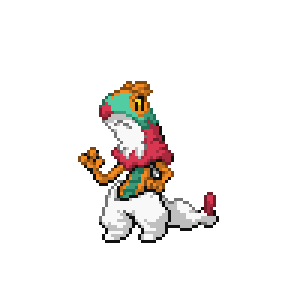
Hawlbell balances on its head vine before performing intricate acrobatics, using its flexible body to evade attacks. If cornered, it spits a blinding acid before flipping away to safety.

The seeds it carries scatter easily, taking root wherever they land. Other Pokémon often follow in its wake, hoping to benefit from the plants that quickly grow.

Cacbone's yellow skull releases a soothing scent in desert heat. The hotter the temperature, the stronger the aroma becomes.
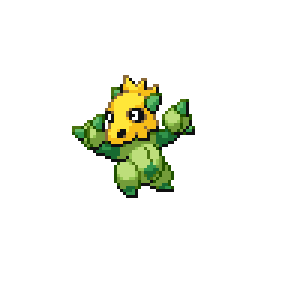
Its limbs extend far beyond what seems possible, catching foes off guard. It uses this ability to surprise enemies from a distance before reeling itself back in.

It dodges with expert precision, weaving between attacks like a seasoned fighter. Its movements are fluid, with each dodge leading seamlessly into a counterattack.
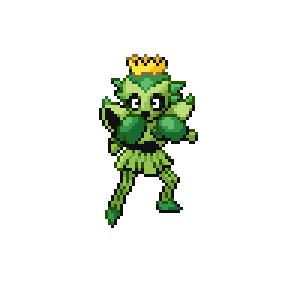
Cactung's tongue secretes a sticky sap that smells like cactus nectar. It uses this to coat its spines, trapping insects before consuming them.

It buries its body in the sand and peaks its face out to absorb nutrients from the sun. Should it begin to rain, it will open its mouth wide to inhale any falling water.

It uses clouds to mask its presence, hiding until the perfect moment to strike. With each movement, fine sand falls from its wings, camouflaging it further.

With a surprising grace, it performs playful dances to attract companions. Its rhythmic movements leave soft trails in the sand, enchanting those who follow.
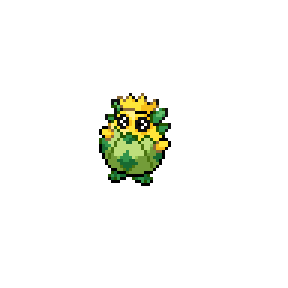
It hovers just above the ground, drifting gently on passing breezes. This floating ability allows it to evade ground-based attacks with ease.

To survive the harsh temperatures of the desert, Cacloom absorbs heat during the day. It releases the heat gradually as the desert temperature drops.
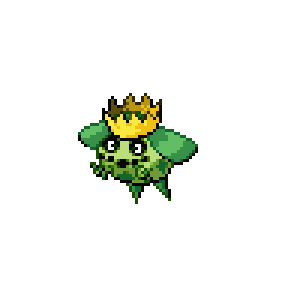
It thrives in marshes, where its spines absorb moisture from the humid air. The damp environment keeps it active and ready to defend its territory.
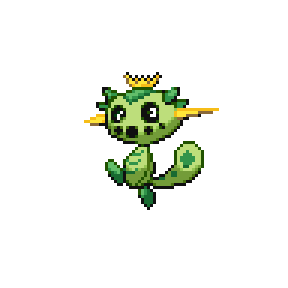
Despite its tough appearance, it is surprisingly wimpy in confrontations. It tends to bluff aggressively, hoping intimidation will prevent actual combat.

It circles its prey multiple times before stunning it by throwing the cactus it carries. It can easily fly in even the worst sandstorms.
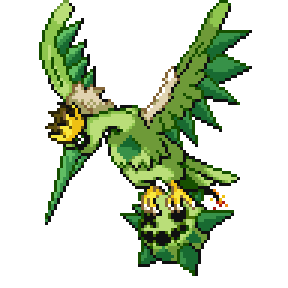
A layer of frost covers its spines, chilling anything it touches. It uses this icy protection to fend off attackers and stay hidden in cold climates.
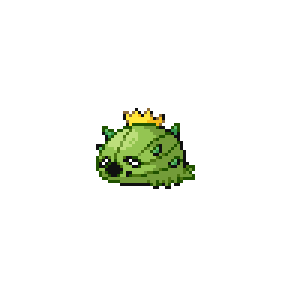
Its body retains moisture despite living in dry environments, helping it survive harsh conditions. It camouflages itself among rock formations, waiting for prey to approach.
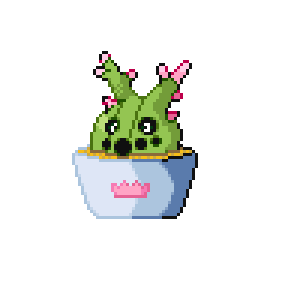
Known for acts of thievery, it sneaks into campsites to steal food and trinkets. Its quick reflexes make it difficult to catch in the act.

It spins rapidly to deter predators, kicking up dust clouds as it whirls. This spinning technique also helps it gather food scattered across the desert ground.

It moves swiftly by rolling across the landscape, flattening anything in its path. Its spiny exterior makes this rolling technique both an attack and a defense.

It splashes in puddles, enjoying the cool water on hot days. Other Pokémon often join in, drawn to its carefree nature.
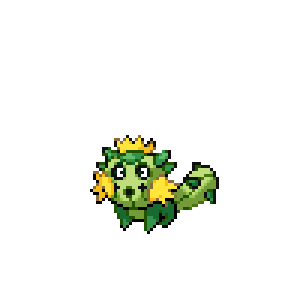
Its body emits a faint magnetic field, which it uses to navigate through deserts. This ability allows it to find hidden minerals buried deep underground.
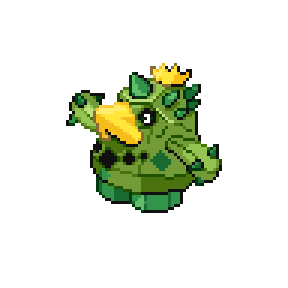
Its body secretes aloe-like sap, which soothes and hydrates its spines. This natural gel protects it from harsh sunlight, keeping it healthy in dry, arid environments.

This Pokémon thrives in intense heat, absorbing sunlight to power its movements. It builds complex dams even in arid conditions, relying on its resilience to endure the blazing sun.

Cacolu trains by rapidly striking rocks with its spiked fists. The impact releases small bursts of energy, which helps it sense the emotions of nearby Pokémon.

The thorns on its body are extremely nutritious and taste similar to Yache Berries. Many chefs use these thorns to flavor their curries.

Sunlight energizes it, allowing bursts of rapid movement through the desert. It glimmers under the sun, leaving mirage-like reflections as it moves.
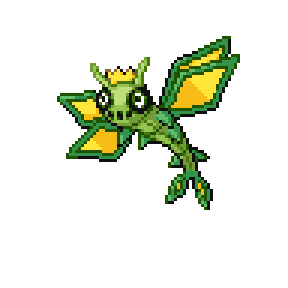
The air around it feels scorching, as it radiates heat even while standing still. When agitated, it can release bursts of intense fire, scorching the ground beneath it.
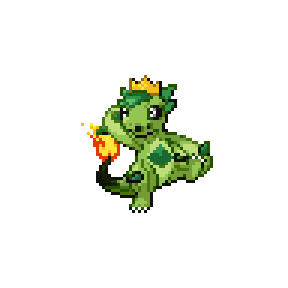
Cacdew's spines release a fine green powder that smells faintly of fresh herbs. This powder encourages plant growth in the arid environments where it lives.

With incredible agility, it can jump great distances, easily evading threats. Pairs often practice leaping contests, developing both speed and coordination.
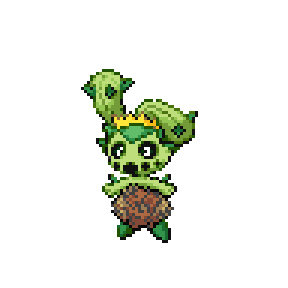
A translucent membrane covers Cacsis's spiny body, keeping it hydrated even in extreme heat. If its fluid levels drop too low, its spines become brittle and break off.

Screeching fills the air when it senses danger, warning others to keep their distance. It uses its voice both as a defense mechanism and a way to locate others in the dark.
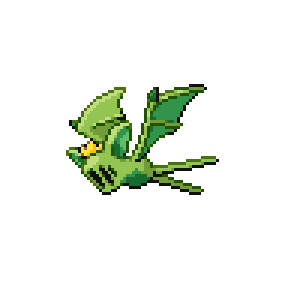
Disembodied whispers seem to follow wherever it goes, unsettling those nearby. These eerie sounds often lead travelers astray, as if urging them deeper into the desert.
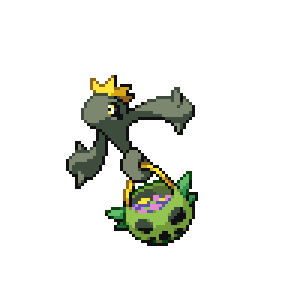
This Pokémon rolls in sand to sharpen its tiny spines, keeping them ready for defense. It glides smoothly across dunes, blending into the shifting landscape.
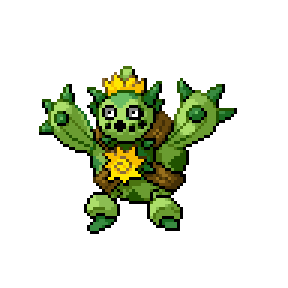
It scatters embers with every flap, leaving tiny sparks in its wake. These glowing trails act as both warnings and lures, attracting curious Pokémon into traps.

Cacrunt makes its home in greenhouses, camouflaging itself among potted plants. Under the cover of night, it quietly consumes the vegetation around it.

A haunting wail echoes from deep within its body, unsettling those nearby. It moves slowly through forests, blending in with the shadows cast by ancient trees.
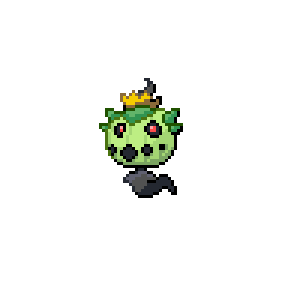
While absorbing sunlight with its thorns, it will hold the same pose for hours. Should it be disturbed, it will hop up in alarm and skitter away at great speeds.

Ancient ruins are its preferred resting spots, where it camouflages among crumbled walls. It absorbs remnants of old structures to strengthen its defenses.
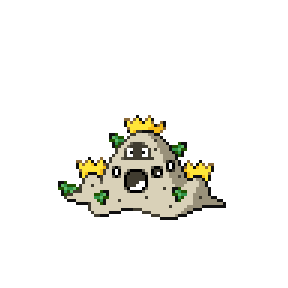
Cacpin's spiny body is covered in a tough, bark-like shell that hardens over time. It absorbs sunlight to fuel its rapid growth, sprouting small leaves along its arms.
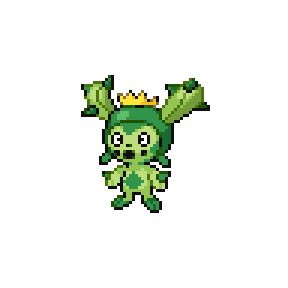
Cackaboo's hollow body glows faintly at night, luring wandering travelers deeper into the desert. The eerie flicker is said to resemble a lost soul searching for home.
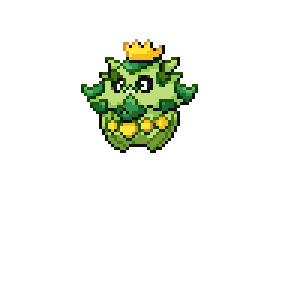
Caclett rest in clusters under the hot desert sun. When it absorbs enough heat, it will grow a small yellow flower on its face.

This Pokémon throws nuts with surprising accuracy, often aiming at unsuspecting targets. It takes delight in this playful mischief, though it quickly flees if confronted.

Its temper flares when the heat becomes unbearable, making it dangerously aggressive. During hot days, other Pokémon keep their distance, knowing its mood worsens with rising temperatures.

The seeds Cacbell scatters from its mouth are highly fertile and can take root even in the driest desert sands. Many cacti fields owe their existence to the wandering travels of this Pokémon.
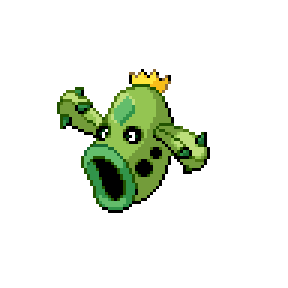
Topaz shards embedded in its body gleam under sunlight, giving it a dazzling appearance. These gemstones are known to attract treasure hunters, often leading to conflict.
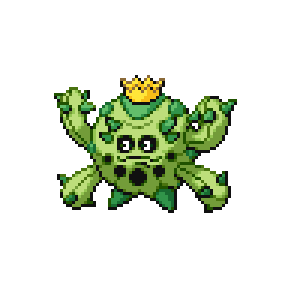
Often appearing tired, it moves slowly even in the hottest sun. Its sluggish nature belies the power hidden within its thorny body.

Its magnetic field is unusually strong, allowing it to pull in small objects from a distance. It uses this ability to collect metal scraps, which it stores for unknown purposes.

Small pins cover its body, which it uses for defense and gathering food. When agitated, it flails wildly, sending these pins flying in every direction.

It thrives near hidden oases, where it stores water for dry spells. Other desert creatures often follow it, hoping to discover these life-saving havens.

It collects discarded soda cans, hoarding them inside its hollow slimy body. The rattling sounds it makes often confuse opponents, giving it time to escape.
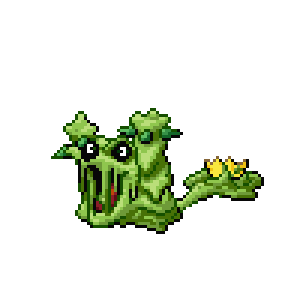
Cactbone's skull is covered in needles that sharpen with age. An adult's bone can pierce stone when thrown.

It performs graceful, ballet-like movements, mesmerizing onlookers with elegant spins. Each step releases a soft aroma, making it as captivating as it is dangerous.

Its movements induce dizziness in foes, leaving them disoriented and vulnerable. The unique rhythm of its steps confuses even the most experienced opponents.
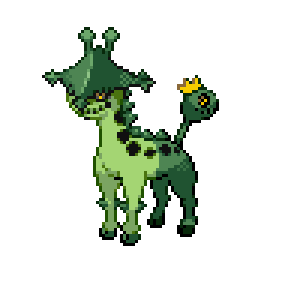
It succumbs to sudden bursts of rage, attacking anything in its path. Despite its anger, it can be calmed with careful handling.

It roosts among skyscrapers, watching the city below with keen eyes. From these high perches, it can strike quickly and return to safety.
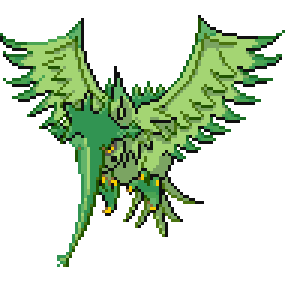
It rotates rapidly, using its spines to clear obstacles in its path. This spinning technique doubles as both an attack and a defense mechanism.

It grapples with opponents using its flexible arms, holding them in place. Once it has a firm grip, escape becomes nearly impossible.

Always facing north, it navigates through deserts with uncanny precision. This orientation never changes, even when it is caught in powerful storms.
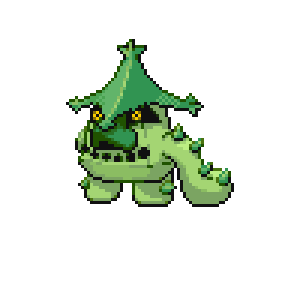
Cactjask moves silently through the desert, rarely appearing before the sun sets. Its blinding speed allows it to ambush prey before disappearing without a trace.

It wanders the deep sea, camouflaging among coral reefs. Its thorny appearance deters predators in the abyss.

Touching its spines causes a burning sensation that lingers for hours. It uses this painful defense to discourage predators from getting too close.
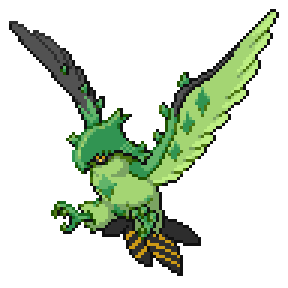
Its powerful bite can crush even the hardest shells. It burrows into the ground, waiting patiently for prey to stumble into its trap.

The aloe Cacteary secretes emits a pungent odor reminiscent of rotten onions. Historically, pharmacists used this aloe as a key ingredient in burn ointments.

It digs tirelessly through the sand, creating complex tunnel networks. These hidden paths offer it both shelter and a way to ambush prey.
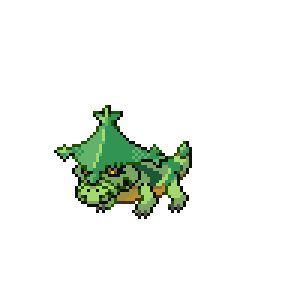
Its body radiates intense heat wherever it goes. Flames sometimes flicker from its spines, setting fire to dry grass and brush.

At night, Cactoom stands motionless atop desert dunes, releasing a fragrant lilac scent into the air. This scent is said to lull weary travelers into a deep slumber, leaving them vulnerable to the desert's dangers.
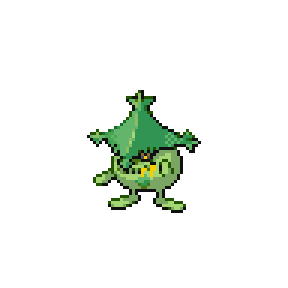
It performs dazzling acrobatics, leaping and spinning through the air. Its swift, unpredictable movements leave enemies struggling to react.

Sandstorms swirl around it, summoned effortlessly by its presence. These storms obscure its movements, making it a difficult target to track.

Ancient crypts are its preferred hiding spots, where it remains undisturbed. It is said to guard secrets that should never be uncovered.

It stands guard over ancient temples, waiting silently for trespassers. Legends say its spines are remnants of sacred relics lost to time.

Cactpin primarily eats seeds and roots for its diet. In the hot desert sun, tiny spines grow from its head, adding to its formidable defense and helping it adapt to its harsh environment.
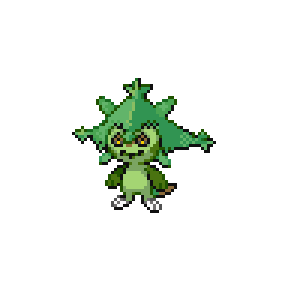
Cactggy's pants-like lower half is similar in consistency to cactus flesh. Chefs use its shed layers in a delightful sautéed Rindo Berry dish, creating a unique and savory treat.
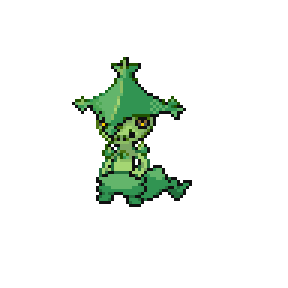
It thrives in extreme heat, absorbing energy from the scorching ground. This heat fuels its movements, making it faster during hot days.

Cactsian becomes entranced when it encounters a tumbleweed, often playing with it until dawn. If disturbed, it retaliates with a powerful Slash attack.

Its spines are as hard as sandstone, giving it immense durability. When angered, it strikes with relentless force, showing no mercy.
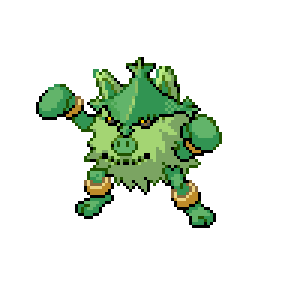
Basking in the desert sun, Cactbell emits a sweet, melon-like scent that drifts through the air. However, this alluring aroma is merely a trap - it strikes at prey the moment they wander too close.
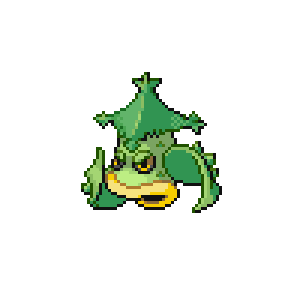
It absorbs sunlight to fuel its spines, which grow sharper with each day. In the heat of noon, it becomes nearly immovable, basking in the sun's energy.

It dashes through desert landscapes with incredible speed, leaving trails in the sand. Its twin heads coordinate perfectly, allowing seamless movement through rough terrain.
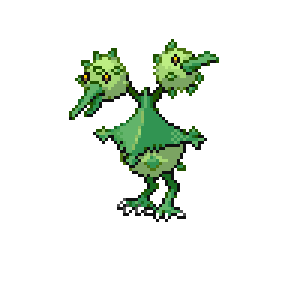
Sandytu stands motionless atop sun-scorched dunes, staring directly into the blazing sun. Some believe that if it ever looks away, it's flooded with visions of those who died lost in the desert.
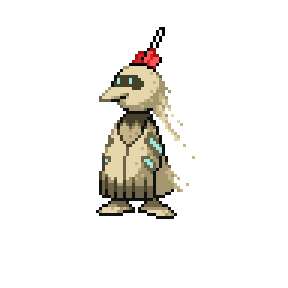
Sandyluff drifts along coastlines with others of its kind. Upon spotting a lone human, they descend and quiet their target's screams with their fluffy puffball before pulling them beneath the sand.
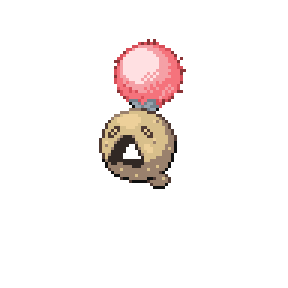
Disguising itself as a small dune, Sandybull waits in silence. If someone approaches, it springs up, latches on with powerful jaws, and drags them beneath the surface.

During thunderstorms, its kelp-like tail points skyward to absorb lightning. It stores the electricity in its shovel-like ears and unleashes it in a violent burst if tourists wander too close.
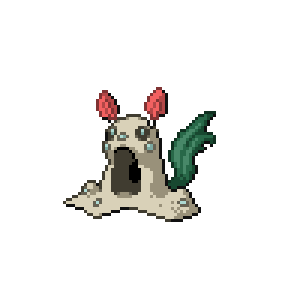
The shovel-like appendages on its head detect the happiest person nearby. It feeds on joy like a nutrient, soaring toward its target and blanketing them in sand that drains their happiness.

The grains of sand making up Sandyeon's body lay flat around ancient desert tombs, blending in perfectly. It lunges out and drags explorers into the ground.

After human visitors leave the beach, Sandypass inhales the sand left behind through its large nose. It gradually adds the absorbed grains to its body, slowly growing in size.
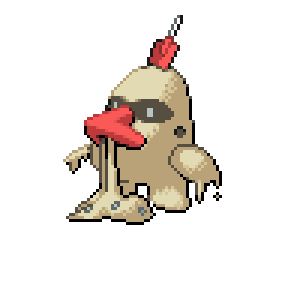
Sandyjask's shovel-like wings allow it to take short, rapid flights. Swarms can be seen filling eastern coastline skies each spring in a dazzling but ominous display.
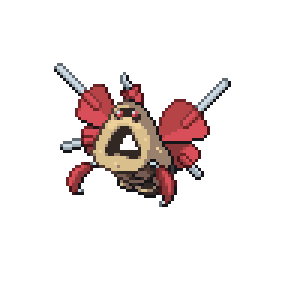
Sandycada tunnels beneath beach sands, feasting on discarded food left by tourists. Its networks of tunnels stretch for miles, connecting to nests of others in its colony.

Sandytik hunt in swarms by burrowing beneath the beaches they inhabit. When prey is near, they unleash a burst of electricity to paralyze their target before slowly dragging them below the sand together.

Ancient island songs speak of Sandyolett being used by glassblowers. Its sand is so pure it was highly prized for crafting fine glass.

While it appears to be made of sand, Sandyoom's body is actually composed of countless tiny seeds. This allows it to slip into small cracks and burrow for sleep at night.
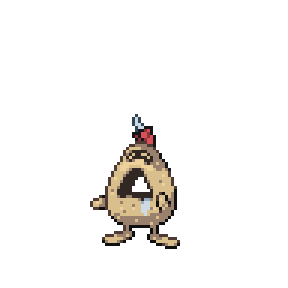
Sandybat listens intently to the voices it hears during the day. At night, it takes to the skies and mimics those voices to lure unsuspecting people toward the shoreline.
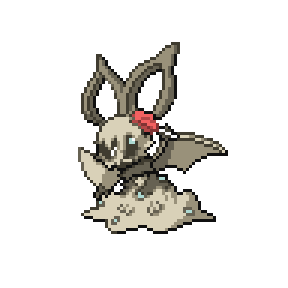
Sandylu is drawn to the laughter of children playing at the beach. It steals toys from other people and delivers them to the children, desperately trying to join in their fun.

The shovel atop Sandyeanie's head conceals a venomous stinger. A single sting causes extreme awareness but full-body paralysis lasting up to 20 minutes.

The shovel-like mushrooms on Sandyras's back are filled with tiny pores that release corrosive spores. These spores incapacitate beachgoers, making them easy prey to drag under the sand.
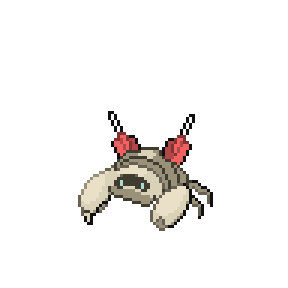
Sandypod swarm the beaches at night, scouring the sand for discarded food. At the first sign of light, they burrow instantly, vanishing beneath the surface.
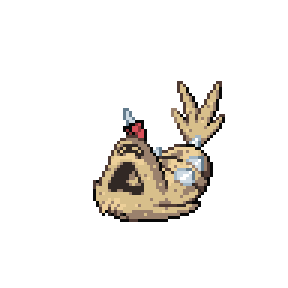
Sandyggy travels across shorelines, gathering mud and sand onto its body. Its headbutts sometimes shake sand loose, which it replenishes after each fight, ensuring its defense is always reinforced.

Sandyduck lays flat against the shoreline, blending with the sand. If a human steps too close, it grabs their legs and drags them swiftly into the sea while using its psychic powers keep their mouth shut.
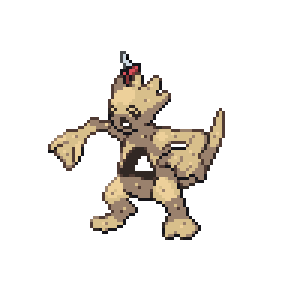
Sandyby lies in wait on quiet beaches, appearing harmless. When approached, it seizes its victim with sharp pincers and pulls them into the ocean depths.
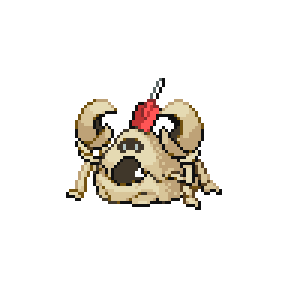
It is very protective of the mushroom in its pouch. It will scratch anyone that attempts to touch the mushroom.

The mushroom growing from the top of Padew's leafy head is used in a spicy stew, first conceptualized in the Kanto region. It is cheap to make and quick to regrow if spores are left behind, making it a sustainable ingredient.

The mushroom extends up when Paish tries to spread its yellow spores. These spores can cause vomiting when inhaled, a useful defensive mechanism against intruders.

The mushrooms on Paesta's body are extremely spicy. They are sliced finely when served. Even a small nibble can leave a lasting pain, making them a potent deterrent for any predators.
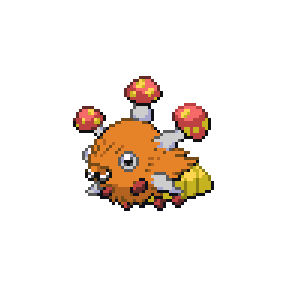
Palu spreads a red spore across cave floors to cause mushrooms to grow. This unique ability helps its environment flourish even if plants cannot survive.

Pamise lands on stones near the ocean, waiting motionlessly and using its mycelium roots to snare prey like Wimpod. The roots are extremely sticky and poisonous to the touch.
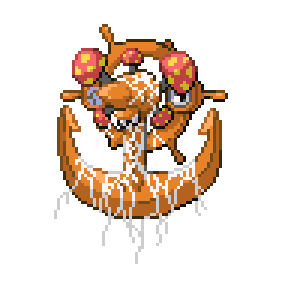
Papod spreads spores throughout cave systems with great care to plant fungus. It is skittish and will flee quickly if exposed to light, preferring the safety of the shadows.
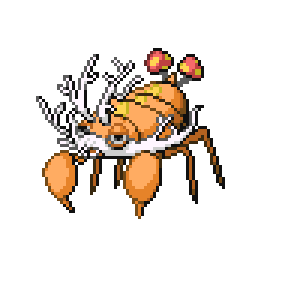
Pakaboo plants mushrooms throughout its cave home. The mushrooms are edible and taste like pumpkin pie, making it a comfortable home for the resident Pokémon and a delicious environment to grow food.
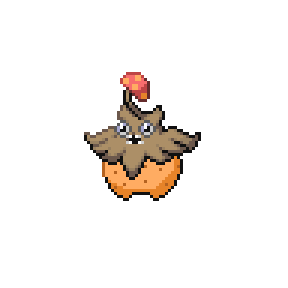
Its face is permanently smiling regardless of its emotions. There is a group of fanatics that believe a frowning Amanx will bring good luck.

It refuses to eat any food that is not frozen. Should it find a meal, it will use its icy breath to freeze the meal in preparation for consumption.

Flocks of Amakrow make home in crystalized caves. Their nests are regularly filled with gems that they gather during their migration.
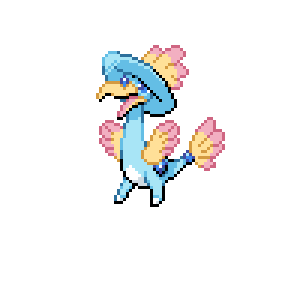
Its roars have the ability to cause massive snow storms. The severity of the storm is based on how angry it is.

There is an icecream shop in Porta Vista that sells desserts made with Amaceon saliva. The saliva is sweet and keeps the dessert cold for hours.
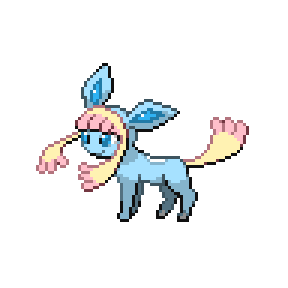
Thousands of frozen Amarith were recently discovered in ice east of Snowpoint City. Researchers dated their origin to over 100,000 years ago.

The flat surface of Amadon's head is extremely cold, freezing objects on contact. If rapidly warmed, the icy plating becomes dangerously brittle and prone to shattering.
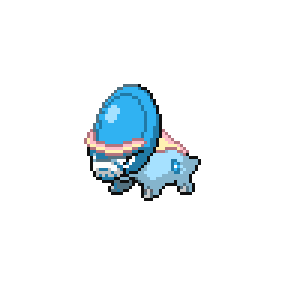
Amaceus carries itself with overwhelming self-importance and icy grace. Those who fail to admire its elegance are often frozen solid within moments.
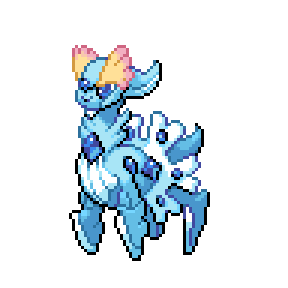
It dislikes eating food that is overly warm. It frequently summons cold gusts of wind to chill its food.

It releases small clouds of snow when it swings its body. If it is in the sun too long, the metal on its body will melt slightly.
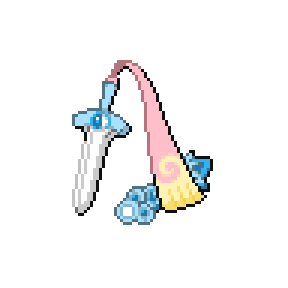
Researchers have found bite marks on fossilized plant life that match Amarunt's jaws. Anything it bites freezes instantly, preserving the remains for millennia.
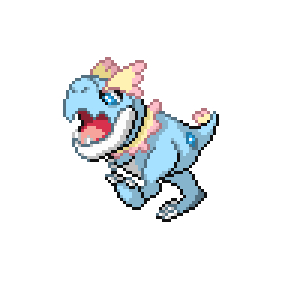
It shivers when subjected to warm weather. As it shakes, a mist of cold air surrounds it and chills its body.

When it sleeps, it emits a glistening aura that can freeze living tissue on contact. If it becomes sick, the aura loses potency.

Portions of its body are made from a thin layer of ice. Should the ice crack or break, it will take a full day to regenerate.
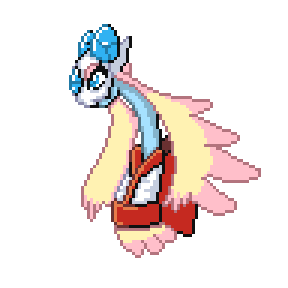
Amaor streaks joyfully across the sky, leaving behind a trail of icy dust. When landing, it seeks out snowy fields to cushion its fall.

It gathers berries during the evening and stores them at the bottom of the sea floor. It buries them with utmost care, separating them by color.

By concentrating, it can form thick layers of ice on its fists. A punch from an Amachop can freeze an entire lake in an instant.

As it swims through the water, it causes small ice crystals to form. When it is tired, it will sleep on the closest glacier.

A pod of Amader made its home near Cleopatra Island five years ago. Divers visit regularly to gather the gems that naturally form on Amader's tongues.

By using its superior sense of smell, it can find food easily even in the most deserted tundra. Its body thrives in temperatures below freezing.

Aurobone's bone remains icy cold at all times. Even brief contact can cause frost to form on foes, slowing their movement.

It lets loose icy winds when it flaps its wings. Temperatures can easily reach below freezing where this Pokémon flies.
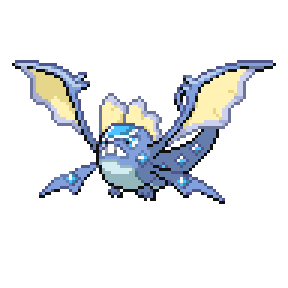
Aurolie's icy plates shimmer under moonlight, creating a beautiful Light Screen as a defense mechanism. Its cold gaze can freeze smaller prey in their tracks, making it both enchanting and dangerous.

As it flies through the sky it emits a sparkling mist. This mist can drop to temperatures that are far below freezing.

Auror leaves puffs of ice-cold mist as it flies over tundras. This chilling trail adds to its otherworldly appearance, creating a frosty path wherever it goes.

A freezing mist flows from Auror's tail as it glides near icy mountain peaks. Trails of frost form in its wake as it soars over the terrain.

There are schoolyard stories of Aurogar stealing children away that spend too much time in a blizzard. It can blow air that drops well below freezing.
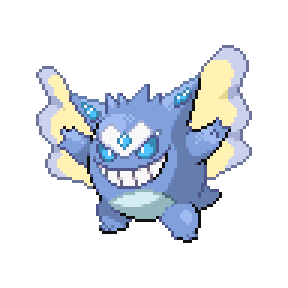
Rockrow flies with its flock through forest canopies at dusk. Upon spotting prey, they howl in unison before striking with Rock Tomb.

Rockpy rolls through hills alongside its pack. At night, they form a circle and howl at the moon in perfect harmony.

Rocksly's fluffy tail is incredibly soft but sensitive. It hides from the rain, refusing to move until its fur is dry.

When sensing danger, Rockran growls to alert its pack. If pressed, it injects a venom that causes painful blistering.

Rockdoof builds dams at night with surprising precision. Once finished, it runs to the top and howls proudly under the moon.

From within the swamps, Rocktump howls at the moon once the midnight hour passes. If seen, it disappears into hollow stumps to avoid detection.

Living in pumpkin patches, Rockaboo howls atop the largest pumpkin at night. It watches vigilantly for scavengers, attacking with a Crunch if they get too close.
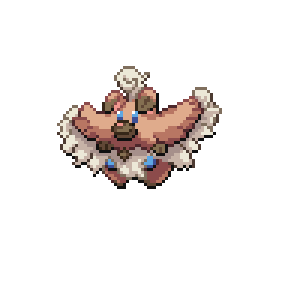
Lycancute collects stones and decorates them to imitate itself. When the stones gather together, it can unleash psychic abilities.

Lycanian uses its strong fists to break boulders in its cave den, creating more space for its pack. They sleep in tight groups to conserve warmth during winter months.

Lycanma buzzes while flying through mountainous regions. It uses a swift Accelerock to take out predators that get too close to its pack.

Lycanfarig barks aggressively if its precognitive abilities detect evil actions. It can bite with enough force to break stone.

Lycanran's furry spikes are actually hard stones, each one leaking green venom. The venom is strong enough to knock out a Wailord.

Lycanran picks fights with others from its pack to test its strength. It performs jousting motions with its horn while sparring.
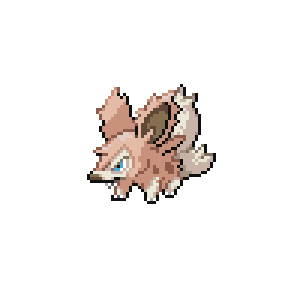
Before unleashing an electrical attack, Lycanxio will Howl loudly. After a fight, it lays on its back, hoping for belly rubs.

Lycansion's muddy water keeps its fur moist. It unleashes psychic blasts if anyone gets too close to its cave, the muddy water rippling with each blast.

A pleasant cakelike aroma wafts from Lycanpuff's rocky fur, attracting prey to its cave where its pack will attack in unison.

Lycanbell's furry vines waft a pleasant Chesto Berry scent. It dangles them over den entrances to lure prey out. Once exposed, it will dispatch the prey with a Vine Whip.

Lycanzee's loud howling can cause someone to fall asleep. It barks happily after eating a bad dream.
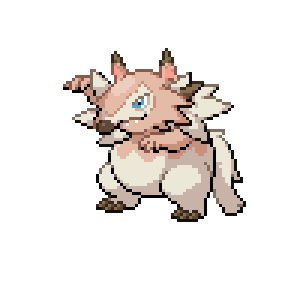
Lycanowl perches in dead trees at night, using its superior eyesight to scan regions. It uses Rock Slide to subdue prey like Cubone.

If Lycandos notices a rockslide, it spits out thick webbing to hold the rocks in place. This gives its pack time to flee.
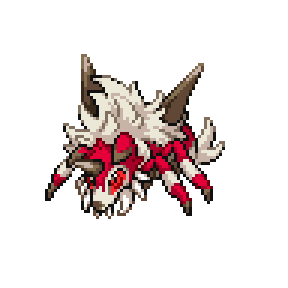
Lycanran's fur collects sharp stones, protecting it from melee attacks. Its fang carries a sweet-smelling venom that causes intense confusion.

Lycanran is primarily active at night, striking with its pack in mountainous regions. The stone horn on its head carries potent venom that induces nausea.

Lycanrantis prefers pack tactics to strike at foes, coordinating joint Petal Blizzard attacks to subdue them. It stands on one leg while performing its attack, looking elegant from afar.
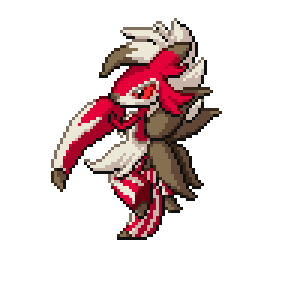
Cressbone enjoys watching others sleep from afar. If noticed, it attacks with precise bone strikes reminiscent of master swordsmen.

Bruxsea collects pieces of floating flotsam, using them to build nests in quiet coves. It hides among these scattered objects, waiting patiently to surprise passing prey.
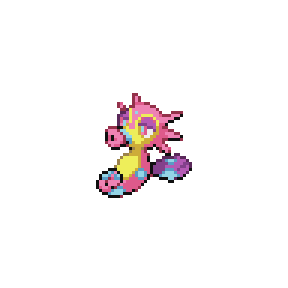
Bruxdra emits brine from its mouth, surrounding itself with a salty cloud that confuses attackers. It uses the brine both offensively and defensively, maintaining its dominance in underwater battles.

Bruxdeen glides among lily pads, using their cover to ambush unsuspecting prey. Its colorful fins resemble flower petals, blending seamlessly into its watery surroundings.

A small school of Bruxking have been spotted off the coast of Mikan Island. Their friendly attitude has greatly encouraged tourism.

Bruxyu nests among coral, using its vibrant body to blend into reef formations. It guards these areas fiercely, keeping intruders away from its chosen habitat.

Bruxkarp scavenges for debris along shorelines, collecting anything it finds interesting. These collections often reflect both its curiosity and the state of the environment around it.
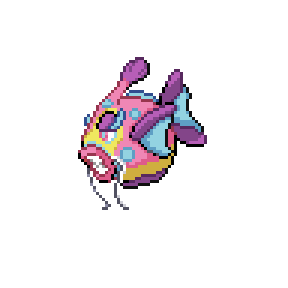
Bruxdos rides ocean currents to conserve energy during long migrations. It uses powerful bursts of speed to control its direction, making it a master of open water travel.

Bruxras sometimes attaches barnacles to its fins, using them as natural armor. The barnacles also serve as camouflage, making it look like part of the rocky seafloor.

Bruxgon scours shipwrecked vessels, consuming computer equipment left behind. Its appetite for digital components allows it to enhance its internal systems, improving its ability to navigate treacherous waters with uncanny precision.
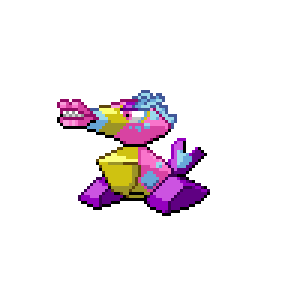
Bruxdile collects jetsam, adding it to elaborate nests along riverbanks. It often decorates these collections, turning them into playful displays.

Bruxchou hides among coral reefs, using bursts of bioluminescence to confuse predators. It navigates the reef's intricate paths, hunting small fish by cornering them in tight spaces.

Bruxturn weaves seaweed into protective shelters, creating nests that sway with the ocean's currents. Its bioluminescent spots mimic small fish to attract prey into its lair.

Bruxrill thrives on beaches, basking in the sunlight as it searches for food. It burrows into the sand during high tide, resting until the waters recede.

Bruxrill thrives in calm bays, where it weaves through shallow waters in search of food. Its playful splashes are a common sight, bringing joy to those who encounter it.

Bruxpip floats effortlessly above the water's surface, using its fins to catch the wind. It mesmerizes prey with its shimmering scales before dragging them beneath the waves.
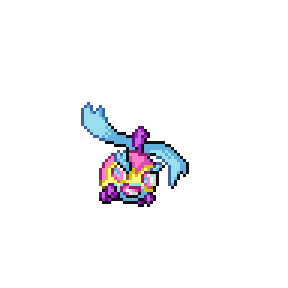
Bruxper exudes a foul odor, resembling rotten vegetation, to ward off predators. It lingers in murky waters, where few Pokémon dare to follow.

Bruxsire drifts lazily through swamps, using its colorful appearance to ward off predators. It burrows beneath the mud to sleep, making it nearly invisible to anything passing by.

Bruxfish thrives in the chaos of typhoons, using violent currents to hunt for food. Its spiked body helps it navigate the stormy waters without injury.

Bruxsola is known to follow submarines, mistaking their metallic hulls for large aquatic creatures. Its fascination with these vessels often draws it to the depths of the ocean.

Bruxraid's sharp teeth allow it to crush the shells of smaller aquatic creatures. It has a habit of spitting high-pressure jets of water to startle and disorient prey.
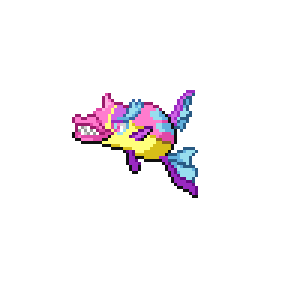
Bruxllery gathers ancient scrolls lost in shipwrecks, storing them carefully in hidden underwater caves. Some believe these scrolls hold forgotten knowledge, though few dare disturb Bruxllery's lair.

Bruxtine glides effortlessly alongside sailboats, enjoying the wake created by the vessels. Sailors consider it a sign of good luck, as it appears only in calm seas.
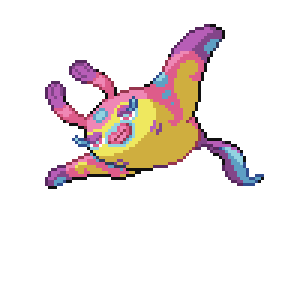
Bruxmory patrols coastlines, watching for threats from both land and sea. Its metallic scales reflect sunlight, creating dazzling patterns that serve as both a warning and a beacon.

Bruxtyke races beside motorboats, drawn to the noise and speed. It delights in the waves these vessels create, often using the wake to perform playful acrobatics.

Bruxlord is known to interact with scuba divers, curiously following them through underwater caves. Its immense size makes it both a marvel and a hazard for those exploring the depths.

It uses the flower-like antennae on its head to focus its psychic powers. It uses these psychic pulses to determine its surroundings.

Bruxmer enjoys swimming alongside surfers, riding waves with effortless grace. It has a playful demeanor, often mimicking the movements of those on boards.

Bruxbas ascends waterfall-filled cliffs with surprising agility, using bursts of energy to propel itself upward. It rests in shallow pools between leaps, preparing for the next climb.

Bruxfisk burrows into quagmires, waiting patiently to ambush prey. Its body becomes coated in mud, making it indistinguishable from the swampy environment.

Bruxvanha lurks around marinas, waiting to catch unsuspecting prey drawn by the movement of boats. It uses its sharp teeth to tear through ropes and fishing lines with ease.

Bruxedo patrols arctic waters, slicing through icy seas with ease. It uses its powerful jaws to shatter icebergs, carving pathways for smaller Pokémon.

Bruxvern rides the winds during monsoons, navigating treacherous weather with ease. Its vibrant colors flash through storm clouds, adding bursts of brightness to dark skies.

Bruxria's body is naturally buoyant, using specialized tissues for efficient flotation. It drifts serenely across water surfaces, humming softly to soothe both Pokémon and Trainers.
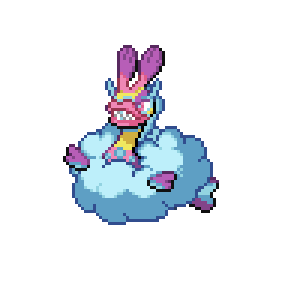
Bruxmise lingers near sunken ruins, where it scavenges for small treasures buried beneath layers of silt. It is often mistaken for part of the wreckage, lying in wait to ambush curious prey.

Bruxeanie clings to driftwood, using its sharp spikes to pierce passing prey. The potent toxins it injects can paralyze its target, rendering them unable to swim.
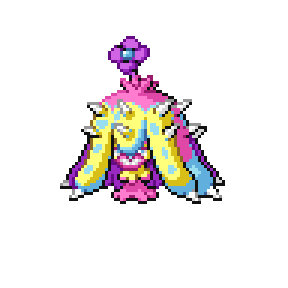
Bruxbre lounges in murky ponds, using its vibrant scales to lure in unsuspecting prey. It lets out eerie laughter when startled, startling even larger Pokémon.
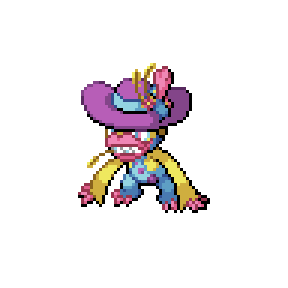
Bruxdisc's scales shimmer in the moonlight, making it a sought-after sight for divers. It releases a relaxing pheromone that causes Pokémon nearby to lose focus.
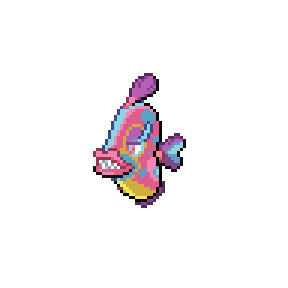
Bruxth collects shells along the shore, crafting intricate patterns in the sand. It guards its treasures jealously, often hissing at anyone who approaches too closely.

Bruxduck constructs small dams along rivers, diverting water to trap prey. It works tirelessly, though its erratic behavior sometimes results in unexpected floods.

Bruxwag weaves through dense reeds, using them to ambush unsuspecting prey. It moves with fluid grace, making it nearly impossible to detect among the swaying plants.

Bruxcool's venomous bite can paralyze both prey and predators alike. It releases toxins through its skin, deterring anyone that dares approach.

Bruxcruel's sting causes intense itching, driving victims into frantic fits. It uses this distraction to escape or strike again, depending on the situation.

Bruxpoke drifts lazily through streams, occasionally snapping at smaller prey that pass by. It spends hours submerged, moving only when carried by the current.

Bruxeel displays a natural flair for nautical activities, easily navigating both surface waters and ocean depths. Its playful nature makes it a welcome companion on long sea voyages.

Bruxmer lurks in sewage systems, feeding off waste and pollutants. It emits a foul odor to deter predators, making it a formidable presence in polluted waters.
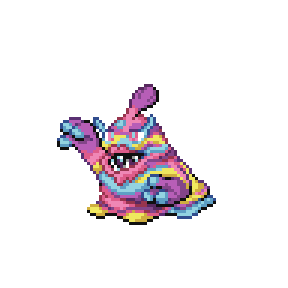
Bruxder's jaw strength rivals that of steel traps, clamping onto anything that wanders too close. It uses its large, armored lips to smash open hard-shelled prey.

Bruxster often clings to the sides of vessels, riding along unnoticed as they travel through deep waters. Its shell-like fins blend seamlessly into the ship's hull, making it difficult to spot.

It will use its psychic powers to put its enemy into a deep slumber. After the enemy is unconscious, the Paracute will spread its spores on it.

It lets loose clouds of spores when it gets agitated. Spores from Parapod are regularly used in anti-dandruff shampoo.

Parapom uses the hand-like mushroom on its tail to grip grooves on cave ceilings, spreading its spores on anyone who passes by. These spores can cause dizziness, fainting, and sometimes even mind control.
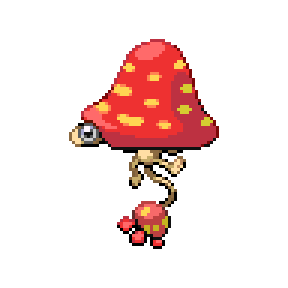
Colonies of Paratar sleep in shifts deep within caves, taking turns digging into stone to unearth and devour plant life. This communal behavior ensures they have a constant food source.

It claws through cave walls to find alcoves, spreading spores as it sleeps among the growing mushrooms. These mushrooms serve to absorb nutrients from the surrounding organic material.

The spores released by Paraceus can corrupt the minds of those who inhale them. Victims often become convinced it is a deity.

It will hide within bushes during the daylight. At night it will begin to wander the forest, looking for new water sources.

Paragon sleep in clusters while clinging to cave walls. If one awakens, the rest follow suit, chasing and devouring any creature they spot as if controlled by one mind, making them a formidable group.

The tusk-like mushrooms sprouting from Paraxew's mouth are very hard and leave behind puffs of spores when it strikes a foe. This serves both as an attack and a way to weaken the enemy with a debilitating effect.

While rolling, it spreads its spores around caves. This helps it feel comfortable, and as the spores grow into tiny mushrooms, absorbing nutrients from nearby organic material due to interlocking root systems that nourish both the fungus and itself.
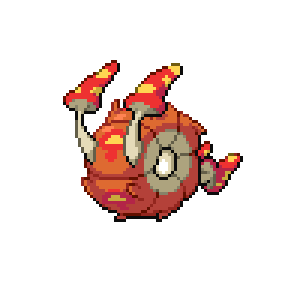
It attaches to cave walls, rooting in like a tree. It spreads spores that cause green blemishes, eventually parasitizing organic material to grow mushrooms for nourishment.

Paralett releases dense spores throughout its tunnels that can cause violent fevers. Some believe eating a Pecha Berry beforehand neutralizes the toxins.

Paratrio's body is composed almost entirely of a mushroom-like substance. It builds vast underground labyrinths where spores hang so thick the air becomes nearly impossible to breathe.

The mushroom on its body seems to direct it where to fly at night. Should the Paraton find a Berry bush, it will scatter its spores everywhere.

The scale on Jangtini's head glows softly when it's ready to evolve. During this time, it only swims in familiar waters to feel safe.
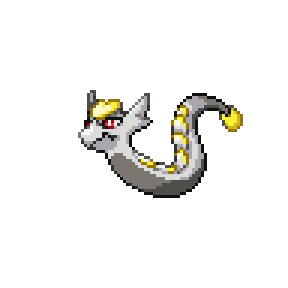
Flocks of Jangrow live in seaside coves, dipping their scales in saltwater to stay polished. If disturbed, they attack in unison with Drill Peck.
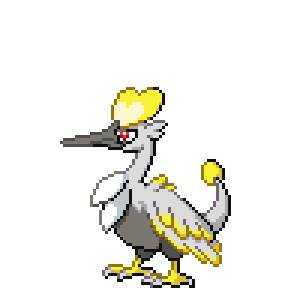
Jangtar uses the sharp edge of its head scale to slice into stones. Afterward, it eats the fragments to strengthen its body.
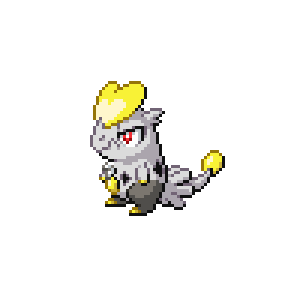
The scale on Jangdum's head emits a strong magnetic field. It sometimes sticks to metal objects without realizing it.
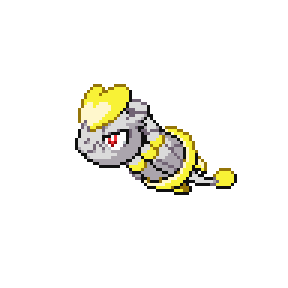
Jangble channels draconic energy through the scale on its head. This energy lets it trap opponents in swirling Sand Tombs.
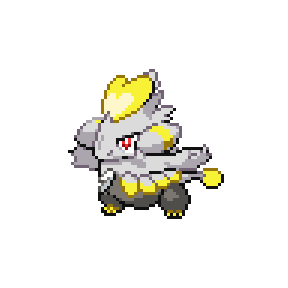
Ancient carvings depict armies using Jangedge in battle. They would fight alongside their human allies, trained to protect them at all costs, making them revered warriors in history.
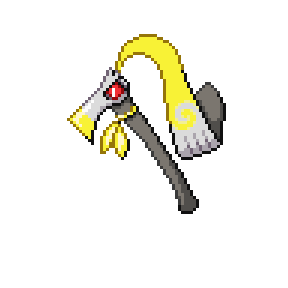
Jangno's head scale absorbs solar heat throughout the day. When it overheats, warm air is vented through the fur on its neck.
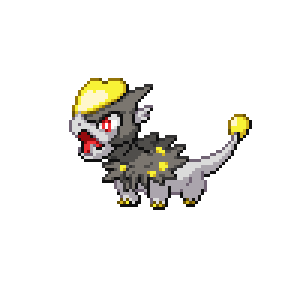
After clamping onto its target with its powerful jaws, Janginch will attempt to strike again with a sudden Dragon Claw. Due to the size of its maw, these follow-up attacks often miss.
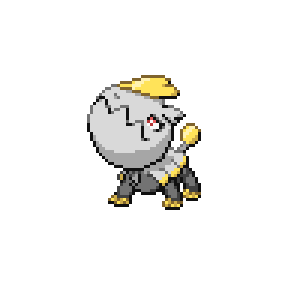
When Jangxew slams into foes with its tusks, the scale on its head rings with a pleasant chime. The sound often startles enemies more than the impact.
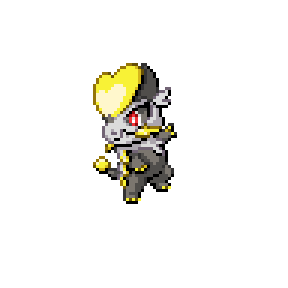
As Jangcorio dances, its head scale produces a melodic tone. The rhythm grows more complex with each elegant step.
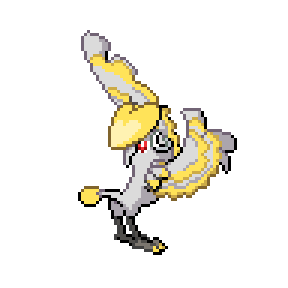
While resting, Jangoom's scales gently wobble, releasing a scent like Pink Apricorns. The aroma lures small Pokémon, which it ambushes.
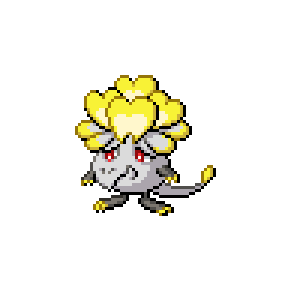
While flying, Jangbat's golden ears glow if it notices falling debris. It can instantly use Protect to shield itself from harm.
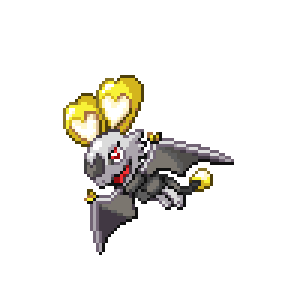
When Jangmy is peacefully asleep, its sticky head scale gives off a faint scent of Oran Berries. This scent attracts Bug Pokémon seeking nectar.
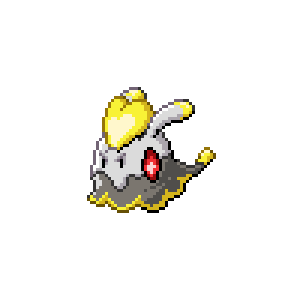
When hugged, Jangful's fluffy body causes the scale on its head to glow bright pink. This can mean happiness-or a warning of coming violence.
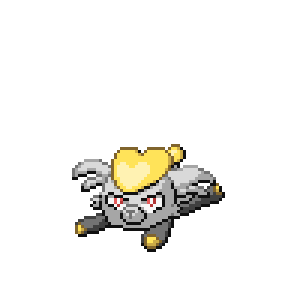
Jangtrio tunnels through mountain walls with sharp scales. It uses them to slice through dense rock while digging paths for its kind.
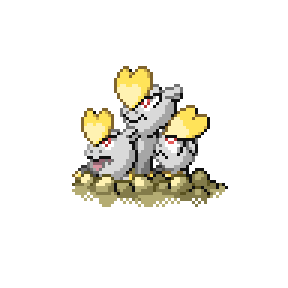
Jangduck sends out headache-inducing pulses from the scale on its head. The waves grow stronger when it's confused or panicked.
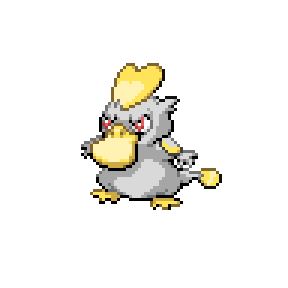
Jangbell swings a vine tipped with a hardened scale to defend its jungle canopy nest. Its strikes can shatter stone.
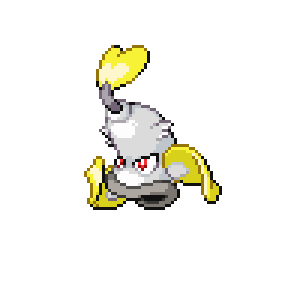
Jangdude uses the sharp scale on its head to cut off small bits of marble from deposits in caves. It then eats the shavings to strengthen its stony body, improving its durability for battle.
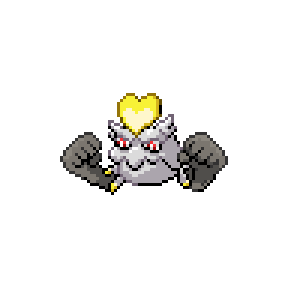
Jangler's scales grow warm when it nears ore deposits. If it senses tin ore, it digs tirelessly to uncover its favorite treat, sometimes over a mile deep.

When its scale glows orange, Jangby is ready to unleash a powerful Bubble Beam. This attack is strong enough to leave dents in stone.
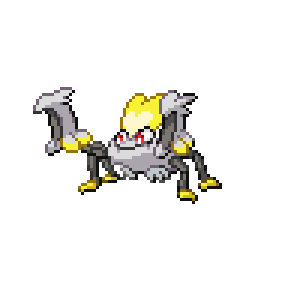
Hakasey gathers abandoned Dragon-type eggs and guards them fiercely. It uses its sharp scales to fend off any predator that comes too close.
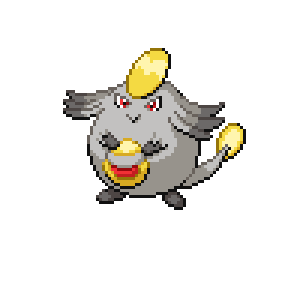
When enraged, Hakanair lifts its radiant scale skyward to call down violent thunderstorms. Legends say the sound of thunder is its war cry echoing from above.
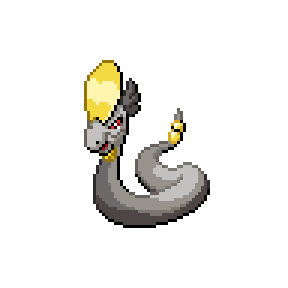
Hakatar slumbers in dark caves as it prepares to evolve. When danger nears, the scale on its head vibrates rapidly to warn it of predators.
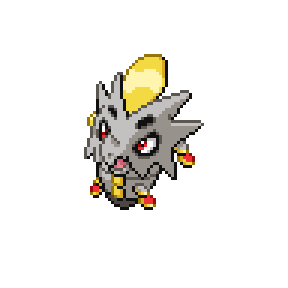
The scales on Hakavile's head emit a chilling sound when they clink. The air around it cools noticeably, and lost scales regrow in a day.
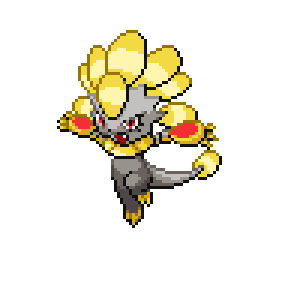
After heavy rainfall, Hakatang's metallic body gleams like polished steel. It attacks with devastating force using its bladed, claw-like arms.
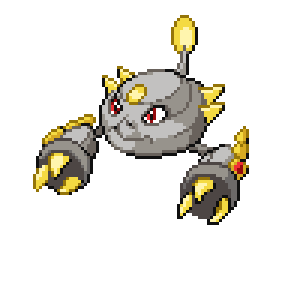
If its scales fall off, Hakabite hoards them in a carefully organized den. Jewelers prize these gleaming pieces for crafting rare necklaces.
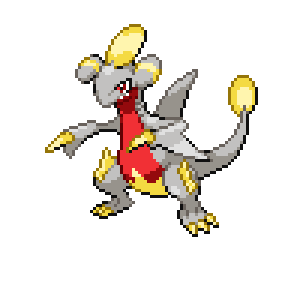
The scale atop Hakasharp's head is sharper than a razor and can cleave slate. The strange metal armor it wears is lighter than it looks.
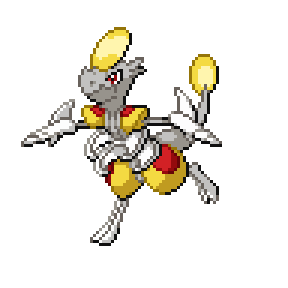
Ancient civilizations used Hakalurk to guide cave explorers. Its immense strength made it ideal for clearing rubble from tight passageways.
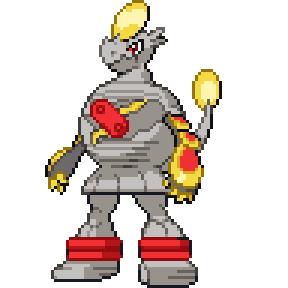
Hakalous's twin head scales are hypersensitive to sound and heat. They twitch violently when a creature approaches, alerting it to strike.
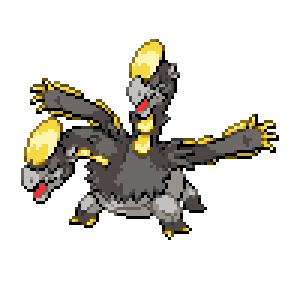
The shiny scales covering Hakaelgon's body are incredibly dense. During rockslides, it curls into a ball to protect itself from falling debris.
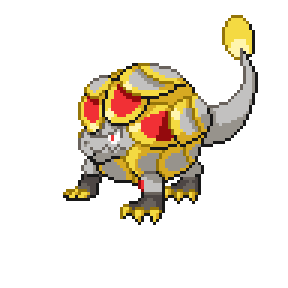
When Hakaxure strikes a foe, scales may chip from its tusks. These regrow easily if it maintains a rich, protein-heavy diet.
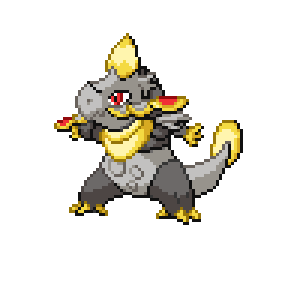
Hakabat emits powerful sonic waves from the golden scale on its head. It does this to knock out prey before it feeds, using sound to disable its victims in a flash.
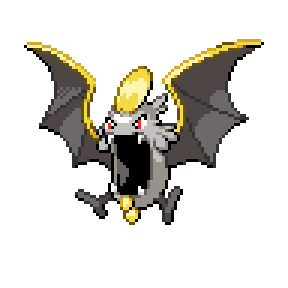
The loose scale atop Hakagoo's head chimes softly in the wind. It dances with its slime-covered body to the sound in secret but freezes instantly if it notices anyone watching.

Hakaty uses the sharp scale on its tail to guard its domain. It patrols cave entrances regularly to keep out any unwelcome visitors.
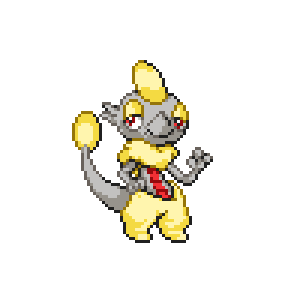
Wimhoot flocks at night to Persim Berry trees, feeding under cover of dark. If anything unfamiliar approaches, it hoots sharply to send the group scattering.

Wimpom lives in Nanab Berry trees, picking fruit with its long tail. If spotted, it panics and swings away through the canopy to escape.
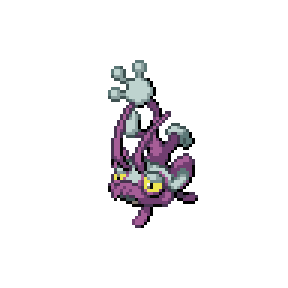
Backyard gardens attract swarms of Wimkern, who devour weeds and invasive sprouts. The flash of a motion-activated light sends them screeching in every direction.
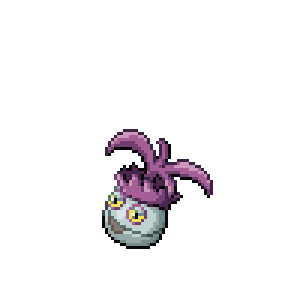
By night, Wimkrow pecks mold off building walls with surprising care. Sudden light from streetlamps causes it to shriek and take flight.
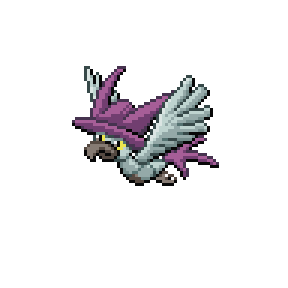
Wimcross feeds on tree sap in silence, venturing out only when it believes it's alone. At the faintest sign of movement, it vanishes into the underbrush.
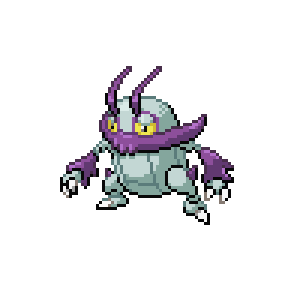
Wimgast gathers in quiet clusters along dark shorelines to feed. Even the snapping of a twig can send the entire group scrambling into the sea foam.
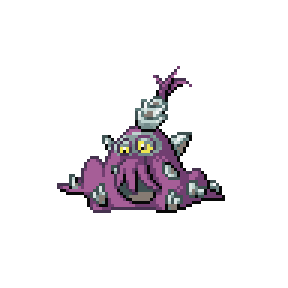
A school of Golisea was recently sighted near Sayda Island. When cruise ships approach, they spar playfully with each other to impress watching tourists.
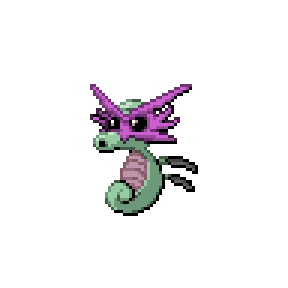
Golidra shoots bubbles from its claws to stun predators. If overwhelmed, it releases clouds of dark ink before fleeing at high speed.
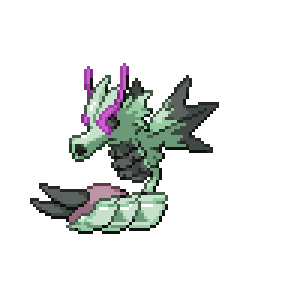
Golideen slashes at fish Pokémon to test its claws. After victory, the horn on its head glows pink in satisfaction for several hours.
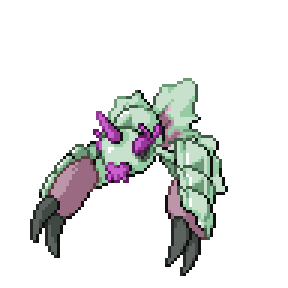
In prehistoric times, Golidactyl would challenge Kabutops to brutal duels. These fights were used to test its strength and enforce its dominance over its territory.
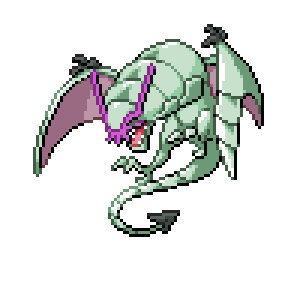
The red tips of Goliturn's antennae glow while hunting. Its claw-like fins can tear through thick hulls without resistance.
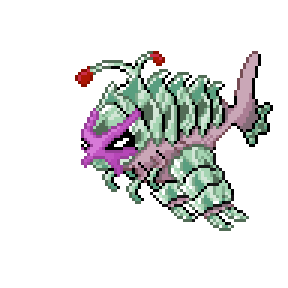
In swamp battles, Golisire splashes opponents with mud. The one who stays cleanest is declared the winner and gains local territory rights.

By eating waste and swamp plants, Golifish develops potent venom. The most toxic individual becomes leader of its school through chemical strength.
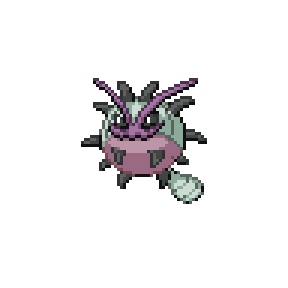
If Golisola locks eyes with another of its kind, it fights until one is unconscious. Its ability to Recover lets it survive blows that would fell most others.

When disagreements arise, Goliraid duels by firing high-pressure water jets. The victor decides the group's next move without question.
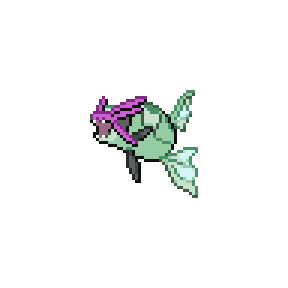
Golidily drifts in ocean currents while clustered. If two touch for long periods, they clash in sudden, fierce bursts of energy to establish dominance.

Golialdo's dense outer shell can deflect most projectiles with ease. It swims through winding bayous, lurking beneath the surface as it stalks unsuspecting prey.
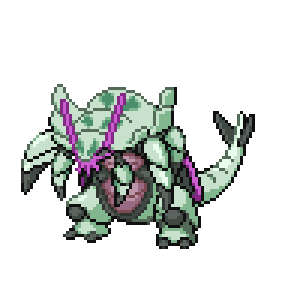
Golipardos rams heads with rivals to test strength. Afterward, it strikes with claws sharp enough to cleave tungsten in a single clean swipe.
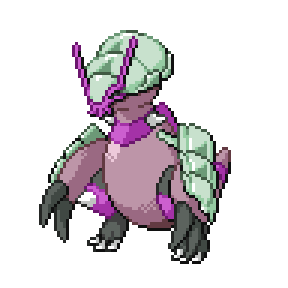
Golidon barrels along the seafloor with its iron-plated head. It devours coral reefs and crushes prey hidden among the debris.
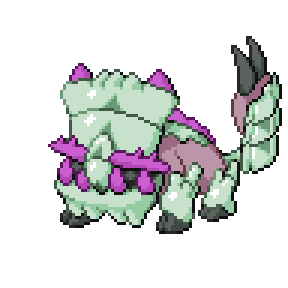
Golipass carves up debris to collect metal shavings, displaying them as dominance trophies. Other Golipass will challenge it to claim the scraps.
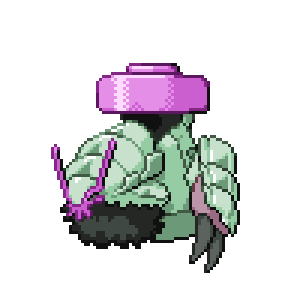
Golimer rolls across the ocean's surface, slicing prey with its claws. Its spinning attacks can destroy entire coral reefs in seconds.
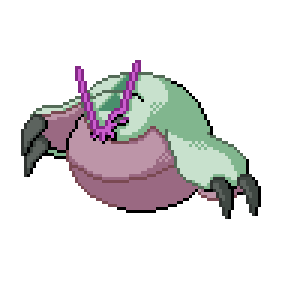
Schools of Golibas spar in lakes, creating frothing water. The most defeated member is exiled from the group and forced to live alone in distant waters.

Goliedo bites and races others of its kind to determine leadership. Once a leader is chosen, it can only be challenged again one year later.
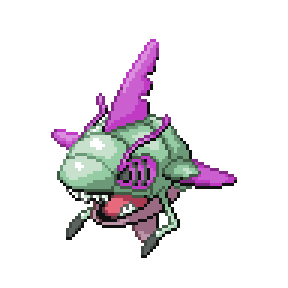
Golimise attacks ship anchors similar in size, mistaking them for rivals. Once it realizes they don't retaliate, it quickly loses interest.
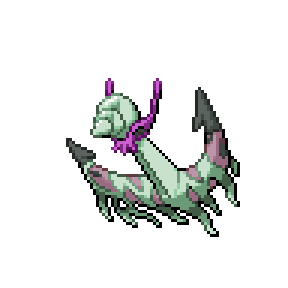
Golieanie's tough carapace oozes a thick purple toxin when struck. Its scent alone is enough to ward off most predators.
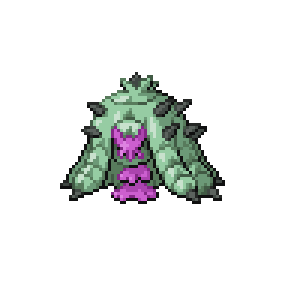
Goliapex lives deep within underwater caves, where its shell can withstand even submarine collisions. It secretes faint toxins into the water to ward off intruders.
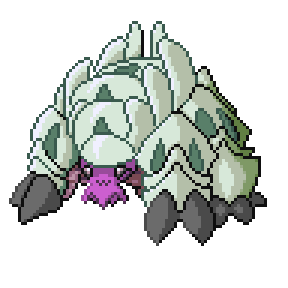
Golish fiercely claims bayous as its territory, biting any who dare approach. It regularly challenges others of its kind to brutal duels to prove its dominance.
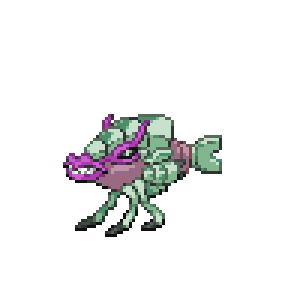
To choose a leader, Golicool wrap their tentacles and sting each other repeatedly. The last to fall unconscious is crowned the victor.
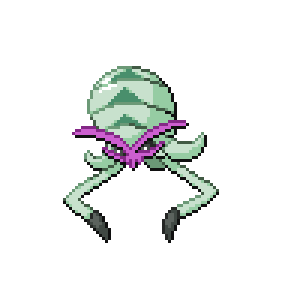
It flies around at night, then lands during the day and extends roots from its talons to absorb nutrients from the soil. If disturbed, it will screech loudly before taking flight again.
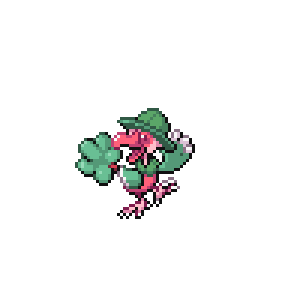
It bites chunks off of bushes to fuel the fire in its belly. The leaves it eats determine the color of its flames, ranging from bright orange to eerie green.
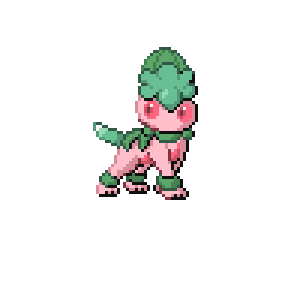
When Foedge swings its bladelike leaf, it releases a soothing aroma that smells faintly of Chesto Berries. This scent often masks its presence in battle.
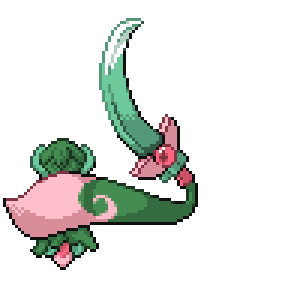
It replaces portions of its disguise with trash and leaves, blending in with decayed plant matter. It chews on fallen leaves to gain energy but avoids sunlight as much as possible.

Foloon floats silently over rice fields. When hungry, it descends to steal clumps of vegetation before drifting away.
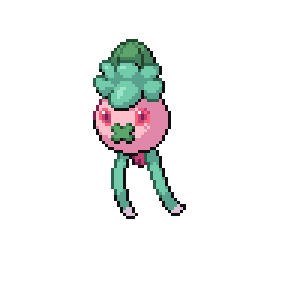
Fobat's leaf-like wings flap rapidly as it navigates wooded areas at night. It feasts on the juice of overripe fruit, leaving small pin-sized holes where it bites- a subtle sign of its nocturnal feeding habits.
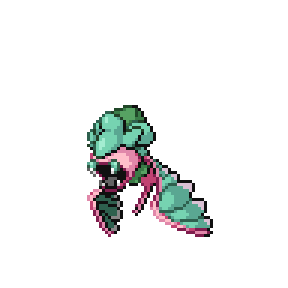
It burrows in leaves in forested areas, shooting electric webs at anything that disturbs its rest. The webs also help conduct sunlight to its leafy body, enhancing its energy.

Fobish hides in compost bins inside greenhouses. It feeds on biodegradable scraps, preferring fruit rinds and rotting leaves over soil.

Fotump inhabits stumps in deep forests. One can always tell the stump it sleeps inside- small pink flowers grow from the wood in anything it enters, adding a touch of life to the decaying timber.

When asleep, Fomise's seaweed intertwines with kelp beds. Though it resembles an anchor, tides can carry it away if not securely latched.
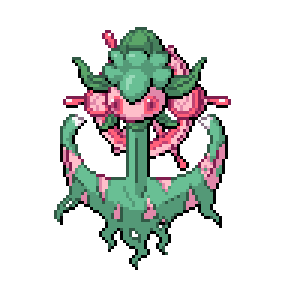
It chops leaves off of nearby trees and chews them into a fine pulp to cultivate small fungal patches. These fungi act as a personal food storage for Foras, growing stronger as they absorb sunlight.
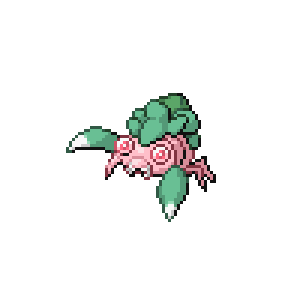
Fonat shakes Stun Spore attacks from its body that smell faintly of Jaboca Berries. The scent lingers long after it flees the scene.

When grumpy, Fokaboo releases a foul rotten pumpkin scent. It chases intruders with its stubby legs to drive them out of its territory.
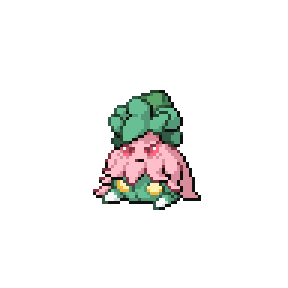
Luowl glides silently at night, flapping its broad leaf-like wings. It seeks wild oregano patches, its favorite food, to munch on until dawn.
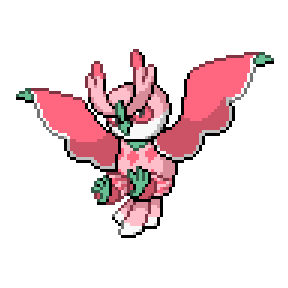
Ludos makes its home among chives and fragrant herbs. It spins near-invisible silk throughout the area to keep pests away, ensuring its garden thrives.
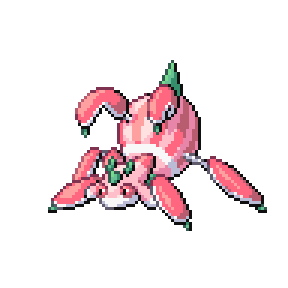
Luphan curls its leafy limbs inward and rolls across hills at terrifying speed. Its top velocity exceeds that of most buses, making it dangerous to encounter.
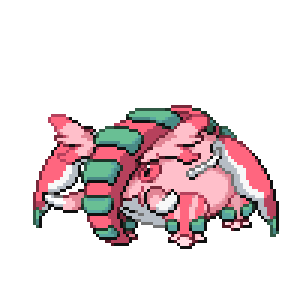
The leaf-frills on Luran's back emit a pleasant Sweet Scent to lure others close. It then stabs them with a venomous thorn that causes severe paralysis.
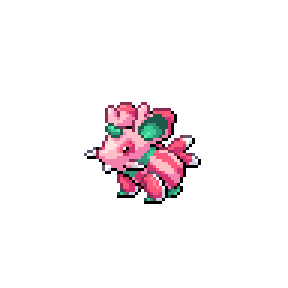
Luclops's pink leafy body is completely hollow inside. It will eat herbs like oregano and mint to fuel its eerie powers, which it uses to spook and disorient its foes.
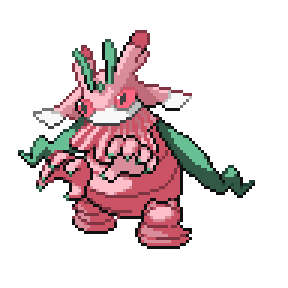
By basking in the sun, Luran's leafy body absorbs solar energy. This strengthens the toxin produced by the thorn on its head.

The vine-like tail of Luray channels intense electricity. Even a casual touch can knock out a full-grown human due to the voltage it stores.
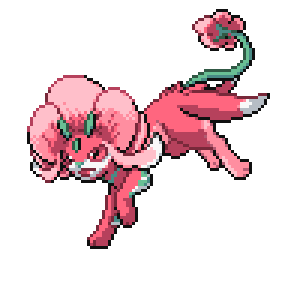
Lunette floats above junkyards under moonlight. It plants seeds in discarded plush toys, somehow animating them to defend its territory from intruders.
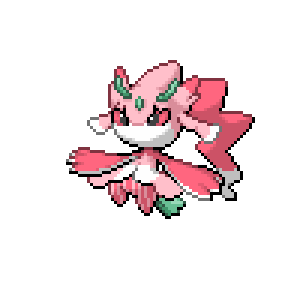
Though it appears to be a peaceful Bug-type mimic, Luwear is deceptively powerful. When a predator like Fearow gets too close, it retaliates with a bone-shattering punch.

Luroc stalks forest paths at night in search of prey like Metapod. When it finds them, it strikes with razor-sharp leaves, slicing cleanly through their shells.
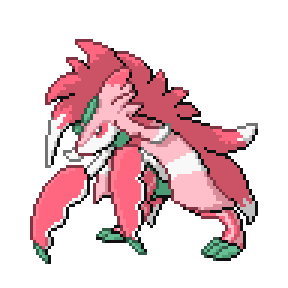
Deep within dark caves, Carbone tirelessly trains with its crystal club, striking rocks to hone its skills. When lonely, the gemstone-like mask on its face glows with a faint, sorrowful blue light.
