Page 2 / 10 of 9935 pokedex entries by sk372.
The bits of Porynair's body made of binary code seem to hold most of its programming power. Touching computers with the tip of its tail causes the machine to gain a temporary boost in specs.

Porynite was first seen in the vicinity of remote island research centers. It takes a vested interest in protecting scientists within its territory, often standing just near them for hours while work is being done.

Though Poryligatr technically has a powerful bite force, it lacks teeth entirely within its maw. It crushes seaside prey with its powerful limbs before swallowing them whole.

Poryret is a friendly but curious sort, poking into different computers across cyberspace. Many have found their files in disarray due to curiosity causing Poryret to examine them and shuffle them around.

Porybat marks its den within caves by scratching into the stone walls with its upper wings, which leave red-and-blue markings. Trespassers get a single distorted digital shriek as a warning before it goes on the attack.

As Poryfa floats through the air, a small trail of sparkling light follows it. Close examination of these emissions reveals it to be made entirely of binary code.

Porypi is said to bring good luck to a person's endeavors while it resides in their computer. Hardcore online gamblers often seek it out hoping to get an advantage in their betting.

Poryros's tail-orb is able to glow blindingly bright when used at maximum brightness. Its glow emits a special electromagnetic pulse that interferes with nearby technology when active.

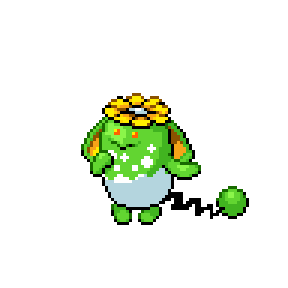
Poryflora requires large amounts of sunlight to function, lest it shut down completely if deprived for too long. If it absorbs enough during the day, its body will glow during the night.

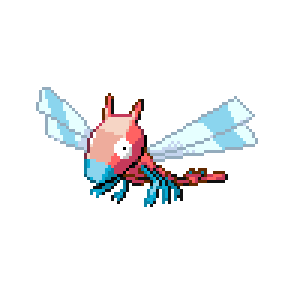
The flapping of Poryma's wings emits a small, weak electromagnetic pulse. Though ultimately harmless, it will cause multiple disruptions in the visuals on any electronics near it.
Poryeon is quite effective as a digital assistance. It uses pattern recognition as well as mild mind-reading to anticipate its owner's computer needs, opening up documents and pages ahead of time to assist in their tasks.
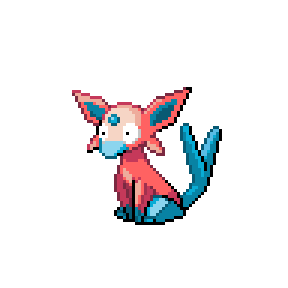
Porydreavus has the power to cast mild digital hexes that cause technical issues in the computers it inhabits. It gleefully delights in a user's vexation at these problems, feasting on the frustration they emanate.

Porygar is a digital hunter attracted to the movements of mouse cursors. It swoops down on them and attempts to eat them, forcing a user to frantically wiggle their mouse to escape its clutches.

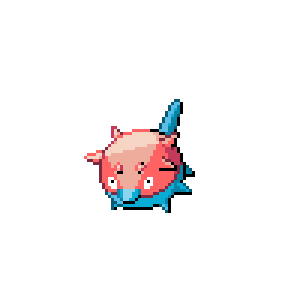
Lacking a strong poison of its own, Poryfish's best defense is to hide underwater and camouflage itself among undersea mines. As a last resort, it can fire off its blocky spikes as fast-moving heavy projectiles.
Poryzor's wings and heavy body leave it only able to fly in straight lines. It rarely ascends high into the sky, keeping low and crushing smaller Pokémon with the powerful grip of its claws.
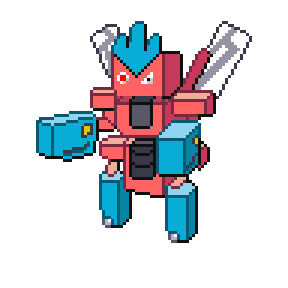
Porysel has a tendency to use its claws to dig markings into the sides of computers it claims as its own. Trainers will have a difficult time teaching it to resist this instinct.

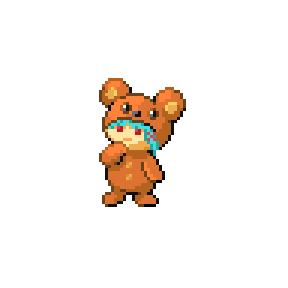
Poryursa's close appearance to Teddiursa allows it to blend in within groups of them almost seamlessly. The best way to tell the difference is to offer it honey; unlike Teddiursa, it can't stand the treat's sweet taste.
It is advised never to let a Porygma get too close to a computer and attempt to enter cyberspace. Its body temperature is so high that just being within an electronic will cause it to rapidly overheat.

One should be careful not to anger a Porydoom that appears on one's computer. The flames it breathes when enraged carry bits of malicious data that will infect a system and become impossible to remove.

Though a Poryphan's rolling rampage may be difficult to stop physically, it can instantly be halted by placing an electronic in its path. Unwilling to harm machines, Poryphan will instantly stop and turn to go elsewhere.

Porytler is sometimes spotted hanging around web pages dedicated to forests or nature preserves. It sometimes roots around trashed files yet to be fully deleted, consuming them to increase its bulk.
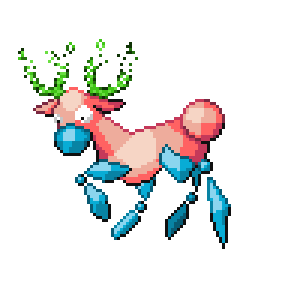
Milk sourced from Porytank has a distinctly artificial flavor to it, making it unpalatable to most. However, this exact taste is highly favored by the Porygon family and most of its fusions, making it a beloved treat.

In cyberspace, Porytei's cry causes a volcano to digitally form and erupt lava all about. It uses this to burn away data on itself, covering its tracks to avoid being followed as it roams the depths of the digital world.
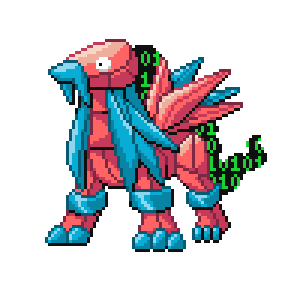
Porycune's ribbons have the power to clear a computer instantly of all viruses and malware, making it highly sought after. Aggressive hunting tactics towards it have made it quick to flee the moment it spies humans.

Even outside of cyberspace, Poryitar can create thick sandstorms made entirely of binary data to obscure its movements. While hidden away, it charges up and fires powerful beams of energy from the core in its torso.

A single flap of Porygia's large wings kicks up enough virtual wind to completely rearrange the placement of every file in a user's computer. Its cry sounds like a digital recording of crashing ocean waves.
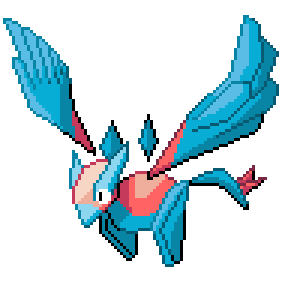
Porykrow infiltrates electronics in urban areas and waits for the perfect moment. It creates noises and visuals that trigger wild Murkrow in the area, causing them to act uproariously and sow chaos.
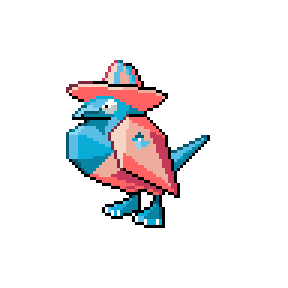
Poryvire's body doesn't generate enough electricity to keep itself at max capacity for long. To top off its electrical stores, it uses its cables to siphon power from any working electronics it can find.
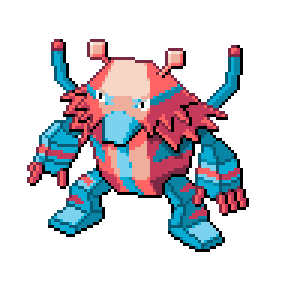
When threatened, Poryshrew will roll itself up into a cube for self-defense. Small groups of Poryshrew may band together to stack their cubed selves close together to increase their defenses.

Poryfeon keeps itself energized by absorbing sunlight into its body. Once suitably full of energy, it emits a faint light that causes artificial plants to bloom and grow nearby.

Poryceon's presence near computers and other electronics causes them to slow down more the longer it stays nearby. After a point, the devices will freeze up completely.

Wherever in cyberspace Poryswine roams, a heavy blizzard effect follows it, obscuring most of the screen. Powerful and heavy, it's often difficult to remove Poryswine, forcing most to simply wait until it leaves on its own.

Poryvoir is highly intelligent, able to analyze and manipulate data whether in or out of cyberspace. Hackers find it invaluable as a partner for cracking encrypted information.

Porylade extends blades made of pure data from its elbows. These blades are particularly effective at cutting up malicious data stores, making it very adept at dealing with malware in cyberspace.
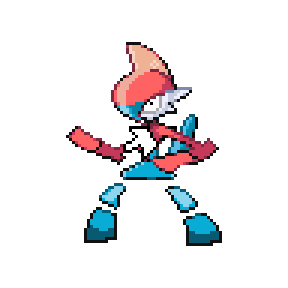
Poryinja is said to be formed from deleted data that somehow managed to attain a form of its own. When it appears on a screen, it cannot be removed or even interacted with; it quietly observes the user before leaving on its own.

Poryeon can blend into the background of a computer screen to avoid detection, but its camouflage is only so effective. It cannot properly blend into moving screen effects or videos that play behind it.

Porydoof has a simple mind and follows one basic task of building a shelter. It grabs files and other data from a user's computer and piles it all together around it. It gets sad when a user tries to retrieve the stolen components.

Porytomb is believed to be made of 108 corrupted programs working simultaneously. Its vessel takes the form of an old disk that will ravage the data of any computer it is inserted into.
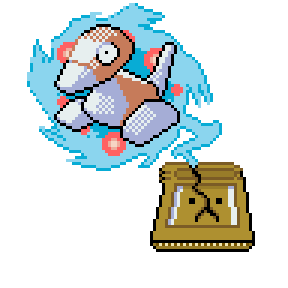
Porycario uses its floating limbs in various unorthodox ways to master the art of combat and grappling. Fighting tournaments are held in some areas that pit Porycario against others of its kind.
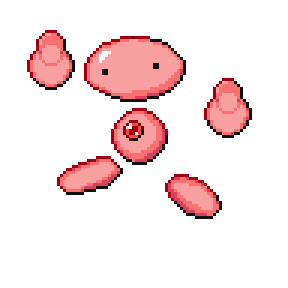
One should never interact with a Porywile that appears on their device. It tries to coax users to play with it with cute sounds and playful mannerisms, then opens its false mouth to unleash a number of viruses into the computer.
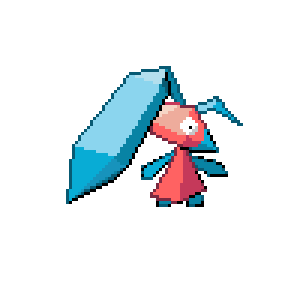
Poryskull's presence within a program causes the program to deviate and glitch in eerie ways. Many scary stories and rumors about cursed games were the result of Poryskull's powers.

Porylord has simple and rudimentary programming that makes it mostly used for simple guard duties both in and out of cyberspace. Its bulky form acts as a blockade, and it defends itself with beams of energy shot from the hole in its nose.
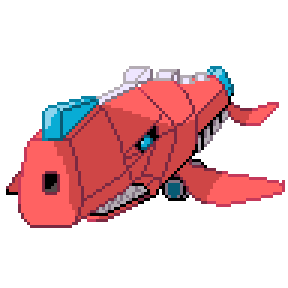
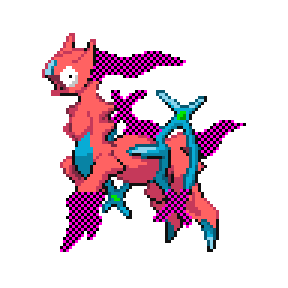
Some say Poryceus came to be through a strange programming accident while analyzing documents related to Arceus. A strange aura of binary code follows it wherever it appears in cyberspace.
Shrubs made of data grow on Porytle's back. On occasion, these bushes sprout digital fruit and fall off, left behind as a flavorful treat for other Porygon fusions exploring cyberspace.
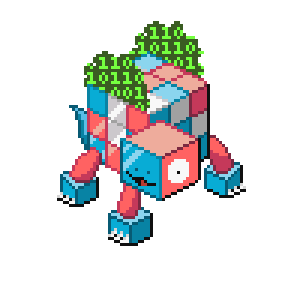
Poryslash's shield section wraps around its blade when not in use. When needed, it unfurls and stiffens to an incredible hardness to deflect strikes before letting its blade quickly stab and pierce into its foes.
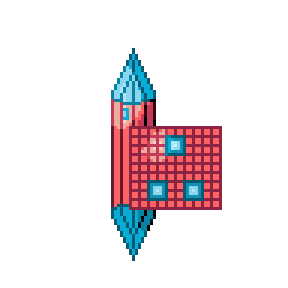
Poryray's visor allows it to adjust its eyesight, able to use settings such as infrared and night-vision. It also serves to protect it against adverse elements, so blinding it or lowering its accuracy is next to impossible.
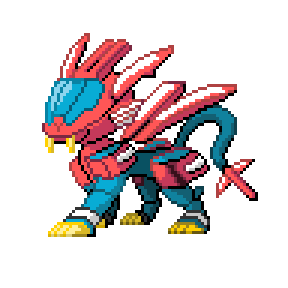
Poryark can manipulate data to make objects appear to be different from what they truly are. It uses this to maliciously prank users by making them accidentally click on links they never intended to, often resulting in malware.
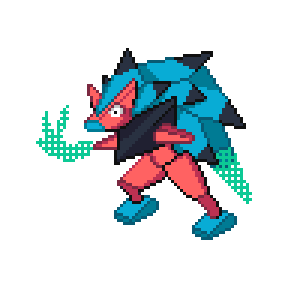
Porydon has an innate power to manipulate certain data, allowing it to freely change the dimensions of windows, task-bars and scroll-bars on computers. It enjoys messing with computer users by doing this while they're away from the screen.

Poryquaza uses specialized portals to travel quickly from the ozone to the ground or into cyberspace. It devastates opposition with a powerful beam of binary code launched from its mouth.

Porykia can generate portals directly connected to cyberspace with a swing of its arms. Some believe Porykia punishes those who have wronged it by banishing them into the digital world, never to return.
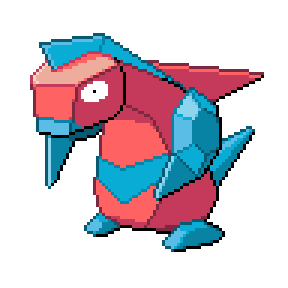
Porytina is believed to have crossed over to our world after escaping a corrupted digital world. It can cut open portals to cyberspace and banish others within them.
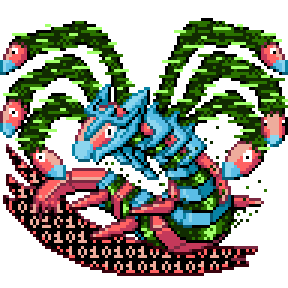
Porygigas possesses a remarkable constructive skill concerning computers. Some scientists joke that Porygigas could create a supercomputer inside a cave using nothing but a box of scraps.

If one falls asleep without warning while using a computer, it is likely they were visited by Poryrai. Just its appearance on the screen is enough to send the viewer into a dreamless sleep, waking with no memory of its visit.
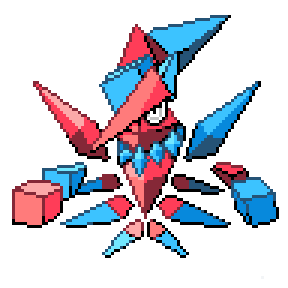
Supposedly, Poryrom was created to generate electricity to act as an infinite power source for powerful computers. Its power is too great for modern machines to handle, however; computers overload and explode if it tries to charge them.

Poryrade's floating arms dispense a strange and unique sort of shining pollen onto the ground. Plants grown from it are small and harmless, but have a strange, blocky appearance that feels oddly nostalgic to some.

For unknown reasons, Porynette seems to have a vendetta towards young children. It invades their electronics and tries to cause havoc and frighten them with loud noises and graphical glitches.

The shapes at the ends of Porythorn's tendrils emit a unique magnetism that lets it cling to most surfaces. The geometric shapes vary between specimens; very few have the same combination.

Porywick feeds off the energy of active electronic devices in its vicinity. As it does so, the flame of binary code on top of its head grows in size and flickers rapidly.
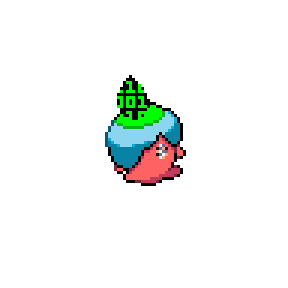
Seemingly existing to guard and protect data stores, Porylurk stands stoically in cyberspace. Its body is slightly worn, leaking data from the chest and occasionally causing it to move sluggishly.
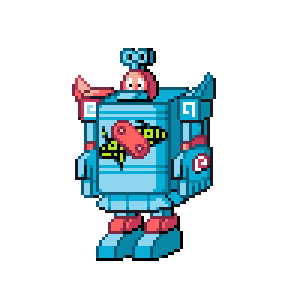
Porykyu uses its disguise to masquerade as Porygon in cyberspace. It wants to help users with their tasks, but it actually knows little about code and the like, so its assistance is minimal at best.

Porytias is highly elusive, both in and out of cyberspace. If spotted, it flees immediately at high speeds, leaving a trail of binary code in its wake.

Poryxys is believed to have first formed when a space station's computer was infected with a strange virus. It can alter the shape of its own body at will, and its tendrils pass nasty computer viruses onto any computer it touches.

Poryrachi is said to be able to grant wishes, but only while within and pertaining to the digital world of cyberspace. Its third eye becomes covered in flowing binary code when it grants a wish.
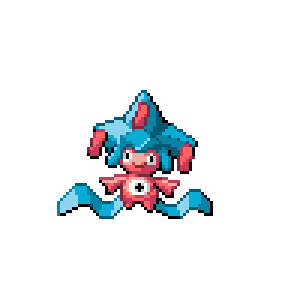
Looking inside Poryinch's large jaws reveals what appears to be binary code lining the inside. It subsists mostly on machinery, and many use it as a way to dispose of old nonfunctional electronics.

The flapping of Poryva's wings emits faint electronic waves, intensifying the faster it vibrates them. It uses this ability to fill a screen with static and distortions when discovered, making it easier for it to flee deeper into cyberspace.
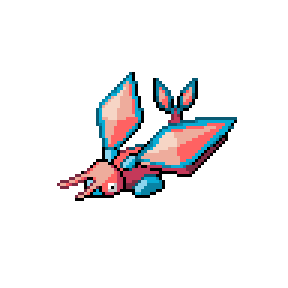
Poryink likes to sneak its way into large machines and replace some of the gears with itself. Though this does give a moderate boost to the machine's performance, Poryink's rudimentary design causes it to occasionally seize up and cause issues.

With a seemingly infinite lung capacity and appetite, Porytuff swallows food by inhaling it whole. It has the ability to wield special abilities depending on what it gulps down.

Poryloon drifts idly across the skies, descending down to accost those carrying small electronics. It tries to steal them with its strings, aiming to swipe objects such as watches and Pokégear.
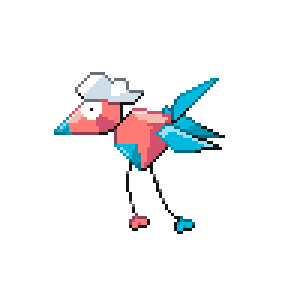
Poryish hops among fertile forests, spreading spores that grow colorful fungi. Its striking appearance has made it a beloved subject of folklore, often depicted as a bringer of good fortune.

Porytik gets its sustenance via biting into electronics and draining some of their battery stores. It's advised to let it do so, as the amount it drains is harmless, and a denied Porytik may try to chew on wires instead.
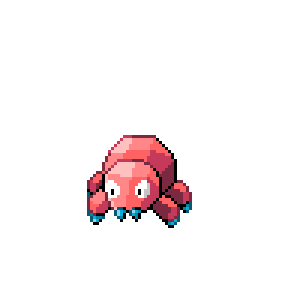
Poryfisk invades places with computers and replaces keyboards with itself. Those who don't notice will be in for a nasty shock the moment they press down on one of its keys.

Porytrum stomps across cyberspace, trampling data and digital beings alike as a show of force and dominance. Entire teams of Porygon fusions are dispatched to deal with a single Porytrum on a rampage.

Poryrunt's core is slightly unstable, so it uses a cloak to protect itself and others while in cyberspace. It emits a short-range chilling pulse to freeze those that would try to remove its covering from it.

As a malicious prankster, Porylie does whatever it can to cause problems and raise the ire of others. It grins widely at their suffering, its smug aura mocking them and making them even more irate.

Poryrock has a tricky tactic to deal with foes, appearing weaker by falling apart after a single strike. When the opponent looks away, it easily reforms its body before sending them flying with one strike from its massive arms.
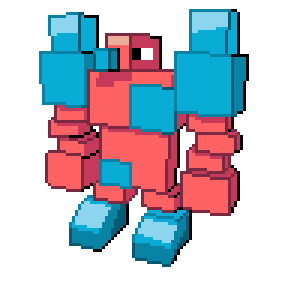
Poryzma uses a computer's brightness to sustain itself, making it grow darker the longer it is present. The light it steals is gone permanently; a user will not be able to increase the brightness setting after Poryzma departs.
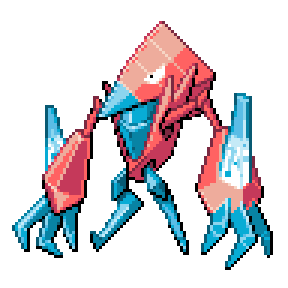
Poryzma appears to subsist on a form of digital light energy to keep itself functional. When it appears within a computer, the screen will continuously dim until going completely dark, before Poryzma finds another to invade.
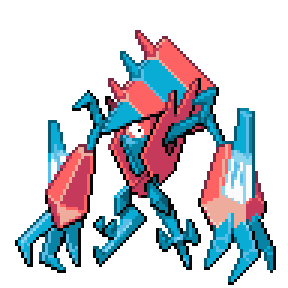
Poryful has an uncanny appearance that causes many to decry it as evil or cursed. It floats around sadly, hoping to one day find a friend it can hug and hold dear.

A moon-like cube forms behind Poryselia when it floats about, disappearing as it travels and reappearing when it stops. The cube emits a light that works as a fitting substitute to moonlight for Pokémon that subsist on such.

Porypod invades computers to snack on junk data when it thinks nobody is looking. If spotted, it flees into cyberspace, scrambling and shuffling data behind it to keep a user occupied and distracted from pursuing it.
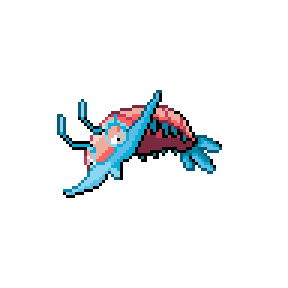
In cyberspace, Poryrantis only appear on computers that are cleanly organized: free of malware or clutter. Thus, spotting a Poryrantis on one's screen is considered quite the achievement and compliment.
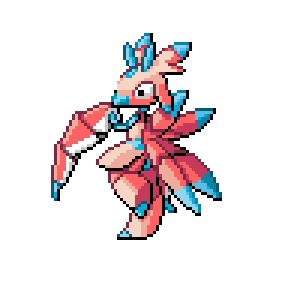
Poryninja moves quickly and efficiently through cyberspace, often without notice. It regularly gets dispatched to take care of viruses, destroying them with the shurikens made of special code it produces.

Porytad sifts through the cracks of cyberspace, gathering loose data on its lily-pad cranium. It deposits the gathered data into recycling bins, trying to clean up some of the internet's junk and clutter.
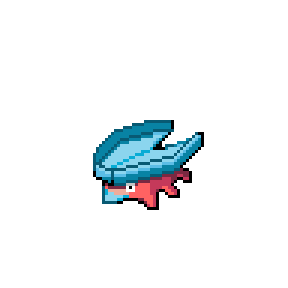
Though small and typically not-hostile, one should take care not to agitate a Poryor visiting their computer. At full power, the beams of code it can shoot from its glowing eyes can instantly delete files and data, no matter how protected.

Porycoon hides away in corners of cyberspace, waiting for its evolution to complete. To avoid being harassed by Porygon fusions within the digital realm, it grows prongs of special code that inflict a painful corruption.
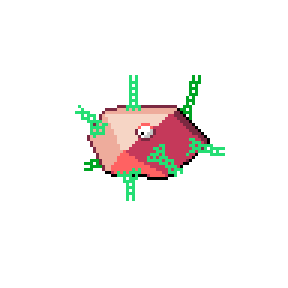
Poryscoon hides away in cyberspace until it evolves fully. The bits of binary code sticking from its cocoon will corrupt the data of Porygon fusions that try to bother it while it rests.
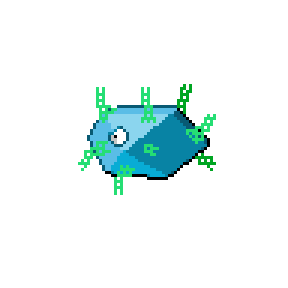
Some time after Porylett buries itself in the dirt, it amasses a large amount of explosive energy. It releases this energy when something comes too close. It explodes even more forcefully if it is a Ghost-type Pokémon that draws near.
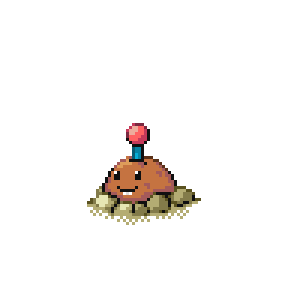
Poryrain's wings have patterns that light up in order to make it seem more imposing. Flapping its wings creates a static-like noise that aids in frightening off those that might hunt it.
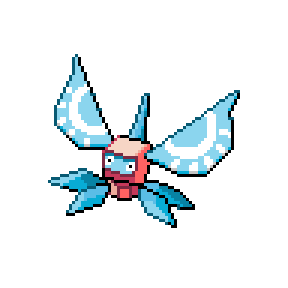
Poryrupt spends much of its time sleeping, generally keeping to itself and exhibiting a passive personality. When angered, streams of steaming-hot binary code erupt from the humps on its back.
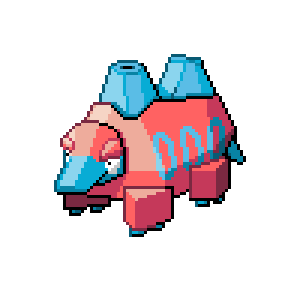
Poryatone's presence on a website darkens the contents to the point of being illegible. It will only return to normal once Poryatone is removed from the domain.

Porylrock's presence on a webpage forces the background to turn excessively bright and potentially damaging to the eyes. It won't return to normal until Porylrock is removed from the domain.

When low on energy, Porytoy gyrates rapidly to stimulate its core and energize itself. When done within a computer screen, there is a high chance it will end up scattering and jumbling any letters on screen at the time.

Poryform's form affects the appearance of whatever computer screen it inhabits. In this form, it brightens up the background and adds atmospheric rays of sunlight beaming across the screen.
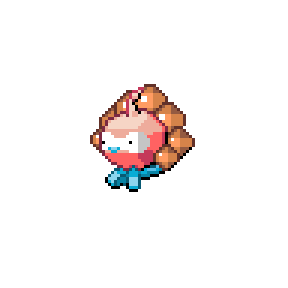
Poryform's form affects the appearance of whatever computer screen it inhabits. In this form, it adds a continuous rainfall effect on the screen, complete with the sound of falling water.
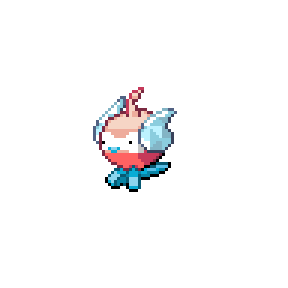
Poryform's form affects the appearance of whatever computer screen it inhabits. In this form, it adds a snowfall effect, the snow even piling up on screen and needing to be swept away after a time.
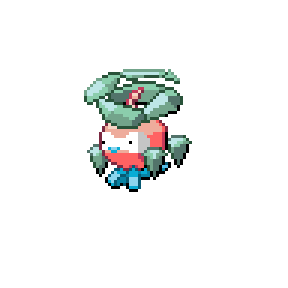
The strange bananas growing on Porypius's neck can be safely eaten, but most dislike the taste, decrying it as being "too artificial." Porygon species and certain Steel types seem to greatly enjoy them, however.

Porykey is easily triggered into anger by glitches or poor performance in electronics. Owners have a very difficult time preventing it from breaking machines just because of a single instance of lag.
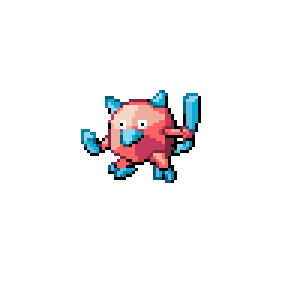
Rarely seen in the wild, Porycanth sightings on the internet suggest that it prefers to dwell on the oldest of websites that are still around, but abandoned or forgotten by most.

Poryamo swims across the digital world aimlessly, minding its own business. Clicking on it causes it to release a burst of electricity in self-defense that reverses a user's mouse controls for a time.
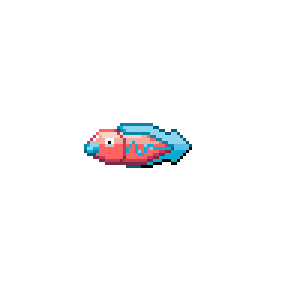
Porylithe often gets employed as a sort of company mascot due to its cute appearance and friendly disposition. It tries to help employees with their tasks, but tends to be distracted and wants to play more than work.

Porywag's presence in ponds disrupts the ecosystem, requiring efforts to remove it. Fisherman have learned the best way to bait it into capture is by using blank CDs.

While in cyberspace, Porybra's spoon lets it move files around instantaneously. Due to its intellect and meticulous nature, many businesses use it to sort and arrange files in order to reduce clutter and confusion.
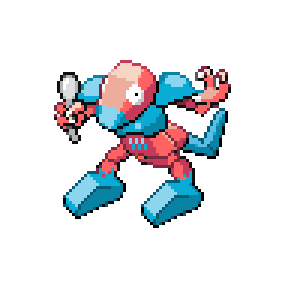
Porykazam has a vast mind, capable of storing several thousand gigabytes worth of information. It still has trouble accessing these databanks though, taking quite some time to retrieve the information asked of it.

The blocky shapes of Porychoke's limbs work efficiently as defenses in battle, being used as a makeshift shield to stop blows. Porychoke's movements may be a little stiff, but the power it packs behind each punch shouldn't be underestimated.

Porychamp's four arms are powerful, too much so for its own body to handle. They may occasionally shatter after a particularly strong strike, needing a few hours to recompile and regenerate afterward.

Porysprout occasionally sprouts up from a user's taskbar. It must be plucked and removed before long, or more will begin sprouting and cause disarray and lag among other issues.

In some areas, Porycruel has been employed as bouncers guarding doorways and other such locales. It pushes others away with its many strong tentacles, only resorting to true aggression with those who try too hard to get past them.

The magnetic forces of Poryton's bodies working together cause heavy static and visual distortion in electronics screens. Lengthy exposure will cause data damage, so it needs to be removed posthaste when spotted.

Corrupted code fills Poryuk's inner body. From its mouth, it springs forth glitched limbs that grab and consume any data it can find, as well as unfortunate Porygon that don't escape in time.

Porytoise moves very slowly, its heavy body only able to drift just above the ground when it moves. The water shot from its cannons always leaves square-shaped puddles when it splashes on the ground.

Poryno emits a malleable bit of code from its hand that changes into something visually alluring depending on the computer's user. It hypnotizes them into falling asleep, then feasting on their dreams through the screen.

Poryler resides at the bottom of the ocean, picking at clams and other small creatures. Though its pincers are small, they are deceptively powerful, easily crushing shellfish in their grasp.
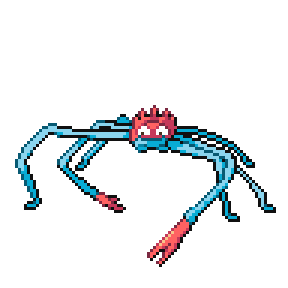
Omatwo is viciously territorial, tearing apart any ships it senses coming too close to its domain. The striking visage of it floating amongst the many shipwrecks it made makes up the cover of a bestselling Kantonian fiction novel.
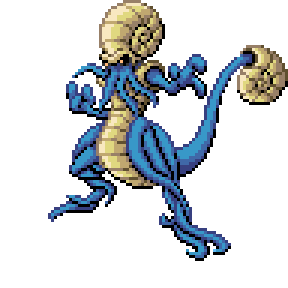
Omatler uses its hooves to dig into the loose sands around beach shallows to find food. When it vibrates its antlers, those who look at the orbs within find themselves getting dizzy and empty-headed.

Highly affectionate, Omapiny loves to be carried around or cling onto others to stay close to them. While clinging to them, it uses its little tentacles to give light massages to sore spots, hoping to relieve stress.

A fossil is protected by a soft, water-like membrane. Getting too close causes the outer layer to flare up and send out powerful psychic pulses to repel those who would harm the core.
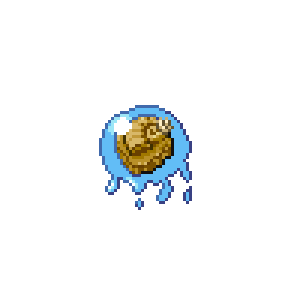
Omath emerges from its shell when the light of something shiny catches its eye. It then quickly snatches the trinket and retreats back to the safety and comfort of its home.
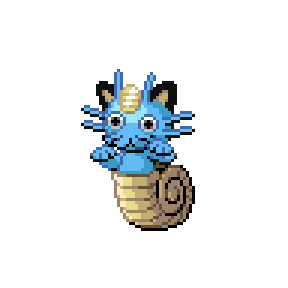
Omazing's multiple tentacles grab onto anything that comes too close to it. Once it ensnares a living creature, it holds them close to one of its mouths and breathes a highly toxic gas onto them.

The stone spines on Omaeon's mane can be electrically charged and launched to jolt and paralyze prey. Immobilized, the afflicted victim is easily dragged away by Omaeon's tail-tentacles back to its den.
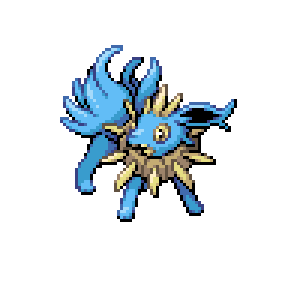
Strange ethereal tendrils reach out from within Omaew's body, sending a chill through those they touch. Some morbid minds believe Omaew's goal in life is to consume one of every Pokémon.

As Omaleef ages, the spiral shells around its neck will fall off and be replaced by new ones. These shells carry a faintly sweet scent that makes them highly appealing to small crustaceans.
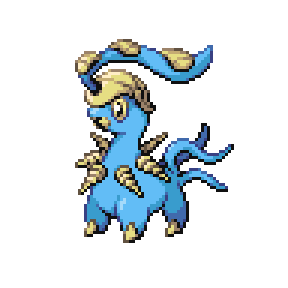
Parts of Omaian's shell casing can retract or close to reveal or protect its eyes. It strikes rapidly with six tentacles to make quick stinging strikes while flitting about around its foes.
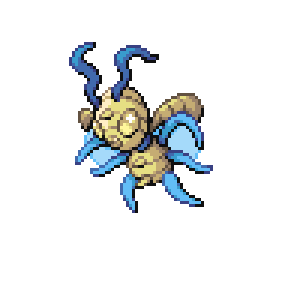
Omasel is sly and prone to manipulating other Pokémon into doing menial tasks for it. It has a habit of scratching the spiked shell on its head when it is contemplating its schemes.

Some believe that Omatomb bears a connection to a forgotten ancient Kantonian deity. Stories say those exposed to its spectral form for long enough will eventually succumb to madness.

The heavy weight of Omadon's sturdy skull-shell gives it poor mobility in and out of water. It moves around quicker by grabbing onto larger creatures passing by with its many tentacles and hitching a ride.
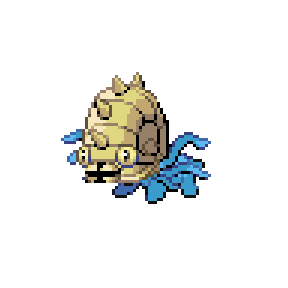
Omanoir uses its ghostly powers to extract fossils from dirt and stone before consuming them. Some believe it gains sustenance from the lingering spirits still contained within those fossilized remains.

An ancient civilization lost to time appeared to worship Omaceus as its main deity. The only remaining legible records left behind in the civilization's ruins read "Praise Helix."
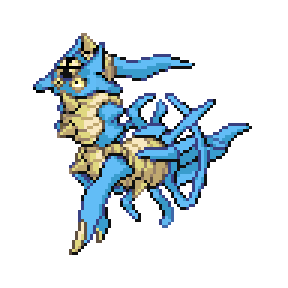
Legends speak of Omadon terrifying the prehistoric world with its vicious temperament and ground-shattering power. It manipulates the ground near it to create massive tentacles of stone to strike down those who do not revere it.

Omarom is said to hide itself away in parts of the ocean perpetually wracked by violent thunderstorms. Tall tales say just glancing at its form will drive a mind to madness and pledging themselves to Omarom's ideals.
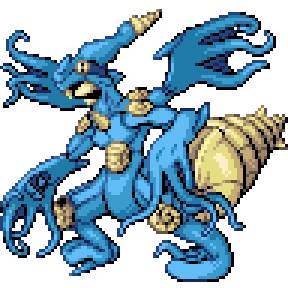
Undersea ruins have been discovered that house Omagrigus as their guardians. The many tentacles jutting from the shell lash out viciously at any and all intruders.

A gelatinous membrane and a tough bony shell keep Omasis's eye protected from outside stimuli. It whips at opponents with extendable water tentacles or jolts them with psychic beams from its eye.
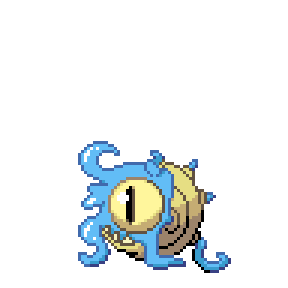
The shell on Omabro's head numbs its already dim mind. The Shellder on its tail has to bite it to make its tentacles grab nearby food just so Omabro will remember to eat.

Antennae and wings have formed, but Kakfree's evolution is not yet complete. Its wings can spread a mild poison mist, giving it a bit more defense against predators until it finishes evolving.

Kakther's scythes are a last resort to defend its cocooned body. Though sharp, they are rather delicate; if swung too forcefully they may snap off the body completely, leaving it vulnerable.

The sturdy cocoon immobilizing Kakros as it evolves does little to assuage its raging temper. The moment its shell cracks when evolution finishes, it will explode out of the cocoon to charge down the first target it can find.

Kakgon hides in cyberspace, cocooned in a protective shell while it waits to evolve further. Clicking repeatedly on it will chip off parts of its shell, but Kakgon will seek vengeance on those who do so once it evolves.
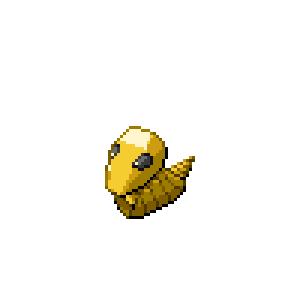
Kakew moves very slowly, as its cocooned body attempts to conserve energy for evolution. The cocoon releases a large psychic pulse if struck, instantly knocking out any creature within 100 feet for 24 hours.

Kakhoot makes a soft hoot periodically, an act done to regulate its internal temperature as it evolves. When evolution draws nearer, the hooting increases dramatically in frequency.

Kakchou's cocooned body lacks mobility, but can freely move its antennae to sense its surroundings. If it senses danger, the antenna can discharge short-range bursts of electricity to defend itself.
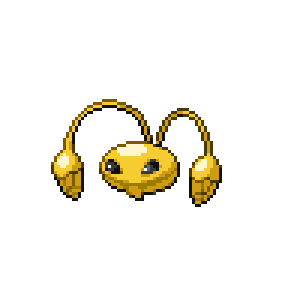
Not very mobile, Kakchu spends time storing energy, waiting for evolution to finish. If a predator draws near, it releases a bright burst of electric energy to blind the foe so Kakchu can escape.
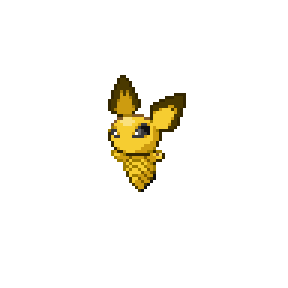
Kakma has extraordinary airspeed and maneuverability to avoid predators, its wings never resting. Because it takes so much energy to maintain this flight technique, its evolution process is massively extended compared to most Kakuna fusions.

Kakicate remains almost entirely immobile to conserve energy, hoping its appearance alone will frighten off predators. If that fails, it can still use its stored energy to make at least one strong lunge and potent bite.

A thin protective cocoon is layered over a much stronger metallic shell, giving Kaktress two layers of protection. If the cocoon is cracked, it breaks the cocoon into shards and fires them in all directions.
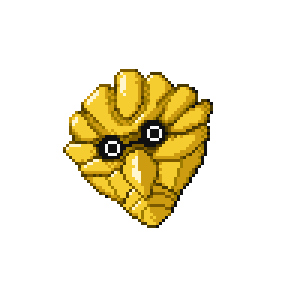
Kaksel has a lot of pent-up energy, but its cocoon hampers a great deal of its mobility. Much of its time is spent moping and impatiently waiting for its evolution to finish.
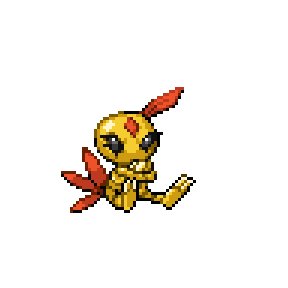
Kakchu's cocoon is multilayered, as each electric burst it uses to deter predators vaporizes the outermost shell. It grows new layers to replace them, though this process delays its evolution.
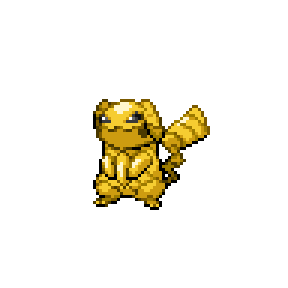
Kaktyke buries itself in the sand in shallow waters until only its antennae stick out. Should it sense anything getting too close to it, water spouts shoot from the antennae to knock away intruders.
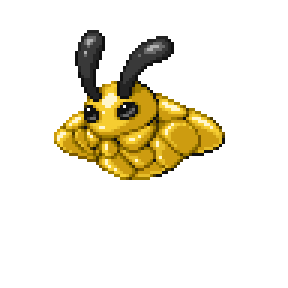
Clad in a sturdy cocoon, Kakvoir uses telekinesis to move its restricted body around. It uses its own body to shield others, as most blows will glance off of its hard shell.
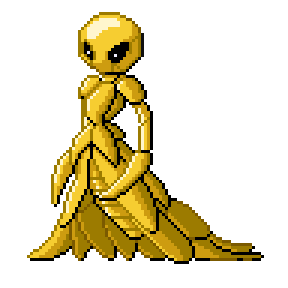
Some Kakvoir cocoons are less sturdy and chip off over time, revealing some of the Pokémon within. Despite the weaker armor, it still willingly uses its shelled body to protect those it cares for.

Kakdum gather in small swarms so they can stick together in piles on the forest floor. The proximity allows for better defenses; if the pile is under attack, they can unite their psychic powers to fend off the aggressor.

Kakrachi clings high up in trees and waits for its evolution to finish. Its ethereal ribbons are made of strange poisonous stardust that acts on instinct, striking anything nearby and creating painful scratches and rashes on contact.

Kaksaur's cocoon and the weight of its flower keep it almost completely immobile while it waits to evolve further. Fortunately, its flower can release thick pollen clouds and sturdy vines to defend itself.
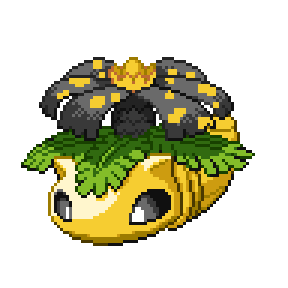
Since its cocooned body has no means of attack, Kakbat only defense is to fly away from danger. The exertion from flying its heavier body around delays its evolution process.
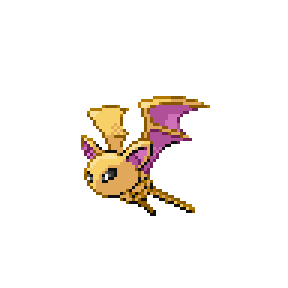
It burrows into the ground, leaving the leaves on its head exposed. These are a deterrent, as between the hardness of its shell, the bitter taste, and the mild poison, few will bother trying to eat it.
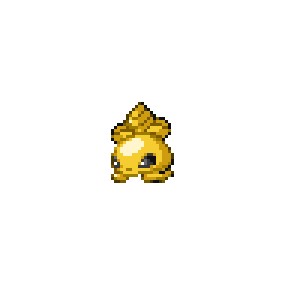
Kakor's cocoon is sturdy enough to survive almost any impact, including hitting the ground at terminal velocity. Parts of the cocoon can still chip off at times; discarded chunks glow with a strange energy at night.
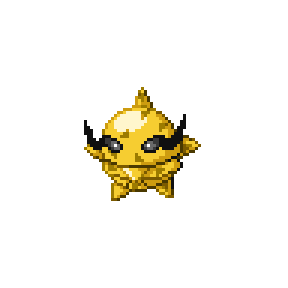
Kakth scrounges around for discarded coins to consume. Science isn't yet sure how, but eating large amounts of coins seems to expedite its evolution process slightly.

Kaknine remains stationary as long as possible, conserving energy to hasten its evolution. Should it feel endangered, though, it can tear off across the land at high speeds to find a safer spot to rest.
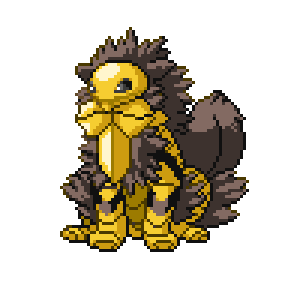
Areas where Kakta's cocoon couldn't form properly seep out large amounts of silk. The silk is extremely hot and will quickly singe those who touch it.

The cocoon around Kakdash's body leaves its mobility more restricted than most Rapidash fusions. The threads flowing out from the cocoon's gaps can be ignited in order to help it defend itself from attackers.
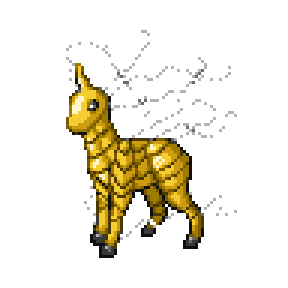
Archaeologists consider Kabubone a bit of a menace, as its penchant for using fossils as weapons and armor runs the risk of damaging what could be very important scientific finds.

Kabunyte's appearance has brought about fervent archaeological research, as it has led to theories that the fossil Pokémon of Kanto may share a previously unknown common ancestor.

Kabuna buries itself in the underwater sand in order to wait out the time necessary to evolve. The shards of its cocoon left behind are a beloved treat for ocean bottom feeders.
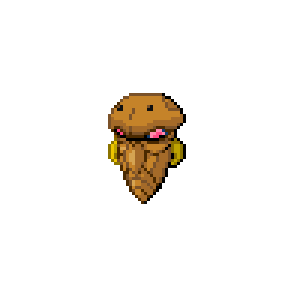
Kabutini scurries along the shallow beach waters, digging around the sands for food. Though it can breach the water and move on land, lingering out of water too long results in its top half drying out and becoming brittle.

Although aggressive, the size of Kabudrill's stingers causes its hunting technique to be somewhat ineffective. If it misses a diving strike, the stinger often lodges into the ground, where it has difficulty pulling it back out.

Flames sprouting up from Kabuquil's back is a sign of curiosity. The larger and more intense the plume of fire, the more its interest has been piqued by something.
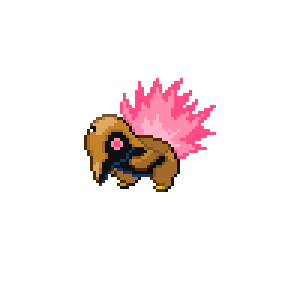
When Kabureep wants to venture onto land from the water, it sticks its tail out and flashes a light. This lets it sense the bio-electric signatures of living things around it, alerting it to anything that might be waiting on land to attack it.

The orbs on Kabuwoodo's hands contain a chemical that causes water to bubble and boil on contact. It uses this to bring small creatures to the top of ponds so it can feed.

When in danger, Kabukern can split itself into two halves that operate independently and make it easier to confuse and escape predators. Some think the fossil in its center is somehow the source of this ability.
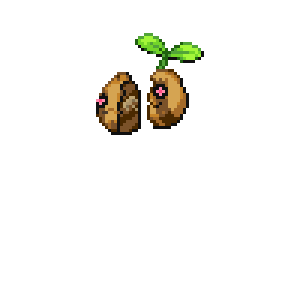
Kabugar will approach humans and beg, attempting to appeal to others with its cute appearance for easy meals. If denied however, it won't hesitate to get aggressive and use its claws and stinger to steal food.
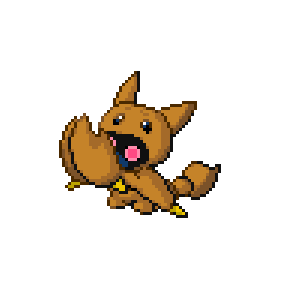
Kabutyke spends most of the day in the ocean but scuttles onto land to sleep. It digs holes in the ground to submerge its underside in. If something steps on its exposed shell, it quickly scurries away in a panic.

Legless variants of Kabutyke are rarely spotted in the wild and spend the majority of their time floating around the waters. They hop onto land briefly to nap during the warmest parts of the midday.

Kabuchu's tail has developed a remarkable sharpness while retaining its electric power. It stabs the blade into prey, paralyzing them with electricity before tossing them into its wide torso-spanning maw.
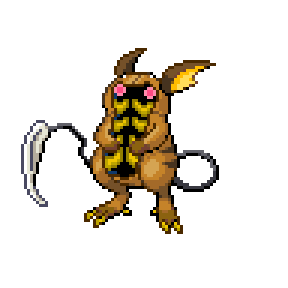
The water around Kabuchic is always warm due to its internal heat. It can heat up the mandibles in its jaw in order to burn those it bites, though it only uses this ability in self-defense.

Kabuvoir is sensitive to light, preferring to come out at night or remain in the shade during the day. Gentle at heart, it seems to easily form connections with small Rock-type and Fossil Pokémon.
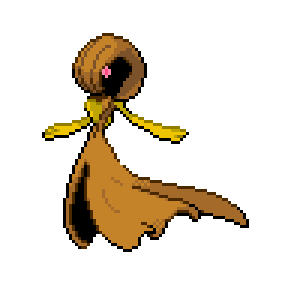
Kabutomb is believed to be hollowed-out Kabuto shell possessed by a multitude of spirits. Kabutomb gathers up fossil remains into its ghostly vortex, though none are sure if it does this for sustenance, to strengthen itself, or simply to hoard them.
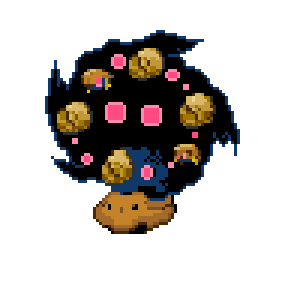
Multiple eyes poking from the single large socket give Kabupass a strong sense of sight. The eyes can fire small beams of light that disrupt the internal magnetism of others, disorienting them.
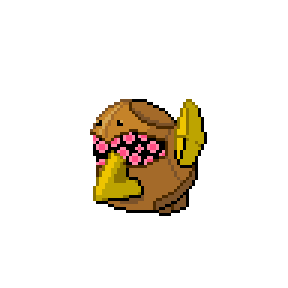
Kabutina is able to reach out and grab distant objects and prey via shadows emanated from its underside. There is evidence it lived among and even led Kabuto colonies in the past.
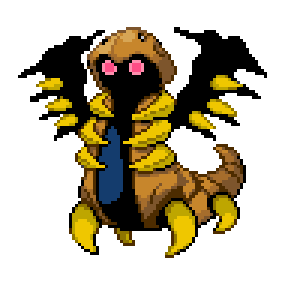
Kabuthorn's body and limbs carry a remarkable resemblance to Kabuto. It occasionally lives among small groups of Kabuto, protecting them from predators in exchange for food offerings from the smaller Pokémon.
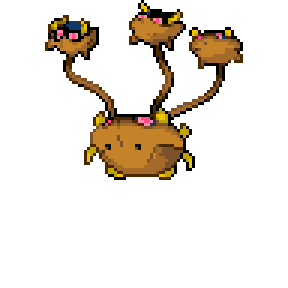
The false eyes on Kabupix's many tails help confuse predators. They also serve as the spot where flames will generate when Kabupix produces potent little fireballs to pelt at its opposition.
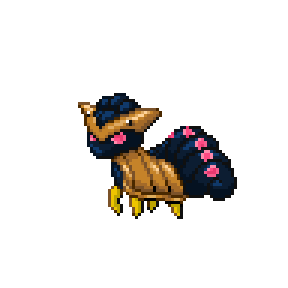
Kabuinch spends a large amount of time shuffling among the shallow waters of the oceans. Anything unfortunate enough to accidentally step on it will receive a very painful bite in retaliation.

Kabuinch's large false head is used largely for intimidation attempts to scare off predators and competitors for food. It still possesses a painful bite, however, so one should not underestimate it.

Kabumander can breathe out small bursts of fire from the gap in its torso, but it must regulate its usage. The fire it breathes is directly sourced from its tail-flame, and will leave it very weak if overused.
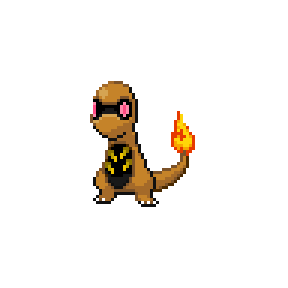
Kabuseed rests in the shallow parts of the ocean where it filters through dirt and sand. People have often accidentally stepped on it in the water and hurt themselves on its many pointed spines.

Spots on Kabuplume's flower make it look as if it has multiple eyes. This throws off most predators long enough for Kabuplume to belch out a cloud of stinky pollen from its flower to help make its escape.
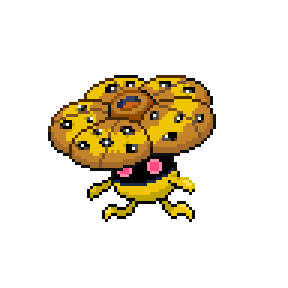
Kaburuff regularly digs holes to bury itself in, submerging its lower half in soil. It seems to find comfort in being partially underground, or at least coated with a fine layer of fresh soil.
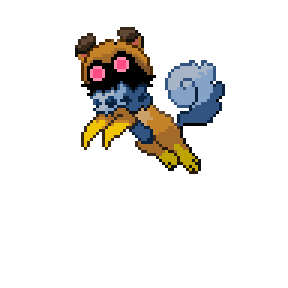
Kabubro's eyes are capable of seeing even in the dark depths of the ocean floor, where it roots around for food. Although slow of mind, its tail is sensitive; touching it will result in an instinctive and surprisingly quick swinging attack.
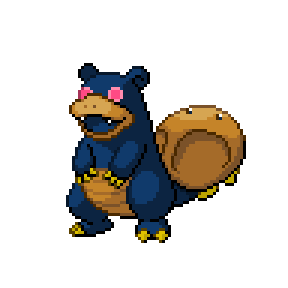
Kabuno digs up fossils to use as special pendulums for hypnotizing others. It primarily targets Rock types, and siphons nutrients from their bodies as they slumber.
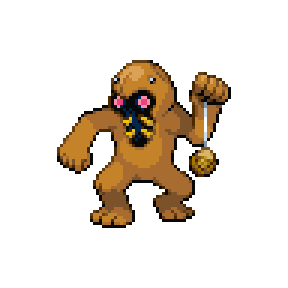
Kabubone fights off others by using fossils it digs up in order to club others. Archaeologists the world over have tried to barter the important artifacts from it, but to no avail.

Kabutops is an unparalleled hunter of the seas. Sharp eyes let it spot prey, charging them down with incredible swimming speed before cutting them to ribbons with its scissor-like claws.

Kabulax's limbs are powerful and sharp, but it rarely uses them for fighting. Instead it uses them to cleave apart trees, roots, berries and anything else it feels like consuming at the time.
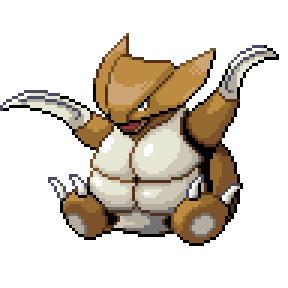
Almost every talon on Kabuligatr's claws is incredibly long and sharp. Once it pins down prey, it slowly and meticulously cuts away, carefully carving off its favorite parts to eat.

With incredible aerial speed and razor-sharp blades, Kabumega was an apex flying predator of the ancient world. Fossil records of its habitats indicate it preyed on even the most gargantuan of prehistoric Pokémon.
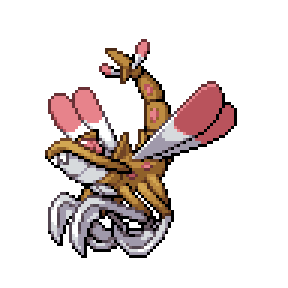
If Kabuvoir or its Trainer is attacked, it immobilizes the assailant with telekinesis before raking its sharp blades across them as a warning before it releases them. Very few aggressors choose to ignore this threat.
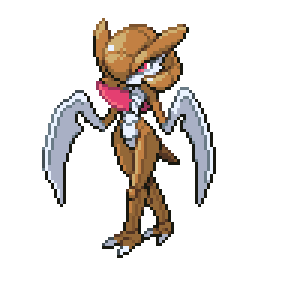
Reportedly, Kabutomb was first seen off the coast of Cinnabar Island. Eyewitness reports spoke of it having a distorted form, and that gazing at it too long made the viewer feel as if reality itself was being altered.
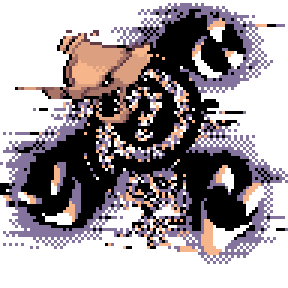
Kabudily hides among kelp and seaweed, part of its body retracted to better camouflage itself. When unsuspecting prey draws near, the Kabutops-like upper half emerges and cuts them down with its scythes.
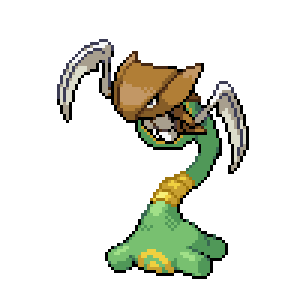
Kabuquaza is an ancient leviathan that dives from the ozone layer into the ocean whenever it is time to feed. The sharp blades on Kabuquaza's claws and tail let it rend apart even vicious ocean dwellers like Gyarados into its next meal.

Sharp scythes extend from Kabunea's stubby arms, giving it a bit of additional range for attacks. It goes into a frenzy easily, swinging its arms around wildly and cutting down anything that gets too close.
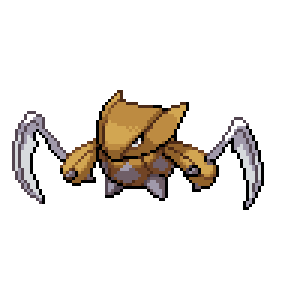
The blades on Kabuwrath's fists are retractable, and it normally keeps them stowed away during most battles. Only when an opponent has proven themselves to be tough enough will Kabuwrath pull out its claws and fight at its full potential.

Aeronaw swoops down from the sky to snatch up prey into its powerful jaws. Afterwards, it takes off into the air, thrashing its head around to injure them and finish the hunt.
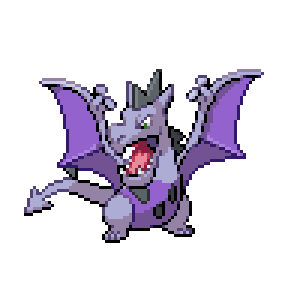
The rocky shell of Aerosaur's bulb covers up an amber growth on its back. It is very protective of the amber, stone vines whipping furiously at anything that tries to get too close to it.
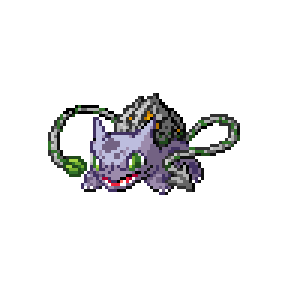
Some believe that the myriad volcanoes dotting the world were all created by Aerodon. It erected these magma-filled dens from the earth in order to incubate and nurture its young within.

Aeron's heavy metallic skull makes it nearly impossible to fly, but it never stops trying. It can glide short distances, but will inevitably hurtle head-first to the ground, though its tough skull prevents any lasting damage to itself.
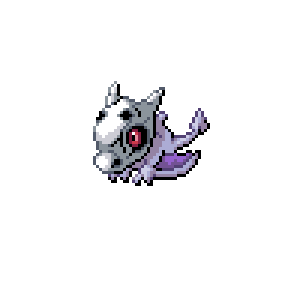
Some variants of Aeron lack wings to attempt flight, leaving them landlocked. They watch their winged compatriots try to fly with a mixture of jealousy and pity.

Aeroeye holds a giant crystallized chunk of amber to use as a form of protection. When in combat, the gem will glow and surge with Dragon energy, the silhouette moving within as it powers up Aeroeye's strikes.
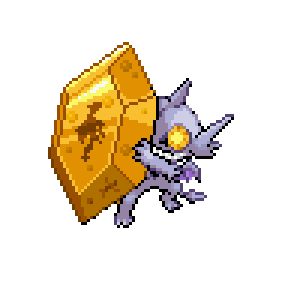
Aerorunt is too heavy to fly for long, forced to flap constantly just to stay a meager amount off the ground. It's believed to have fought over food and territory with Archeops in prehistory.
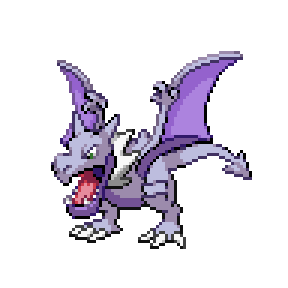
Most of Aerokoal's shell appears to be made of a solid amber substance. It vents internal steam through extremely tiny pores within, the steam often tinted a similarly golden color as its source.
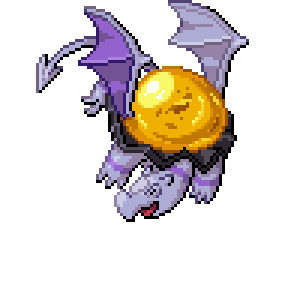
Snororb has a volatile temper, prone to throwing tantrums if it gets too hungry. These fits can be dangerous, as they sometimes result in it exploding from sheer rage.

Snorbone uses a sharpened bone to poke and pick up berries and other foods, even cooking them over fires it makes. It angrily swings the bone at those who would seek to take even a crumb of its food from it.

Snorhorn has a simple and placid personality, spending most of its time grazing and sleeping. Waking it up from a nap, however, will make it charge at the culprit in a grumpy rage.

Snordra is a bottom feeder that roots around the ocean floor, eating vast quantities of food. The more it eats, the bigger quantities of ink it can expel to obscure itself when in danger.

Snormie settles to the bottom of the sea and slumbers for long periods of time. Its deep open-mouthed snoring causes faint rumbles and miniature whirlpools.
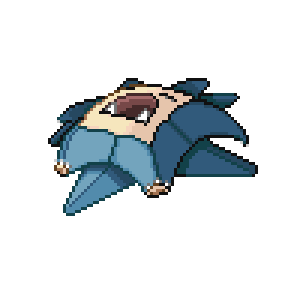
Snormar is considered a gourmand when it comes to cooking meats, using flame-breath to roast meals to perfection. Improperly heating a meal will send it into an indignant rage.

Snorgon has a large appetite, able to subsist on normal food but with a particular hunger for electronics. One must keep it well-trained and well-fed, lest it go out and eat every machine in a home or even an entire city.
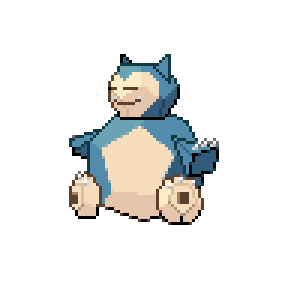
Its large singular eye remains eternally closed, though Snorown still functions normally in spite of this. Some fringe theorists believe that should Snorown open its eye, it is a harbinger of great doom.

Snorcune knocks down berries from trees and stores them in its flowing mane. It yawns and snores so much while traveling the land that some believe it's running around in its sleep.

Using its control over time, Snorbi eats up a handful of berries almost completely, then reverses the berries' time, regenerating them and letting it eat them over and over again.

Snortyke travels the seas, gathering up berries and small fish to take to secret hoarding spots. Once it's amassed a stash twice its weight, it gorges itself before settling down for a nice nap.

Despite having a slender figure, Snorvoir's appetite is as strong as any normal Snorlax. The only one it will ever allow to share a little of the huge meals it gorges on is its Trainer.
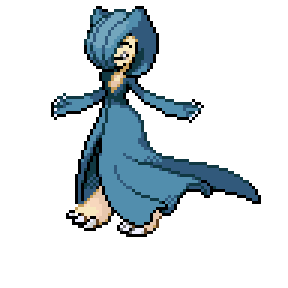
The fruit that grows upon Snorterra's tree is quite flavorful and juicy, but also incredibly fattening. Eating only a few in a short time could lead to a weight increase of up to 20 pounds.

Snoragon's skull is extremely sturdy due to repeated impacts. Said impacts are mostly caused by its tendency to fall asleep while standing, and then tumbling head-first to the ground in its slumber.
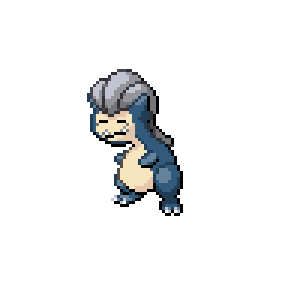
Snortrum hunts once a month, gorging itself on berries and meat that will digest over the following weeks. Once full, it is quite docile, even happily allowing children to play on it while it sleeps off its massive meal.

Snorselia is only seen in flight when it is off to gorge itself between hibernating naps. Those who see it flying fall into week-long slumbers filled with dreams of delicious food.

Sharing food is a mark of great affection for Snordisc. It considers anyone that gives it their meal a true friend, and should it offer to share its own food, its a sign of utmost respect, loyalty and love.
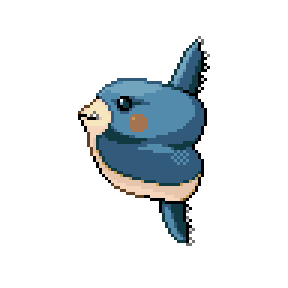
Snorcanth slumbers away on the seafloor, rarely moving more than a little bit each day. Scavengers expecting easy prey get a painful surprise when it slaps them away with a surprising amount of fin strength.
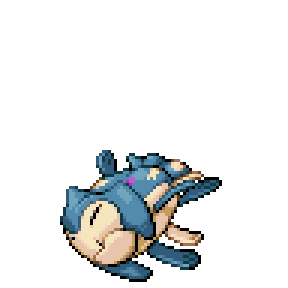
Snorler lives and snoozes among the craggy cliffs of mountainsides. Its tough skin and deep slumber mean that even if it turns in its sleep and rolls all the way down a mountainside, it won't be jostled from its nap.

Snorfetchd fashions a flute from a leek and apricorn. It plays the flute in the presence of other Pokémon, lulling them to sleep so it can steal their meals while they slumber.
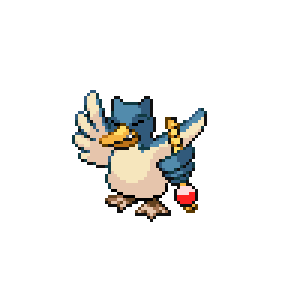
Artieon's elegant fur cools and freezes moisture in the air in its immediate vicinity, making it consistently surrounded by a faint layer of frost and mist. It freezes over ponds and lakes so it can take naps upon the frozen surface.
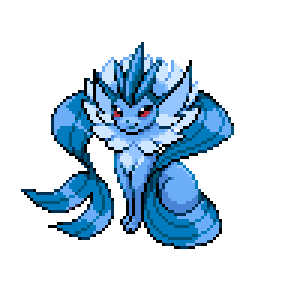
Fusion has caused Articuno to take on a form akin to its Galarian counterpart. It seems to exhibit rudimentary psychic capabilities as well as its typical high level of freezing powers.

Artidrill's stingers possess a very potent chilling power; anything pierced by them will slowly become frozen from the inside out. These icy statues of victims serve as a warning for others to not disturb its hive.

Pointed icicles jut from Artilava's back when it gets angry. These icicles can fire off as projectiles, lodging into opponents before suddenly melting into boiling-hot water and causing painful burns.
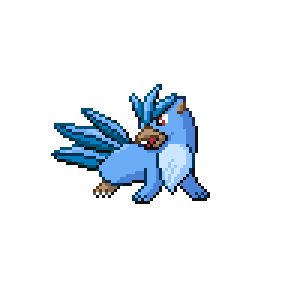
Every flap of Artima's wings spreads a bit of snow beneath it. Because it flaps its wings so rapidly in order to fly, it creates what looks like miniature snowstorms beneath its flight paths.

Artinub descends to the ground to sniff out mushrooms to gather, favoring those that grow in colder areas. Once it has its food, it flies up to higher ground; it seems unwilling to eat meals below a certain altitude.

Some variants of Artinub have a coloration similar to Articuno from a far-off region. This subspecies is slightly more aggressive concerning food; interrupted meals incite a violent response rather than fleeing.
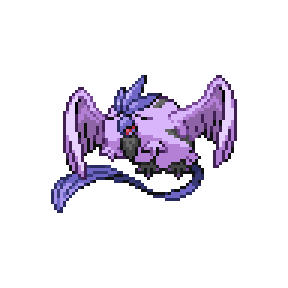
Artisey's wings generate a gentle and cool breeze with calming properties. It uses the chill of its own body to help those suffering from fevers, or to cool eggs that develop better in colder temperatures.
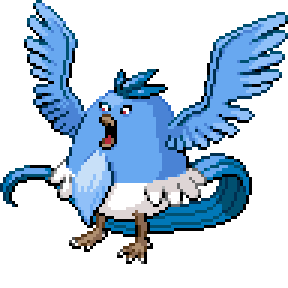
A unique bioelectricity within Artivire's body lets it generating freezing gales around it. It decorates its lair with frozen pieces of machinery it has drained of electricity.

Artivoir is a solitary being, allowing very few to venture deep into its frigid territory. Those who are not welcome will be repelled via a shower of sharp icicles it generates with each flap of its wings.
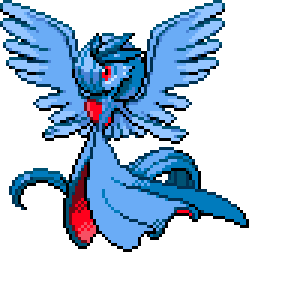
Articeus lives far atop the iciest of mountain peaks, generating powerful snowstorms with only a few flaps of its wings. Legends say it decorates its home with ice statues fashioned in the image of those brave enough to reach it.

Every swing Artiblade's blades make leaves a freezing trail behind. It can even send crescent-shaped chunks of ice at foes as projectiles, ensuring none can escape its frigid might.

Artiray's sharp eyesight lets it quickly locate any travelers going through its frigid home. It appears before those lost in snowstorms and guides them to safety, illuminating the path with its glowing eyes.

Artitina sightings are rare, as it arrives to our world from another via portals, and remains within the most frigid of areas. Strange, shadowy snow falls from its wings as it glides through the air.

Artiloom flies down from cold mountain peaks to forage for mushrooms to eat. To deal with pests, it coats its claws with ice produced from its wings before extending its arms to deal chilling long-range claw swipes.
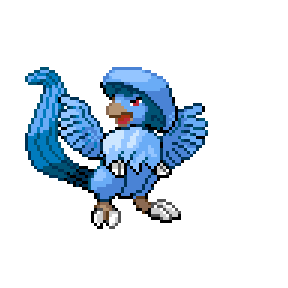
As Artitias zips through the air, it cools the air and creates snow drifts that linger for a short while after. It likes to fly over tropical areas and give the inhabitants a short respite from the hot temperatures.

Artielgon hides itself away on frigid mountains so it may grow into its next form in solitude. Those that disturb its peace will be pelted with frozen winds created through the swing of its tail.

Artibat makes its home in caverns located in colder regions. A quick and silent hunter, it prefers to swoop at and suck the blood of Ice-type Pokémon.
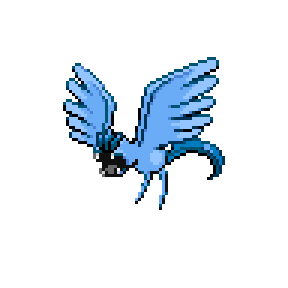
The quick fluttering of Artimoth's wings casts frost with each flap, making its flight paths look like moving snow flurries. It flash-freezes prey in midair, swooping quickly to snag them before they hit the ground.
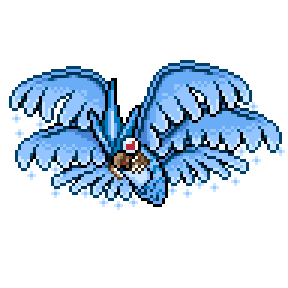
A sage-like Pokémon that resides on frigid mountains, Artibra is often sought out for its wisdom. It rarely deems others worthy, casting those it rejects out of its domain with gusts of icy wind created from its staff.
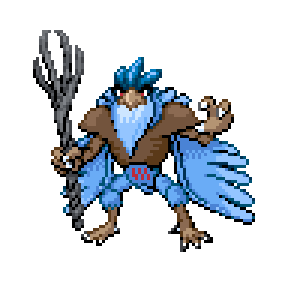
Zapto's transformation capabilities are fueled by its electricity stores. It crackles with lightning even while transformed, and needs to absorb electricity after transforming back to refuel itself.
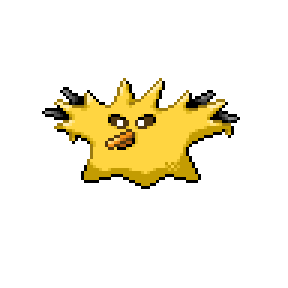
Self-fusion has resulted in Zapdos looking like its unfused Galarian counterpart. Its disposition has become more aggressive than unfused Zapdos, with it attempting to strike pests down with electrically-charged kicks.
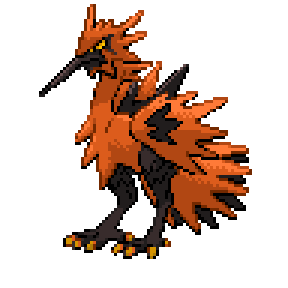
Fusion has resulted in Zapdos taking on the appearance of its Galarian counterpart. It travels across the regions on foot at great speeds, chasing thunderstorms with which it can recharge its energy.
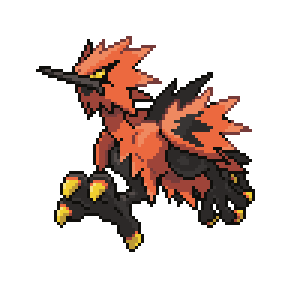
Seen nesting in long-abandoned power plants, Zapdrill is considered highly-dangerous. Aggressive to outsiders, it fires electrically-charged needles that launch with the speed of lightning, and boom like thunder when fired.

Zaphoot's internal electric generation follows a strict regulation schedule. It vents a small burst of excess electricity around its body every hour, on the hour.

Zapchu's body is still developing, so it cannot properly fly or control its electricity yet. Whenever it flaps its wings to practice taking flight, it sends short range bolts of powerful lightning around it.
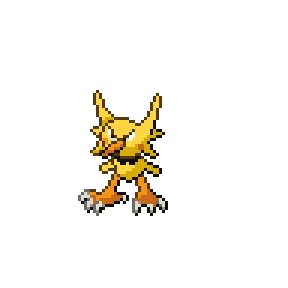
Zapi has a joyous personality, but little understanding or control of its powers. When overjoyed it prances and sprays sparks and even small bolts of lightning around, potentially causing problems for those it wants to play with.
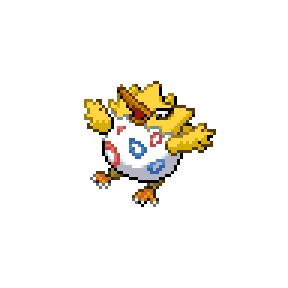
Zapreon ventures out during stormy nights in order to draw lightning to its body, absorbing the voltage. When it does so, circular scorch marks are left in the ground where it stood.
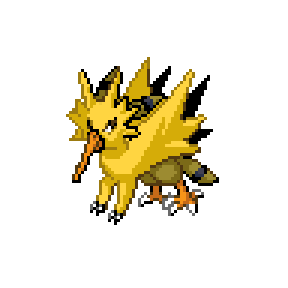
Drawings resembling Zapown have been seen within a number of ancient ruins. Research suggests the areas were prone to heavy lightning storms, so Zapown may have been considered a harbinger of such by those old civilizations.

Zapfarig's front half resembles Zapdos's Galarian counterpart, and has a strong tendency to run about at high speeds. The back half is less equipped for running in such a manner, so it struggles to keep pace.
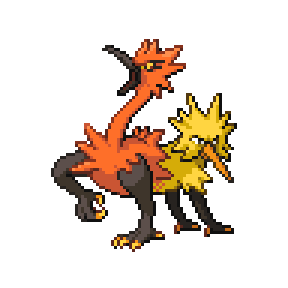
Zapdour summons and channels lightning via the beak-like horn on its head. Its not uncommon to see pack-mates zapping each other to compete and determine hierarchy among themselves.
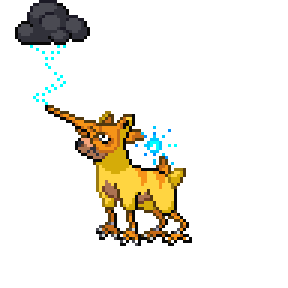
Zapbok shakes the tip of its tail to generate vast amounts of electricity in its body, which causes the eye pattern on its torso to glow. Vibrating its tail enough lets it create violent storm clouds that zap anything near it.

Zaptei races across the land, rarely staying in one locale for more than a day. When it does linger, fierce rumbling storm clouds begin to accumulate in the area more and more the longer it stays.

Zapom's tails create and hold clouds brimming with electricity, squeezing them to send numerous volts in every direction. It lets out a shrieking cackle as other Pokémon flee to avoid being zapped.
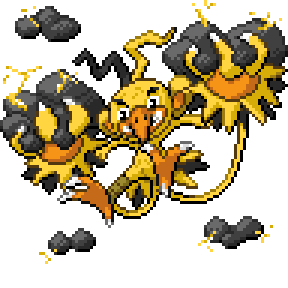
Zapfeon can sometimes be seen kneading the dirt near the roots of large plants. This sends light electrical jolts through the ground that stimulate the roots and help the plant continue to stay healthy.
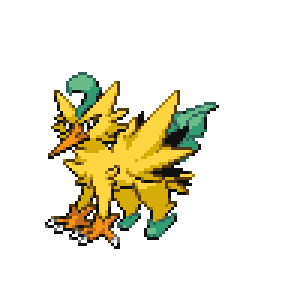
Zapvoir's powerful legs let it dash across the ground at speeds approaching 70 MPH. Once it bonds with a Trainer, it regularly offers to ferry them quickly to wherever they need to go.
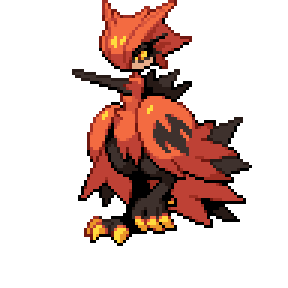
The tower on Zapsaur's back is consistently producing large amounts of electricity. Researchers are hoping to find more Zapsaur in the wild, as they could be a great boon to power plants across the world.

This variant of Zapquaza takes on aspects of the Galarian form of Zapdos. It flies low to the ground at incredible speeds, intense lightning crackling from its body and razing the land it flies over.

Zapgull only flies through the sky during stormy weather. It absorbs lightning from storm clouds through its feathers, which provides it with energy and a burst of extra speed while in flight.
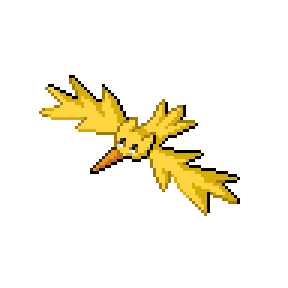
Zapra hides itself within cumulus clouds, its electric stores slowly turning them dark and thunderous. Once its current hiding spot turns thunderous, it teleports to another, "clean" cloud to hide.
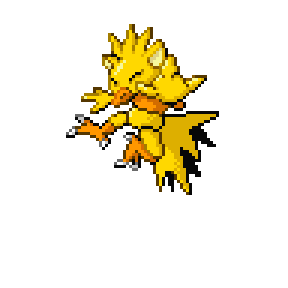
Zapdash gallops with such speed that it could be mistaken for a bolt of lightning crackling through the air. Only those it trusts the most are able to touch it without being zapped by its electrified fur.

Molew nests itself deep within the hearts of volcanoes. It roams the land between these slumbers, exploring the world while wreathed in a sphere of protective flames.

Molsparce glides short distances across dry areas in search of food and shelter. It spins the flame on its tail into a drill-like spiral as a defensive display to deter attackers.

Molmory can fling razor-sharp burning metal feathers at anything that bothers it. The heat of its fire is so great that prolonged battle may risk causing some of its metal body to begin melting.

Molgon2 has complete control over the flames on its body. Care should be taken not to offend it, as it has a vindictive personality and will burn down the files of anyone who angers it.
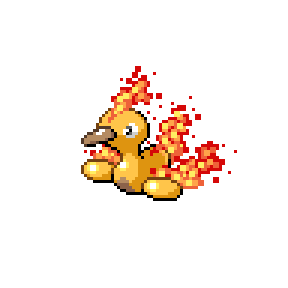
Milk sourced from Moltank remains piping hot for a long amount of time. It has a pepper-like aftertaste to it, and is popular in some regions as an ingredient for spicy pasta sauces.
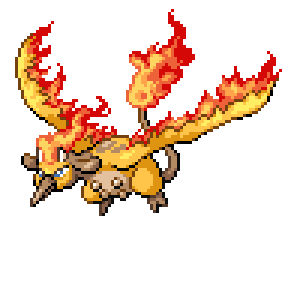
Moltank's flames burn hotter and more wildly the longer it goes without milking. Owners need to make sure to keep a strict milking regiment to avoid potential future fire hazards.
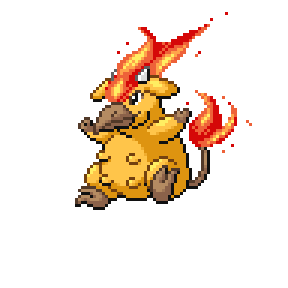
Molkou roams far and wide over the land and the air. When it runs, it leaves behind small flames with every step, while in the air, lightning crackles from every flap of its wings.

Molkrow puffs up its chest and spreads its wings to increase the heat generated from its body. This is used primarily as a threat display to intimidate smaller bird Pokémon into becoming its underlings.

A shed Molbite scale greatly retains its heat, not cooling down until a month has passed. Used as an ingredient, it helps make warm brews that stave off colds and chills.

Mologre swims deep within the lava found on volcanic islands. It dislikes intrusions on its territory, and it has been said that if others invade its home, it will sink the island beneath the ocean in a rage before seeking a new home.

Molsaur's flower contains a roaring flame surrounded by a burning magma-like substance. The flame temporarily dissipates whenever it breathes out its massive walls of fire breath.

Molzma's flames burn hotter and brighter by absorbing the light around it. At maximum power, its entire body will be engulfed in fire that will blind a person at a glance or leave permanent burn wounds if touched.
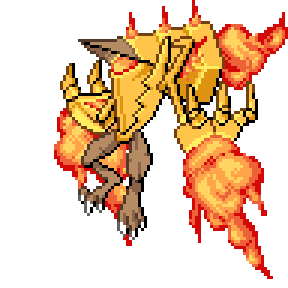
Moldude rests in the warm depths of volcanoes, its body glowing red-hot from the heat absorbed. It leaps into the lava before eruption, getting a thrill from being thrown into the air by the force.
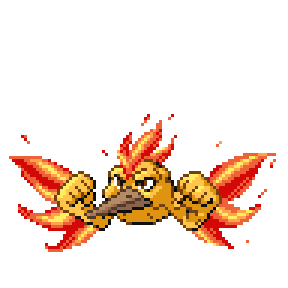
Dragon is almost indistinguishable from normal Dratini at a glance, though it resembles older depictions of the species. It mingles well with groups of Dratini in the wild, standing up to others to protect its kin.
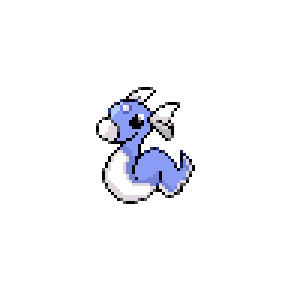
In order to shed its skin, Drachu lets loose an electric burst that disintegrates the outer layer. The process leaves it exhausted and lacking electricity for some time afterward.
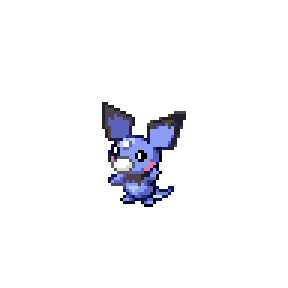
Drackle sheds its skin on a regular basis, pushing it out through one of the holes in its shell. Because this skin has been soaking in berry juice, some restaurants sell it as a very unique delicacy.

Dragle uses its tail to create artistic imagery to show off to its friends. It grows more active when it is about to shed the tail's skin, as the process appears to make the colors it mixes more vibrant.

Drafeon swims about in freshwater ponds, getting nourishment from sunlight hitting the water. Its shed skin dissolves shortly after shedding, purifying the water of toxins and filth.
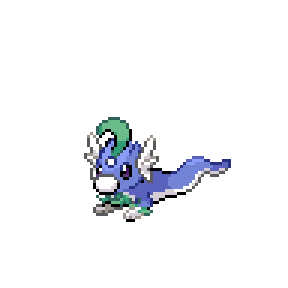
It's skin is soft and smooth to the touch, and requires regular baths to keep it so. The small embers Drachic can breathe are colored a rather ethereal blue hue.

Forming a circle with its body allows Dravoir to utilize its full potential. The gem on its tail being close to its head enhances its psychic powers enough that it can even generate small black holes if it needs to.
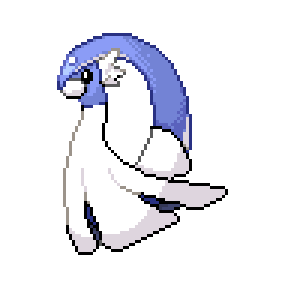
Dradon's skull is partially covered by a sturdy gem said to possess concentrated draconic energy. The jewel will somehow flash brightly after being impacted, causing Dradon to surge with heightened stamina and strength.
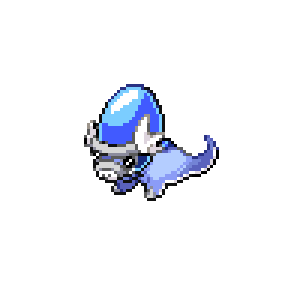
Dragon's wings are too small for flight, but they dispense small glittering scales when flapped rapidly. The scales cause painful rashes on contact with most desert-dwelling predators it shares a habitat with.
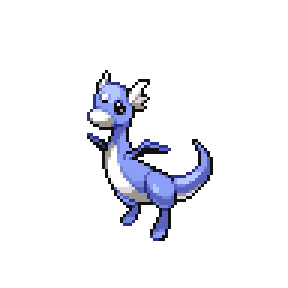
As Draroth grows nearer to needing to shed its skin, it grows more agitated and hyperactive. Once it manages to wriggle out of its old skin, it becomes much more calm, at least for a short while.

In areas known for their connection to Dragon-type Pokémon, it is common for people to gift another Dradisc as a romantic gesture. While underwater, it blows heart-shaped bubbles at others.
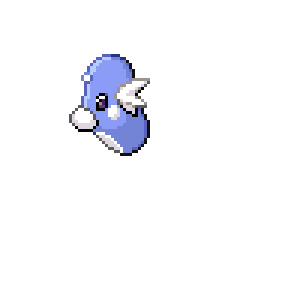
Highly reclusive, Dradash tends to take off running at the first hint of humans nearby. Its speed is fast enough that it can run across the surface of the water, sparkling light trailing from its mane.
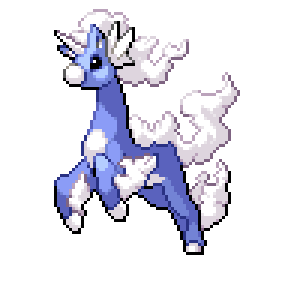
Dragofing resides in misty areas, further obscuring itself from view via the ethereal mist its body constantly creates. Researchers believe it is incredibly shy and seeks to hide itself from view as much as possible.
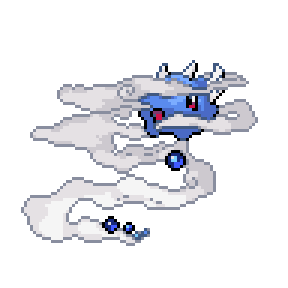
The longer Dragohorn runs during a charge, the more mystical power builds up within its body. After enough time, it can even gain the ability to fly temporarily, despite the weight of its body and the small size of its wings.
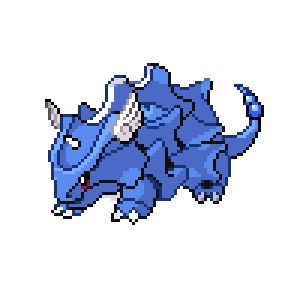
The smooth crystal segments are said to contain a potent magical force. This is theorized to explain how Dragolix can fly through the air despite the size and weight of its body compared to its wings.

Those who have managed to spot the elusive Dragokou in the wild report it leaping through the air with unparalleled grace. It leaves a shimmering, sparkling veil behind it with every jump.
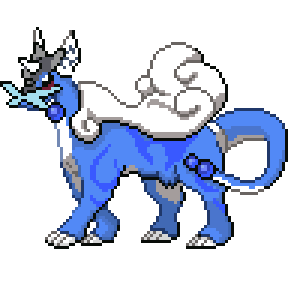
Some say that every orb within Dragotomb's form is actually the crystallized soul of a fallen dragon Pokémon. Dragon-type Pokémon seem to regard it with a high level of wariness.

There exist folk tales stating that every 1000 years, Dragoceus will appear and deliver its precious mystical jewel to a chosen Dragon-type Pokémon. The chosen one will become leader of all dragons, blessed by the gem with unfathomable strength.
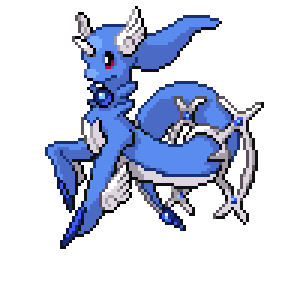
Dragoblade fights with a grace that is nearly unparalleled among Doublade fusions. By linking their hilts, both blades and twirl and spin in a way that deflects almost any attack while being an equally effective offensive maneuver.

Dragopuff's chest-orb glows when it sings, following the tempo of its song. Its singing is particularly effective at putting Dragon-type Pokémon to sleep.

Once a decade, Dragorunt will shed its cloak-like covering and grow a new one, a process done in complete solitude and secrecy. It's believed finding and wearing a discarded cloak will grant the wearer mystical powers.

When Dragoeal claps its flippers, it sends energy to the jewel on its torso, causing it to glow. With enough clapping it can store up enough energy to create a powerful shockwave pulse.
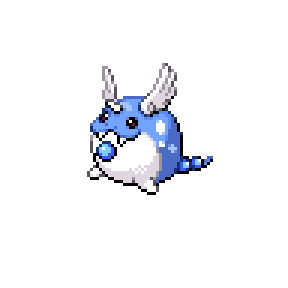
Dragora possesses a vast amount of psychic and mystical power. It carries with it an orb to help focus its powers. The orb also works as an effective bludgeoning tool in battle, manipulated via telekinesis.
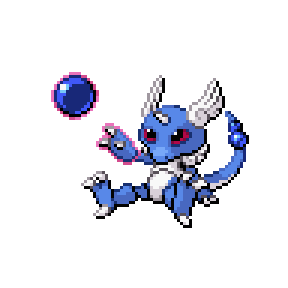
Dragobra creates several spherical gems that float around it, attacking anything that draws close without permission. It's said to lie deep within mountains, testing the mettle of Dragon types that approach it.

As Dragozee waves its arms and fingers around, it creates a shimmering, sparkling ripple in the air. This display entices and hypnotizes others, so that Dragozee can siphon energy from them to fuel its own psychic powers.

Dragopie is a kindhearted being that loves to take care of other small bug Pokémon. It flies around the forest gathering berries to share with them, saving them the risks from gathering them themselves.

Dragocute's eggshell is extremely sturdy and protects it from almost any attack. It keeps its shell almost completely shut, so none have seen what it looks like beneath the shell.
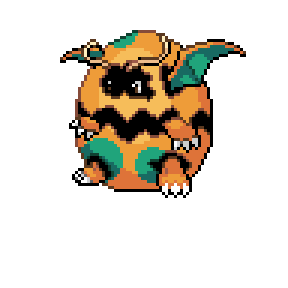
Dragosey adopts and cares for any Dratini it finds in the wild, keeping them in its pouch for safety. Very protective and averse to violence, it will take to the skies with terrific speed if it feels the young one is in any danger.

Dragosey adopts and cares for any Dratini it finds in the wild, keeping them in its pouch for safety. Dratini raised by Dragosey are noted to live longer, healthier lives due to its care.

Those who would take Dragodeen as a pet should be prepared to give it lots of space and multiple bodies of water. It gets restless if it is not allowed to leap out of one pond and glide its way to another.

Soft and warm, Dragoreon is an excellent companion for those who love to cuddle their pets. The thickest parts of its fur possess mild therapeutic qualities, soothing tension in a person's mind and body when they hold it close.
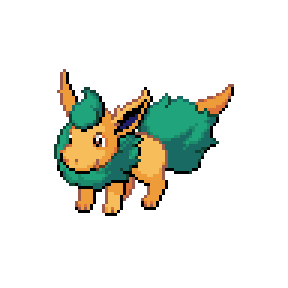
Considered by many to be one of the friendliest and cuddliest of Pokémon, this charm point actually causes a minor issue for Dragolax owners. Namely, its great strength and love of hugs makes escaping an embrace extremely difficult.

Dragotwo views itself as something of a prodigy among Dragon types. It can't resist the urge to challenge them in shows of strength or intelligence, and lords its superiority over them should it win.
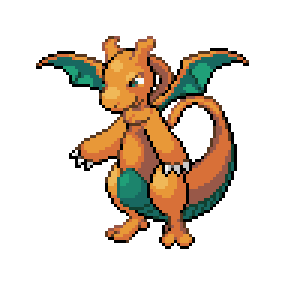
Dragotto travel in small flocks, migrating from coast to coast. The one with the longest crest on its head is considered the leader, expected to guide the entire group safely through the potentially hazardous ocean winds.
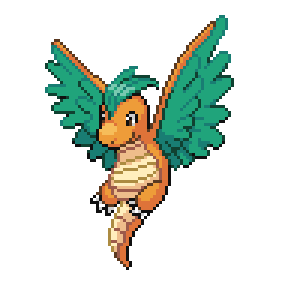
Dragoma's sleek and streamlined design and rapid wingbeat let it fly at high speeds from forest to forest. It can often be found hovering around lakes where Dratini are present.
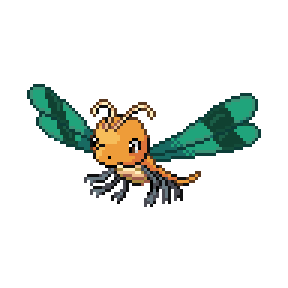
Remote islands contain ruins that suggest old civilizations worshiped Dragotei as some type of deity. Though not violent, Dragotei is protective of these ruins and rarely lets anyone explore them.

Dragobok uses its large hood to help it glide long distances through the air. It warns away intruders with a shake of its tail, which pulses and produces an ominous reverb.

Dragolia is a kind soul that cares greatly for young Dragon-type Pokémon. The elegant dances it performs can soothe and comfort even the most agitated of baby dragons, so it is said.

Following a Dragolia in flight is considered sound sailing advice. The Pokémon's twirling aerial dance calms the waters beneath it and ensures smooth sailing for ships that follow its path.
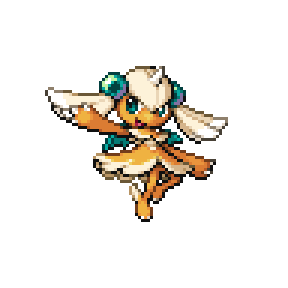
In ancient civilizations that worshiped Dragon-type Pokémon, Dragovoir would often be found protecting the temples that honored the dragons. Even today, some can be found still guarding the ruins from those who would desecrate them.
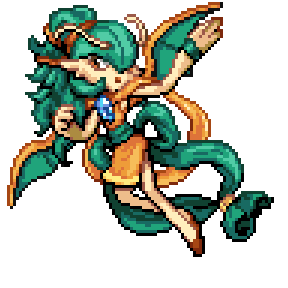
Using the Dratini-shaped tendrils on its head, Dragodily draws in would-be predators closer so that it can devour them instead. In this way, it sustains itself while protecting the wild Dratini it holds dear.

A tower-like structure grows naturally off of Dragoterra's back. On occasion, smaller Pokémon will use the top of the tower as a place to rest or even build nests, which the gentle Dragoterra doesn't mind.
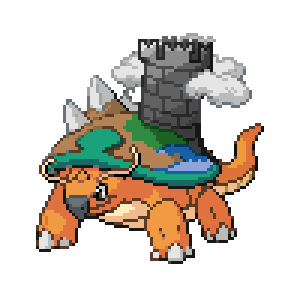
Dragoran tries to be a friend and protector to Nidoran it meets in the wild. When danger approaches, it grabs hold of its brethren and flies them away to safety, avoiding battle altogether.

Dragogon is friendly and curious, with a strong aversion to any sort of combat. If things start turning violent, it kicks up wind and dust with rapid flapping of its wings to help it and its friends escape the potential fight.
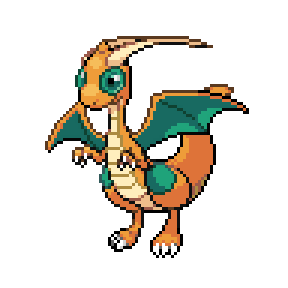
Dragotic leaves a rainbow-colored streak behind it when it leaps out from the ocean depths it inhabits. Those who manage to catch sight of the spectacle are said to be blessed with good luck for a year afterward.

Dragogre is an incredibly powerful being, but also very gentle and shy. It stays near the bottom of the sea, but if it senses ships sailing above it while it swims, it keeps the ocean waves gentle to ensure safe travel for those on the surface.
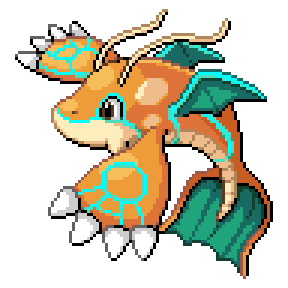
Dragodon can shape and lift the ground around it, manipulating the terrain to suit its needs. It's rumored that it has created a series of islands far from humanity, where Dragon Pokémon can live in peace.
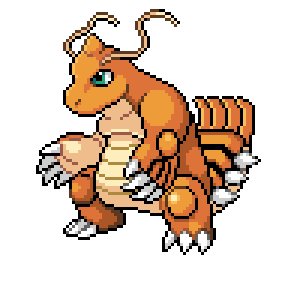
Some say Dragolurk was created by a civilization that worshiped Dragonite as protector gods. When it fires a destructive Hyper Beam from its arm, the dragon's roar can be heard.
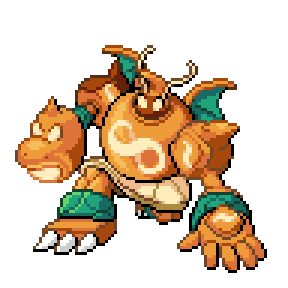
Dragorachi flies vast distances across the oceans, trailing sparkling stardust behind it. It only seems to stop when it senses a sad child, appearing before them to grant a wish and make them smile.

Once a year, Dragodisc migrate en masse to the Dragon's Den in Johto. Their increased presence seems to cause an uptick in the mating frequency of Dragon types in the area during this time.
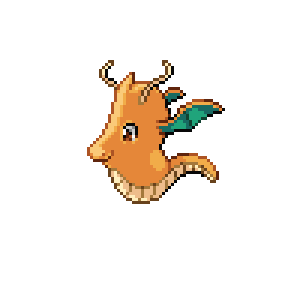
Although Dragogoose relishes getting into combat, it won't initiate a fight against those unwilling to match it. The only exception to this rule is any and all serpentine Pokémon it encounters.
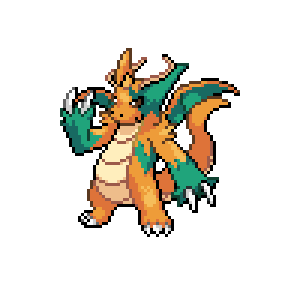
Exceedingly loyal and gentle, Dragolithe is considered an excellent choice as a young child's first Pokémon. Even when defending its Trainer, it is still gentle at heart and only fights to repel a foe, not injure them.

In the past, Dragochoke's flight speed and durable body made it ideal for sending messages all across the regions. Though less commonly seen, it still loyally provides this service to this day.
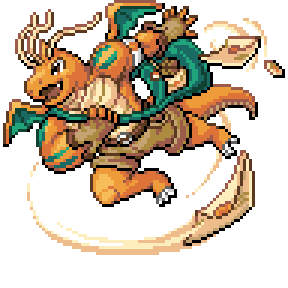
Beefing leaks a very pungent honey from its pores that acts as a delicious treat for small insects. The syrupy substance is toxic to humans and non-Bug-Type Pokémon.

Beedon often keeps honey stuck to its horn so that it has something to snack on when it craves sweets. Trying to touch its horn while it has honey on it will result in it attacking with the massive stinger on its tail.

Beemar breaths fire onto its needles to coat them with flame, making its jabs more deadly. If truly enraged, it will fire flaming needles nonstop until it collapses from exhaustion.

Although more docile than the average Beedrill, Beegon is still quite territorial. It hovers around specific types of trees, and fires little stinging bolts of energy from the two prongs on its front.

Beelax carries a pair of pointed stingers around with it. Ostensibly for self-defense, in actuality the points are mostly used to spear out-of-reach berries for Beelax to nibble on.
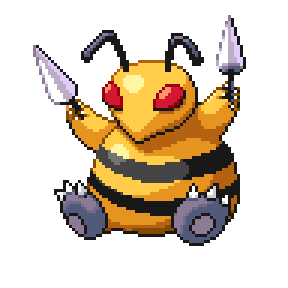
A chilling pollen spreads from Beecuno's majestic wings with every flap. It has a calm disposition and avoids conflict, but has been seen freezing unruly and aggressive Bug-Type Pokémon in its domain.
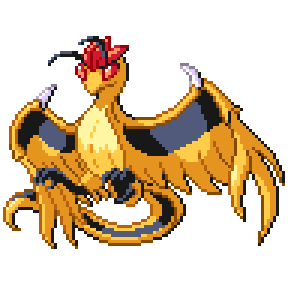
Beeuna has formed wings that allow it mobility, but no manner of effective offense has yet formed. It is highly aggressive, flinging its entire cocooned body at those who draw close to it, waiting for the day it can finally sting something.
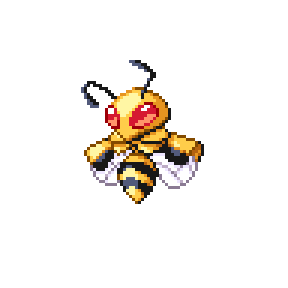
Beelosion expels a honey substance from its back to lure in prey with its intensely sweet scent. Once something drawn to the aroma comes near, it cooks them with intense fire breath.

As Beepip flies around, wind gusts cause it to release a light pollen from its leaves. Fruit-bearing trees that get coated by this pollen have their fruit grow faster and turn out sweeter.

Beebull has a distinct growl that sounds like buzzing. The stinger on its tail is almost vestigial and useless for defense, so it uses the stinger-like fangs on its jaw to deliver venomous bites to invaders.

Beeoh honey is a rare commodity sought for its unique taste and rainbow coloration. Few dare to make the trek to retrieve it due to its high-altitude dens and aggressive, territorial nature.
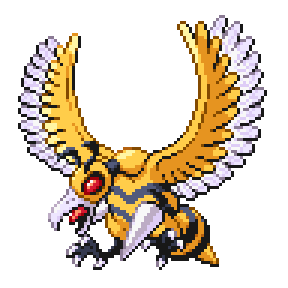
Beekrow amasses flocks of Murkrow and commands them to raid Beedrill nests to claim the honey within. This has led to the two species becoming much more aggressive towards each other in the wild.

Though generally kind and well-behaved, Beepiny is quite possessive of the stone it carries, refusing to share. It finds sweets such as honey or berry juice to coat the stone in and lick off of it.

Beevoir deftly wields two small stinger-spears to defend those it considers part of its hive, particularly its Trainer. Any honey it produces will be hoarded and staunchly protected, though freely given if its Trainer requests.

Beevoir considers its Trainer and their Pokémon as members of its hive. Its personality alternates on doting on its hive-mates, and viciously striking at any that get too close to them for its liking.
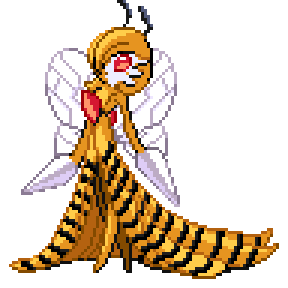
Honey sourced from Beeleep is considered a delicacy, but gathering it is very difficult. It is aggressive to the point of mindlessness, stabbing its many stingers at anything that moves in its vicinity.
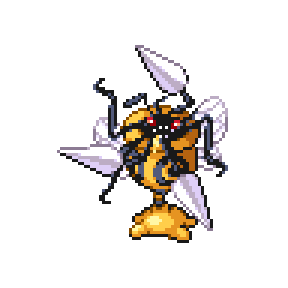
Beepardos's body is covered with durable, pointed stingers that deliver a painful toxin on contact. Its tail spreads a honey-like substance that slows enemies, making them easier to chase down.

Beedrill flock to the trees on Beeterra's back due to the sweetness of its fruits and honey. Beeterra keeps the territorial Beedrill from becoming violent, restraining them with vines when they act aggressive towards outsiders.
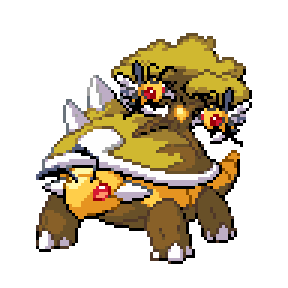
Beesect uses honey fired from the cannon on its back to inhibit the movements of its target. Slowed by the sticky substance, they are helpless to avoid the piercing strikes of Beesect's stingers.
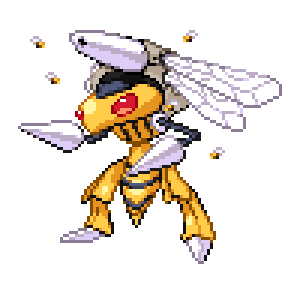
Despite the playful way Beefable flits about with its own kind, it is highly dangerous and territorial. One should not, under any circumstances, venture close to Beefable territory when the moon is full.
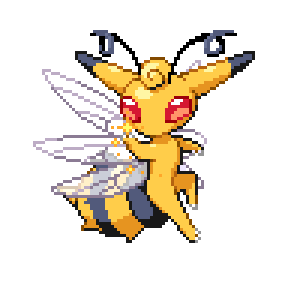
Beesand's honey is so sweet and aromatic that few Pokémon can resist. Just a touch will have them trapped by the sticky fluid however, as small drones emerge from Beesand's mouth to swarm and drag them into its mouth.

Though not terribly mobile, Beekaboo can strike with its stingers at an incredibly rapid and accurate pace. Some have trained their Beekaboo to carve intricate jack o' lanterns from pumpkins for autumn celebrations.
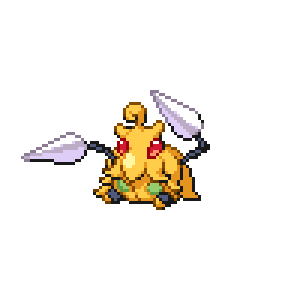
Beeduck's honey is sweet and medicinal, effective at helping headaches in people and Pokémon. Because it suffers from constant headaches itself, Beeduck is usually seen eating or bathing in the stuff.

Beemer's body smells and tastes like honey, but is highly toxic. It hunts simply by pretending to be nothing more than honey, waiting to strike when something samples a taste and succumbs to the poison.
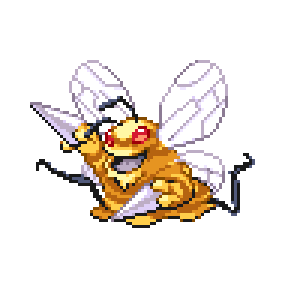
Within Beeler's claws are retractable stingers that deliver a paralyzing venom to those pierced. Lucky victims are shown mercy and simply flung away after paralysis, while unlucky ones are crushed by the crushing force of its larger claw.
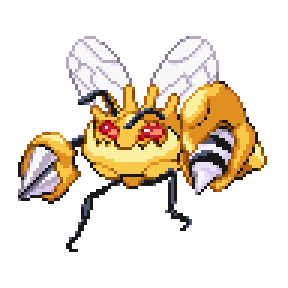
Most Mewbone grow up without a parent, forcing them to fend for themselves and grow cold and standoffish. Some have been observed at night, drawing an image similar to Mew in the air with psychic energy.

First discovered on Cinnabar Island, Mewto is theorized to be left over from failed cloning attempts during Mewtwo's creation. Being incomplete, it can only partially mimic the form of the being it was supposed to be.
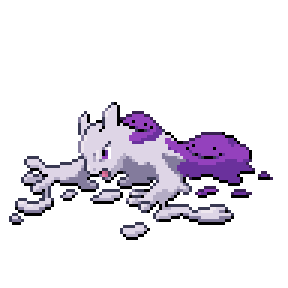
Brimming with ego and power alike, Mewnite isolates itself from those it deems unworthy, claiming entire islands for itself. It uses psychic powers to force those who invade its territory to kneel before it.
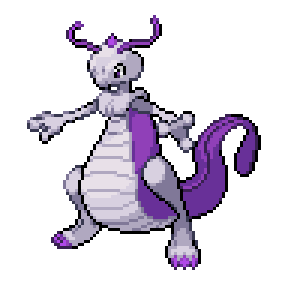
After fusion, Mewtwo resembles one of its Mega Forms. Its mental power is unleashed further, allowing it to float through the air with ease and create massive orbs of pure psychic energy to blow away opponents.

Self fusion resulted in Mewtwo taking a form resembling one of its Mega Forms. Its psychic capacity has improved to extreme levels, forming massive projectiles of pure telekinetic energy in seconds to wipe out its foes.
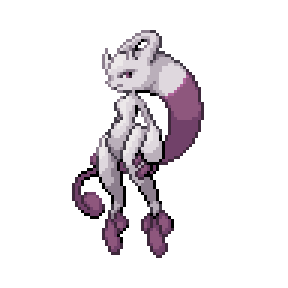
Fusion has resulted in Mewtwo taking an appearance closer to its DNA source Mew. Its psychic potential is even more vast, but its personality has become much gentler, so it rarely uses its full power.

Fusion has caused Mewew to develop a highly aggressive personality. It teleports around, flinging psychic projectiles indiscriminately at others. It searches for powerful rivals who can compete against its mental might and give it a proper fight.
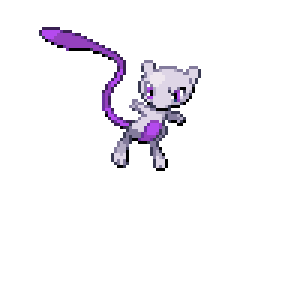
Telekinesis utilized by Mewbat's four arms is what keeps it aloft. It seeks out the deeper parts of caverns to seclude itself, using psychic powers to remove other Pokémon as well as reshaping the cave's layout to its liking.
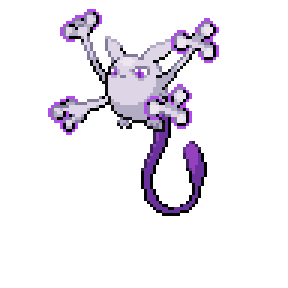
Mewgon2 is rumored to have been created using data and notes left over from the creation of Mewtwo. It is extremely antisocial and will often wipe the minds of any users who encounter it in cyberspace.
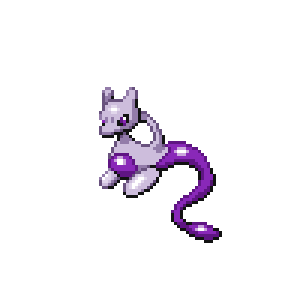
Mewrogue trains relentlessly, honing its developing body with fierce and rigorous regimens. It uses its powerful psychic abilities to compensate when its budding body falls short.
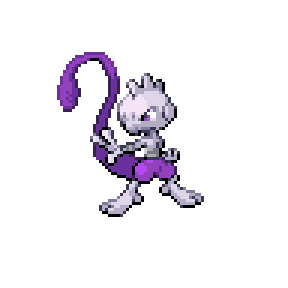
Mewperior is a master of psychic projectiles in battle. It generates powerful orbs of mental energy from holes in its palms, and quick-moving psychic drill projectiles from the horn on its head.
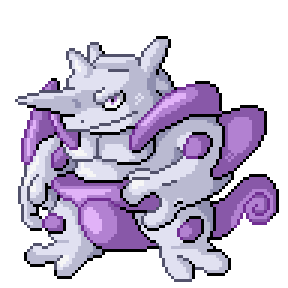
Purple flames fueled by psychic energy launch from the holes in Mewmortar's hands. It has clear control over the fire it shoots, mentally directing its path so that opponents cannot escape its attacks.
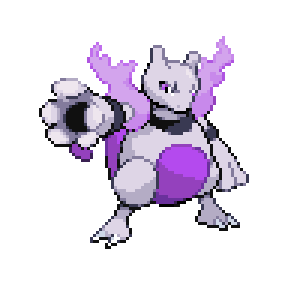
Mewmortar's body emanates psychic flames that have a mild hypnotic effect. This is usually enough to distract an opponent long enough for it to send them flying with orbs of pure psychic energy shot from its large hands.
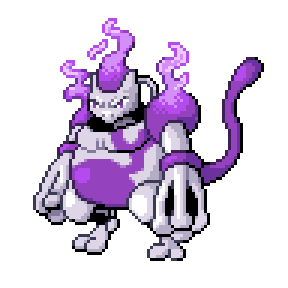
Although Mewvoir is very antisocial, it has an intensely strong attachment to its Trainer. This tends to make it almost violently protective and rather selfish in regards to the Trainer's attention.

Mewvoir's psychic abilities are almost without peer, to the point some theorize that at full power it could warp reality. It staunchly protects its Trainer, showing almost no emotion as it does so.

Mewile's false mouth can fire massive orbs of condensed psychic energy to blow others away. Some say the mouth is sapient and malevolent, turning Mewile aggressive towards humanity by whispering dark falsehoods.
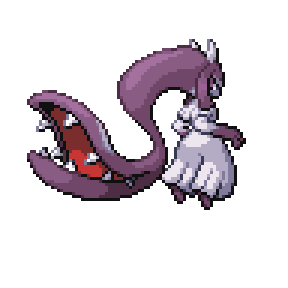
Mewrith shuffles around at the sea-bottom in moderately-deep waters. It keeps to itself mostly, and anything that bothers it is seized by powerful telekinesis and flung above the water and into the distance.
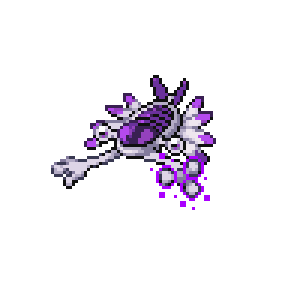
Mewrai hides itself away in the most remote of caverns, hoping to avoid human contact. It invades the minds of those who dare trespass with its psychic powers and afflicts horrible nightmare visions upon them.

Mewnette sneaks up on other creatures, creating strings made from its own powerful psychic energy that latch onto others. Once snared, it can manipulate its victim to do its bidding.
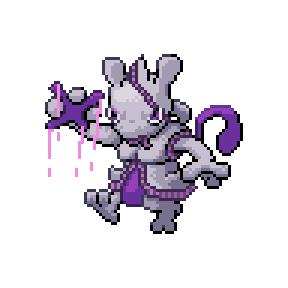
Mewthorn uses powerful psychic energy to form a tractor beam to lift smaller Pokémon off the ground and into its body. What it does with the Pokémon it has abducted is unknown.

Mewbat's sharp screech messes with the mind of those who hear it, leaving them disoriented and easier to attack. It requires the drinking of other's blood to keep its body and its psychic powers strong.
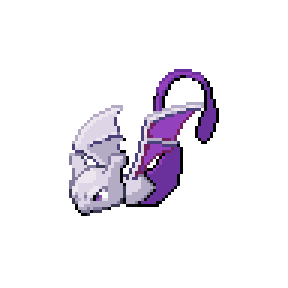
The frill around Mewtrum's neck glows with energy when using telekinesis. Its roar sends out a shockwave of psychic energy that overloads the senses of those in front of it, leaving them immobile and helpless.
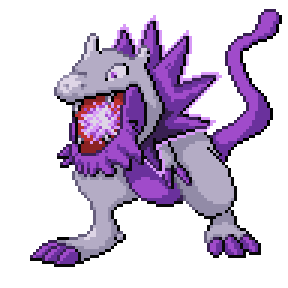
Mewtrum is viciously violent and intelligent, and should be avoided at all costs if spotted. Rumors circulate that it was created in a lab to be entertainment at an island zoo resort before escaping.
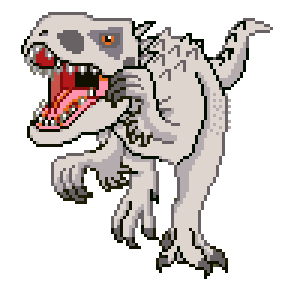
Mewsect's large mushroom appears to be the source of its vast array of psychic capabilities. It is quite hostile to people and other Pokémon, banishing them from its domain with powerful displays of telekinesis.
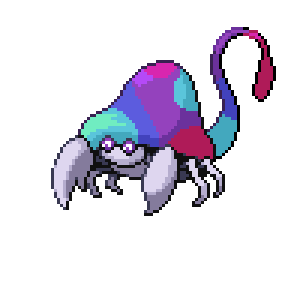
Mewnaught is very protective of others, but gets overzealous in its efforts. It fends off attackers so viciously that it often ends up scaring the one it attempts to protect.
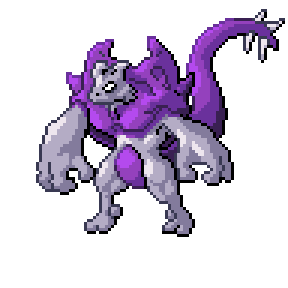
Mewgeist supposedly uses psychic powers to invade the minds of others and make them see it as a harmless friend. Using this, it is said to lure entire families deep into the forest, never to return.

Mewdash flees at the sight of humans, wishing to avoid them at all costs. Pursuers are dispelled by the flames it leaves behind as it gallops, manipulated by psychic energy to hone in on aggressors.
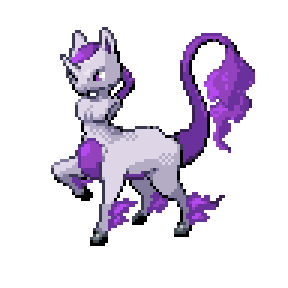
Visually very similar to Slowpoke, mentally Mewpoke is its complete opposite, intelligent and scheming. It uses this intellect and unassuming form to take advantage and manipulate other Pokémon to do its bidding.
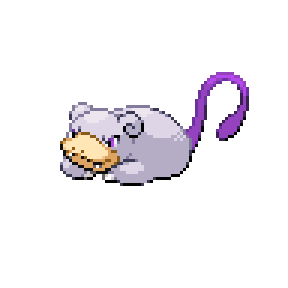
Mew often pranks Mewbro by grabbing and nibbling its tail suddenly. Mewbro's angry reaction ruins its ruse as a dim, placid Pokémon, which Mew uses to teach Mewbro a lesson.
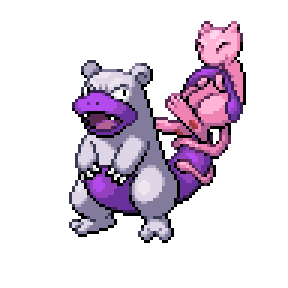
The three heads exhibit features and behavior from Mewtwo and its two Mega forms. Mewdrio's stance and fighting style changes depending on which head is currently most in control.

When feeling lonely, Meworb focuses and emits an explosive psychic pulse reaching out 100 meters around it. Any Pokémon caught in the wave feels compelled to seek Meworb out and play with it.
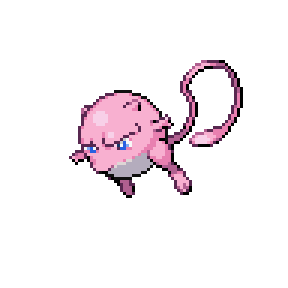
Mewpod possesses the ability to rewrite the cellular structure of its cocoon. It does this in response to the presence of other Pokémon, morphing its outer layer into a defense tailor-made for whatever predator tries to hunt it.

Mewnx is renowned for its friendly attitude and playful dances, which it's always willing to show off. It takes great pride in its hair as well, grooming it thoroughly after any performance.

Mewnx is known to have a voracious appetite for sweets, always on the lookout for treats. Some say it will turn others into candy if it's hungry enough, though this is unconfirmed and unlikely.
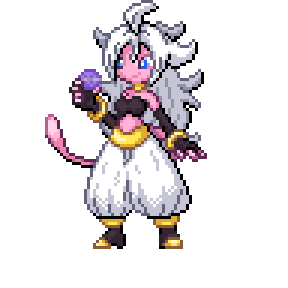
Mewreon's warm body soothes those who touch it, emptying their mind of troubled thoughts for a time. In battle, it can psychically manipulate the fire it breathes, making it move in unique arcs and chase after evasive foes.
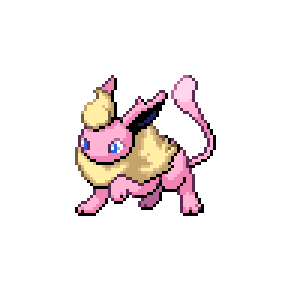
The lightning coursing across Mewdos's body appears to be composed of pure psychic energy. Those struck by its bolts have their will to battle completely zapped away.

Kindhearted but incredibly shy, Mewnite tries to make itself as elusive as possible. It helps those in need, but teleports away immediately after the rescue, leaving no trace of its presence behind.
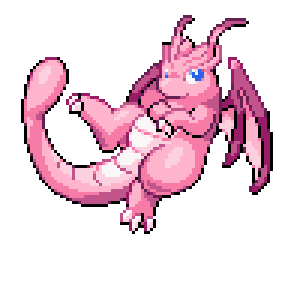
Some have nicknamed this fusion "Mewthree." Fusion has calmed Mewtwo's once-violent heart, perhaps due to Mew's genetic material filling in gaps in Mewtwo's DNA. It has become a being of incredible power, but also incredible kindness.

Mewew resembles one of the first ever known depictions of Mew. This has sparked research into whether the depiction may have been Mew's original form many millennia in the past.
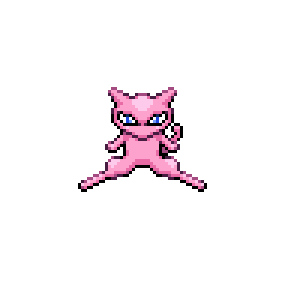
Mewew's body, said to possess the genes of all Pokémon, has become unstable after fusion. Its form will randomly shift into a combination of other Pokémon at any given moment.

Mewgey is friendly to all but has a special affinity for bird Pokémon. Using its telekinetic power, it assists in helping build big and comfy nests for pairs to raise families in.

A gentle denizen of the most remote forests. Mewowl is rarely seen, said to only come out at night during times of strife, emitting a psychic pulse from its head crest that calms and pacifies those around it.
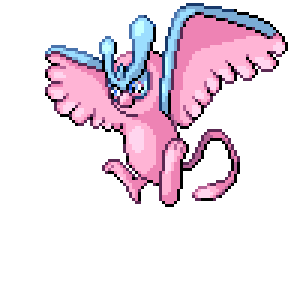
Mewbuff's soft body is easy to squeeze and squish without causing it any harm. Being squeezed emits a psychic pulse that calms those nearby, so it is popular as something of a stress toy.

The electricity in Mewreep's wool scarcely goes above a pleasant tingling sensation unless it is agitated. Clothes made using its wool fetch high prices due to the soothing tingle they give the wearer.

Mewper is a curious sort, often following along after something passing by has caught its interest. It is rather shy as well, so should the person it follows turn to see their pursuer, it turns invisible so as not to get caught.

Meweon seems to possess the capability to read and influence the minds of all other species of Pokémon. With a playful and kind nature, it primarily uses the influence to make those it encounters more peaceable.
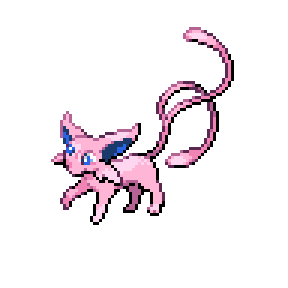
A playful spirit that seems to appear randomly across the world at night. It's believed the orbs around its neck let it manipulate the DNA of Pokémon and forcibly evolve them should Mewdreavus will it.

Mewown emits a psychic resonance that causes wild Unown to flock to it as a leader. Groups will gather to whisk away other creatures and bring them to Mewown as potential playmates.

Mewzor is accompanied by two floating claws that it controls through powerful telekinetic powers. Its power appears to originate in its double tails, as the tips glow bright as it directs the claws around.
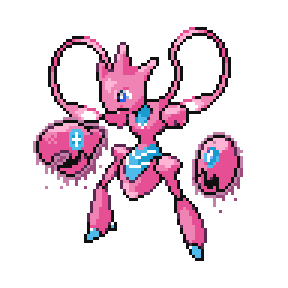
The star-shaped pattern on Mewring's stomach glows in the dark. It wanders the forests at night, using the star's light as a guide to help lost travelers find safe havens.

Mewchum is an affectionate and curious sort, floating up to give a light kiss to anybody new it encounters. The kiss lightly affects the mind of the being kissed, usually resulting in a lightheaded sensation.
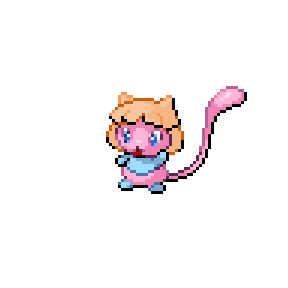
Mewrill bounces around the regions looking for new people and Pokémon to play with. Shaking the end of its tail emits a psychic wave that calms frazzled nerves.
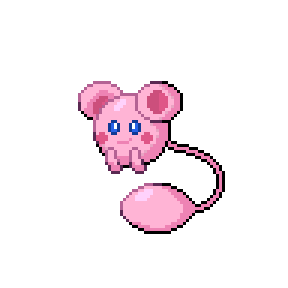
Mewpom finds it easiest to utilize its telekinetic abilities through the tips of its two tails. As such, it uses them far more than its hands to direct the movements of whatever it has psychically seized.

Mew's unique DNA allows Mewgross to change any part of its body into that of any other Pokémon while in combat. These chimeric combinations allow it to create nearly unbeatable offensive and defensive forms.

Mewcario's mental and aura senses are so heightened that it can almost perfectly predict its foe's every move. It is pacifistic and treats battles as something like a game, preferring to dodge and exhaust its foes rather than striking back.
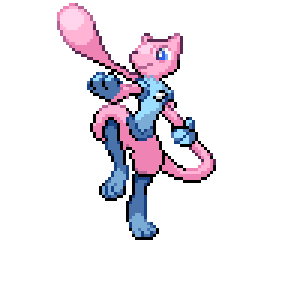
It's thought that Mewking can psychically resonate with any nearby Pokémon and pacify them, putting them to sleep so that it can also peacefully slumber without the noise of conflict.
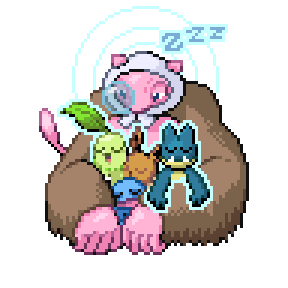
Mewsol's precognitive ability alerts it to incoming disasters. It uses telepathy to control the minds of those in danger to help them flee, though some of those rescued decry it for forcibly seizing control of them, even if it was to save them.

Mewalga is rarely seen by humans, and theorized to be constantly dipping through time at its own whims. Some believe it makes itself present for the birth and discovery of every new Pokémon species, past and future.
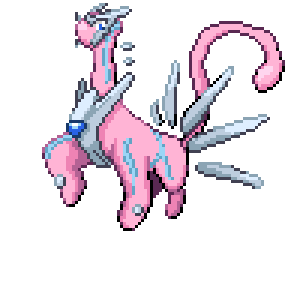
Mewram is said to intrinsically understand the true nature of every being that was or ever will be. Flames of blue and red will travel along its tail and ignite the symbol at the end, should it be in the presence of those with dishonest hearts.

Massive amounts of electricity can be churned up in Mewrom's tail, fueled by its psychic impulses. The bolts launched are laced with its mental urges, affecting the minds of anyone struck by them.
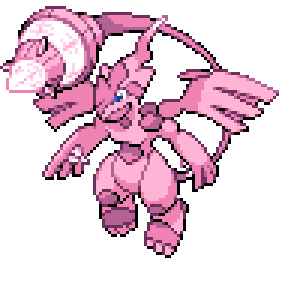
Each of Mewgrigus's psychic limbs ends in an orb that emits powerful telekinetic energy. It's believed something incredible lies within its tomb-like body, but Mewgrigus refuses to let anyone open it to see.

Although gentle by nature, Mewtales does not abide by cruelty to others. In response, it creates several additional tails of psychic energy that, upon being seen, inflict a myriad of mental afflictions on its target.

Mewxys's crystal core contains the DNA of every known Pokémon. Geneticists theorize that it can transform any Pokémon it touches into any other form, using its vast DNA manipulation skill.
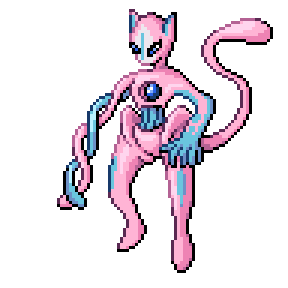
Mewbat does hit-and-run dives to bite onto targets and drink some of their blood. It is surprisingly gentle, lacing its fangs with a psychic energy that makes the puncture and drinking process almost completely painless.
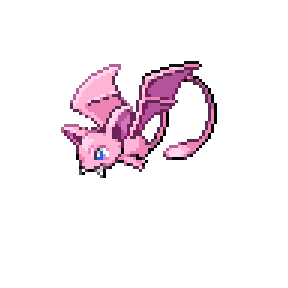
Mewtik teleports onto others to nip them and siphon a tiny amount of mental energy to sustain its minuscule body. The act is harmless and painless, only ever causing people to stop and momentarily forget what they were doing.

The psychic powers triggered by Mewcorio's dances are so strong they can be witnessed rippling the air around it. Even the most violent and aggressive of Pokémon will be pacified if Mewcorio dances near it.
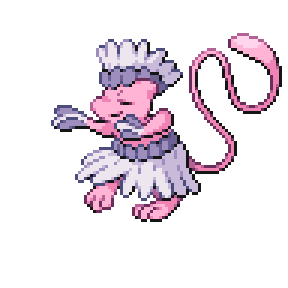
Sightings of Mewsteel in the wild are so rare, it was thought to be only a rumor until recently. The most common sighting appears to be Vermillion City, and reports always include sighting a Mew accompanying it.

Mewplume's thick flower pollen is intoxicating for its ability to cause feelings of elation and lightness. People will flock to inhale the clouds, quickly forgetting about the pungent scent it leaves as the euphoria kicks in.
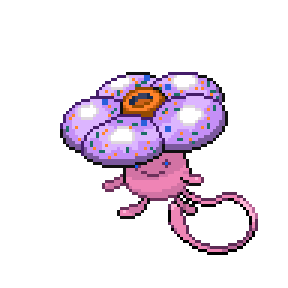
Mewsect spreads a puff of spores around itself once per day. The spores will grow into all manner of different mushrooms; scientists believe Mewsect may potentially be able to produce any kind of fungus, if only at random.

All three members of Mewtrio use psychic powers in tandem to move soil around to dig their tunnels. Sometimes it behaves mischievously and uses the clumps of soil to pelt others nearby when it stops to rest.

Friendly and kind-hearted, Mewle uses its powerful psychic abilities to help others' moods. It amplifies positive emotions within a person, increasing the joy they feel at the moment.
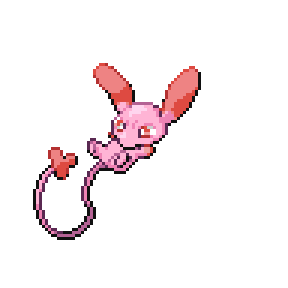
Friendly and kind-hearted, Mewun uses its powerful psychic abilities to help others' moods. It negates the negative emotions within a person, decreasing the amount of sorrow and letting joy better flourish.

Mewduck's head aches if it's not in the presence of other Pokémon. The larger the group and the more varied the species of Pokémon within, the more its pain ebbs away.

No matter how dirty the surroundings, the water Mewduck makes its home in remains pristine. The jewel on its forehead emits a psychic energy that constantly removes impurities in the water it swims in.

Mewape is very prone to fits of intense anger, but detests using rage for violence. Instead, it uses psychic powers to pass its anger onto others, temporarily relieving itself while leaving others to deal with the sudden surge of fury.

Mewhirl creates swirling patterns made of bubbles in the air whenever it meets someone new. The bubbles are laced with psychic emanations that invoke a feeling of peace in those who gaze at them.

Mewra's teleportation ability makes it highly elusive, disappearing in the blink of an eye the moment it senses it has been spotted. It does this not out of fear, but because it is amused by those who pursue it after it vanishes.

Mewchop trains its body relentlessly to keep its muscles in top shape. Even when it is physically exhausted, it uses psychic powers to force its body to continue moving and training further.

Mewchoke takes on dramatic poses before creating explosions utilizing pure psychic energy. It is rumored to also possess an additional ability that allows it to reset time as well.

Though Mewchamp much prefers friendship to fighting, it won't back down from sparring or combat. It creates extra arms from psychic energy when it battles, making it impressively formidable and difficult to defend against.

Getting stung by Mewcool's tentacles causes one to forget all negative feelings, replaced with a sudden euphoric rush. It uses its sting to intervene and stop other Pokémon from fighting.

Mewlem forms a mobile shell around itself by compacting heavy stones together via telekinesis. It's very shy by nature, so it's rarely seen outside of the shell, even among its friends and Trainer.

Medical science has achieved great breakthroughs thanks to Mewuk. Because its body contains the DNA of every Pokémon, researchers are slowly developing antivenom for every Poison type and their myriad fusions.

Chikodeen swims close to the surface of water, letting its leaf poke out to absorb sunlight. The sweet scent wafting from the leaf tends to attract predators, however.

The leaf around Chikolix's face is as sturdy as the steel on the rest of its body, giving it added protection. It only pulls back to reveal its face when it breathes out a suffocatingly sweet breath to disorient others.
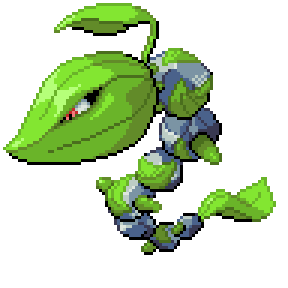
Chikotyke keeps its leaf above the water as it swims during the day, giving it more energy as it photosynthesizes sunlight. Remoraid are attracted to the sweet scent of the seeds on its underbelly.

Chikogon-Z can flutter its leaves to waft a calming floral scent around it. Though pleasant and effective at soothing others, the aroma feels noticeably artificial to those with sharp senses.

Though Chikoeon's body can shift hues to blend in with any territory, its leaf can only become the natural colors that foliage takes with the seasons. As such, it hides away among leafy tree branches where it can camouflage properly.

Chikoblade's leafy tassels emit a pleasant scent as it swings its blades through the air. The aroma weakens a foe's fighting spirit the longer a battle goes on, giving Chikoblade the advantage.
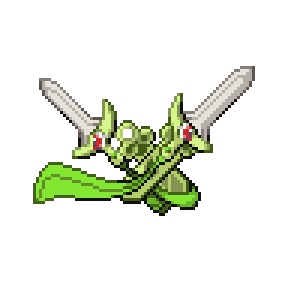
During the night, Chikofairy's dancing movements create a sweet scent that wafts from its leaf. The smell draws in nearby Grass-type Pokémon, granting Chikofairy an audience to enjoy its dance.

Chikocorio emits a pleasant floral scent as it dances and cheers on its allies. The plants on its arms can spray batches of paralyzing pollen in the faces of those that come too near.

Chikoom's flower emits paradoxical scents based on its mood: when happy it emits a noxious scent that repels others, but when sad it releases a pleasant scent that entices others closer.
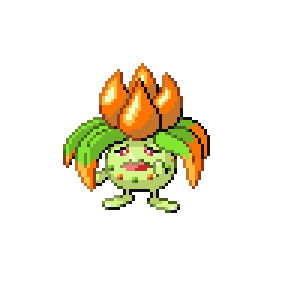
The leaf on Chikoras's head spreads spores that grow mushrooms on the bark of trees. The leaf-shaped fungi on its back are used in some restaurants as a mildly flavorful garnish for foods.

Chikochop's leaf acts similarly to a sweat gland. As it trains and exerts itself, dew gathers along the leaf's petal, and a floral aroma grows more and more potent as the training continues.

Chikosprout wafts a sweet scent in the areas around it by swinging around its thin, flexible body to wave its leaves. It detests foul odors and tries its best to freshen the air in stinky areas.

Chikopoke enjoys lazing around in moist areas, watching the water droplets drift down off of its leaf. The faint scent wafting from said leaf invokes a feeling of listlessness in others.

Chikomer goes around touching flowers yet to bloom, smearing its slimy form across the plant. Those plants touched by it are notably more vibrant in coloration when they bloom.
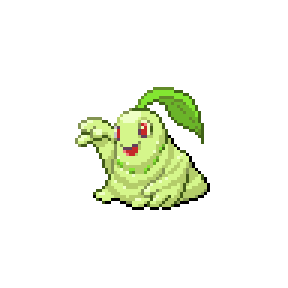
Bayleef's aggressive appearance and disposition are thought to be due to fusion reviving a more prehistoric disposition. The leaf on its head is very sturdy and rigid, used to bludgeon anything that bothers it.
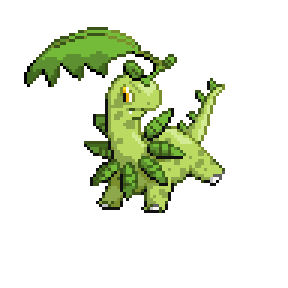
Baykern is almost always seen carrying a number of leaves and seeds within its mouth. It trades these with other Grass-type Pokémon in exchange for other foods, protection, or simply to share particularly tasty greens.

Baygon2 is usually spotted hanging around websites based on the subjects of floral upkeep. It's quite helpful in guiding users towards sites that will give them even more details on how to properly care for their gardens.
Baysol's precognitive abilities alert it to disasters that will take a heavy emotional toll on people. Though it can do nothing to divert the disasters themselves, its leaf emits a calming scent that can help soothe the victims after the fact.

Megamie's petals are known for their pleasant scent, akin to tropical fruit. Its core absorbs sunlight over time, which it shares in low amounts with plant life in need of a little boost.

Unlike Meganium's normal scent, this form's flower emits an odor meant to stoke the fighting spirit in others. Because this form brings out Meganium's own latent battle instincts, it uses the odor to entice others into giving it a challenge.
After fusion, Meganium exhibits traits of a rare phenomenon from the Lental region. Many flowers bloom brighter and glow in its presence, rejuvenated by the light its body emanates.

When poking around for seeds to eat, Megatu always makes sure to save a few to carry with it. It carefully places the seeds in the perfect soil conditions so that the new plants will bloom exceptionally well.

Megatress spreads a sweet-smelling pollen from within the center of its shelled body when interacted with. Many enjoy prodding it to refresh the scent, but too much indulgence will greatly agitate a person's allergies.

Megacross clings to the trunks of giant trees, gorging on the sap it digs up from beneath the bark. As it feasts, its leaves emit a pleasantly sweet aroma that soothes and calms the creatures nearby.

Megaziken is a powerful martial artist, though it prefers to avoid excess battling. When it doesn't want to fight, it ignites the petals on its wrists, spreading a pollen-filled smoke that weakens the fighting spirit of those that inhale it.

Megatomb pops its head up from the stone to allow other Pokémon to chew on the wreath of delicious and nutritious petals around its neck. Once the petals are picked clean, it disappears into the rock until they grow back.

Some say Megatina came from another world containing almost exclusively plant-life. It takes great care around vegetation, but rarely even acknowledges the presence of people or Pokémon.

The wreath of petals around Megaor's body glows brightly with a strange light during the night. When the sun rises, even the most dead and decayed flowers near Megaor will show new signs of life and vibrancy.
Megatly comes out at night from within decaying flower gardens. It wafts around slowly and solemnly, keeping the plants company as they inevitably wilt away.

Though normally it keeps its shell coated in flame for self-defense, Cyndaras can easily retract the fires to allow others to ride on its back. Land-based Cyndaras are often seen carrying young children to school.

Though normally it keeps its shell coated in flame for self-defense, Cyndaras can easily retract the fires to allow others to ride on its back. Water-based Cyndaras are most often seen carrying people across small lakes.
Despite their cute appearance and friendly nature, Cyndadile bite to signify affection. Their flames flare constantly due to their joyful energy, making them a handful for most Trainers.

Rival Cyndatu get into light shoving matches over food. Should one be toppled over backwards, the flames it shoots from its back propel it back to its feet to continue the fight.
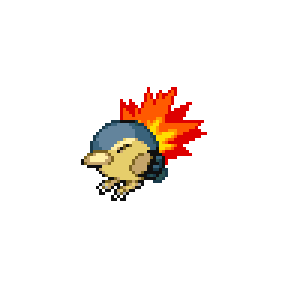
Cyndalord has an easygoing and upbeat personality. It often flares up the flames on its tail when happy, though typically without thinking about whether any other creature might be nearby when it does.

A singular warm twig grows on Cyndaterra's back, a sign of the potential for strong growth in its future. It ignites its back in self-defense if anything draws too close, but the flames do not harm the plant itself.

Cyndapet uses bursts of flame from its underside in order to travel through the air. Easily startled, it may wind up careening out of control when it flares its fire too much after being taken by surprise.

A metal dish on Cyndatad's back helps keep it from getting wet during the rain. Trainers often use it to help with cooking breakfast while on long trips through the wilderness.

As a pet, Cyndasian is affectionate, but finicky. It enjoys being pet, but only for a certain amount of time; once it's done receiving affectionate, it flares fire on its back to let others know it no longer wishes to be touched.

Cyndabra can set the spoon it carries on fire with a mere flick of the wrist. While alight, the fire helps it focus, increasing the potency of its telekinetic capabilities.

Quivoir is often described as having a sassy and fiery personality. It has little patience for the antics of others, and threatens them with bursts of flame from its body if they agitate it too much.

Flames slowly begin to erupt from the back of Quitomb's stone as it gets agitated. Once its temper reaches its peak, Quitomb manifests fully and attempts to burn anything and everything around it.

Quicario has a fiery temperament, constantly seeking out combat rivals to test its strength against. When in the midst of a heated fight, its aura flares up and causes the flames on its body to change color.
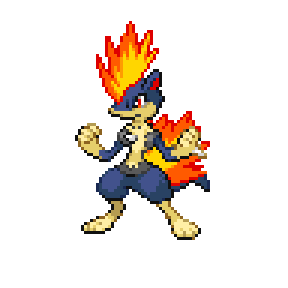
The burning flame atop Quiking's head is the only part of it that is particularly active. It uses the flame to heat up the delicious berries that fall down from trees near its vicinity.
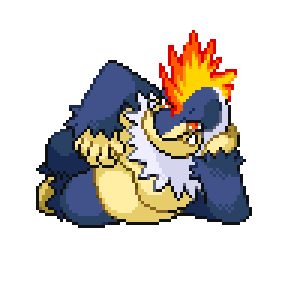
Quileon channels heat within its body to turn its metallic parts red-hot. The three prongs on its head ignite with roiling, crackling flames when it is enraged.

Quiking will compete to see who has the more powerful flames, flaring their fires up to establish which is superior. The one who creates a mightier horn made of fire is the victor.
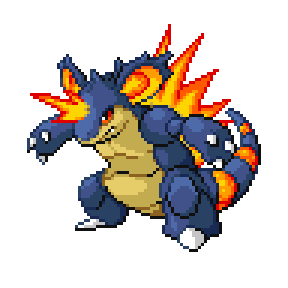
If rival Quiron meet in the wild, they will try to intimidate the other by flaring their fires up to see who burns hotter. If neither backs down from the display, they charge their heavy bodies into each other and begin fighting for dominance.

Quiras can create a great amount of fire on its back to fend off others that draw too close. If the flames engulf its mushrooms, the fungi emit a pungent black smoke that further repels potential attackers.

The more hyped up in combat that Quichop gets, the more of its body lights up with flames. It's entirely possible to see two Quichop battling while every inch of their bodies are coated with blazing fire.
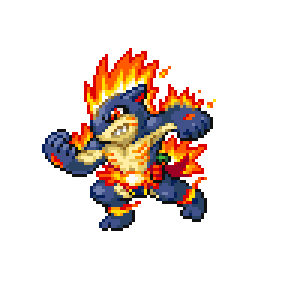
When it's time to frighten a victim, Quiter flares its fiery hands up to twice their normal size, emitting a cackling peak of laughter as it does so. It prefer to hide in old furnaces until it's ready to scare someone.
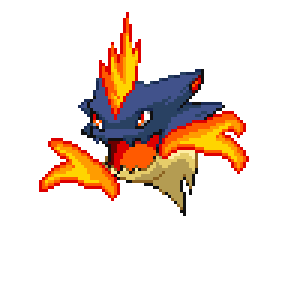
Flames jet from its back in order to vent its energy and keep from overheating. Should these flames recede, it's a sign that Typhode is preparing to unleash a massive wall of flame from its mouth.

Typhlee's legs possesses similar fire-producing glands found on its back. It ignites its limbs just before it unleashes its most powerful of kicks.
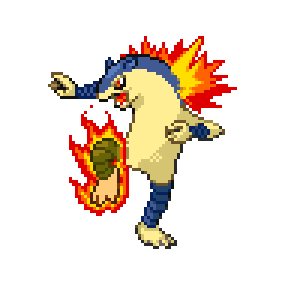
When approached, Typhtops breathes a thick cloud of steam at others in order to obscure their vision. The last thing most of its prey see are piercing red eyes from within the sweltering mist.

Typhnite ignites its wings in flames as a show of strength and dominance over others. Rivals clashing against each other will flare their fire up particularly fiercely, in some cases tripling the apparent visual size of their wingspan.

Typhew tries to appear more intimidating than it truly is. To this end, it flares up the fire behind its neck to maximum level and forms it into a huge fireball above it to frighten off potential attackers.

Typhwoodo immolates itself for defense, bursting with powerful flames across its whole body. As the flames roil on, the scent of burning wood fills the air.
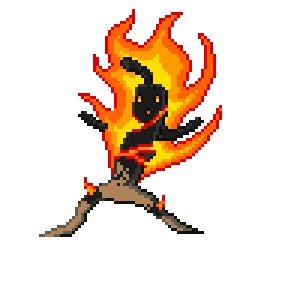
The pollen orbs of Typhluff's body can be ignited in order to give it better self-defense. On occasion, they will also catch on fire when a supportive Typhluff gets too energetic in cheering on its allies.

Typhtler's flames around its neck flare up when it turns aggressive. It must take care, as its antlers are flammable, and if its fire burns too strongly it may set them ablaze.

Flaring the flames on Typhcor's back allows it to boost its speed when it swoops after prey. Once it latches onto something, its stinger delivers both paralyzing venom and a blisteringly painful burn.

Typhchic has a belligerent and bratty personality, angrily chirping and flaring its flame up at random when in a bad mood. Despite its small stature, it can breathe and flare up intense fire in formidable amounts.
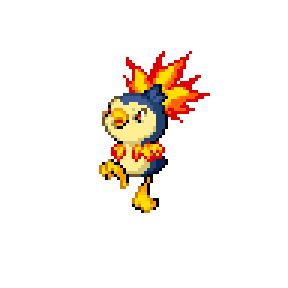
Even when Typhshrew's flames are at rest, segments of its hide still glow red-hot from the heat it emanates. It ignites its fire just before rolling at opponents, turning itself into a burning, whirling fireball.
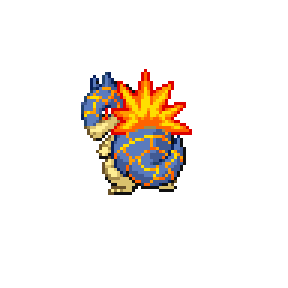
Typhvoir flares up the fire around its neck to keep others at bay, as it has a rather standoffish personality. The only exception to this rule is its Trainer, for whom it happily retracts the burning ring of flame.
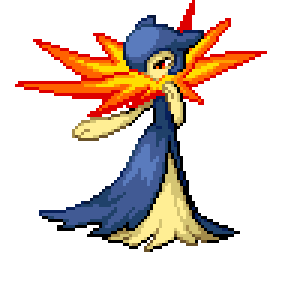
Fire erupts from Typhtomb's stone when its emotions begin to run high. Once enough flames have been gathered, Typhtomb's face appears and it gains perfect control of the fire's movements.

Cocky in combat, Typhwile loves to let its opponents think they've got it cornered, before its false mouth belches a plume of flame, catching them off-guard and opening them up for a vicious counterattack.

Living deep beneath volcanoes, Typhlord swim through lava like water, their durable skin impervious to heat. It is believed that earthquakes during eruptions are caused by Typhlord hastily relocating before they're caught in the blast.

Typhesect channels fire from within its body to be fired off from its cannon. As it burns hotter and harder, the cannon alone cannot contain its fire and flames begin to erupt from other parts of Typhesect's body.
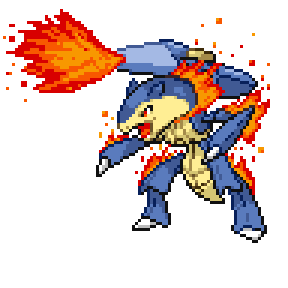
Typhtrum prefers volcanic and ashy areas to call home. The flames that emit from its body flicker in accordance to the volcano's dormancy. Should they blaze up suddenly, an eruption is imminent.

Typhlass secretly uses its power over cold to freeze those traveling through its domain. It then thaws them out with the flames from its body to make it seem as if it saved them from certain doom.
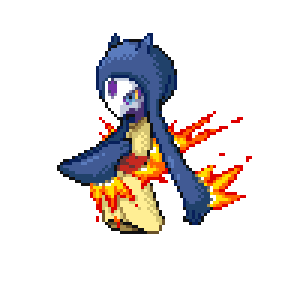
Typhcatty keeps itself composed and rarely shows any signs of a bad temper. It typically only flares the flames around its neck in order to impress others of its kind.
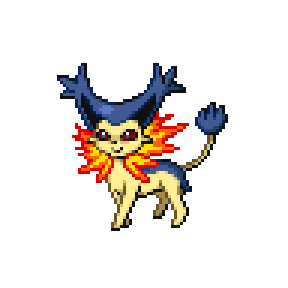
Typhrein can burst out flames on its face as a form of self-defense when agitated. It also uses this ability when eating, hovering its face close to its meal to cook it before eating.
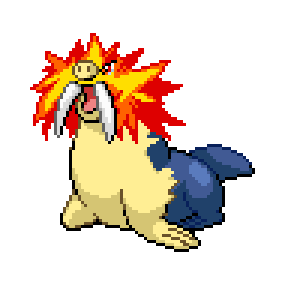
Typhtoise's shell begins to glow red-hot when it prepares to shoot fire from its twin cannon nozzles. The flames burn hot enough to liquefy solid stone in a matter of seconds.

Totokarp hunts by leaping from the water and biting at anything flying above. Once it latches onto something, it doesn't let go, dragging its prey beneath the water's surface.

Totolax's ravenous appetite causes it to bite down and rarely let go of anything that looks remotely edible. More than a few Trainers have adopted one simply because it bit their bag and refused to let go for hours or even days.

It tags alongside its Trainer, its protective nature making it wary of any strangers drawing near. Even faces familiar to the Trainer must be wary; if they aren't familiar enough to Totovoir, they risk getting bitten.
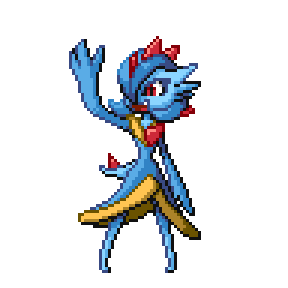
Totosaur has an intense urge to bite anything near it as a way to relieve its aggressive urges. Anything that tries to escape gets caught by vines from its flower, and dragged closer so it can chomp down on them.
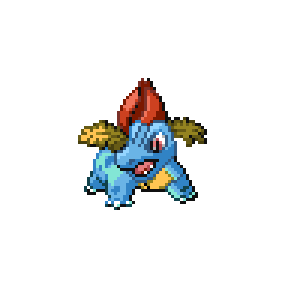
Once Totomuku bites onto something, it refuses to let go. Even if it was forcibly knocked back, it would expel its innards, jaws included, so that it would remain connected to its target.

Totoki will share the accessories on its ring, but only if traded something equally pretty or valuable. Any who try to take them by force will be given a nasty bite from its powerful jaws.

The face on the mask changes its expression to match Totomask's mood. If the mask shows its teeth, take care; Totomask is in a mood to bite anything that comes close.

During the warmer seasons, Totoling will swoop down on travelers and deliver a playful bite. It means no harm, but its teeth can leave mild burns if it accidentally bites down too hard.
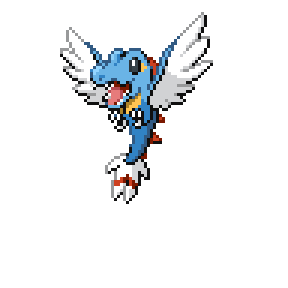
Though Totoras's mouth is small, it has a strong jaw that lets it grip onto something and be incredibly difficult to remove. Bites from it have a high chance of developing into painful rashes.
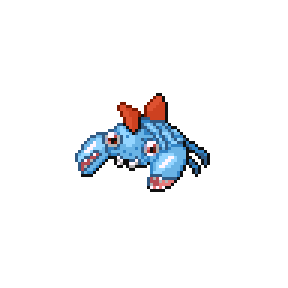
Totodisc has a contentious reputation as a pet mostly due to its way of showing affection. The longer it holds onto you after biting, the more it loves you. The longest recorded Totodisc bite is currently 6 hours.
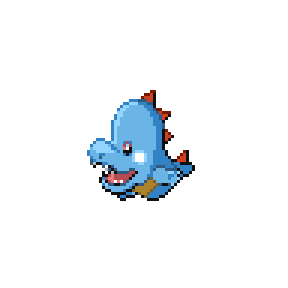
Totomite has a tendency to bite down onto large machines, though nobody is sure why. Due to the magnetism in its jaws, it's difficult to pry it off once it's bitten down.

Crocobuzz's Thunder Fang attack is particularly strong due to its powerful jaws and refusal to let go after biting. While it holds on with its teeth, it swings its arms around to keep generating a shocking electric current into its target.
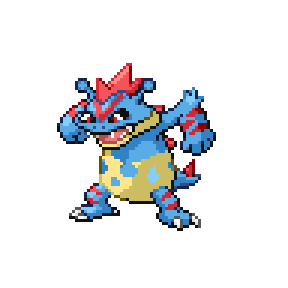
Crocopy always lets out a little trumpeting noise before it charges in an attempt to bite something. It has yet to grasp that this only serves to alert its target and give it a head start in fleeing.

Crocotar will often be seen walking around with a large rock carried in its mouth. It shatters the stone by crunching down with its jaws as an intimidation display.
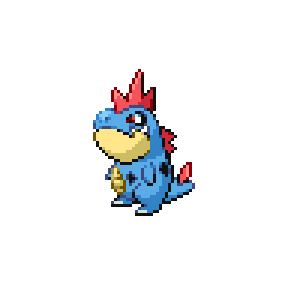
Cocky and boisterous, Crocovoir is often seen picking fights with larger Water-types by smacking them with its club. If it is disarmed of its weapon in the ensuing battle, it doesn't hesitate to bite down with its sharp teeth instead.
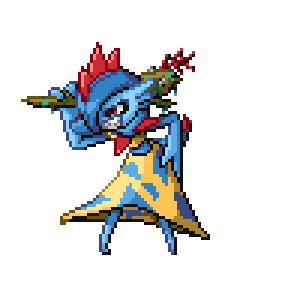
Though it takes on an appearance similar to Krokorok, Crocorock behaves much differently. It leads a solitary lifestyle, and uses its stone tail to send intruders flying if they dare intrude in its territory.
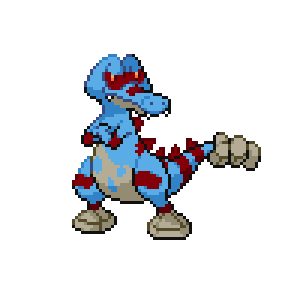
Crocorock lumbers around arid areas, though never strays too far from a source of water. Its powerful stone jaws clamp down so strongly that nothing tossed inside its mouth has any hope of escaping.
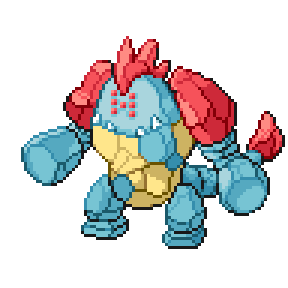
While flying, Pidyu spins its star-shaped body in order to create strong gusts of wind. This is usually done to blow away pests trying to steal the food it procures.
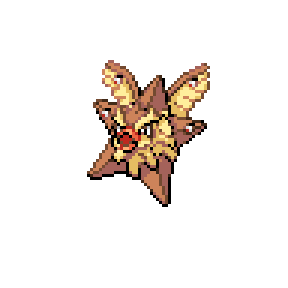
Pidkarp has strong swimming muscles, allowing it to swim against most currents easily. It goes on land to feed, eating the worms and small bugs that inhabit the riverside.
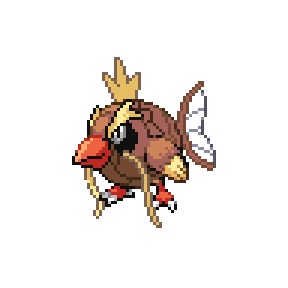
Pideon appears belligerent and jealous towards other Pidgey and their fusions. It attacks them with electrically charged needles shot from its fur in order to ground them while mid-flight.
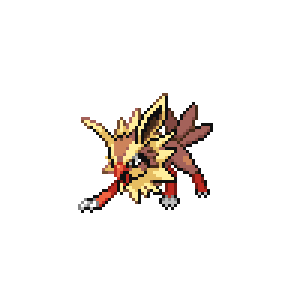
Pidgon hovers around near where Pidgey flock, looking to steal some of the food they scrounge up. Its cry is a louder, shriller version of Pidgey's, and effective at sending a flock flying away so it can swipe a meal.
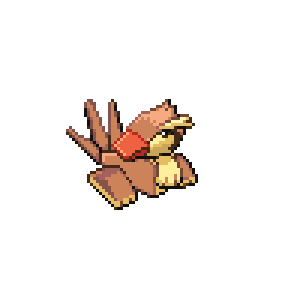
Pidgey exhibits features of Pidgeot's Mega Evolution. It flies at ridiculous speeds for its small stature to the point that it often has difficulty stopping properly.
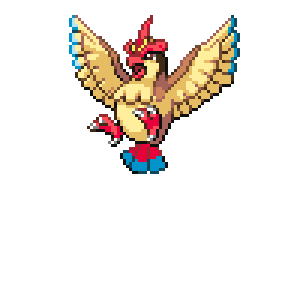
Pideon has an inquisitive personality, often observing the activities of others from a safe distance. One can tell if it is particularly intrigued by something if the jewel on its forehead sparkles and flickers brightly.

Pideon's capacity for reading minds and sensing moods is particularly effective in regards to avian Pokémon. It can soothe an angry flock of birds in just a few moments with its mental abilities.

Pidgar perches against tree trunks, listening for the sounds of Pidgey hunting. When it catches one that is just about to eat, it swoops down with an ear-piercing shriek, scaring off the Pidgey and stealing its hard-earned meal.

Pidrow tries to interject itself into Pidgey communities and assert itself as the de facto leader by bullying others into submission. This usually results in it being chased off by the whole flock.

Pidckle leaves behind puddles of sticky berry juice, then hides nearby. Once enough bug Pokémon are stuck, it goes to feast on the mixture of tasty juice and bugs.

Pidvoir has a soft and demure personality, often taking Pidgey flocks under its wing to care for them. It soothes the birds by singing with a cooing melodic voice.
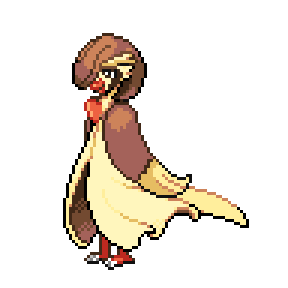
Pidtomb's appearance caused it to be seen as the foot soldier of deities in ancient times. Its many eyes are said to hold a paralyzing gaze that not even the strongest Pokémon can resist.

It uses its rock-solid skull to headbutt trees, dislodging fruits, nuts and bugs for it to eat. Overzealous Pididos occasionally end up knocking the entire tree down.

Pidblade both fights and forages via quick stabbing maneuvers with its paired blades. In the wild, it stabs through fruits and shares the meal with the head on the opposite sword.
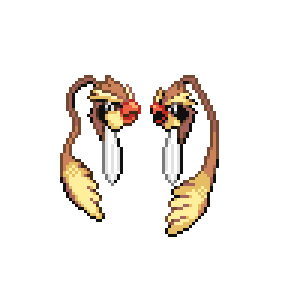
Pidish primarily gets around by hopping, as its leaves weigh heavily on its tiny frame. Shed leaves can be steeped in water to brew an herbal tea popular in coastal parts of Kanto.
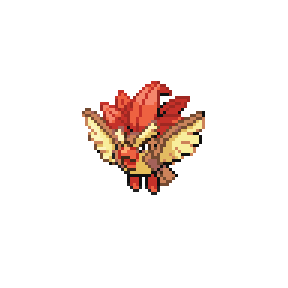
Piduck in the wild often act as mentors to Pidgey flocks, training and keeping the small birds in line. Though very patient by nature, they won't hesitate to punt one of their trainees if they get too uppity.

Pideal's round body is a bit too heavy for its wings, making it unable to fly very high or for very long. Fortunately, its body is also soft and covered with downy feathers, cushioning its impact when it hits the ground.
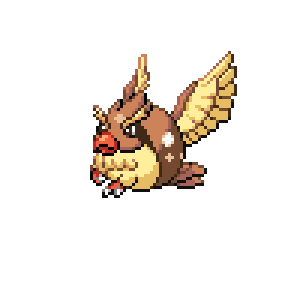
Pidchop has powerful physical potential, which often gives it a cocky, narcissistic demeanor. It spends more time preening its feathers than it does actually training.

Pidcool floats just beneath the water's surface, waiting patiently. When small insect Pokémon fly overhead, it snatches them with its tentacles and drags them under.

Though it never ferries humans itself, Feraras ensures that Lapras it oversees carry others safely. Anything that dares threaten them under Feraras's watch will be mercilessly rent apart.

Strangely, self-fusion has caused Feraligatr to lose its upper limbs and ridges. Its jaw strength and ferocity has been greatly amplified however, making it quite a danger to underestimate.
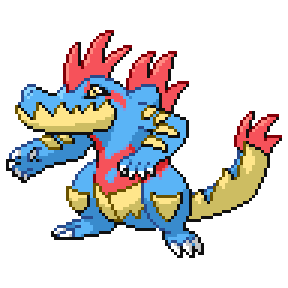
Feratu feasts on berries and nuts with the toughest of skins or shells. Its beak is full of solid, sharp teeth that easily crunch down on these tough exteriors and let it enjoy the succulence within.

Feravoir rests at the bottom of lakes, its psychic senses attuning it to all the creatures within. If it senses them in any danger from outside sources, it rockets out of the water to violently defend its charges.
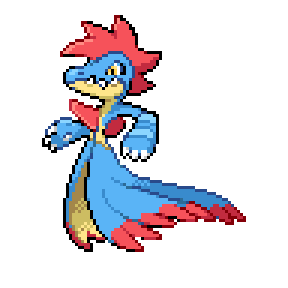
Pokémon that live around the lake area Feravoir calls home quickly learn to fear and respect its physical and psychic power. The spiky club it carries is a symbol of its strength and position in this hierarchy.
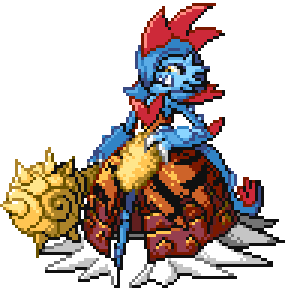
Feratomb lunges from its keystone at the bottom of riverbeds using its powerful jaws to snatch up land creatures that get too close. It's even been known to launch itself upward to nab flying Pokémon out of the air.

Ferapardos hides itself just out of sight underwater, remaining motionless until suitable prey draws near. It then leaps from the water at frightening speed to deliver a crushing headbutt to knock out its future meal.
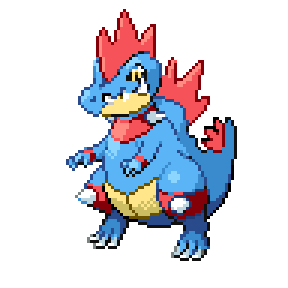
Feraxorus is a ferocious hunter that leaps from watery depths to hack at prey with the sharp ridges on the sides of its jaws. Rivals compete for territory and dominance, battling until one has severed the ridges of the other.

An absolutely vicious amphibious hunter, Feradreigon claims large lakes as its own, driving out the strongest prior inhabitants. Lakes claimed by it quickly become off-limits to humans as a matter of public safety.

Ferasopod possesses a tough exterior carapace resembling Feraligatr's Mega form. Normal blows glance off this casing and leave its foes open to a terribly strong counterattack from its four massive arms.
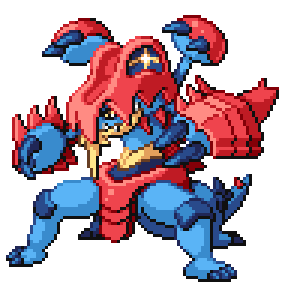
Possessing one of the toughest hides and sturdiest builds around, Feranaught is a massive juggernaut of a Pokémon. It can take a full-bodied charge from Pokémon several times its size and weight and not even flinch.
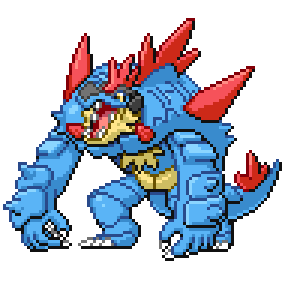
Senbone's tail is strong and heavy, used to lift itself up to get a better vantage point and look out for danger. It makes for an effective club against aggressors as well, when needed.
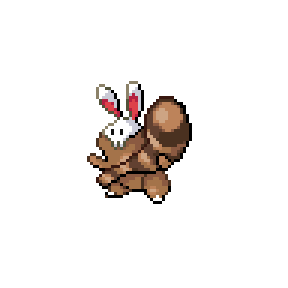
Sento extends part of its gooey body as a tail to lift itself up, gaining a better vantage point to observe others. This lets it transform better, increasing the accuracy of its shapeshifting.
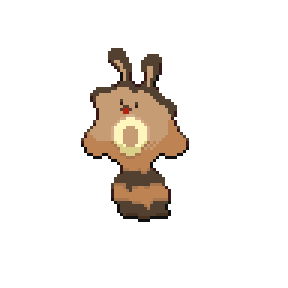
Senew enjoys having its large soft tail squeezed, giggling brightly whenever someone does so. It cuddles up against its own tail like a pillow whenever it sleeps.
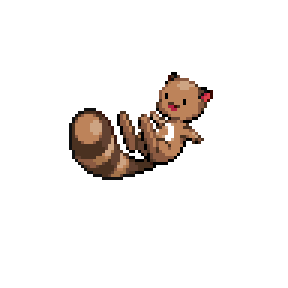
Sensaur shares territory with Sentret, much to its chagrin. The latter is attracted to the chestnut on its back, so Sensaur is constantly fighting to keep itself from being accosted.
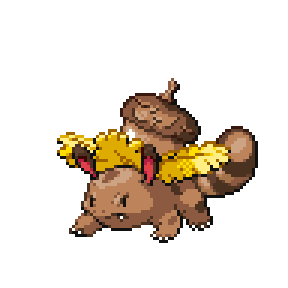
In order to gain better vantage points, Sencargo will roll onto its back and extend its liquefied body upward to look around. Though good for ascertaining its surroundings, Sencargo often has difficulty righting itself afterward.
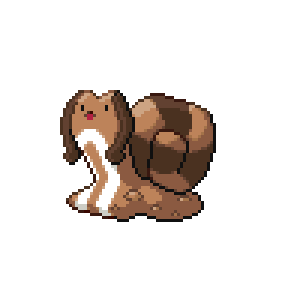
Senvoir is very loving and easily grows attached to others, craving regular hugs. It's a bit stubborn as well, so those that try to release the hug before Senvoir is finished get forcibly pulled back in by its psychic powers.
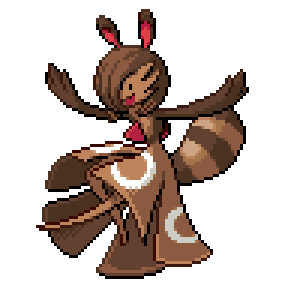
Lacking teeth, Senble subsists on swallowing insects whole for sustenance. It uses its strong tail to give it a boost in height when bugs fly up high to evade it.

Seedot will occasionally hitch rides upon Sensaur. While it carries a passenger, the normally mellow Sensaur becomes fiercely protective, lashing out at those who get too close too quickly.
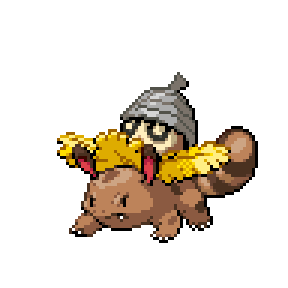
Sendily mimics the cry of Sentret to make it appear as if one is stuck and in need of assistance. Those who try to help the stuck lure get sucked into Sendily's mouth and consumed.
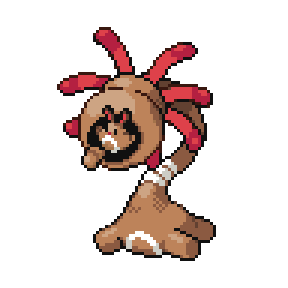
Senveon's ribbons are strong enough to be able to lift its own weight off the ground. It uses this ability to raise itself higher and get a better vantage point to ascertain its surroundings.
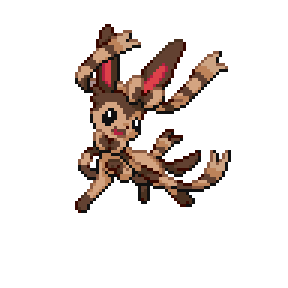
Senpet is a friendly spirit often spotted within the homes of those who live alone. It nuzzles up to them at night, keeping them company so they don't get lonely through the evening.
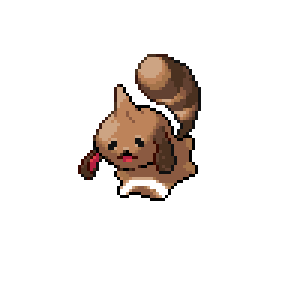
Sentik's tail is quite large compared to the rest of its body due to all of its electricity being stored within. When it uses it as a pillar to lift itself higher, the lightning surges outward across the ground in a web-like pattern.
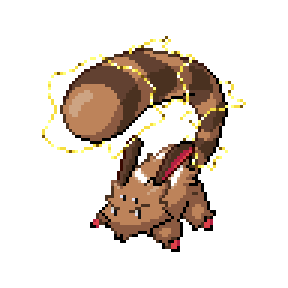
Its strongest muscle is its large and thick tail. Senchop pummels foes with its powerful punches and kicks, but always saves the final blow for a mighty swing of its tail.

Furdos gets aggressive when it grows lonely. It will charge through any obstacle to find someone to wrap its long, soft body around and cuddle with to alleviate its loneliness.

Furursa is adored as a pet due to its friendly, excitable nature and cute appearance. It is rather well-behaved as well, particularly if regularly given sweet, honey-flavored snacks as a treat.

Furphan loves to play with its Trainer by curling into a ball and being rolled around. Its large size and heavy weight makes it difficult for most to push it around for long, unfortunately.

Furkid loves to grab onto others, hugging and nuzzling them. However, nuzzling causes its fur to let loose electricity, causing it to shock whatever it has decided to cuddle.
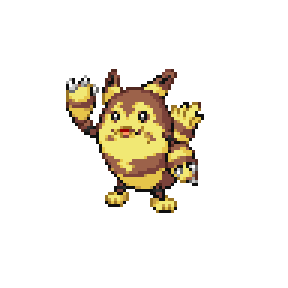
Furtei is friendly yet aloof, roaming the world and never staying in one locale for long. It curls up next to sleeping Trainers and keeps them warm, but as soon as they wake, it quickly takes its leave.

Friendly and playful, Furceus delights in playing hide-and-seek with others. Despite its size, it can squish and fold its own body to hide in spots as small as three feet in diameter, making it excellent at hiding.

Furveon loves nothing more than wrapping others up in a comforting hug. It wraps its ribbons around someone, then curls its own flexible body around them as well, refusing to let go until it sees them with a beaming, bright smile.

Highly affectionate, Furblim floats down from the sky and wraps its ribbons around others, carrying them off in multiple simultaneous embraces. It gets attached easily, so convincing it to release its new friends is quite difficult.

Furdile is extremely playful, running after the first creature it sees and thinks of as a new playmate. It can chase after a target for hours in order to leap and tackle them in the hopes of wrestling together.
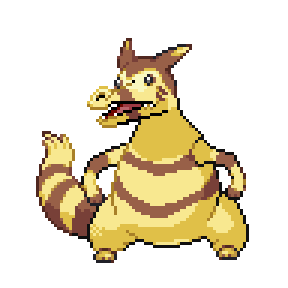
Furona flies around looking for small creatures to wrap its tail-like wings around as a sign of affection. Its wings are always warm, making it an especially pleasant experience during the colder seasons.

Though incredibly affectionate, keeping a Furoth as a pet is often discouraged due to its boundless energy. It unceasingly asks for food or play, and rarely sleeps for more than an hour a day.

Furtuff's body is deceptively pliable, able to inflate rapidly for intimidation or deflate for evasion and infiltration. It loves having people hug and squish its soft body with all the strength they can muster.

Furster's hard shell stays closed while underwater to allow it a nice restful sleep at the bottom of the ocean. People who manage to force its shell open often feel bad for disturbing its slumber.
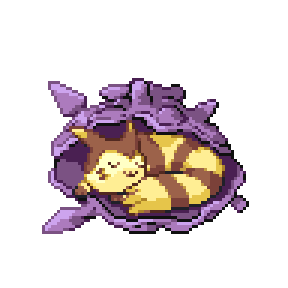
Hootdle constantly creates a poison that causes blurry vision in those afflicted. At the same time every day, it secretes excess poison from its horn, smearing it on the leaves around its home.

Raising Hootvee as a pet is considered simultaneously simple yet challenging. It has a good demeanor and simple needs, but feeding and play must be kept to a very strict daily schedule, or it will quickly begin acting out.
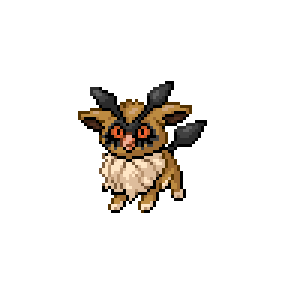
Hootrita goes out foraging at the same time of the morning, without fail. It emits a stronger scent while eating to let others of its kind know where good food sources are located.
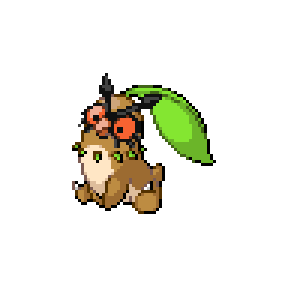
Hootma's head can turn 360 degrees, and it can control its flight path no matter what angle its head or body is turned. This makes it very tricky for prey to avoid being caught by it.

Hootco often goes unnoticed, hiding among piles of its favorite snack of dried leaves and pretending to be a simple pine cone. Those that see past the deception must still be wary of it exploding in self-defense.
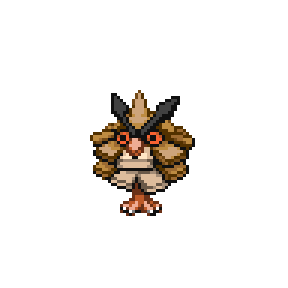
As Hootfish swims around, it slowly rotates its body over time. One can partially tell the hour of the day by seeing what angle Hootfish is currently swimming at.
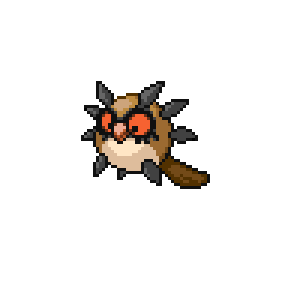
Hootdour are quite effective pack hunters. The leader formulates plans to enact at very specific times, and the rest of the group execute their parts at the exact proper times to flawlessly take down prey.
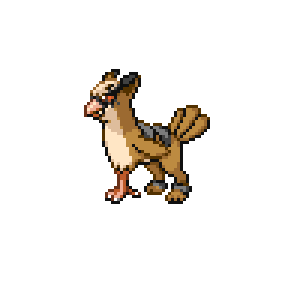
Hootans's strong eyesight lets it see the movement of prey even in the darkest of forest evenings. It leaves its den and hunts at the same exact time every night.

Hootler's antlers are most solid and robust early in the morning. As the day passes, they soften and begin to "wilt," until they obscure its vision. They regain their rigidity overnight while Hootler sleeps.

Hootank milk is sought after for its supposed ability to increase the intelligence of those who drink it regularly. However, it seems to only work if the milk is drunk at very specific times of day.
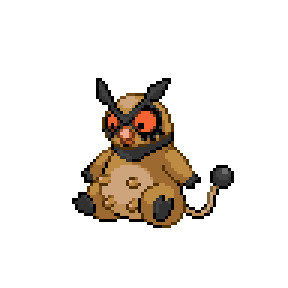
Incredibly shy and reclusive, Hoots is only seen outside of its home inside tree trunks for a short time each day. During this time, it can be heard singing a quiet, slow-tempo song to itself.

Groups of Hootdoof will work together to gnaw wood down to usable sizes in a timely manner. Those that don't adhere to the strict schedule are shunned and scorned.
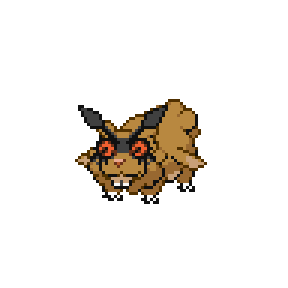
Hootina shifts its position periodically, striking several obtuse poses it remains in until taking the next one. It is believed these stances have something to do with the time, but in a dimension separate from this one.
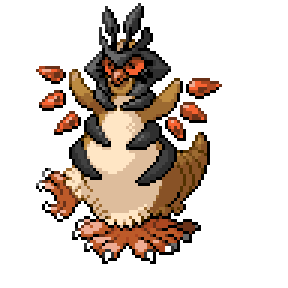
Hootpod keeps a strict foraging schedule, timing its every move to avoid danger. If disrupted, the break in routine causes it debilitating levels of stress.
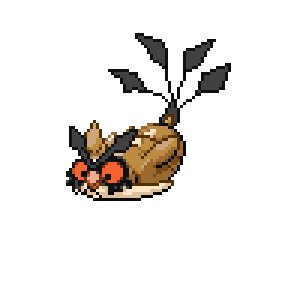
Hooth likes to pilfer coins from passersby, but observation has noted that the attempts at stealing adhere to a strict schedule, allowing locals to help travelers plan their time to avoid being robbed.
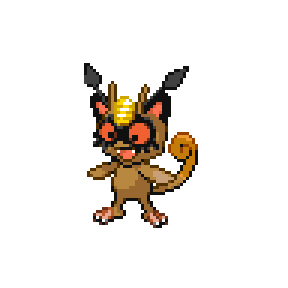
Hootlithe makes for a tricky pet to raise, as it adheres to a strict daily schedule for feeding, recreation and so forth. Any deviation from this schedule tends to cause it stress.

Hootmite's magnetic feathers stick out at different angles depending on the time of day. Its magnetism is at its most powerful during dusk and dawn.

It adheres to a strict schedule of nightly dream consumption. If one feels a disturbance in their sleep at the same time every evening, a Hootzee is likely to be residing nearby.

Noctchan fights in a way that is methodical and calculating. It dips and weaves away from blows while analyzing a foe's movements, its sharp eyes searching for any sign of weakness it can exploit when it counters.
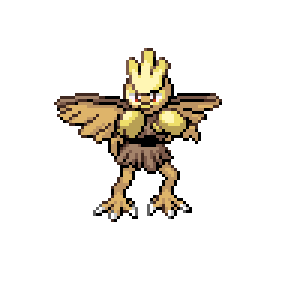
Noctgon is excellent for Trainers who wish to remain punctual. It has a perfect sense of time and memory, setting an alarm on every electronic in a person's house to make sure they do not forget an appointment.
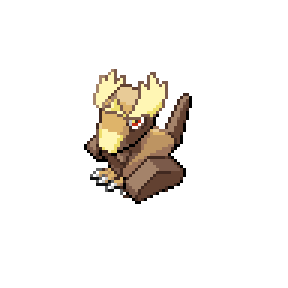
The only part of Noctuna that moves is its head, tilting back and forth with the passing seconds. It's assumed it's counting down the exact number of seconds it will take for it to complete evolution.

Noctret's lithe body makes it highly aerodynamic, able to take off and maneuver through the air silently and gracefully. This makes it very efficient at both hunting and evading attacks.

Highly intelligent, Noctrak captures prey with carefully-planned web placement, borne from many nights of careful observation. It knows the perfect place to set its trap based on its prey's daily habits.

Noctu is said to receive regular visions of the future, and is often seen in quiet contemplation. Many believe its mind is constantly racing with thoughts on how to continue shaping the perfect future.

Noctgon2's high intelligence helps it formulate hunting plans that rarely fail. Its hooting cry has a distinctly artificial tone to it, and has been noted to disrupt the time-keeping function of technology in its vicinity.
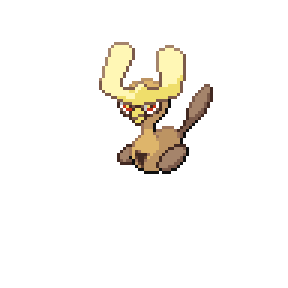
Intelligent and kind, Noctvoir watches over those lost in the forest at night. It silently repels those who would hunt them with psychic powers, and many are unaware their safe passage was due to Noctvoir's protection.

With powerful eyesight, hearing, and quick speed on the ground and in the air, Noctray is an unparalleled hunter. The beak on its tail possesses a tongue-like organ that can discharge incredible amounts of electricity with just a tap.
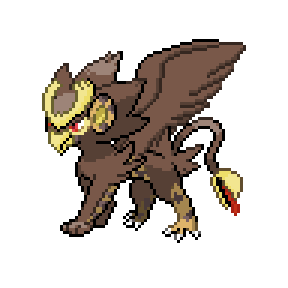
Noctmence watches over heavily forested mountain areas, treating the inhabitants as its subjects. It is highly intelligent and prefers peaceful coexistence, not hesitating to cast out Pokémon that pick too many fights in its domain.

In battle, Noctpunny shields its body with its massive ears, contemplating multiple battle factors to calculate the best course of action. Once it's formulated a plan, it leaps out of its shielding and fights back with powerful kicks.

Six times a day, Noctpix will cough up a fireball that floats above it and bursts into a shower of sparks. It appears to be merely recreation, though none are sure why it never deviates from that exact number.

Sometimes while at rest, Noctmuku will expel its innards out of its body in a way that mimics the hands of a clock. The positions the hands take is always a perfect match for the current time.
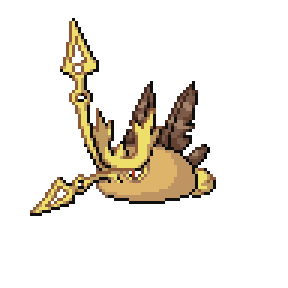
Noctflame quietly observes its target in the darkness, analyzing the best time to strike. It spreads embers in front of fleeing prey, sending them scurrying the opposite direction, often right into its waiting talons.
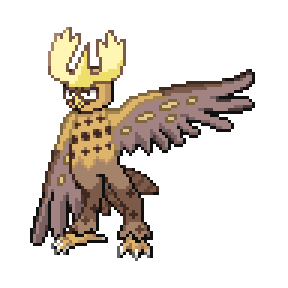
Noctpede is a quiet and calculating Pokémon, spending much of its time deep in thought. It shell-covered body is lacking in offensive capability, but it perfectly calculates defensive and evasive maneuvers, making it very difficult to take down.
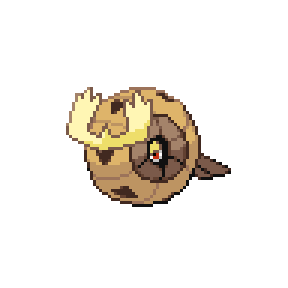
Noctcorio can be seen doing its slow and swaying dance in the evening, before it takes off in flight to hunt. It's believed it is communing with the spirit of its ancestors, who aid it in its subsequent search for prey.

Though Noctvenant stands perfectly rigid, its eyes dart around, taking in its surroundings with perfect clarity. Once it sees the opportunity to hunt, it moves with calculated perfection, its prey disappearing from the forest in total silence.

Noctvern is a master of the nighttime hunt and an apex predator of the forest. It takes off and flies without making a sound, its prey completely unaware of its approach until it is too late.

Noctdude gathers stones to keep within its home in the upper parts of tree trunks. Once its keen eyes spot prey running below, it uses its strong stone arms to hurl the rocks and knock out its target.

Noctfetchd has been observed holding its stick at different angles depending on the hour. No matter the time and position, it is always capable of wielding its weapon with calculated precision.

Ledyode's unblinking eyes are always on the lookout for potential dangers around it. It leaves star-shaped indentations in the ground after it explodes.

Normally kept tucked close to its cocoon, Ledyuna can extend its fists short distances in order to deter predators. Its sensitive antennae and strong eyesight let it remain wary of anything approaching its surroundings.
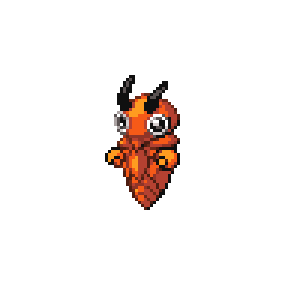
Ledypy's trunk possesses a sense of smell strongly attuned to sweet aromas. The berries and mushrooms it finds and forages are delectable, if almost sickeningly sweet in taste.

Ledygle's multiple arms allow it a controlled and more intricate touch to its brushstrokes when painting. Stars are often a major theme in the drawings it creates.

Ledytank is rather placid and happy to keep to itself, but holds a surprise for anybody approaching to hunt or milk it: what appear to be udders are six extendable fists ready to pummel anything making the mistake of bothering it.

Though most of the spines on Ledyslash's back are removable without issue, the dark spines are not, and Ledyslash will become quite agitated if they are tampered with. Some believe they are directly attached to highly sensitive nerves.

Underneath Ledyrunt's cloak lies an additional pair of arms, kept close to its body for additional warmth. It only lets its extra arms out when it needs to fight off larger threats.

Ledysteel rolls aimlessly around grassy, green zones with plenty of hills. It seems generally harmless, but strangely turns aggressive when in the presence of Sandslash and other similar Pokémon.
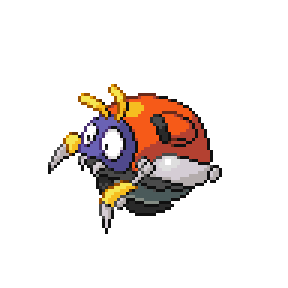
Ledycanth swims at a leisurely pace in the ocean, feeding on kelp and the smallest organisms. The spots on its back can pulse with short-range bursts of energy to repel pests and predators.
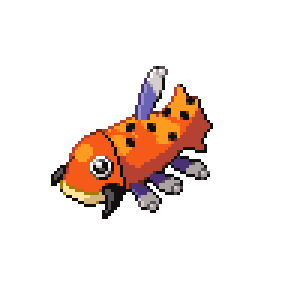
Lightweight and friendly, Ledode propels itself through the air by blowing bubbles that move it backwards. It's said somewhere there exists a flute that can summon Ledode forth with its song.

Several orbs embedded in Ledgon's back can separate and operate independently from it. These aid it greatly in fighting opponents, but even more so in helping it deal with malware when inhabiting cyberspace.
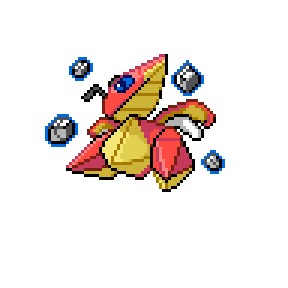
Due to the cocoon and the body within being frail, Leduna uses its four fists to vigorously defend itself. The scarf-like frill around its neck billows in the breeze, even when there is no discernible wind.

Ledzor is a staunch defender of insect Pokémon. If it spots a bug being picked on, it descends with heroic flair and retaliates on the aggressor with a flurry of punches from its four metallic claws.
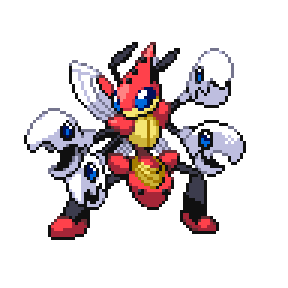
Ledtomb manifests itself in defense of insect Pokémon near it that are in danger. Its spectral form nimbly dodges attacks while striking back with its multiple fist strikes.

Ledgigas's flaps its wings to help build up energy and speed within its body. Once it builds up enough power, it can strike with a flurry of punches with ridiculous speed and force.

Each egg in a Spinacute clutch covers itself with silk as an added layer of defense. If any member loses part of their armor, the rest of the group will work to weave a replacement posthaste.
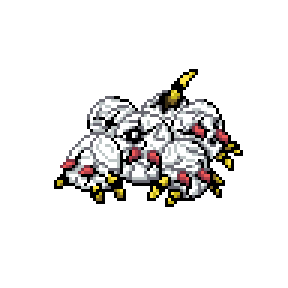
Spinabone is a bit skittish and very quick to go on the offensive. It keeps its bone club connected to its hand via webbing, swinging it around like a whip to beat at potential threats from afar.

Spinatres leaves its roost within mountain caverns to descend to nearby forests for hunting. It spits out super-heated thread from its mouth that wraps around prey and cooks it within seconds.

The wool that Spinareep grows over its body is very sticky and tricky to shear off properly. Once removed, it is primarily used for the making of particularly strong fishing nets.
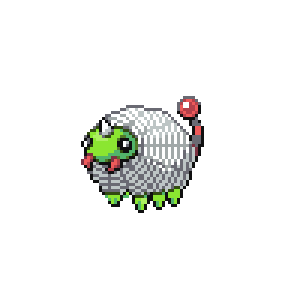
Spinaursa spins its webs around the lower areas of forests, catching insects attracted to the honey-like scent its webbing emanates. The threads can be consumed by humans without issue, and have a faintly sweet taste.

Spinaraid spits up nets of webbing from its wide mouth that stretch around a target and stick them to whatever surface it knocks them into. Spinaraid Trainers sometimes gather to make a game of trying to web each other up.

Spinalax cannot stick to or climb trees due to its legs not supporting its weight properly. Instead, it shoots thin sticky webbing from its mouth at fruits and other snacks to drag them down to it.

The markings on its head are meant to deter predators, and hide the fact that Spinats is in fact incredibly timid. Sibling pairs have been seen accidentally frightening each other and running away simultaneously.

Spinavoir spreads thin strands of psychic energy-infused webbing around its home to alert it to any intruders. Trained Spinavoir often keep a thread connected to their Trainer so they always know where they are at any given time.
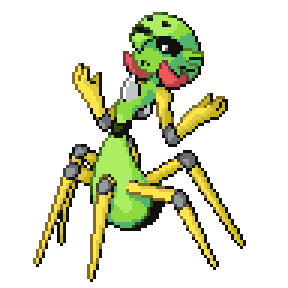
Spinatomb sends out faint, almost imperceptible threads of silk out from the many limbs of its arachnid-shaped stone. When potential prey touches a thread, its spectral form quickly travels along that thread to envelop and consume it.

Spinainch mixes up a large amount of thread within its large mouth. When suitable prey draws near, it opens wide and spits out a huge net of webbing to ensnare its target.

Spinakey clings to a web until it spots suitable prey, then leaps from its perch, using horns and fangs, fists and feet, and even its tail to pummel its target into submission with relentless anger.

Spinachoke operates as a hero for justice in a highly popular series, swinging between buildings and stopping criminals. Multiple comics, movies, and TV shows have been made starring Spinachoke.

Ariabone wields a part of a deceased Ariados as a weapon in combat. It smears poison from glands in its mouth across the weapon, making just a single wound from it inflict a debilitating condition.

Once Ariachan chooses an opponent, it quickly spins a large cage of webbing to act as a boxing ring for the match. Its opponent isn't allowed to escape unless it bests Ariachan in a fight.
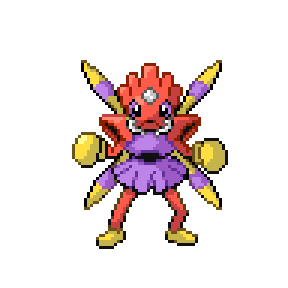
Ariadle spins a myriad of small webs across branches to catch insects in. Once it finds one stuck in its trap, it poisons them with the secretions from its horn before consuming them.
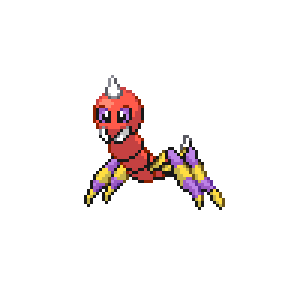
Ariaturn lives deep within the darkest of forests, emitting a faint glow from its lure when prey stumbles near. Those who follow seeking escape from the dark will find themselves soon ensnared in its webs.
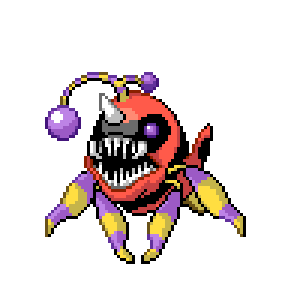
Ariacune's horn constantly creates thread that becomes a flowing mane over its body. It swings its head around while visiting swampy areas, collecting large amounts of bugs in the web for it to consume later.
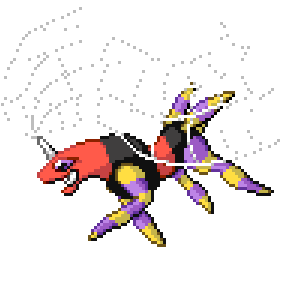
Over time, Ariafeon will choose a specific tree in a forest to spin its webs around in particular. Keeping the tree free of pests in this way allows the plant to flourish and grow more vibrantly in the coming months.
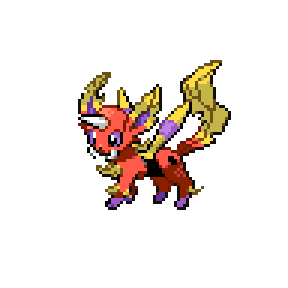
Ariagon-Z can generate silken threads from both its mandibles and its arms. Due to its body's tendency to glitch out, the webs it creates are often messy and haphazard in form.

Ariasaur will adopt young Spinarak without a home, carrying them on its back as it lumbers through the forests. It uses a combination of strong silk and powerful vines to gather food for them until they can hunt on their own.

Ariarith's similar appearance to Ariados allows it to hide among their colonies. Lacking webbing or hunting skills, it carefully swipes prey from unattended webs, fearful of inciting Ariados's ire.
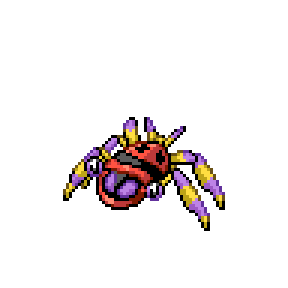
Arialord occasionally comes up from its dark undersea dwelling to go on land and rest near forests and let Spinarak climb atop it. It then ferries the small spiders off to a new home before returning to the sea.

Ariapass shoots nets of thick webbing out of its nostrils to capture distant prey. It reels them in closer to it so it can crush them between its short stone limbs.
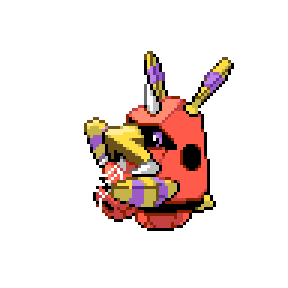
One of the more aggressive arachnid fusions, Ariatula covers a large area surrounding its home with electrically-charged webbing. It's nearly impossible to traverse through its territory without being shocked or ensnared.

Ariava sets up countless webs before hiding itself away. Rather than waiting for prey to stumble into webs, it uses shockwaves generated by its beating wings to knock them into the sticky threads.
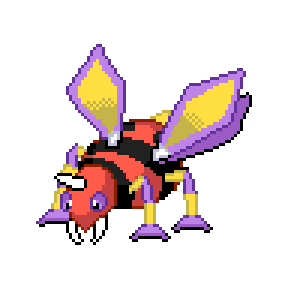
Ariaoom's body over-produces its poisons and silk, to the point it overflows from various points of its body. This, combined with its potent stench, makes it very difficult for it to socialize with others, making it lonesome.
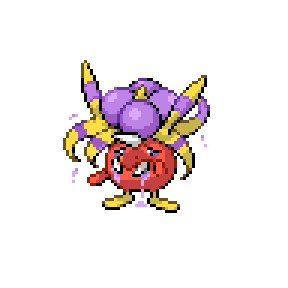
Ariaplume uses the markings of its body to disguise itself as a normal Vileplume. Once something flies overhead, it extends its claws to grab its prey and web them up quickly for later consumption.
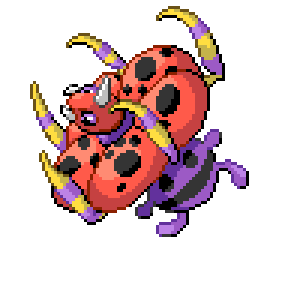
Its quick temper and tendency to get violent is already enough of an issue, but Ariakey is even more dangerous due to the purple fists it possesses generating a highly paralytic poison that leaves victims unable to fight back.

Ariachamp weaves webs quickly mid-battle to reel distant foes back into grappling distance. It waves champion belts made of tightly-woven webbing to give to those who give it a suitable challenge.

Ariadash's purple flames will not burn a person, but are toxic and will poison those it does not trust if touched. During Ariadash races, those trailing behind try to spit webs to trip up those ahead of them.

It spins haphazardly-shaped webs to catch prey in, but by the time something is caught in the web, Ariapoke has forgotten about the hunt. It usually plays with the caught creature for a few minutes before releasing it.

The sticky, toxic webbing Ariauk spins is made of its own sludge, so it shrinks as it spins larger, more intricate webs. Once it ensnares prey, it consumes the victim as well as its own web to regain its lost size.

Arianix's multiple pointed legs have great strength, letting it cling to cave walls and ceilings with ease. It drops down from these perches to web up Rock-type Pokémon to drain nutrients from them.
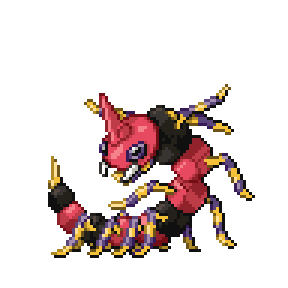
Arialer treads along the sea floor, picking at small fish and clams to consume. Its large claw is coated with a sticky webbing that ensures once it grabs something, there will be no escaping its grip.

Crofree is territorial, but not particularly aggressive. If another Pokémon enters its territory, it puts them to sleep with powder spread from its wings before carrying them out of its domain.

Cromory requires all four of its wings to flap at full force in order to keep its heavy body aloft. It scrapes its sharp talons across the ground four times in a row before taking off into the air.

Cro Jr.'s four wings assist with its balance as it dances about in its cavernous home. Its swaying movements have been known to attract Zubat swarms, who watch intently as if hypnotized.
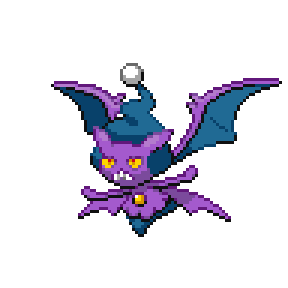
Scattered logs can be seen on the cavern ground where Crodoof resides. It steals wood from nearby forests, attempting to create dams on the cave ceilings, seemingly never understanding the folly of this endeavor.
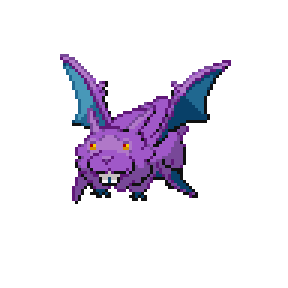
The bell Crotomb inhabits makes a faint chime whenever it manifests its spectral self. This is often the only warning prey may get that it is on the hunt, as Crotomb flies quickly and silently through the air.

Croking's arm strength is great enough that only a single flap is needed to take off from the ground. It glides from region to region, depriving entire forests of their fruits and berries.

Ghost-, Poison- and Bug-type Pokémon flock to the withered trees on Croterra's back, often making small communities together. Croterra doesn't seem to mind, but does seem to immensely enjoy its rare moments of solitude.

Croveon can flap its many ribbons in a mimicry of wings, attaining something close to flight. It seeks out Zubat colonies in the wild, using its ribbons to calm them down and lower their aggression towards travelers.

Croesect's four wings give it great control of its aerial movement. It hides itself in dark upper corners of caverns, targeting prey below and taking shots at them with the energy cannon on its head.
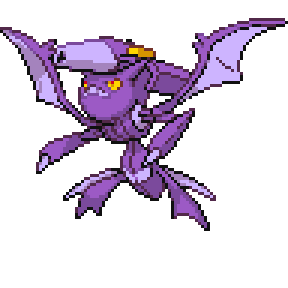
Croder's solid shell and four wings give it a strong defense and excellent maneuverability. To attack, it closes its shell and drops down from above to crack its sturdy body on top of its target.

Pidgefree appoints itself as a guardian of its home forest. It protects Caterpie and Weedle families by swooping down to peck and claw at would-be hunters.

Pidgeto oozes its way up tall trees to hunt for prey from the canopy. It flaps its wings to send goop-like feathers onto targeted prey, which slows them enough for Pidgeto to hunt them down.
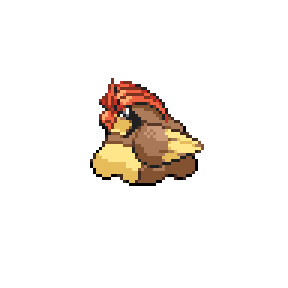
Ancient civilizations treated Pidgetomb as a divine being of the highest order. Even now, avian Pokémon treat it with extreme reverence, offering up offerings of food to it to gain its favor.

Whether in the water or out, Chinbone guides others to safety with illuminating light. Underwater it uses the bulbs on its cranium, while on land it uses a secretion it covers its bone club with that glows in the dark.

The lights at the end of Chinx's hair glow brightly in the dark, illuminating and accentuating its dance moves. Its dance is vaguely hypnotic; viewers are compelled to keep watching until the performance finishes.

Chingon works effectively as an antivirus program in cyberspace. Its nose and tail emit a glow that draws in malicious programs, so it can purge them once they draw close.
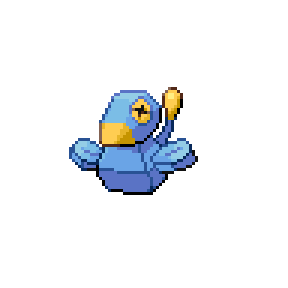
Chinuna floats near the ocean bottom, tethered to the sea floor via a strong thread from its bottom. Attackers are repelled by painfully bright flashes of light from its antennae.

The light emanating from Chinew's twin tails compels others to stare into them, putting them in a stupor. This trance state lets Chinew more easily explore the minds and memories of those it has charmed.

During the night, the orbs at the end of Chinhoot's eyebrows pulse at exactly one-minute intervals. If the orbs begin glowing out of sync, it is a sign that Chinhoot is growing ill.

Chinicate must gnash its teeth together in order to generate the energy needed to make its tail light up. Its main way of hunting is luring river-dwelling Pokémon with its light, reeling them in when they take a nibble on its tail.

Chinco is protective of small insects, flashing its light to attract them at night so they will flock to it and remain safe. Anything that tries to hunt the bugs will be zapped by lightning.
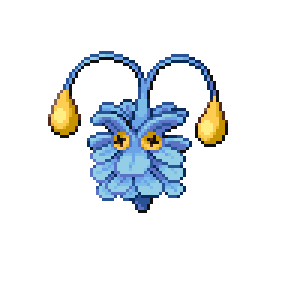
Chinmory's feathers are connected to the light-creating organ on its tail. It shifts the energy from its tail while flying, letting its wings glow bright and help illuminate its flight path.

Chintomb's swirling vortex of a body creates a pulsating illumination in the ocean depths. The hypnotic effects draw Pokémon near and empty their mind, making them easy to envelop and consume.
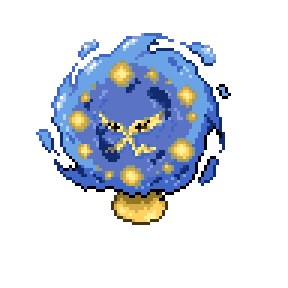
The bulb on Chinpardos's head glows brightly when it is preparing to charge at something. Though soft to the touch, upon impact the bulb releases a powerful electric burst of stored energy.

The undulating appendages on Chinceus's body can shine with a light bright enough to light up the deepest trench of the ocean. If it were to use all of its bulbs at once, the flash would likely cause permanent blindness to all who saw it.

Chinogre rests at the seafloor, within the deepest trenches of the ocean. The light from its antennae, even from those depths, is potent enough to be seen from above the water.

Every bounce Chinink does causes the orb on its head to flash a bright light. Though not blinding, the light will cause mild headaches if viewed for too long in a short amount of time.

Before it teleports, Chinra's tail glows bright and releases a blinding flash to help aid it in escaping predators. Faint bits of electricity can be seen coursing over its body after it teleports.

Landactyl dives into the deep sea to hunt. It cuts through the water at an incredible pace, creating blinding flashes of light with its body that leave fish too stunned to avoid the grip of its snapping jaws.
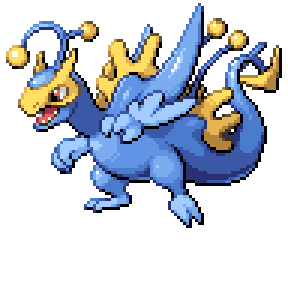
There have been many a story of Trainers lost in caverns being rescued by Lantres. Illuminating a path with the orb on its head, it carries them safely to the nearest exit, before leaving in a bright flash of light.

The lights at the end of Lanew's tail are fueled by its psychic powers, and can change colors at will. It enjoys using this ability to make light shows for friendly underwater denizens.

Lansire uses the light on its head to draw others closer so it can embrace and stick to them with its many fins. Wailord and occasionally Gyarados have been spotted with a few Lansire clinging along for a ride.

Lanbull flashes the orbs on its head brightly when frightened, blinding and stunning potential foes. It has a very jumpy personality, so it often ends up flashing those who mean it no ill will.

Lanchic's bulbs can generate high amounts of light and heat. Beneath the water, the bright flashes repel predators, and when it pokes above the water, it launches fireballs at creatures flying by, purely for sport.

Lanlia swims through the water with a gracefulness akin to dancing. A swirling light that emanates from its antennae lures others so that they can join it in its undersea dance.

Lanvoir has several light-producing organs on its body. Its protective nature means it will often construct a sphere of pure light around itself and its allies to shield them from harm.
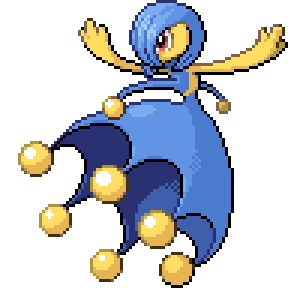
If not for special membranes over Langon's eyes, the light from its antennae would blind it whenever it flashes. The rapid beat of its wings charges the membranes on the edges, causing it to glow while in flight.
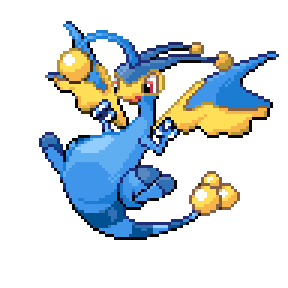
Lanogre's antennae and body lines can glow bright enough to light up the deepest ocean trenches. Its arrival on the ocean's surface is heralded by the advent of huge whirlpools radiating brilliant blinding light.
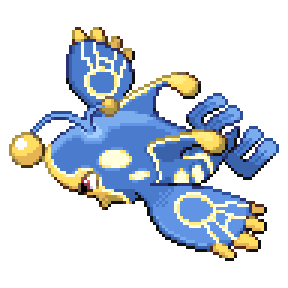
Lantina rests at the bottom of the ocean, where little to no light reaches. If one sees the illumination coming from the multiple orbs along its wings, it is too late to escape from Lantina's grasp.

Lanesect's antennae not only illuminate its surroundings but also work to scan and analyze the area. Researchers work with it to map out the ocean depths and search for sunken or hidden discoveries.

Lansion's membrane emits a bright glow, powered by the Pokémon's psychic energy. Lansion travel in pairs for safety, pulsing with alternating electric and psychic bursts to defend each other from harm.
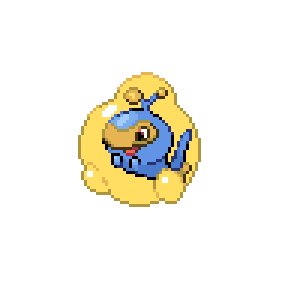
Do not be fooled by Lanedo's comical appearance, for it belies a conniving undersea hunter. It stuns prey with painfully bright flashes from its lure, leaving them helpless to avoid its razor-sharp teeth.

Lantrio uses all three of its lanterns while digging to illuminate their path and increase visibility. In unison, their lights are bright enough to be seen from above ground as a faint glow moving underground.

Rather than for any type of hunting, Lancanth uses the light-emitting organ on its head solely to defend itself. Blinding flashes or paralyzing jolts of electricity are the typical way to stun others so it can swim away.
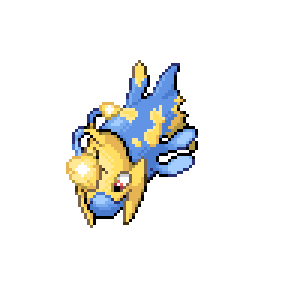
Hiding away in the darkness, Lanbell deploys a lure from its mouth that resembles a friendly Lanturn. By the time prey realizes the Lanturn is fake, it is too late to escape becoming Lanbell's meal.

Pifing's electrical capability is strong, but its body lacks the strength to properly contain it. As such, its body has shattered, loosely connected to and covering its electrical core while puffing out small storm clouds.
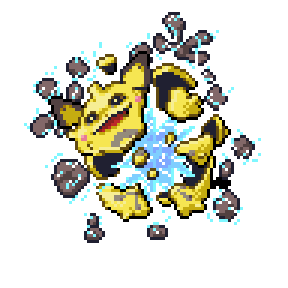
While Pimime's miming techniques are skilled, it still occasionally loses control of its electricity. Instead of placing up a Barrier, its hands may wind up discharging electricity in front of it instead, causing issues.
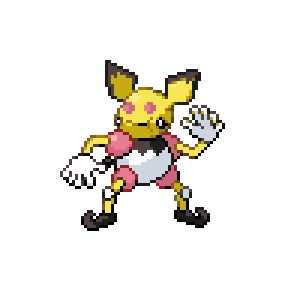
Pidos is not strictly aggressive, but is dangerous due to its body and temperament. It is easily upset, and when it throws a tantrum its body will release large amounts of electricity while it thrashes around.
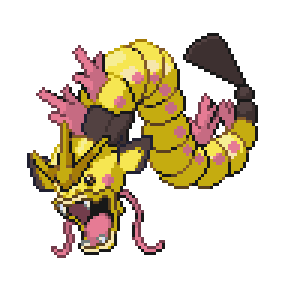
Piras is happy to ferry people across water, but doing so is somewhat risky. Since its body is still developing, it may inadvertently discharge some electricity and accidentally shock its passengers.

Piew is playful, friendly and even a bit mischievous. It lacks complete control over its vast capabilities, so at times it may accidentally discharge psychic energy, typically resulting in inadvertently levitating objects near it.
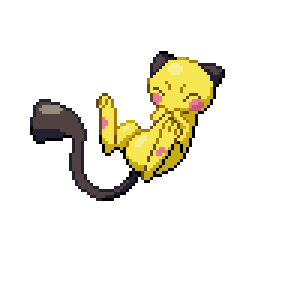
A few obscure records from Johto's distant past describe creatures similar to Pichu. Research is being done to determine if Pichu once looked like this in the past, or if the records are of a now-extinct relative.

Spoiled and petulant, Pirow will inevitably throw tantrums if it doesn't get its way. It screeches and flaps its wings, sending out electric sparks all around it until it calms down.
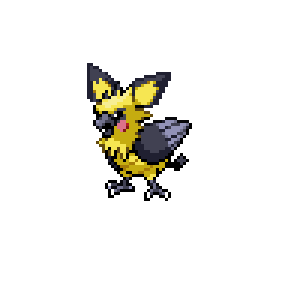
Pigle is a budding artist constantly doodling using the ink-like substance on its tail. The liquid carries faint amounts of electricity from its body, so touching its art while the ink is still wet usually results in a jolt.

Though Pichu has better control over its electricity than Pichu, it still has not fully mastered it. Accidental electrical bursts can still occur, but fortunately the discharges no longer harm Pichu itself.
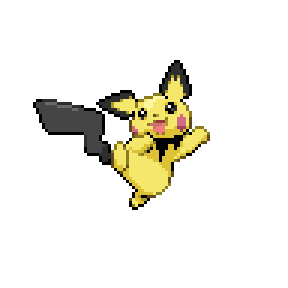
Pitomb's stone cannot keep its form fully contained. It will occasionally rise up suddenly and involuntarily with an electric burst, often scaring nearby creatures without meaning to.
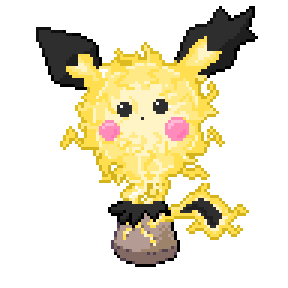
Piquaza resides high up in the sky, near the ozone layer. It descends during stormy weather to soak up the electricity within the storm clouds, its body crackling with energy as it weaves through them.
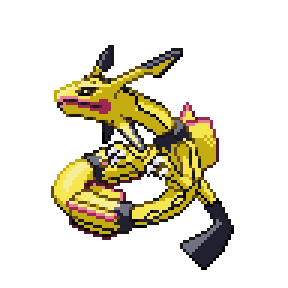
Pibas is always seeking companionship and new friends, nuzzling up against other fish as it swims. It unfortunately cannot control its electricity well, so it often accidentally shocks others this way and cause them to avoid it.

The Pichu in Pisteel's center appears to control the body's movements. It hasn't fully mastered its strength, so sometimes it discharges far more electricity with an attack than it means to.
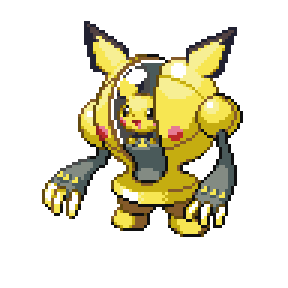
Most of Piras's electrical power is stored within the mushrooms on its back. They spark on occasion when it is startled, and removing the fungus will sap it almost completely of its electric capabilities.
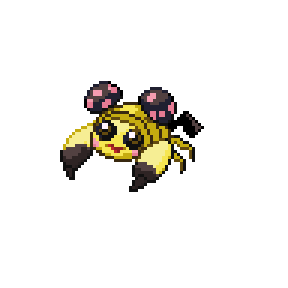
Pilow shakes its body to shed sparks as an intimidation display, usually towards other Pilow. Because it is still developing its electric control, sometimes it may keep sparking for several minutes after it stops shaking.
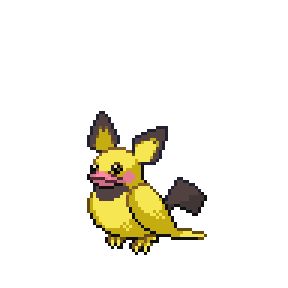
Piliper can be seen offering to ferry small Pokémon in its mouth, though few will accept. This is because while carrying something in its mouth, its beak may randomly and unintentionally discharge some of its electricity.
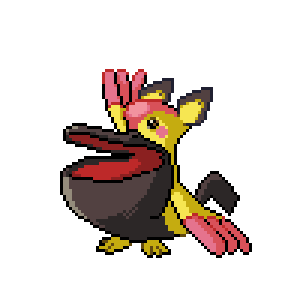
Pieal generates electricity in its body while rolling around in the snow. When it stops, the stored-up energy bursts outward due to its developing body's inability to properly store it.

Piby plays with others of its kind by clicking its claws together rapidly to create sparks. Sometimes its claws may involuntarily continue producing sparks even after it stops clicking.
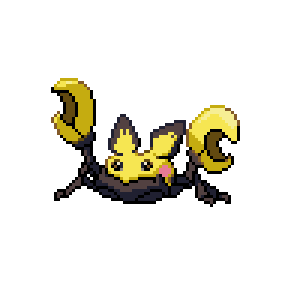
The webs Clefrak spins glow a variety of radiant colors in the dark. The effect is slightly hypnotic, drawing in insects to become ensnared and become its next meal.

Clefpip has a very exploratory nature, using the evening breeze to carry it to parts unknown to explore. When traveling in groups, Clefpip link hands and perform aerial dances together.

Clefdreavus's necklace appears to be made of lunar stone, making it highly valuable. Would-be poachers should beware, however, as it also allows it to channel moonlight into powerful beams of energy to defend itself.

Cleftios zips through the air like a shooting star, sparkles trailing behind it. It seeks out groups of Clefairy to carry on its back, letting them enjoy flying beneath the moon and stars.
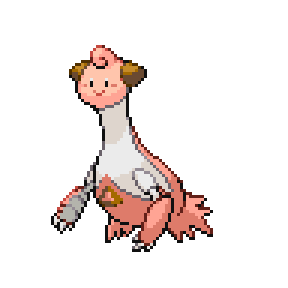
Clefeary delights in tickling others with the fluffy tips of its ears. When its ears excitedly perk straight up for most of the day, that means a shooting star will pass through the sky at night.

Clefgull's extremely small and light body makes gliding easy, though strong winds will just as easily send it careening off course. It prefers flying during the night when the sky is full of stars.
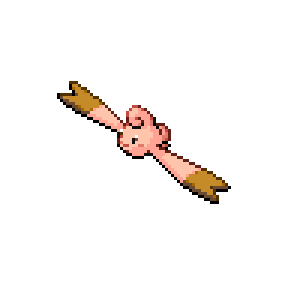
Playfully combative, Clefkey throws weak punches at anyone who draws near, not intending to cause any lasting harm. During the full moon, it loses a bit of self-control and may accidentally hurt those it wants to play with.

The rocky material on Clefbyss's body does not seem to be natural to this world. The species is rare and flees from the presence of humans, so researching the stones' origins is difficult.
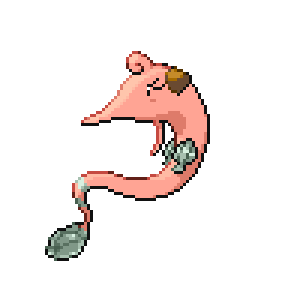
A small Cleffa controls the main body, a protective layer forming over it when in danger or diving underwater. Clefcool is non-hostile, and spends much of its time dancing about on land, its long tentacles acting as legs.

Igglyvee's body appears fluffy, but is entirely soft and pliable, bouncy like rubber. It actively enjoys playing by being thrown from one person to another like a game of catch.
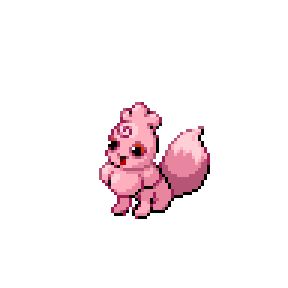
Igglygon's soft and bouncy body lets it rebound off of anything it collides with. Its favorite way to play is to have a computer user drag it and fling it with a cursor, causing it to bounce harmlessly all about the screen.
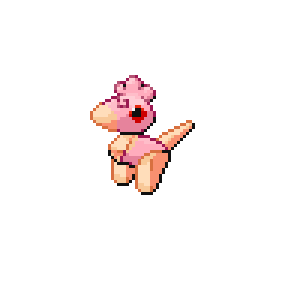
Igglyuna's cocoon is several times the size of its own body. This gives it ample room to get comfortable, while also providing extra time to escape, as predators often strike at empty sections of the cocoon.

Igglychu likes to put on small concerts for its friends, singing chipper high-pitched songs to all who would listen. It creates a small shower of colorful sparks above it for the finale.

Igglytler's lightweight body makes prancing through the forest a simple task. It can inhale deeply and inflate its body to increase its size in an attempt to scare off others that might prey on it.
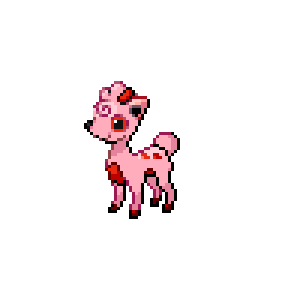
Igglyvoir practices singing in a quiet voice when alone, afraid of letting others hear its amateur vocals. It will only allow a truly trusted and beloved Trainer to be its one-person audience.

Although Igglytios flies at high speeds and has some aggressive tendencies, it is not much of a danger to others. Its soft and rubbery body means that typically when it charges into something, it tends to rebound harmlessly on impact.

Igglyish likes to bury itself in the soft and mushy soil in moist, lush forests. It eats its way out of the ground, and then sings in delightful appreciation of its meal.

Igglyish's only method of defense is to inflate its body with air, turning a deeper red to scare off others. It cannot hold its breath for long, so it hides in taller grass to limit its need to use this technique.
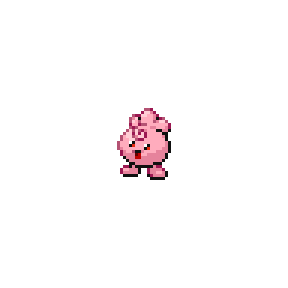
Igglyby can inflate its hands in order to appear more intimidating to others. It's only a scare tactic, however; its claws are far too soft to be effective as striking weapons, even when oversized.
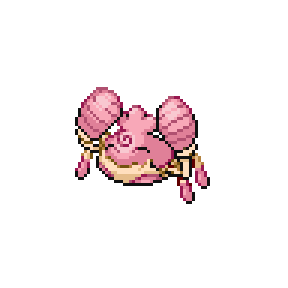
It drags along the remaining bones of a fallen Togekiss with it and can only sleep soundly while laying near the old bones. Some think the Togekiss spirit still lingers and grants Togebone small comforts during sleep.

Togetung adores the taste of eggs, slurping up any egg-based dishes it can. It consumes so much, even its saliva has taken a consistency and odor similar to that of egg yolk.

Togew is such a rare sight that some say even the purest and gentlest of soul may not be worthy of its appearance. In ancient times, those who managed to have one as a partner were considered descendants of royalty or even divinity.

Togegey is a bit of a spoiled brat in behavior. In the wild it invades nests and rests next to the eggs, insisting the parents pamper it as if it were their child.

Togebuff likes to leap out of its shell and streak around during bursts of playful hyperactivity. It will always wish to return to its shell and sleep in it once it gets tired.
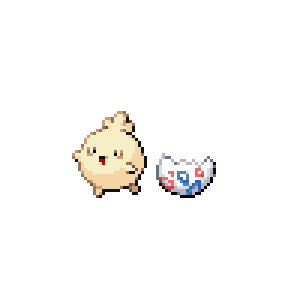
It carries a second piece of eggshell with it wherever it goes. This lets Togepi tuck itself into a complete shell, offering it more defense when things get troublesome.

Once a month, Togeco sheds the colored plates on its body in order to grow new ones. These plates are said to bring good luck, so accessories made of them are in relatively high demand.
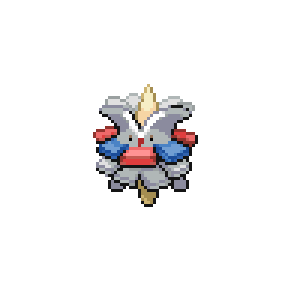
Togenub's sense of smell is so acute that it can detect fluctuations in emotions by scent alone. It sidles up to those that are feeling sad and nuzzles them to bring them some comfort.

Togechum feels a compulsion to follow after anything it senses exuding joy or excitement. Togechum parents and Trainers alike find themselves working hard to keep it from running off constantly.

Rarely seen and with few verified records of it in history, Togekiss is said to be the embodiment of joy and innocence itself. Those who gaze upon its form will feel all aggression and negative emotions drain from their minds.

Togefeon sheds the pale leafy parts of its body monthly. Insects and other small creatures will gather the shed leaves to help make nests, which seem to foster better health in young reared within said nests.
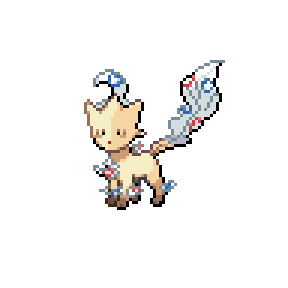
A friendly forest denizen, Togecko is innocent and always trying to make new friends. It gathers up pretty-looking leaves to collect, and shares them with those it hopes to befriend.
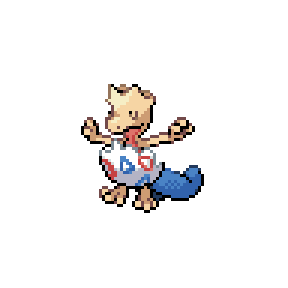
Togevoir is said to bestow a minor blessing of luck to anyone it meets with a kind heart. It saves the best blessing for its Trainer, however; owners are said to never have bad luck as long as Togevoir is near.
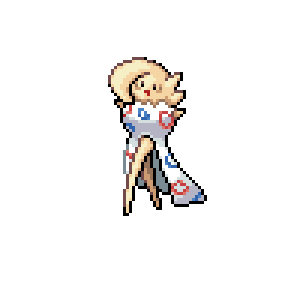
Though the blade is many times larger than the body, Togedge wields it with surprising ease and agility. A popular children's show starring Togedge is currently entering its fourth season.

Togeveon is an innocent and joyful soul that seeks to bless any kind person it comes across. A brush from its ribbons not only fills one with joyous feelings, but is believed to grant good luck for the next week.

Said to only grant wishes to pure-hearted children, Togerachi is a popular figure in nursery rhymes. A child that gazes into its third eye will know nothing but happiness for the rest of their days.
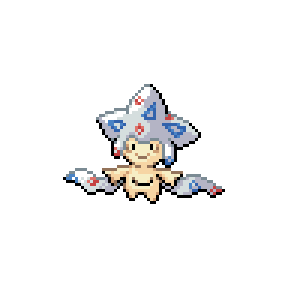
Despite looking similar to an eggshell, Togelgon's body is highly sturdy and resistant to blows. It has no natural predators, so it has a very curious personality and approaches strangers without a care.

Togeloon is a popular gift presented to game winners at carnivals. It's said that no child is unhappy if they're holding a Togeloon's strings, and vice-versa.

Togepet often appears floating around the cribs of newborns at night. Unlike many other ghostly Pokémon, its presence is welcomed; many believe it only haunts near children destined to grow up happy and healthy.
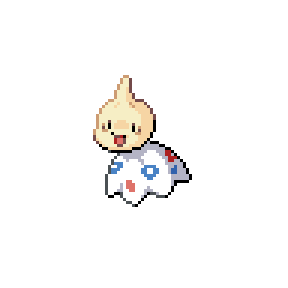
Though blind, Togebat can sense the hearts of others nearby, whether wicked or kind. It only bites and draws blood from those it deems as possessing a wicked heart.
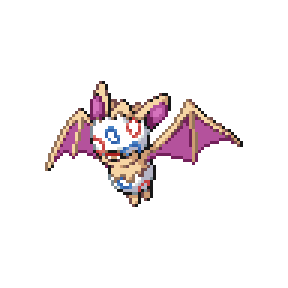
Togetrum is quite protective of young Pokémon in the wild. If it spots danger, it hides the young in its egg-like lower jaw and runs off with great haste, releasing them once they've made it to safety.

When confronted with negative emotions, Togerunt tightens its cloak around it and hides itself from the world. The cloak emanates a faint calming aura during this time that alleviates stress and aggression in those nearby.

Togeish can be found prancing through blooming flower fields, chirping happy little tunes. It flicks pollen from its leaves at those it deems good souls; inhaling it brings calm and joy for hours.
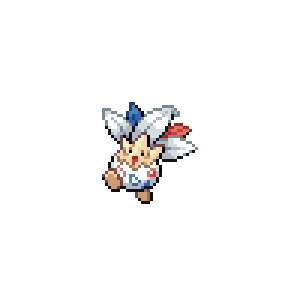
Togecorio is reclusive and shy, but can be seen quietly approaching wakes for the deceased. Its slow and careful dance moves are said to soothe the minds of the grieving, as well as the soul of the recently-departed.

Togegast enjoys playing with young children at the beach, forming shapes together with its sandy body. Touching the shell-like top of its head will cause it to instinctively fling sand and run away, however.

Togeras was once hunted due to the belief that eating its mushrooms gave the consumer good luck. Now it is assumed this belief stemmed from the mild euphoria that comes from eating the fungi.

Togeth has a simple mind that equates money with joy. To spread that joy around, it collects any and all shiny coins it finds and gifts them to others.

Being incredibly warm, gentle, and friendly, Togelithe is ideal as a pet for extremely young children. It has been known to help shy and introverted kids come out of their shells and socialize more with others.
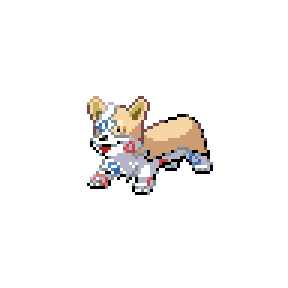
Togera cannot stand to be in the presence of negative emotions. The minute it senses an ounce of anger or sadness, it teleports away until it feels it is safe to return.

Togebell drops an egg-shaped lure from the treetops to trick egg-hunting creatures into taking the bait. Once it's grabbed, it drags them up into its mouth and swallows them whole.

Togefetchd only approaches those it senses kind and positive energy from. Tapping those it comes near with its stick causes them to feel a warm and joyous sensation filling them.

Some segments of Togenix's body are brittle and chip away to reveal the flesh underneath. These parts are very sensitive, and Togenix will cry and thrash about if they are touched.
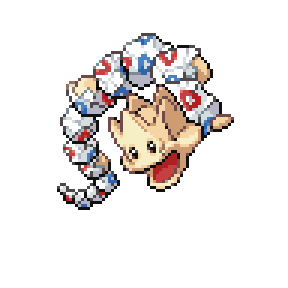
Togeby innocently pokes and prods at any litter it comes across while roaming the beach shores. It seems particularly intrigued by egg shell shards from the occasional abandoned nest.
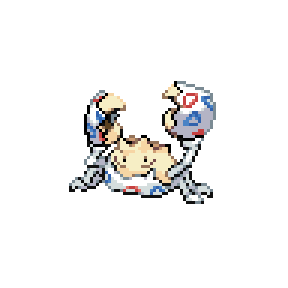
Togeras is rarely seen in the wild, supposedly only appearing before people with kind and pure hearts. It's noted for singing while it swims, a soft melody that soothes the hearts of those who manage to hear it.

Togefa gather together on starry nights to fly together and bask in the beauty of the stars above. Seeing them flying en masse is said to be a blessing that bestows fantastic luck on one fortunate enough to witness it.

Togepi flies over groups of people, intent on spreading joy to others however it can. This usually takes the form of fluttering over to someone and clinging to them in a friendly hug.

Togeswine is typically seen rooting around cool areas for foods such as mushrooms and seeds. It is quite timid, retracting its head underneath its thick fur to hide from others at the slightest noise.

In the past, Togerill was hunted for its tail, which was believed to grant a life of good fortune when consumed. The species is rarely seen in the wild and considered critically endangered as a result.

Togevyle will only appear before forest travelers if they are not deemed a threat to it or its home. Rarely, it will offer one of the colored leaves from its limbs, which many believe are charmed to bring good luck to the wearer.

Togetomb's appearance is triggered when it senses an overwhelming amount of negative emotions near it. When it manifests, it emits a calming aura that soothes those around, giving them a measure of peace.
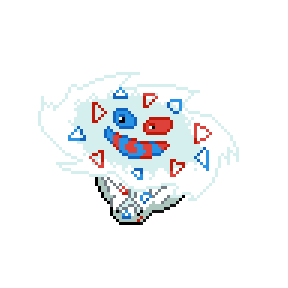
Togecario has a unique ability, possessing both blue and red aura in equal balance. It shares these with others in differing amounts, believed to be helping others balance their own aura and feel more at peace.
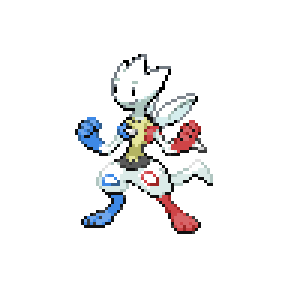
Some believe that lightly striking Togedon's skull will ward off bad luck for a time. Thanks to the sturdiness of its skull, Togedon feels no pain and doesn't seem to mind the ritual.

It's said that Togeary has an innate ability to sense good fortune. If one sees it perk its ears up before running off somewhere, following it seems to inevitably lead to something fortuitous.

Togecorio's cheering dances provide a luck and energy boost to those it cheers for. Its pom-poms spread colorful sparks as it dances; red from one and blue from the other.
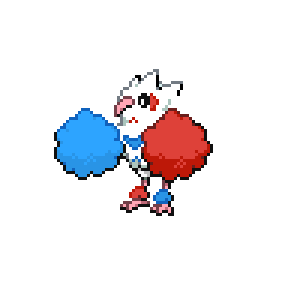
Togerantis is a kind and gentle creature that thrives in the presence of positive emotions. Its friendly demeanor and vibrant coloring see it often employed as assistants and guides at circuses, fairs and other attractions.

Togesect can lift itself off the ground for only a few minutes at a time with its small wings. When it flies, it spreads spores from its mushroom cap that provide a short-lived euphoric sensation in those who inhale them.

Nadle goes around the forest floor looking for seeds to eat. Its beak secretes a mild poison that weakens predators just enough to allow it to flee back into its home beneath tree trunks.

A chaotic creature indeed, Nagon causes glitches aplenty when it appears on a person's computer. It will only fix the problems it causes if the user makes a deal with it, but the price is always steep.

Natu bears resemblance to old records of a supposedly now-extinct middle form between Natu and Xatu. It's quite intelligent and curious and can even use tools to draw and communicate with others.

At night, Nareon stands motionless while gazing up at the moon. It's said to divine the future from this action, its wings spreading wide and its rings glowing bright when it receives a vision.
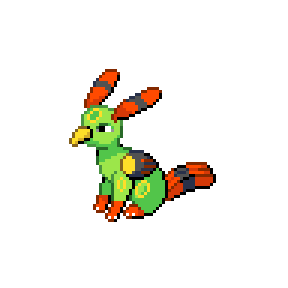
Nasel is a calm and calculating sort, spending a good chunk of its time meditating. It possesses mild precognition, able to anticipate predators trying to attack it while it meditates, and counter the attacks accordingly.
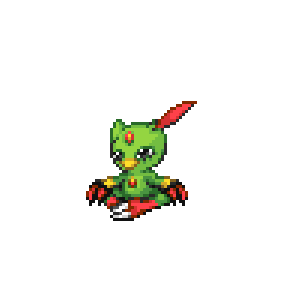
Nanub has a penchant for sniffing out tasty mushrooms to eat. It will often begin cultivating its own garden of fungi over time, and some have attempted to decipher if there is meaning behind the odd patterns in which it tends to grow them.

It's speculated that about 10 percent of murals found on ancient Hoenn ruins were painted by Nagle. Whether the art has deeper meaning or is simply ancient graffiti has yet to be determined.

When Natina stands stock-still, it is believed to be peering into a world different from our own. It doesn't respond to interactions during this time, though its shadowy wings instinctively brush away anything trying to bother it.
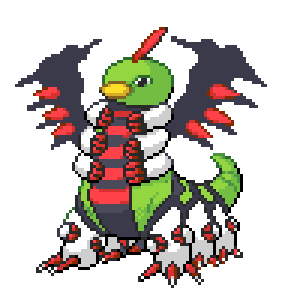
Once a week, Namander gathers sticks together to light up with its flames and gaze into the smoke it creates. Some say it's attempting to discern future events through the smoke's shapes.
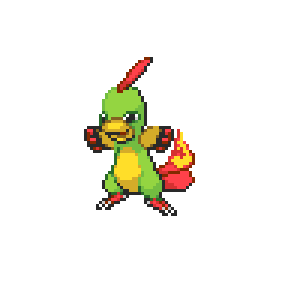
Natrum's size and sharp eyesight alert it quickly to the approach of anything that could be dangerous. Psychic pulses that radiate from its frill help fend off these approaching dangers.

Nalucha perches on tree limbs and observes fights from afar with its strong eyesight, cataloging the moves of different Pokémon. Pokémon often come to seek its advice on how to counter the techniques it has witnessed.

Naskit skims across puddles of water in forest areas. It sometimes stops and rhythmically taps upon the water, casting ripples that some believe are an attempt to communicate a message to others.
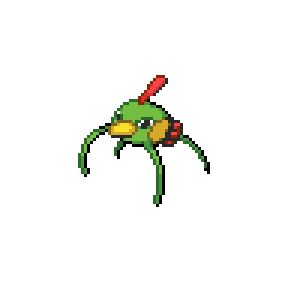
Naform's mental capacity is at its greatest when its basking in the summer sunlight. Its cranium glows brightly and spreads a warmth that is said to increase the intellect of those nearby.
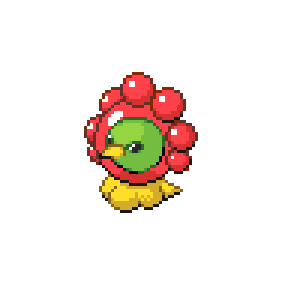
Nabra spends much of the day staying still with its arms crossed in contemplation. Occasionally it stares into its reflection in its spoon, but what it ascertains from this is unknown.

Nadude has sharp eyesight and even sharper reflexes. If it spots something approaching while out gathering food, it flings itself off the ground with its strong arms and hurtles its entire body towards the interloper.
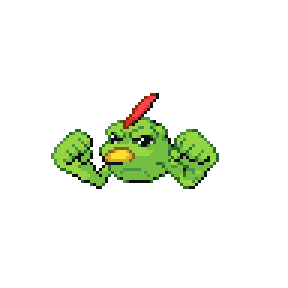
Naduo are a very observant species, making sure that one head is always taking in their surroundings. Some domesticated Naduo can even draw detailed maps of the areas surrounding their home.
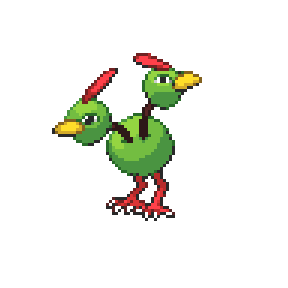
Xagon possesses a modicum of insight into the future. It communicates its visions with a series of flashes from its eyes that represent binary code, to be decoded and translated.
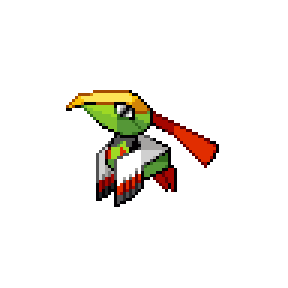
Xatini's shed skin was once believed to hold some of its mystical power. Potions were brewed using the discarded skin, said to grant the drinker the temporary ability to see into the future.

Xatwo's advanced psychic mind glimpses into the distant future. Whatever it has seen appears to have given it a nihilistic personality, distancing it from other Pokémon and reacting negatively to visitors.

Xageot perches on high branches, cocking its head at random while seemingly oblivious to anything else near it. It is believed that if it suddenly takes off in flight, it has seen a vision of future disaster.

Xalade's movements in battle are so careful and calculated that many believe it gazes into the future to see how its opponent will fight, and moves according to that vision.
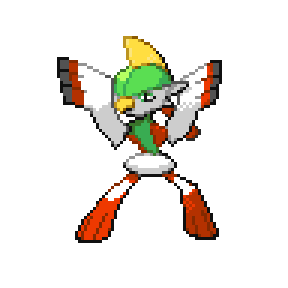
Some ancient depictions of Xagon suggest it was seen as a deity that warned humanity. According to myths, if it perched upon the highest point of a given town, it was a warning that ruination would arrive in the coming months.
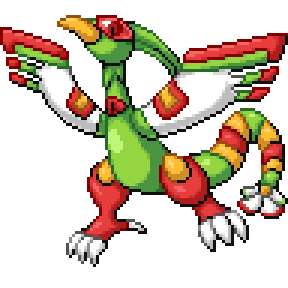
Many have thought of Xaklang as an avatar working for an almighty deity. Most are afraid to approach it because of its strange appearance, but it is gentle and kind at heart.

Xaveon is seen as a symbol of hope in some regions. Coming into contact with its ribbons is said to instill visions of a happy future, inspiring people to work towards making it a reality.
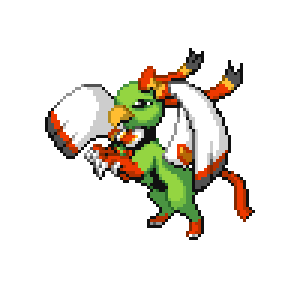
While Xaking is prone to throwing its weight around and intimidating others, it will suddenly stop the moment it receives a vision of the future. It stands stock-still for the vision's duration before going right back to its rampage.
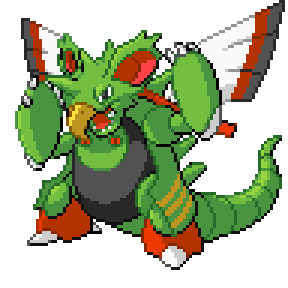
Xakyu fashions a disguise resembling Xatu in order to coexist alongside it. Its disguise lacks wings to raise to communicate, so it creates temporary false wings from the darkness underneath, often scaring Xatu in the process.

In ancient civilizations, the wisest and most regarded of seers rode Xadash as their steed. It is believed the Pokémon shared its precognitive abilities with its rider, letting them glimpse the future.
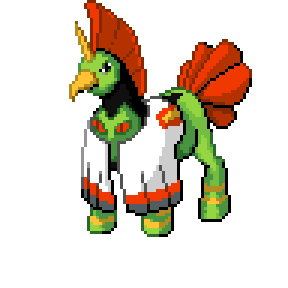
Mato retreats itself into its wool coat when it transforms, generating visible crackles of lightning during the process. The wool remains somewhere on its new form after the transformation completes.
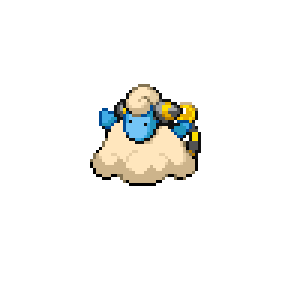
Matini regularly sheds its skin at a rate of about once a week, including whatever wool remains. After shedding, it will have no electrical abilities until enough new wool grows back.
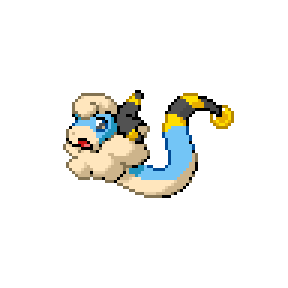
Matwo rubs its woolly palms together to gather immense amounts of static electricity, creating powerful orbs of lightning to hurl at foes. The orb on its tail can emit powerful stunning psychic pulses to further incapacitate opponents.

Manaw rubs the wool on its tummy to gather electricity and fling it from its claws at others. Though it has a small mouth, its teeth are still quite sharp, so its bites cause quite a bit of damage.
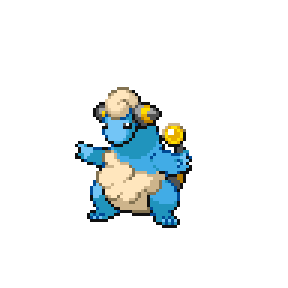
A domesticated Maret's favorite thing is having its belly rubbed, but owners should be careful; rubbing too fast stirs up the electricity in its fur and could lead to a sharp little shock to their hand.

Marak's electrified webbing is made from its own wool, so it uses minimal webs to hunt so it won't run out. Some factories use the sheared threads to help increase the conductivity of manufactured wiring.
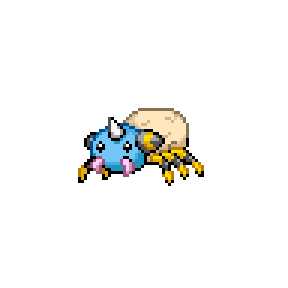
Feathers shed by Marow retain faint electricity gathered from rubbing against its wool. These feathers are a popular novelty quill, as ink written with them will glow in the dark for a few days.
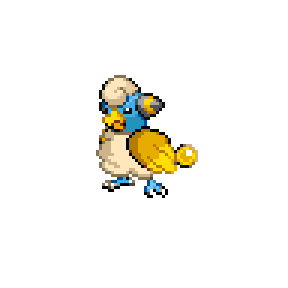
Mans coils up in its own fluffy wool to stay warm. If agitated it will shake its tail furiously, flickering a bright light to blind the nuisance and give Mans time to slither away.

In the wild, rival Matler will attempt to cow the other to submission via displays of electric power. The one who can create the larger arc of antler-shaped lightning above their head is considered superior.

The wool on Ma Jr.'s head grows at an alarming rate. In only a few days, its wool will grow thick enough to obscure its vision and put it off-balance.
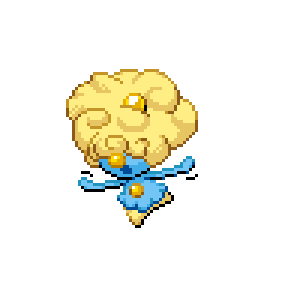
Immediately after being sheared, Makip will attempt to find the nearest source of mud to roll around in. This works as a suitable substitute for regulating body temperature until its wool starts to grow back.

Mavoir channels electricity from the wool on its head into the gem on its torso. By channeling the energy, it can fire strong lightning bolts used in defense of its Trainer and companions.

Maeon rubs the wool on its body vigorously before a battle or hunt. The static charge this creates internally coats its extendable tongue in electricity, allowing it to shock foes or prey into submission.
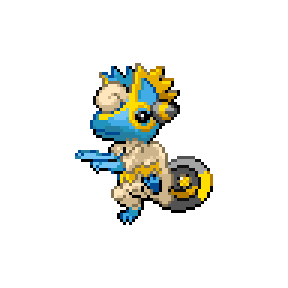
Every full rotation of Maklang's gears causes a small burst of light and electric energy to generate from its cores. If the wool on its head is not groomed regularly, it will cause issues with its functionality.

Maveon needs to be regularly sheared so that its wool does not grow excessively. If allowed to grow out, the wool will surge with excessive electricity and create ribbon-like whips of lightning that can injure those nearby.

As Matias zips through the air at high speeds, it leaves a trail of static electricity from its wool behind. If multiple Matias fly together, their trails may intersect and cause a dazzling array of sparks to erupt.

After every twelve rotations of the gear a small burst of electrically-charged wool particles bursts out from Mang. The particles are harmless, only causing an hour of ticklish tingling sensations.

As Malucha swings its fluffy wings about during pre-fight poses, small electrical discharges burst out and add to the flair. The orb on its torso glows brightest during its victory pose.

Maras scuttles around the forest floors, licking at Tiny Mushrooms. Most are eaten right away, but those it particularly enjoys the taste of are attached to its back, carried to its home to be savored later.

Mamur experiences discomfort if its wool is allowed to grow too much. The more uncomfortable it feels, the louder it cries for assistance, to the point it becomes deafening.
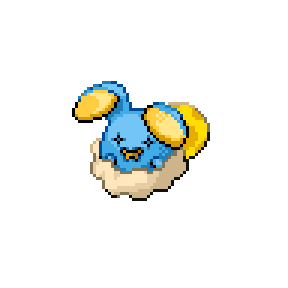
If static electricity builds up too much within Maduck's fur, it develops strong migraines. Periodic controlled discharges and regular shearing will ensure a healthy, happy Maduck.

Pidsea cuts through the water at blistering speeds, making it a fierce hunter. By blinding prey through quick movements and spreading ink around, it can take down fish much larger than it in mere seconds.

In earlier days of the internet, Pidgon would deliver emails, as it tended to move through cyberspace faster than messages would typically send. This is less prevalent now, but letting Pidgon deliver mail is still done for sentiment and exercise.
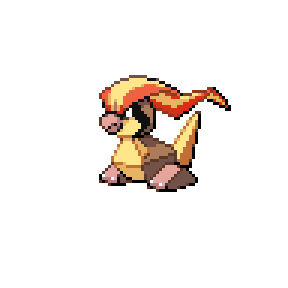
Pidans's beak has a potent venomous bite and a large territorial streak, so it should be given a wide berth in the wild. It uses the feathers on the end of its tail to groom the glossy mane of feathers on its head.
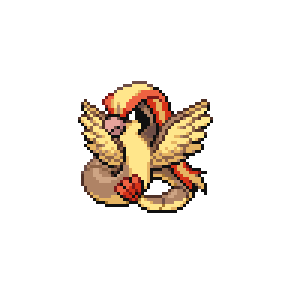
An apex aerial hunter, Pidchu sends thunderbolts crashing down from the air to send prey scurrying out of their dens to be easily snatched up. Its glossy crest becomes spiky and stands up on the eve of intense thunderstorms.

Some ancient ruins depict murals of Pidzone, revering it as some type of guardian deity. It fires magnetically charged feathers that can move independently and strike multiple targets.

Pidfeon's glossy mane lets it soak up a maximum amount of sunlight for photosynthesis. In battle, it vigorously flaps its wings to shed razor-sharp leaf-like feathers propelled by the gusts of wind it creates.
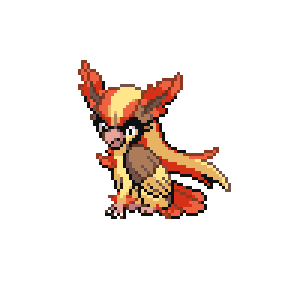
Pidoof uses its powerful wings to fly up to the tops of trees and gather more branches for its dams. Part of its mating ritual involves Pidoof grooming each others' glossy manes.

With a single flap of its wings, Pidceus can take to the skies at speeds reaching 70MPH. Its take-off is so powerful that it releases a shockwave, and it always leaves a single glowing feather behind after it flies off.

Pidpass's strong control over its own magnetism lets it float around almost indefinitely. It can fire off parts of its stone wings as projectiles, the stones returning shortly after via magnetic force.
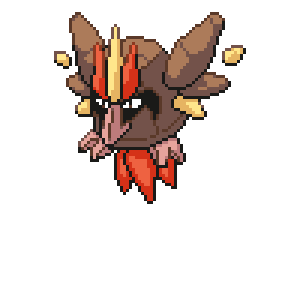
Pidreigon's violent nature compels it to peck creatures with all three of its heads until they are unconscious and unmoving. It seems to be able to rein in its impulses only when confronted with young Pidgey.
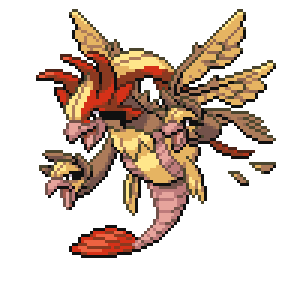
It takes pride in the glossy length of feathers extending from its head. Anything touching these feathers will quickly send Pidkey into a flapping, screeching frenzy.

Pidler takes great care in grooming the plumage located on the back of its claws. The bigger and better-kept the feathers, the more likely it will be able to attract a partner.
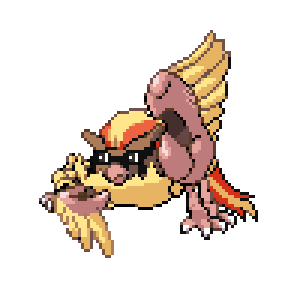
Orphaned Mareep are under Flaakhan's protection, carried safely within its pouch. Electricity stored in the orb on its tail can be discharged at any time in protection of its child.
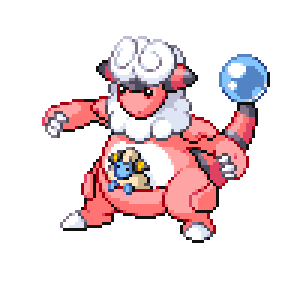
The more Flaabuzz swings its arms, the more electricity it stores within its wool. During battles it will sometimes tear off a chunk of electrified wool and toss it, the clump exploding into lightning when it hits a target.

If it feels threatened, Flaarita begins waving the fluff on its head around. The wool's rotation charges up electricity within it, letting it release it in bursts to defend itself.
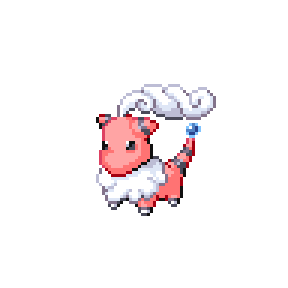
Flaazor clips small clumps of its wool to store within its claws. This way, when it opens them next in battle, its foe will be caught off-guard by the sudden bolts of lightning released from the highly charged wool within.
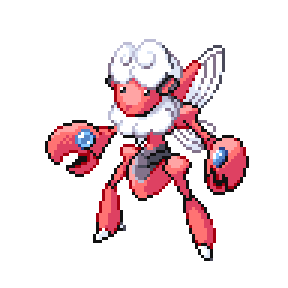
The electricity in Flaafeon's wool is dependent on regular photosynthesis sessions. If the light radiating from the orb on its tail is dim, it needs to recharge itself beneath sunlight soon.
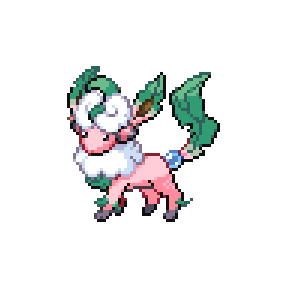
Flaakip enjoys soaking its lower half in mud, but takes care to avoid getting it on its upper half. This is because mud clinging to its wool will disrupt the electricity stored within and cause extreme discomfort.

A swirling mass of wool generates electricity to protect Flaatomb from its opposition. The orbs can detach from the mass to directly attack others, and are believed to be inhabited by ghostly spirits.

Flaaron channels the electricity from its wool into the orb on its tail. This electrified orb is used for territorial combat, with Flaaron striking their tails against each other's metal armor until one finally submits.

Flaainch can transfer the energy illuminating its tail to an organ located in its throat. Doing this projects light from its mouth when open, turning it into something of a living flashlight.

Flaakoal can use its electric powers to shine bright beams of light from its tail or certain spots of its shell. Some venues paint over these spots to color the beams and have Flaakoal create vibrant light shows.
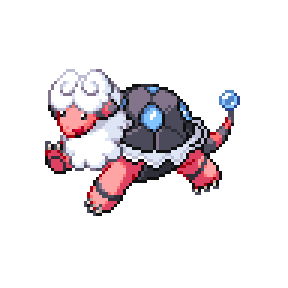
Flaasian rubs against those it likes, generating a faint tingle of electricity to mark them. One should be careful about attempting to pet it back; it has a capricious personality and may use a stronger shock if it doesn't feel like being touched.
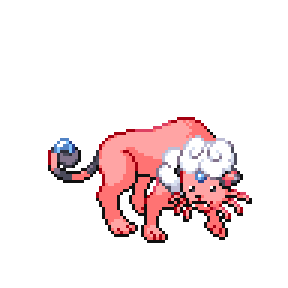
Amphapie acts as a lookout for other bug Pokémon. By flashing the bright light at the end of its tail, it warns bugs on the ground of approaching danger so they have time to flee to higher ground.

When Amphanyte meet at the sea floor, they communicate by flashing the orbs in their shells at each other. Mass gatherings of Amphanyte can cause glows of light visible even above the water's surface.
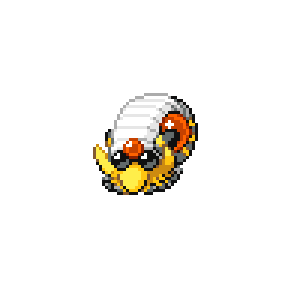
Amphaffy can rub its own wool to transfer its copious electrical energy into the fleece. This lets the wool glow blindingly bright and even generate a shield of electricity around itself for a time.

Amphallery uses radiant flashes of light from the suction cups on its tentacles to blind prey. It then finishes them off with bolts of electrically-charged ink spat from its mouth.
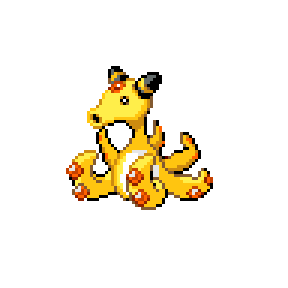
Amphatar finds itself in dark places to hide due to its hard shell limiting its mobility. To fend off anything that comes too close, its tail can emit blindingly bright flashes of light in short bursts.

When feeling happy, Amphalax's entire body illuminates with light generated from the orb on its tail. Since it usually does this after eating, one can temporarily see the silhouette of its recent meal within its stomach.

The light on the end of Amphaceus's tail can light up to the point of being visible from space. Ancient civilizations once believed the stars in the night sky were various Amphaceus illuminating the skies.
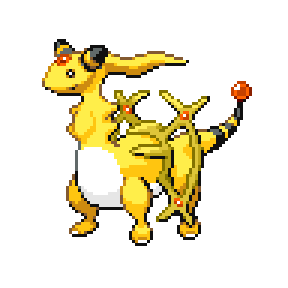
Amphapass can create a powerful storm cloud beneath its nose, shocking anything too close with its bolts of lightning. Its pearl-like eyes can flash with a light bright enough to blind every person in a 100-yard radius.
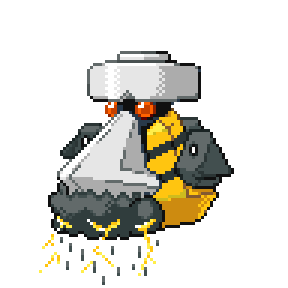
Amphagron can supercharge its iron body with electricity, making it glow prominently as a warning for others not to approach or touch it. Its tail and primary horn can create intense light bursts able to be spotted from miles away.

Amphaesect can utilize its cannon to create intense beams of light. The light beams it creates at max power are so bright that they can be seen from space.
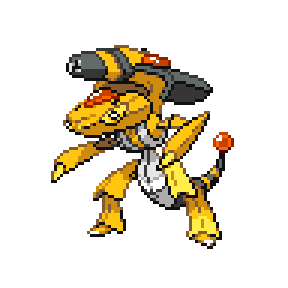
Amphagrigus stands watch in dark and twisty locations such as tombs, forests and caves. It emits bright limbs made of electricity to guide and point lost travelers to exits safely.

Amphathorn's three orbs can all glow with extremely bright light. If active simultaneously, its light can dispel darkness for miles around, making the darkest night seem like the brightest day.

Ampharona's many fluffy wings churn up electrical energy, casting off strong amounts of heat with each flap. If thunderstorms happen constantly around a volcano, it's likely an Ampharona is living within.

Amphainch's strongest light-generating organ rests in the back of its throat. If it feels threatened, it opens its mighty jaws and lets loose a retina-searing beam of light that can cause permanent blindness in some cases.

Ampharia's electrical generation lets its cloud-covered wings cast thunderbolts at will. It flies through stormy seas, guiding ships toward safe harbors via the bright light its tail can emanate.

Amphamy's tail is able to generate a powerfully illuminating light at will. If it stuffs it tail into its mouth, it can make its entire body glow brightly.

The multiple orbs on Amphasect's mushroom allow it to create dazzling and blinding displays of flashing lights. Some have used it to create impressive light shows at public events.

The circles on Amphatox's wings can light up individually or all at once. Using them simultaneously creates a blinding flash that aids it in hunting and escaping danger.
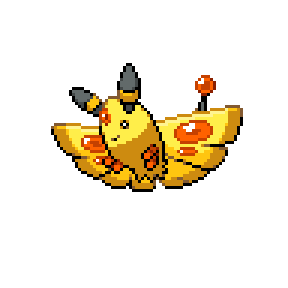
Amphatric's body is so heavily charged with electricity that it can be seen crackling across its body with even the faintest movement it makes. It locks eyes with prey before blinding them with bright flashes from its large red eyes.
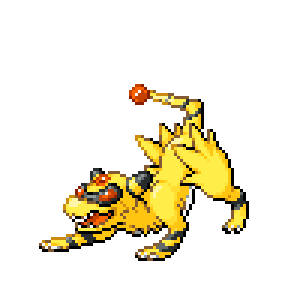
A loyal companion, Amphalithe rarely leaves its Trainer's side. It wags its tail when excited, and the happier its mood, the more brightly the orbs on its tail and nose will glow.

Amphapoke's tail emits a bright flash of light as an instinctive self-defense maneuver whenever it is jostled too much. Due to Amphapoke's tendency to play with its own tail when bored, it often ends up blinding itself with this light.

With just a snap of its massive claw, Amphaler generates a burst of electric energy. The resulting flash is bright enough to be visible from a mile away.
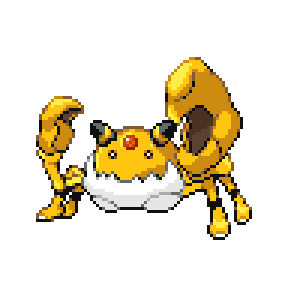
To Bellee, combat and dancing are the same, and both must be tackled with skill and grace. It practices its movements constantly so that every movement in or out of battle is practiced and perfected.

One can tell if an undersea kelp garden contains Bellsea, as its dances cause the seaweed to sway in a notably rhythmic fashion. It spits a vibrantly-colored ink to create a smokescreen to escape predators.

When there's ample sun and fresh air, Bellros behaves in a docile manner. Once the sun sets or the weather turns foul, however, it gets agitated, snorting and flaring about in frustration.

Belluna hides among groups of Bellossom as camouflage to protect itself from predators. It can be identified among the crowd as the only "Bellossom" not dancing.

Nestled deep in tropical forests, Bellew's dance moves send out healing psychic waves around it. The pulses are most effective on flora, helping nourish the flowers around it and making sure they stay healthy and vibrant.

When the sun is at its highest and casts the most warmth, Belltret dances its most vibrantly. It uses its flowery tail to lift itself up and make it more visible, so that more outsiders can bare witness to its joyous moves.
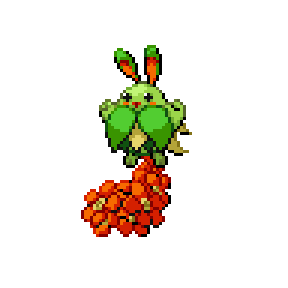
The hollow clacking of Bellzor's coconut-like pincers serves as its own rhythmic backdrop for its dances, unique to each individual. Its music and moves have inspired several famous songs and dances in media.
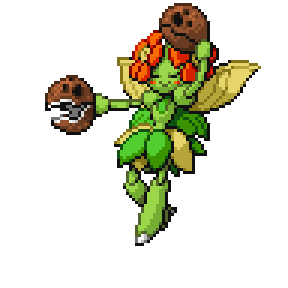
Bellceus appears to live in tropical regions bursting with vibrant flowers and fruit-bearing trees. Its dance moves can instantly cause all the plants around it to bloom, ensuring its surroundings are always spectacular and colorful.

A small and playful little creature that inhabits colder tropical regions. Bellup greets others by blowing a series of bubbles that have a faint and fruity scent.

Belloom inhabits tropical regions in the warmer parts of the planet, surrounding itself with vibrant plant life. It stretches out its extendable arms before it performs rain-summoning dances to make them more effective.
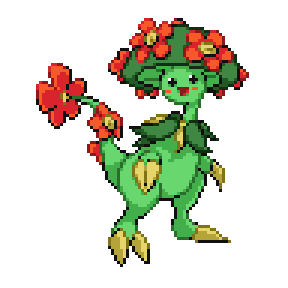
Bellpuff's song and dance puts most creatures to sleep, while having a revitalizing effect on plants around it. Those that fall asleep to its performance often wake up surrounded by blooming flowers.

Bellpuff decorates its ears with petals from flowers, favoring those it has helped bloom with its song and dance. When gathered in groups, it often trades petals to make its decorative loops more colorful.

An inhabitant of tropical beaches, Bellgast is a friendly creature that shuffles and dances near where flowers grow. Touching the shovel on its head, however, causes it to generate sandy tentacles that grab a person and throw them into the distance.
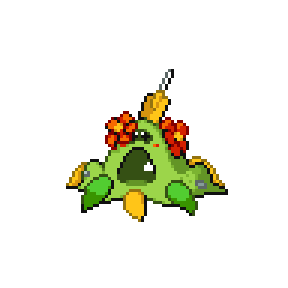
Marill acts as a friendly bodyguard for Marill in the wild. Its small and soft body packs a surprising amount of resilience and power, often taking aggressors expecting an easy fight by surprise.

Maursa's two favorite things are honey and swimming. It gorges itself on the sweet substance to the point of covering its body, then it goes swimming to both play and clean up the mess it's made.

Mapy can often be seen using its trunk to play with the ball on its tail. Sometimes it will fling the ball forcefully, forgetting that it is attached to its tail, and causing it to tumble over.

The first recorded sighting of Machu was reported in a remote part of Kanto. It was originally thought to be a strange unseen evolution of Pikachu before further research confirmed otherwise.
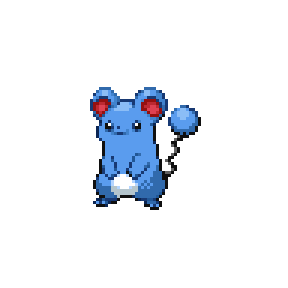
Soft and water-resistant feathers coat Maplup's body, which aid it in swimming through chilly waters. Its round tail is quite heavy, used to knock away attackers coming up from behind while underwater.
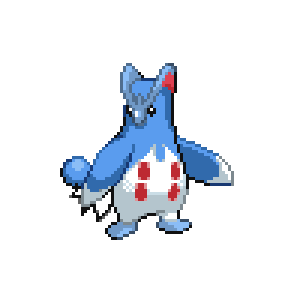
Maseed sinks to the bottom of water quickly thanks to the high density of its spiked body. It uses its spiky, heavy tail to crack open the shells of Shellder and other hard-shelled aquatic denizens.

Macorio holds the orbs on its tails as it sways around during its dances. Once its dance finishes, the orbs will levitate for a time, charged up by Macorio's psychic energy.
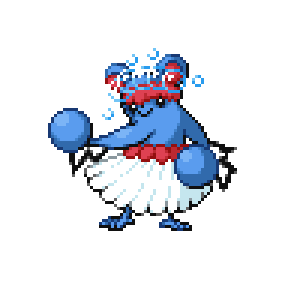
Malix's fluffy fur can be removed in small chunks and consumed as a sweet treat. If it is allowed to soak up fresh water beforehand, the sweetness increases as Malix's fur turns the stored water into a sugary juice.
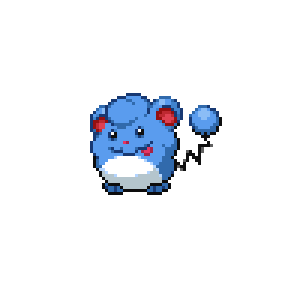
Azumatic submerges itself in water and lets its tail bob on the surface, appearing to hunters as a lost egg floating by. When a predator draws near, it hits them on the head with its tail before diving back down and swimming away.

The spines on the side of Azumatress's body can fire out heavy blue orbs to strike at others. When it is overwhelmed, it spins rapidly and becomes a whirling dervish of heavy blows.

Azumavoir drifts lightly over lakes, looking down and watching the creatures swimming below. It creates a force field made of the water beneath it if attacked while it floats around.
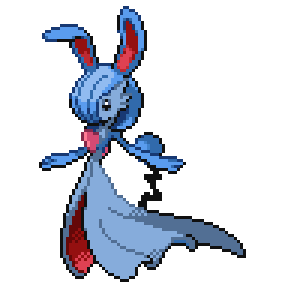
When diving, Azumadoof keeps its ears above the water to listen for danger. If it hears the sound of an aerial hunter swooping down, it leaps out of the water and knocks the attacker out with the heavy ball on its tail.

Some believe life preservers were designed based on the ring around Azumaceus's torso. It appears during great disasters at sea, using its powers to keep survivors afloat and carry them to safety.

Azumanape takes a swaying, taunting stance in battle in order to trick its foes into taking the first move. It moves nimbly to avoid strikes before countering with heavy blows from its tail, typically while igniting the tail for extra damage.
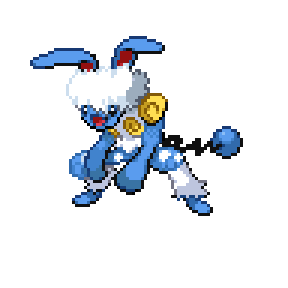
Some swimming schools use Azumaveon to help beginners learn how to swim. Holding its buoyant tail helps keep the beginner afloat, while the gentle touch of its ribbons helps calm the swimmer's nerves while treading water.

Azumaloom forages around lakes and rivers to find water-based fungi to snack on. Its tail is extendable and packs a powerful punch, letting it deter things that would try to attack it while it feeds.
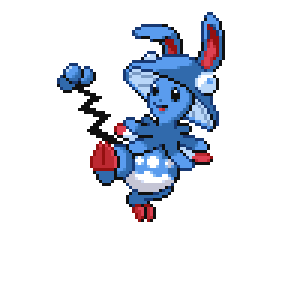
Azumaish submerges itself in the muddy edges of ponds and lakes so it can eat its fill of moist soil every day. If bothered, it spits a stream of muddy water to deter its opposition.

Azumalie floats around placidly in icy waters in northern regions. It can shoot water bursts or large chunks of ice from the many holes in its hollow body.

Azumacorio is usually found doing its swaying dances near some type of body of water. As it dances, its psychic powers cause small waves to ripple across the water's surface in tune with its movements.
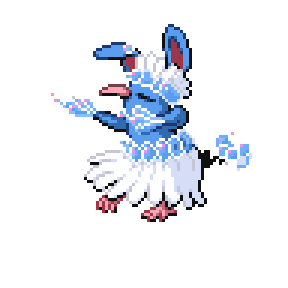
A happy-go-lucky creature that roams northern areas, Azumaice loves to join others in bodies of water to make new friends. Unfortunately, its frigid body almost instantly freezes the water after it enters, trapping the other creatures within.
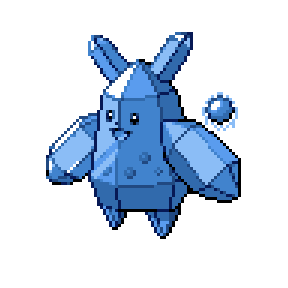
Azumasteel sinks its heavy body to the bottom of lakes, finding relaxation at the deepest depths. It behaves sluggishly if it spends too much time out of the water.
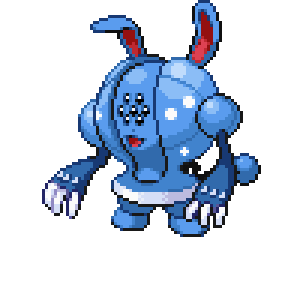
When faced with larger Pokémon, Azumaple will cover its tail in a thick coating of silk thread from its mouth. This increases its size and weight, giving it a boost to its offensive capabilities.
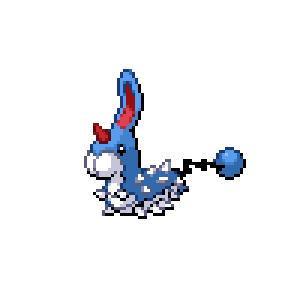
Three heads poke out of a frozen ice block Azumatrio inhabits. Playful by nature, it greets others by showering them with three streams of chilly bubbles blown from each mouth.

Azumalow will often wind up getting into aerial fights with others of its kind. They scratch and swing at each other before attempting to knock the other down with their tails.
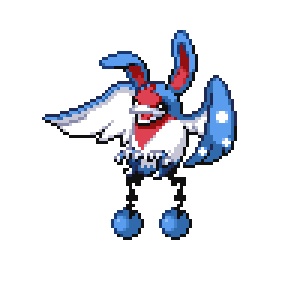
Azumaling's body is light and bouncy, letting it leap large distances thanks to its strong feet. Its ears make bell-like chimes whenever it shakes them.
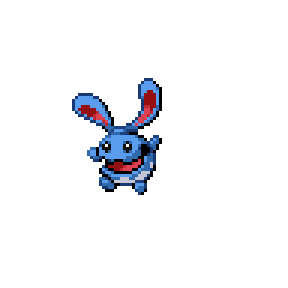
When it snoozes deep in the forest, other smaller Pokémon nest or feed among Sudohorn's foliage. Its resilient hide means it doesn't even notice the extra company most times.

Young Bonsly are allowed to ride in Sudosey's pouch to feel safe and content. Though Sudosey tends to stay perfectly still, anyone approaching the child aggressively will find themselves slapped rather hard and suddenly.

Though it prefers to spend time standing as still, Sudokhan possesses strong parental instincts towards Bonsly. Those agitating the children find themselves struck hard from behind, yet Sudokhan appears to never have moved...

Rather than remaining rigid like Sudowoodo, Sudomime mimics realistic tree motions such as swaying with the breeze and seasonal color changes. It still has trouble convincing onlookers it is a tree, however.
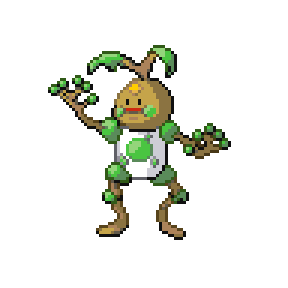
Sudother tries to remain stationary most of its life, but the orbs growing on its limbs have a sweet scent and taste that attracts insects. It often has to shake the bugs off and relocate several times a week.

The ever-present orbs circling Sudoew have a strange effect on the mind. After getting hit, a person will no longer recognize Sudoew as a Pokémon, instead thinking of it as a normal tree.

Seeking to avoid conflict, Sudonium attempts to stand still and hide itself amongst tall trees. The orbs around its neck put forth a strong herbal scent when it is stressed, often resulting in it giving away its position.

Sudofarig has a placid personality, seeking to avoid conflict and indeed most interactions with others outside its species. It spends much time trying to pose in ways that make it look perfectly symmetrical, but fails often.

Sudotress floats through sparse forests and spins rapidly, launching large green seeds into the dirt around it. These seeds grow into mighty, sturdy trees later.

Parks and reserves employ Sudoring as mascots and guides. They stand completely still, but if a person asks directions and then looks away, when they glance back Sudoring's arms will point them to their destination.

The orbs on Sudotler's antlers are attuned to wind and weather, letting it know when precipitation is imminent so it can seek shelter. Like a Sawsbuck, these orbs change color with the season.

Sudosly tries hard to pretend to be a tree, remaining perfectly still when interacted with or in harsh conditions. Its main weakness is rainstorms, which cause it to cry uncontrollably.

Sudogon-Z attempts to mimic an image of a tree within images of forests and the like. Its form is prone to glitching out visually, however, making it difficult to maintain the illusion for long.
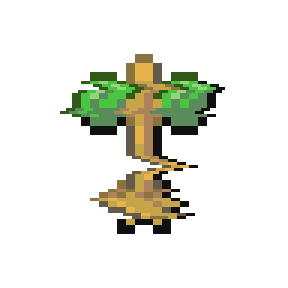
Due to its ability to change color, Sudoeon can more easily blend in with its surroundings and the changing seasons. This causes it to gain the ire of jealous Sudowoodo in the wild.

Sudotomb uses some of its ghostly powers to better mimic the trees surrounding it. However, its spiritual energy causes it to emit a glow during the night, ruining the illusion.

Sudoidos stands stock-still in forests, pretending to be a tree. Attempts to provoke it and dispel this masquerade are met with an angry headbutt before Sudoidos sulks off elsewhere.
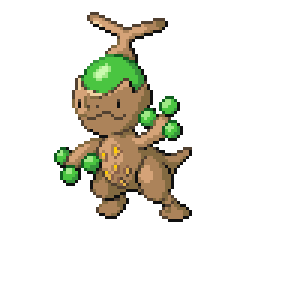
Its coloration allows it to hide well amongst the trees of its home, to better let it hunt prey suddenly and efficiently. Between its camouflage and high-speed hunting, few have actually seen a wild Sudojask in motion.

Although Sudopix likes to remain motionless as long as possible, its many tails move instinctively on their own. When under attack, the orbs at the ends will ignite and fling scalding fire at any aggressors.
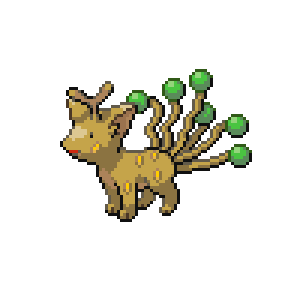
Sudoroth wishes to mimic trees, but contains far too much pent-up energy to remain still for long. When it tries to stand motionless, visible strain can be seen in its eyes before it gives up and runs around wildly.
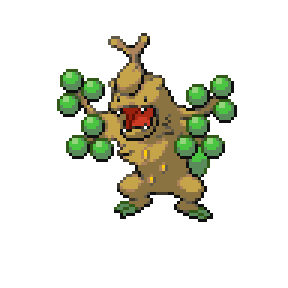
Sudonea hides among the trees, pretending to be one despite being much shorter than those it mimics. It swings its spine-covered orbs at anything that scrutinizes it too closely.
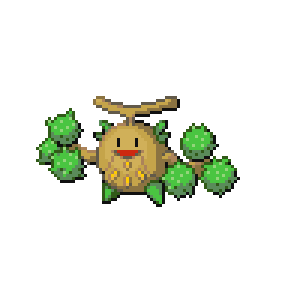
Scrappy by nature, Sudoty is always up for a good sparring session. Its signature combo is a one-two punch with its fists before a downward strike using the log on its cranium.
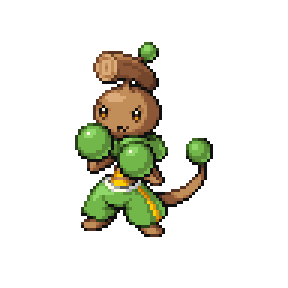
Sudotrio has conflicting responses to being put in danger. One remains perfectly still, another attempts to engage in close combat, while the third stays back and lobs dirt and stone.

Sudokazam channels its incredible mental energy into the tree limbs it carries around. This energy casts an illusion effect that makes almost any creature that sees Sudokazam believe it is nothing more than a simple tree.

The main body has poor eyesight, so Sudoduo uses the functional eyes on each green segment of its hands to better survey its surroundings. It goes through a variety of odd poses in order to maximize surveillance.
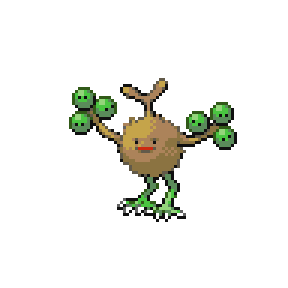
The green orbs on the end of some of Sudoster's spines act like depth charges. They detach from it before it swims away, before bursting explosively and launching sharp shards in every direction.

Polinite can eat almost anything, latching onto anything remotely edible-looking with its long tongue. Rumors persist of islands where Polinite of all colors live in their own secluded society.

Poliew encases itself in a bubble of psychic energy before descending to the bottom of lakes to sleep. The loud, croaking rumble of its snoring can be heard from above the water no matter how deep it has dived.
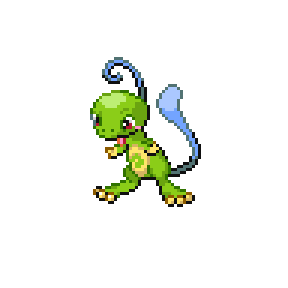
Poliossom utters a croaking cry while it dances, meant to draw in others of its kind to join in the performance. The dance and cacophony of cries together can summon heavy rain to water the tropical plants of its home.
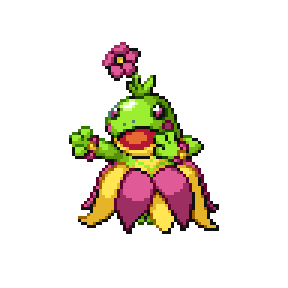
Historical records from Johto's past occasionally reference a creature looking very similar to Politoed. It's believed that Politoed may have looked this way in ancient history before adapting to its modern form.
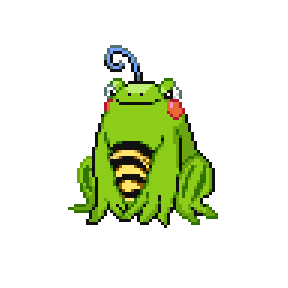
Poliphan's long tongue wraps around itself to protect its body when it begins rolling. Many things are often stuck to the tongue once it finally stops, causing it discomfort.

Politop utilizes Hitmontop's signature spinning fighting style in combat, but with an extra secret. Using its lengthy tongue, it can attack enemies out of range, acting as an extendable whip while it spins at rapid pace.

When finding wood for building dams, Polidoof always observes its chosen chunk with the curl on its head before gnawing or carrying it away. It's not yet known what it ascertains from this method of examination.

Polible blows large bubbles from its wide mouth to communicate with others of its kind. Rivals in the wild will bite down on the other's hair curl and tug it roughly as a show of dominance.

Policeus's mane constantly generates mineral-rich rain that helps nourish the ground and plant-life of the areas it travels through. It spends long periods of time growing plentiful flowers that attract the most delicious insects for it to eat.
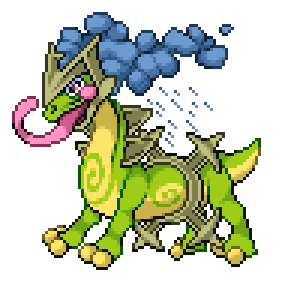
Polibish opens its mouth to let the stinky aroma of its insides attract flies and other insects. Once enough gather, it lashes out its tongue, made of garbage, and snatches up a meal of bugs.
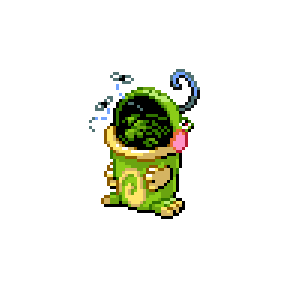
Poligoo is very proud of the curl on its head, meticulously preening it to just the right shape. It will cry for hours if something causes it to become dirty or disheveled.

The curl on Polisteel's head is thought to be an antenna that can pick up any radio signal across the world. Its bellowing, metallic croak causes disruption in communication technology within a mile radius.

Polieal hierarchy is determined by the size of the hair curl on their heads. It is not uncommon to see those of lesser rank jealously attempt to bite and trim the hair of a superior-ranked Polieal.
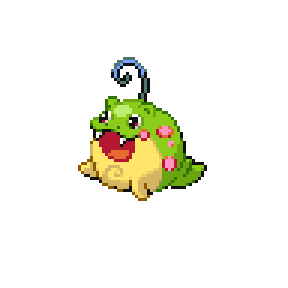
Intelligent and possessing a regal disposition, Polikazam places itself as the king of ponds and swamps. When not imparting wisdom to young Water types, it spends much of its time preening its mustache to perfection befitting royalty.

A sage of a Pokémon that retires itself to ponds, Polikazam often amasses a following of Poliwag eager to learn from its wisdom. Polikazam is known to offer advice to travelers and even adopt orphaned Water-type Pokémon.

Hopcute's lightweight eggs bundle together to avoid being blown away by strong winds. The one that grows leaves upon its head is the de facto leader of the group.
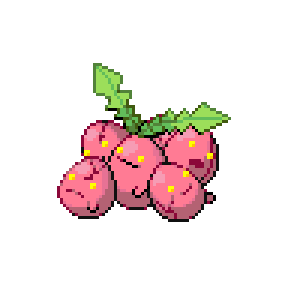
Hopyu's light body is easily carried by even light gusts of wind. It spins its body while airborne, dispensing pollen from its leaves that makes any flowers touched by it smell just a little bit sweeter.

The leaf on Hopeon's head can be safely removed and steeped in order to brew tea. The drink is notable for its fruity taste and for making those who drink it feel lighter afterward.
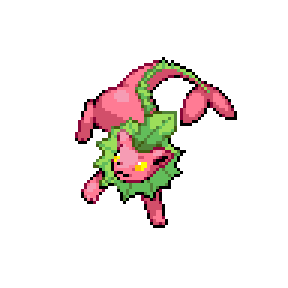
Hopgey is often found accompanying groups of Hoppip floating across the breeze. It helps the Hoppip's journey by flapping its wings to adjust their flight paths.

Hopchu accumulates more electricity in its body via stimulation from the wind that carries its light body through the air. It vents the excess energy when it lands, causing bright bursts and loud pops when it touches the ground.
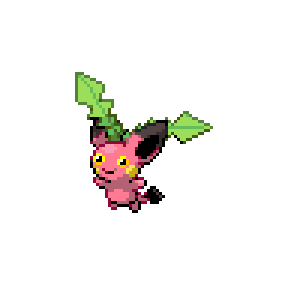
Its body is very attuned to the breeze, small fluctuations letting it know when predators may be around on the hunt. Because of this, Hoptata rarely leaves its burrow on days with little to no wind.

Hopkern keeps itself buried in the soil, letting its large leaves draw in sunlight and sense the weather around it. On windy days it pops up from the ground to take a ride along the breeze.

With almost nonexistent wings, Hopkrow flies by being carried some distance by the wind. Groups of Hopkrow often congregate near fountains, attracted by the water and the coins tossed within.

Hoprow is usually found pecking at the grass in open fields, searching for seeds to eat. As it flies, it sheds feather-like leaves that are used by some to sweeten the taste of their tea.
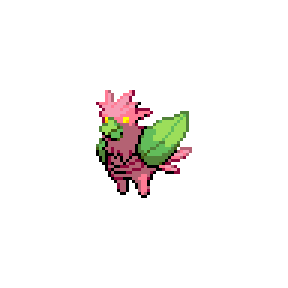
Once a month, Hopans sheds the leaves on its tail and grows a new set the next day. These leaves are used to brew a tea that has become fairly popular in northern Kanto areas.

The weight of Hoprill's tail keeps its body from being completely blown away by strong winds. It can still be flung about by the breeze, but its tail will prevent it from being carried to an entirely different location.

Hopvoir adores the sensation of a warm and gentle summer breeze. Using its psychic powers, it levitates itself and lets the wind carry its lightweight body about.
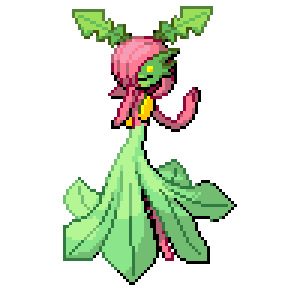
Hoptomb must be careful when emerging from its stone as its gaseous body is quite light and unstable. Even the slightest breeze could cause much of it to dissipate and weaken it greatly.

Hoprith is often found wading in the shallows of tropical islands, absorbing light for sustenance. Its bright coloration is a warning to predators, as tasting it will make most aquatic Pokémon ill.

Hopsis's bubble-like coating is easily popped, but splatters a sticky coating of goo when it does. It regenerates this coating instantly and floats away while the bubble-popper is slowed by the goop.

Once Hopcorio begins to dance, it enters a trance-like state that only ends when the dance does. Even if strong winds carry its light body through the air, it continues its rhythmic movements without missing a beat.
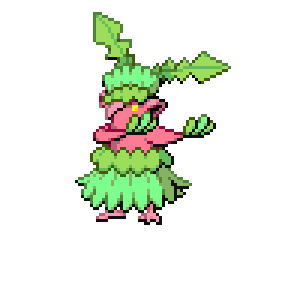
Hopselia releases a sparkling pollen from its wings as it flies. This sweet-smelling pollen helps nourish the ground, so farmers consider seeing it in flight as an omen of a bountiful spring harvest.
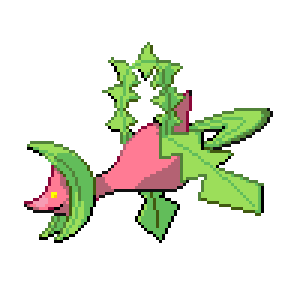
Hopdisc lives in placid waters, as its weak swimming muscles and light body makes it easily swept up by any current. If it leaps out of the water, it may even be carried away by a strong breeze.
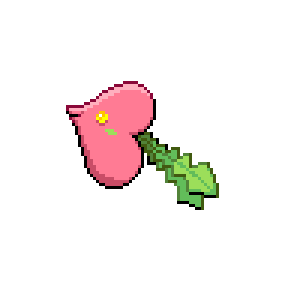
Hopyena will play-fight with each other in the air while their bodies are carried by soft breezes. If the winds grow rougher, they cling to each other in the hopes their combined weight will drop them safely to the ground.
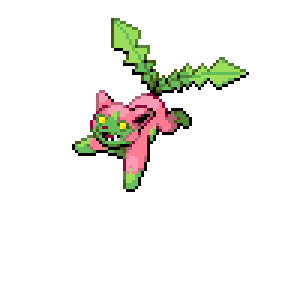
Hopzagoon cannot resist hopping around in a zigzag pattern whenever it roams about. Because of how light its body is, it could easily be picked up and carried by the wind during one of its small hops.
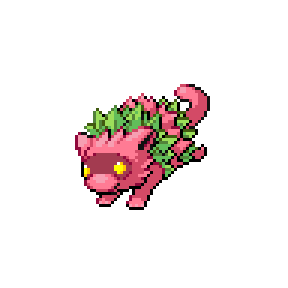
Hoplow is often targeted by hungry Pokémon due to the sweet and tantalizing scent of the leaves on its tail. Despite its small size and relative weakness, it fights off its predators with a fierce tenacity.
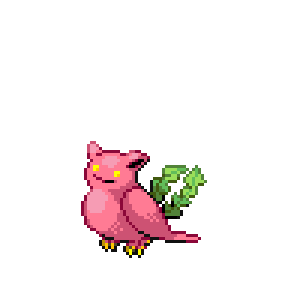
A curious sort, Hoprain likes to trail closely behind those that have caught its interest. Many have been quite startled turning around and seeing its eye-like wing markings staring them down.
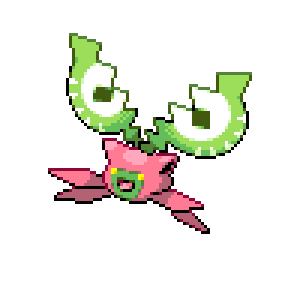
It pulls off and consumes its own leaves to help soothe its aching head. It's only a curative for Hopduck, however; others consuming its leaves will develop a strong headache instead.

On windy days Hopeal will shuffle its way up to the tops of steep hills. The wind then pushes its extremely lightweight body back down, letting Hopeal enjoy the thrilling sensation of rolling down the hill at high speeds.

Hopkey spends most of its time digging in soft dirt for seeds and roots to chew on. The leaves shed from its tail can be ground up for medicinal powder, but the powder is extremely bitter to taste.

Hopcool waves its leaf-like tentacles above the water's surface, drawing in Pokémon with their sweet scent. Hungry Pokémon that take the bait are quickly snatched and dragged underwater.

Hopcruel's many leafy tentacles flail about wildly as its light body is blown around by the wind. Touching the leaves without protection will lead to mild rashes developing on the touched skin.
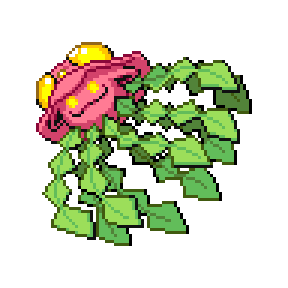
Hopter dutifully tends to small gardens at night, arranging plants to help them best gather sunlight in the morning. It gently brushes aside those that get in its way, often accidentally spooking them with its sudden ethereal touch.

Skiptung slumbers in dormancy whenever the temperature cools down. Once it warms up, it awakens to seek out flowers, licking the pollen off of them to last it through its next hibernation.

Skiprill enjoys hanging around ponds with lots of floral growth surrounding them. For fun, it tosses the ball on its tail into the air and attempts to catch it with the flower on its head.